Ghost Festival Traditions and Their Meaning Explained
The Ghost Festival is a significant annual observance in many East Asian cultures, honoring deceased spirits and ancestors. This tradition holds deep cultural and spiritual importance, blending reverence with a vibrant set of rituals. Understanding its origins and practices offers a window into the values of filial piety and the spirit world that shape these societies.
Simply put, the Ghost Festival is a time when the living believe the gates of the afterlife open, allowing spirits to visit the realm of the living. Families perform offerings of food, incense, and spirit money to honor their ancestors and appease wandering ghosts, ensuring peace for both the living and the dead.
Key Takeaways
- The Ghost Festival is observed on the 15th day of the seventh lunar month, primarily in Chinese, Vietnamese, and other Asian communities.
- Core traditions include burning joss paper, preparing food altars, and staging communal operas or performances for the spirits.
- The festival emphasizes ancestor worship and providing for deceased family members in the afterlife.
- Cultural variations exist, with distinct customs in different regions, such as the Hungry Ghost Festival in Southeast Asia.
- Modern observances often blend ancient rituals with contemporary life, adapting practices for urban settings.
What is the Ghost Festival and Why is it Observed?
The Ghost Festival, known as Zhongyuan Jie in Mandarin, is a traditional Taoist and Buddhist observance. It falls on the full moon of the seventh lunar month, a period considered when the boundary between the living and spirit worlds becomes permeable. The primary purpose is to show respect and provide for ancestors and lost souls.
At its heart, the festival is an act of compassion and duty. Families make offerings to ensure their departed relatives are not hungry or cold in the spirit realm. It also involves appeasing “hungry ghosts”—spirits of those who died without descendants to care for them.
The rituals are meant to prevent these spirits from causing mischief or bringing bad luck.
- Religious Roots: Blends beliefs from Taoism, Buddhism, and folk religion.
- Social Function: Reinforces family bonds and community ties through shared rituals.
- Moral Lesson: Teaches the importance of remembering and honoring one’s lineage.
- Cosmic Balance: Aims to maintain harmony between the realms of the living and the dead.
Important: The Ghost Festival is distinct from Qingming Festival (Tomb-Sweeping Day). Qingming focuses on tending graves, while the Ghost Festival is about inviting and feeding spirits at home or in public spaces.
How Do People Prepare for the Ghost Festival?
Preparation for the Ghost Festival begins days in advance. The home is thoroughly cleaned to welcome ancestral spirits and to avoid offending them with dirt or clutter. Families gather specific items needed for the offerings and rituals.
There’s a palpable sense of solemnity mixed with communal activity as the date approaches.
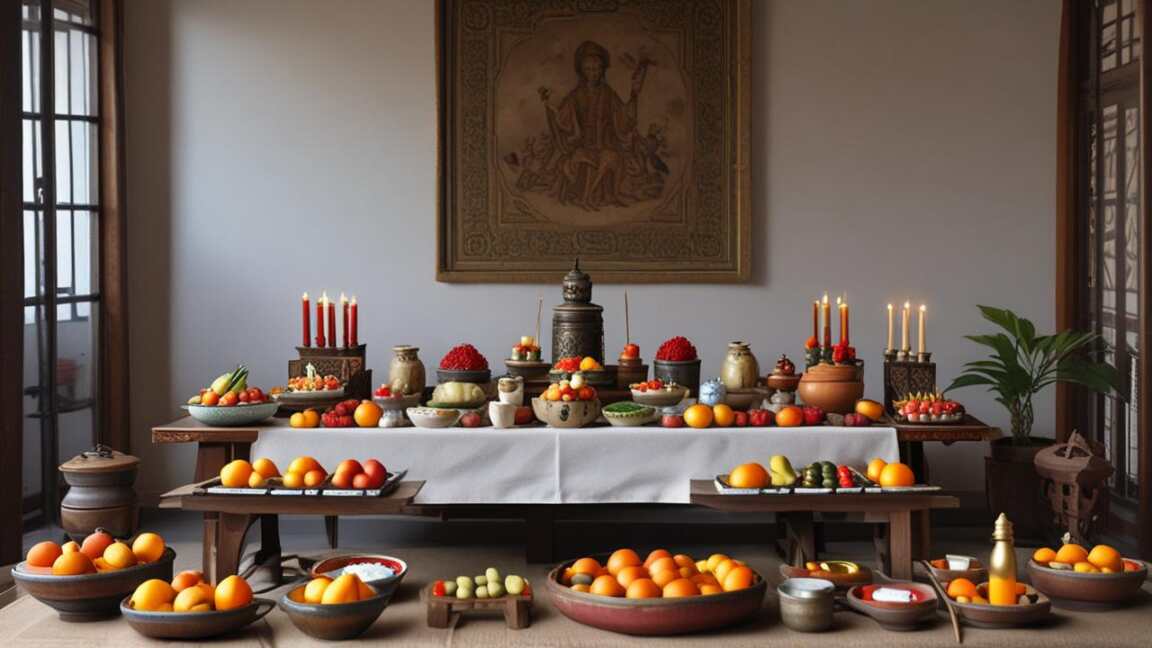
A key step is setting up a temporary altar. This can be indoors on a main table or outdoors in a designated space. The altar is laden with symbolic foods, drinks, and ritual objects.
Shopping for joss paper, incense, and spirit money becomes a busy task in the days leading up to the festival.
- Cleanse the Home: A thorough sweeping and mopping signifies a fresh, welcoming environment for spirits.
- Gather Ritual Items: Procure incense, candles, joss paper (spirit money), and specific food offerings.
- Prepare Offerings: Cook or arrange foods that hold symbolic meaning, like whole roast meats or specific fruits.
- Set Up the Altar: Designate a clean space, often facing the main door, to place offerings.
- Brief the Family: Explain the rituals to children, passing on cultural knowledge and etiquette.
What are the Core Rituals and Traditions?
The Ghost Festival is defined by a series of specific rituals performed on the main day and sometimes during the entire seventh lunar month. These practices are not mere superstitions but are deeply embedded acts of faith and remembrance. They create a structured way for the living to interact with the concept of the afterlife.
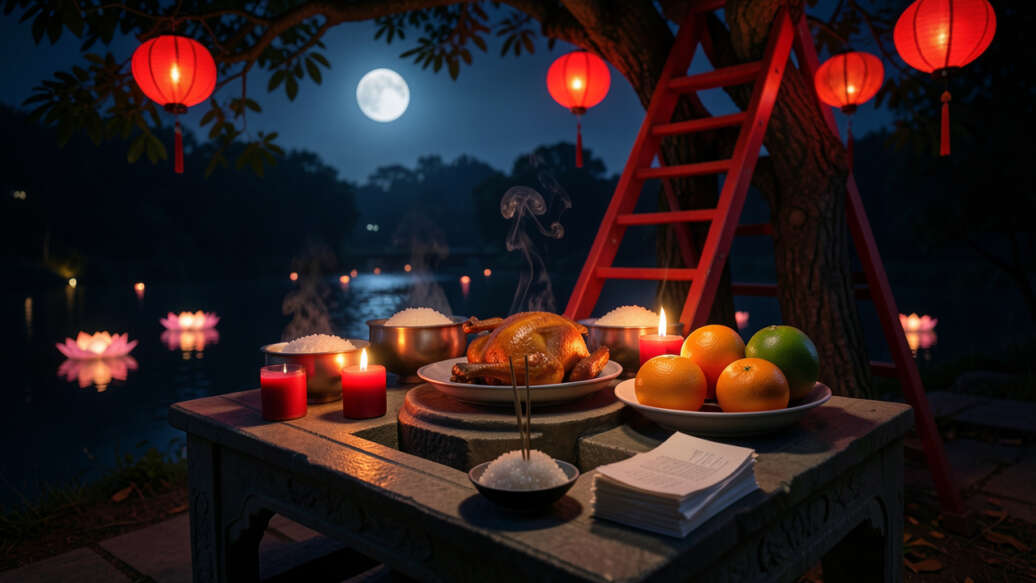
The most universal ritual involves making offerings. Families present food, incense, and spirit money to their ancestors and to wandering ghosts. The burning of joss paper is a central act, believed to transfer wealth and provisions to the spirit world.
Many communities also stage public ceremonies to benefit all wandering souls.
| Ritual | Purpose | Key Items Used |
|---|---|---|
| Burning Joss Paper | To provide wealth and goods for ancestors in the afterlife. | Spirit money, paper replicas of goods. |
| Food Offerings | To feed and honor deceased family members. | Roast duck, rice, fruits, tea, alcohol. |
| Lighting Incense | To purify the space and guide spirits to the offerings. | Joss sticks, candles. |
| Staging Operas/Performances | To entertain both spirits and the living community. | Stage, costumes, musicians. |
| Releasing River Lanterns | To guide lost spirits to peace and release suffering. | Small paper lanterns, candles. |
After the spirits have “consumed” the essence of the food, the family may share the meal. This communal feast strengthens family bonds. The rituals conclude with a respectful sending-off of the spirits, marking the closing of the gates between worlds.
How Do Different Regions Celebrate the Ghost Festival?
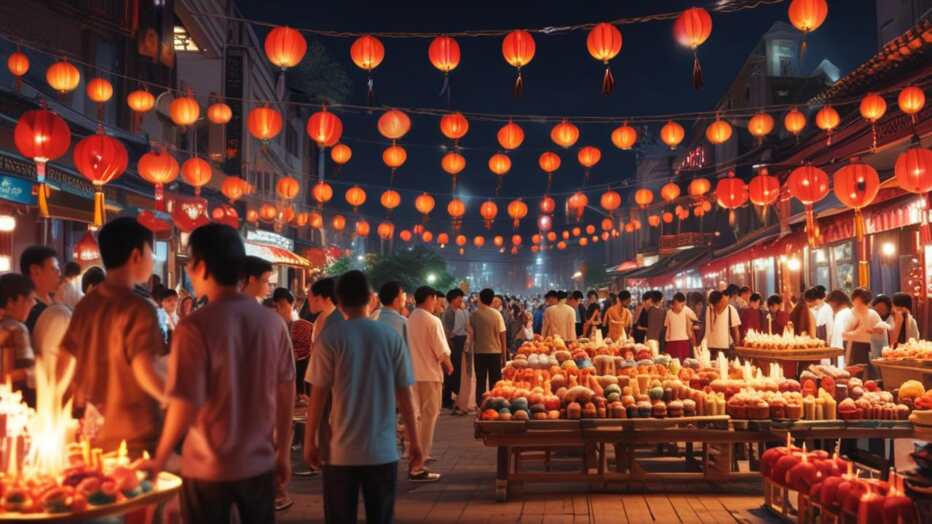
While the core theme of honoring spirits remains constant, the Ghost Festival showcases fascinating regional diversity. Practices in Taiwan, Hong Kong, and mainland China have distinct flavors. Southeast Asian countries like Singapore and Malaysia have their own vibrant versions, often called the Hungry Ghost Festival.
Each culture adds local customs and deities to the observance.
In Taiwan, the festival is a massive public event. Entire neighborhoods pool resources for elaborate “Pudu” ceremonies. Giant “ghost king” papier-mâché statues are burned at the conclusion.
In Hong Kong, the festival is more subdued but still marked by extensive offerings in residential areas and parks. The diversity highlights how a common belief can express itself in culturally specific ways.
- Taiwan: Known for large-scale, community-sponsored Pu Du ceremonies and massive ghost king burnings.
- Hong Kong: Characterized by family altars set up in housing estates and respectful, private observances.
- Southeast Asia: Often features “getai” live stage shows performed for the spirits, which become major entertainment events.
- Rural vs. Urban: Rural areas may have more traditional, temple-centered rituals, while urban adaptations are more compact.
Warning: During the Ghost Festival, many traditions advise against swimming, staying out late, or moving into a new home. It is believed that spiritual energy is unstable and such activities could attract unwanted attention from spirits.
Why Do People Burn Joss Paper and Spirit Money?
The burning of joss paper and spirit money is one of the most visually striking Ghost Festival traditions. To an outsider, it may seem simply like burning paper, but for practitioners, it is a vital transaction between worlds. This act is rooted in a belief in a tangible afterlife where spirits need resources just like the living.
The paper items are crafted to resemble money, gold bars, and even modern necessities like cars, electronics, or designer clothes. When burned, the essence of these items is believed to be transmitted to the spirit realm. It is a direct act of provision, ensuring ancestors are wealthy and comfortable, and that wandering ghosts are pacified with gifts so they do not cause trouble.
- Provide for Ancestors: Ensures deceased parents and grandparents have a good standard of living in the afterlife.
- Pacify Wandering Ghosts: Prevents hungry, homeless spirits from becoming vengeful or bringing misfortune.
- Fulfill Filial Duty: Demonstrates the living’s ongoing responsibility and respect for their lineage.
- Gain Merit: In Buddhist contexts, the act can generate spiritual merit for both the giver and the receiver.
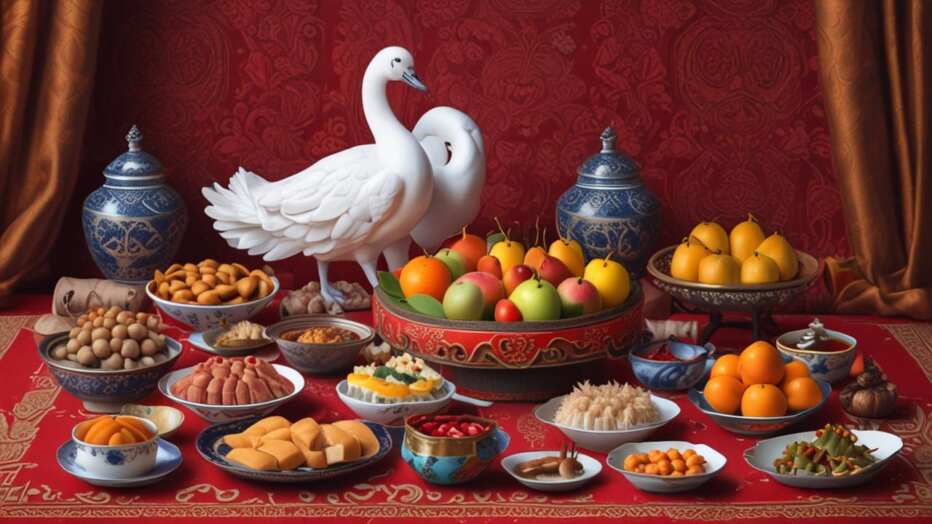
What Foods are Traditionally Offered During the Ghost Festival?
Food plays a central role in Ghost Festival offerings. The items are not chosen at random; each holds symbolic meaning meant to honor the dead and express specific wishes. Preparing these foods is an act of love and reverence.
The quality and completeness of the offering reflect the family’s devotion.
Offerings are typically placed on the altar and left for a period, from a few hours to a full day, so spirits can consume their “essence.” Afterward, the food is often shared among the family or community, symbolizing the blessing returned from the ancestors. The specific menu can vary by region and family custom, but several items are almost universally present.
| Food Item | Symbolic Meaning |
|---|---|
| Whole Roast Duck or Pig | Represents completeness, abundance, and wealth for the ancestors. |
| Rice and Noodles | Rice is sustenance; long noodles symbolize a long and healthy life (in the afterlife). |
| Fruits (Oranges, Apples) | Oranges symbolize wealth; apples symbolize peace and safety. |
| Tea and Alcohol | Offerings for refreshment and to honor the spirit during the visit. |
| Fa Gao (Prosperity Cake) | A steamed cake that splits open when cooked, symbolizing “bursting” with good fortune. |
What Should You Avoid During the Ghost Festival?
Cultural beliefs surrounding the Ghost Festival include a list of taboos and precautions. These are based on the idea that spiritual energy is heightened and unstable during this period. The rules are designed to protect the living from accidentally offending spirits or drawing negative energy.
While younger generations may be more relaxed, many families still observe these practices with care.
The underlying principle is one of caution and respect. By avoiding certain activities, you show awareness of the spirit world’s temporary accessibility and minimize risks. These taboos are not meant to inspire fear, but to encourage mindfulness.
They shape behavior for the entire seventh lunar month, not just the main festival day.
- Avoid Swimming: Believed to attract water ghosts seeking to replace themselves with the living.
- Do Not Stay Out Late: Spirits are most active at night; returning home before dark is advised.
- Refrain from Moving Homes: Changing residences is thought to disrupt spiritual energy and invite haunting.
- Avoid Starting Major Projects: Initiations or openings are postponed as they may require spiritual peace.
- Do Not Pick Up Stray Items: Picking up money or objects on the street could mean taking a spirit’s offering or inviting attachment.
- Limit Practical Jokes and Loud Noise: To avoid startling or offending wandering spirits.
Tip: If you are traveling or living abroad during the festival, you can still participate by preparing a small, simple offering at home. A quiet moment of remembrance with a candle and incense honors the tradition’s spirit of filial piety.

How is the Ghost Festival Adapted in Modern Times?
Contemporary life inevitably influences ancient traditions. The Ghost Festival has adapted to urbanization, environmental concerns, and changing family structures. In dense cities, public spaces become the venue for large, community-organized ceremonies instead of individual household altars.
Environmental awareness has also prompted changes in the core ritual of burning offerings.
Many families now opt for eco-friendly joss paper made from biodegradable materials, or choose to “virtual burn” by using online platforms. The essence of the tradition—remembrance and providing for the dead—remains, but the methods evolve. For the diaspora, the festival also becomes a crucial point of cultural identity, connecting second-generation immigrants to their heritage.
- Community Focus: Large-scale public Pudu ceremonies in parks replace private home altars in crowded apartments.
- Eco-Conscious Rituals: Increased use of biodegradable paper, reduced burning, or symbolic alternatives to minimize air pollution.
- Digital Adaptation: Online memorial pages and “virtual” offerings allow distant families to participate.
- Cultural Education: The festival is used as an opportunity to teach younger generations about their cultural roots and values.
Frequently Asked Questions
What is the difference between the Ghost Festival and Qingming Festival?
The Ghost Festival occurs on the 15th day of the 7th lunar month and focuses on inviting and feeding spirits of all ancestors and wandering ghosts at home or in public. Qingming Festival (Tomb-Sweeping Day) is held in early April and centers on visiting and tending to the specific graves of deceased relatives.
Can non-believers or foreigners participate in the Ghost Festival?
Yes, participation is generally welcomed. Observers can join public ceremonies respectfully, learn about the traditions, or even set up a simple, respectful offering as a cultural learning experience. The key is to approach the traditions with respect and understanding of their significance.
Is the Ghost Festival considered a scary or somber occasion?
While it deals with the afterlife, the festival is not inherently somber. It is a mix of solemn remembrance and communal activity. There is often a festive atmosphere at public events with food, performances, and gatherings.
The mood is one of respectful observance rather than fear.
What happens if you break a taboo during the Ghost Festival?
Cultural beliefs suggest breaking a taboo could attract bad luck, misfortune, or unwanted spiritual attention. However, the severity varies by belief and individual family tradition. If someone accidentally breaks a taboo, they might perform a small prayer or offering to restore balance, but modern practice is often more lenient.
How long do the Ghost Festival traditions last?
The main day is the 15th of the seventh lunar month. However, the entire seventh month is considered a sensitive period. Many families observe heightened rituals and precautions for the whole month, with the peak activity on the 15th.
Some traditions suggest the spirit gates open on the 1st and close on the 30th of the month.
Final Thoughts
The Ghost Festival is a profound cultural practice that bridges the living and the dead through rituals of respect and provision. Its traditions, from burning joss paper to preparing symbolic foods, teach lessons of filial duty, community, and compassion. While expressions vary across regions and evolve with modern life, the core purpose of honoring one’s lineage remains timeless.
Understanding this festival provides deep insight into the cultural values that continue to shape many communities today.