
Legendary Creatures From the Classic of Mountains and Seas Explained
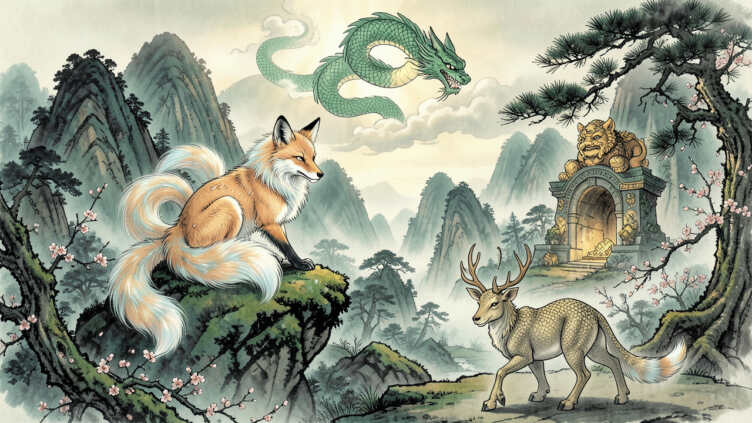
Legendary creatures from the Classic of Mountains and Seas offer a window into the rich and often bizarre tapestry of ancient Chinese mythology. This foundational text, compiled over two thousand years ago, describes a world teeming with hybrid beasts, divine guardians, and monstrous beings that defied simple categorization. Understanding these creatures is key to appreciating the cultural and spiritual landscape of early China, where the natural and supernatural worlds were deeply intertwined.
Simply put, the legendary creatures of the Classic of Mountains and Seas are mythological beings described in China’s oldest geographical and mythical encyclopedia. They range from bearers of good fortune like the nine-tailed fox to omen-bringers like the bipedal bird Dijiang, each embodying specific natural forces, moral lessons, or cultural values of the era.
Key Takeaways
- The Classic of Mountains and Seas is a foundational Chinese text cataloging mythological geography, gods, and beasts.
- Many legendary creatures serve as omens, with specific appearances signaling fortune, disaster, or the arrival of sage rulers.
- Hybrid forms, such as bodies with human, bird, and beast features, are common, reflecting ancient concepts of transformation and interconnectedness.
- These beings are not merely monsters; they often represent natural phenomena, tribal totems, or abstract concepts like justice and chaos.
- Their legacy persists in modern Chinese culture, influencing art, literature, film, and the popular “xianxia” fantasy genre.
The world depicted in the Classic of Mountains and Seas, or Shan Hai Jing, is a labyrinthine map of the known and unknown. It describes mountains, seas, and the supernatural denizens of each region. These beings were integral to the worldview of the time, explaining storms, diseases, strange animal behaviors, and political shifts.
Encountering one could mean blessings for a kingdom or a call for urgent sacrifice. This encyclopedia served as both a geographical guide and a bestiary of the sublime, shaping Chinese cosmology for millennia.
What is the Classic of Mountains and Seas?
The Classic of Mountains and Seas is an ancient Chinese compilation of texts dating from the 4th century BCE to the 1st century CE. It is not a single story but a topographical and mythical encyclopedia. It is divided into 18 “books,” with the first five focusing on the “Classic of Mountains” and the remaining thirteen on the “Classic of Seas” and “Classic of the Great Wilds.” Its authorship is anonymous and attributed to the legendary sage Yu the Great, but scholars believe it was assembled by many hands over centuries.
The text’s primary function was to catalog the geography of the Chinese empire and its borders, but it infused this geography with profound mythological and religious significance. Every mountain and sea had its presiding deity, its unique mineral or plant, and its own set of creatures. These entries follow a formulaic pattern: location, description of the landscape, what it produces (plants, minerals, animals), and what that creature signifies for humans.
| Text Division | Primary Focus | Content Examples |
|---|---|---|
| Classic of Mountains (5 Books) | The Five Regions of the world, focusing on South, West, North, East, and Center. | Describes mountain deities, strange beasts like the man-headed tiger (“Ying”), and restorative plants. |
| Classic of Seas (8 Books) | The four cardinal seas surrounding the known world. | Details sea serpents, divine turtles, island-dwelling immortals, and creatures that cause famine or drought. |
| Classic of the Great Wilds (5 Books) | Uncharted or outer regions, the realm of chaos and the ultimate wild. | Home to primordial beings like Hundun (the embodiment of chaos), gods, and catastrophic beasts. |
The text’s language is terse and laconic, packed with information that later scholars and artists expanded upon. Its influence is vast, providing the foundational lore for later works like the In Search of the Supernatural and serving as the primary source for countless myths. In the modern era, it has seen a resurgence, fueling video games, novels, and films within the burgeoning xianxia and xuanhuan genres.
How Were These Creatures Categorized?
Ancient readers and commentators did not see these creatures as random monsters. They developed sophisticated systems to understand their purpose and meaning. The most common method was omenological interpretation—the creature’s appearance was a message from the cosmos.
Its form, sound, and location were all decipherable clues about the state of the world or the reign of a king. A creature that appeared was rarely just an animal; it was a sign.
Beyond omens, creatures were also categorized by their elemental or regional associations. The Classic organizes the world into directional and elemental realms. Beasts of the East are often associated with the Azure Dragon and the element of wood, symbolizing growth and spring.
Those of the North might be linked to the Black Tortoise and water, representing winter and cold. This cosmological framework helped place even the most bizarre being within a understandable system.
- Omen Signification: This was the primary category. Does the creature signal a bountiful harvest, a coming war, or the rise of a virtuous minister? Examples include the “Nine-Tailed Fox” as a auspicious sign of a sage ruler’s appearance.
- Functional Purpose: Some creatures were described as having specific uses. Their fur might be woven into armor that prevented fire, or their bones might be crafted into amulets that warded off evil spirits.
- Moral Allegory: Many creatures embodied vices or virtues. A beast that ate its young might represent greed, while a creature that guarded a sacred mountain could symbolize justice and protection.
- Zoological Hybrid: A descriptive category focusing on physical form. Creatures were often described as combinations of familiar animals (e.g., “body of a snake, head of a dragon, wings of a bird”).
| Creature | Primary Omen/Meaning | Key Physical Feature |
|---|---|---|
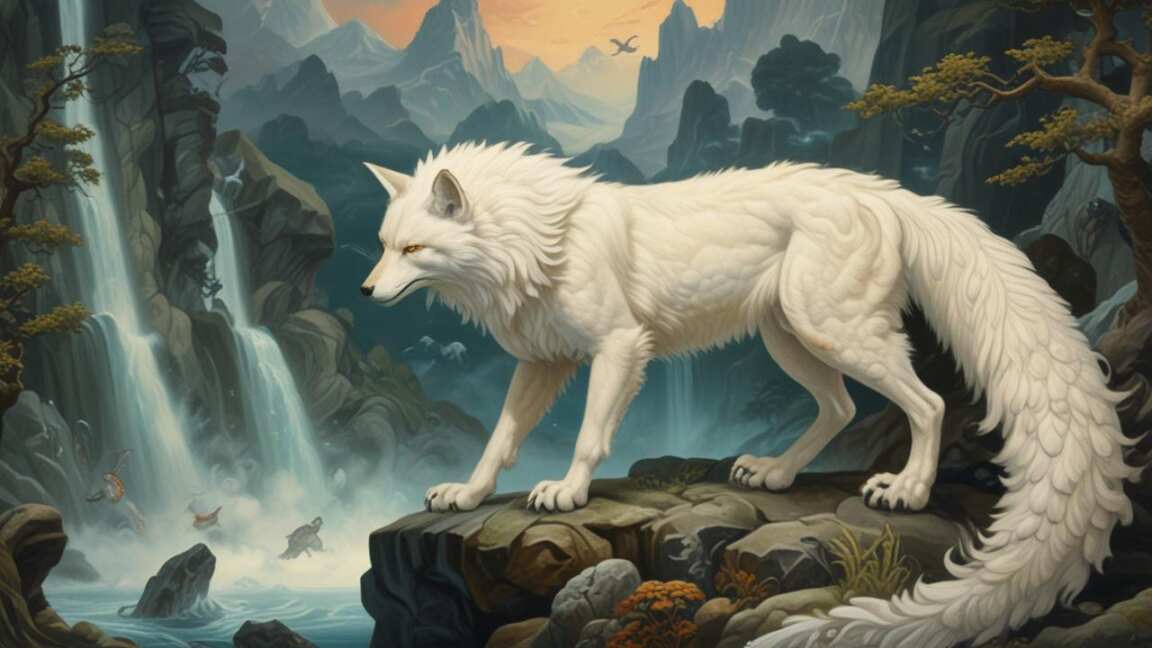
| Nine-Tailed Fox (九尾狐) | Auspicious omen, appears during the reign of a sage king. | Fox with nine tails, often white or golden. |
| Dijiang (帝江) | Embodiment of chaos, appears before great disorder. | A red, six-legged sack-like creature with no face. |
| Taotie (饕餮) | Symbol of extreme gluttony and greed. | A monstrous face, often on bronze vessels, with a gaping mouth. |
This systematic approach shows that these creatures were a form of environmental and social data. A farmer reporting a strange bird was not just sharing gossip; they were contributing to a collective understanding of cosmic signs that could influence state policy, ritual sacrifices, and personal behavior.
Why Do Many Creatures Have Hybrid Forms?
The prevalence of hybrid creatures—beings combining the features of humans, birds, beasts, and reptiles—is one of the most striking aspects of the Classic. This is not merely artistic fancy. It reflects a fundamental philosophical concept in early Chinese thought: the fluidity of categories and the interconnectedness of all life.
The strict boundaries between human, animal, and divine were permeable. Transformation was a key feature of the cosmos, seen in the metamorphosis of insects, the changing seasons, and the legendary shape-shifting of gods and heroes.
Hybrid forms also served practical illustrative purposes. By combining familiar elements, the authors could efficiently convey a creature’s nature. A body like a leopard with a bird’s head and a snake’s tail instantly communicates a creature of land, air, and venomous danger.
This visual shorthand made the beings memorable and their symbolic meanings easier to grasp in a largely oral culture.
Tip: When interpreting a hybrid creature, break down its components. A part representing a fierce predator (like tiger claws) often denotes aggression or power. A part representing a soaring bird might signify divinity, freedom, or a connection to the heavens. The combination reveals the creature’s unique role in the mythological ecosystem.
Furthermore, these hybrids often represented the unification of opposing forces. A being with the grace of a deer and the ferocity of a tiger embodies a balance between docility and aggression, a duality inherent in nature and society. Some scholars also propose that these descriptions may be garbled accounts of real, unfamiliar animals encountered by Chinese explorers or traders, their features combined and exaggerated through generations of retelling.
However, the symbolic and cosmological explanation remains the most compelling and widely accepted.
How Did These Beasts Influence Later Culture?
The influence of the Classic of Mountains and Seas creatures extends far beyond ancient scrolls. They form the bedrock of Chinese supernatural folklore and continue to permeate modern media. In classical literature, like the epic Journey to the West, many monsters are descendants or variants of beings first described in the Classic.
The Dragon Kings of the Seas, the minotaur-like ox demons, and the various fox spirits all trace their lineage back to this foundational text.
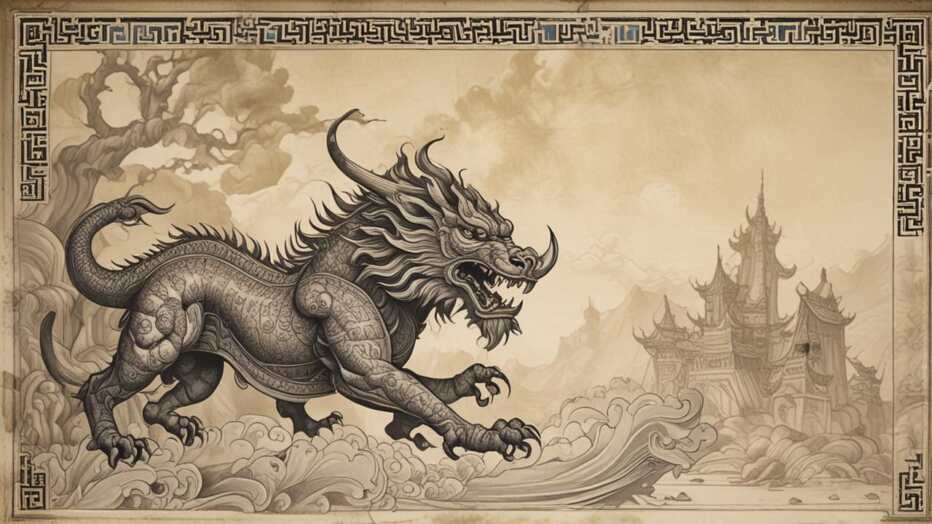
In contemporary culture, these beings are experiencing a massive renaissance. The “xianxia” and “xuanhuan” genres of Chinese web novels, television dramas, and films are saturated with them. The nine-tailed fox, the qilin, and the pixiu are ubiquitous in popular culture, often reimagined as protagonists, love interests, or powerful sect guardians.
Video games like Genshin Impact draw heavily on this bestiary to create their fantastical worlds and enemy designs.
- In Art and Architecture: Creatures like the qilin and pixiu have been popular motifs for centuries, carved into jade, embroidered on silks, and placed as guardian statues on temples and palaces to attract fortune and ward off evil.
- In Language and Idiom: Phrases referencing these beasts are common. “Painting a tiger but ending up with a dog” is an idiom about a failed imitation. The fox spirit is a common term for a seductive woman, though its original omen meaning is more complex.
- In Cosmology and Feng Shui: The directional and elemental associations of certain beasts (like the Azure Dragon, White Tiger, Black Tortoise, and Vermilion Bird) are central to the principles of feng shui and Chinese astrology.
- In Moral Education: The allegorical nature of the creatures provided a rich source for moral tales. Taotie warned against greed, while the diligent qilin symbolized benevolence and justice.
Warning: Modern adaptations often drastically alter a creature’s original meaning. For example, the nine-tailed fox was primarily a positive omen in the Classic, but later folklore transformed it into a dangerous, man-eating seductress. It’s important to distinguish between the ancient text and later interpretations.
The enduring power of these creatures lies in their adaptability. They are not static museum pieces but living symbols that can be reinterpreted for each new generation, while still carrying the echo of their ancient, mysterious origins from the mountains and seas of a mythic past.
What Role Did Omen Interpretation Play?
Omen interpretation was not a marginal superstition but a formalized and serious practice in ancient Chinese statecraft. The appearance of a creature was treated as a direct communication from Heaven (Tian) regarding the Mandate of Heaven, which legitimized the rule of the emperor. A sage king would be blessed with the appearance of auspicious beasts like the qilin or phoenix.
Conversely, the appearance of a monstrous or ominous creature could signal Heaven’s displeasure, presaging rebellion, famine, or natural disasters.
The court often employed specialists in divination and “fangshi” (masters of methods) who studied these signs. Their interpretations could influence major decisions: whether to launch a military campaign, perform special sacrifices, or even change imperial policies. The Classic of Mountains and Seas effectively served as a reference manual for this practice, a catalog of potential signs and their standard interpretations.
- Auspicious Signs (祥瑞, Xiáng Ruì): These indicated a harmonious world and a virtuous ruler. Examples include the appearance of the phoenix (fenghuang), the qilin, the nine-tailed fox, and the “lucky bird” Lu.
- Ominous Signs (凶兆, Xiōng Zhào): These warned of coming disaster. The appearance of a “famine bird” or the three-legged crow that appeared in the sky could signal drought, war, or a corrupt government.
- Monster Omens (妖怪物, Yāo Wù): Some creatures were considered outright monstrous omens, such as the multi-headed snake or the human-headed bird, whose very form was a portent of chaos.
This system created a powerful feedback loop between the supernatural and the political. It provided a framework for people to understand misfortune and gave subjects a symbolic language to express dissent. If a strange beast appeared during a period of heavy taxation, it could be interpreted as Heaven’s judgment against the ruler’s greed, fueling social unrest.
Thus, these creatures were deeply embedded in the political and social fabric of ancient China.
How Are Modern Scholars Studying These Creatures?
Scholarly approaches to the Classic of Mountains and Seas and its creatures have evolved significantly. Early 20th-century scholars often approached it with a rationalist lens, attempting to identify “rational cores” behind the myths—interpreting dragon myths as memories of dinosaurs or flood stories as garbled accounts of real inundations. This approach, while interesting, often stripped the texts of their cultural and religious significance.
Contemporary scholarship uses interdisciplinary methods. Anthropologists see the creatures as reflections of tribal totems and the processes of cultural assimilation as different groups merged. Historians study them as evidence of geographical knowledge and trade routes (e.g., descriptions of exotic animals like the rhinoceros or giraffe from Africa or Central Asia).
Literary scholars analyze their narrative functions and symbolic structures. Archaeologists use descriptions of creatures to interpret patterns on ancient bronzes and jade carvings.
| Discipline | Modern Research Focus | Example Question |
|---|---|---|
| Cognitive Mythology | How do hybrid creatures reflect universal human cognitive patterns for categorizing the unknown? | Why is the combination of human and animal features so common in global mythologies? |
| Environmental History | What do creature descriptions reveal about ancient Chinese ecosystems, extinct species, and climate? | Can descriptions of the “jiao” (a dragon-like creature) be linked to ancient river dolphin populations? |
| Media Studies | How are ancient creatures adapted and transformed in contemporary films, anime, and video games? | What cultural values are emphasized or altered when the nine-tailed fox becomes a video game hero? |
Furthermore, digital humanities projects are now creating databases and visualizations of the Classic’s geography and bestiary, allowing for new spatial and comparative analyses. This modern scholarship treats the creatures not as primitive errors or mere fables, but as complex cultural artifacts that encode sophisticated ways of thinking about the world, nature, and the human place within it.
What is the Legacy of Specific Creatures Today?
The legacy of specific creatures varies dramatically. Some, like the Pixiu and Qilin, have remained largely positive symbols and are actively used today in commercial and personal contexts. The Pixiu is a ubiquitous “attractor of wealth” charm in Chinese businesses and homes.
The Qilin remains a symbol of peace, benevolence, and auspiciousness, often invoked in celebrations and artistic depictions.
Others have undergone significant transformation. The Nine-Tailed Fox’s journey is particularly notable. While celebrated as a positive omen in the Classic, subsequent folklore, especially from the Tang and Ming dynasties, increasingly portrayed fox spirits as dangerous, shape-shifting seductresses who preyed on men.
This negative view is prevalent in much of later literature and film, though recent media has begun to play with and subvert this trope, sometimes returning the fox to its more powerful, ambiguous roots.
The Taotie, the gluttonous monster whose stylized face adorns ancient ritual bronze vessels, lives on as a cultural motif. Its image is instantly recognizable as an emblem of archaic power and mystery. It is often used in modern design for everything from high-end jewelry to trendy restaurant logos, divorced from its original meaning of excessive consumption but retaining an aura of ancient ferocity.
Important: The changing interpretations of creatures like the Nine-Tailed Fox highlight how myths are not static. They are dynamic stories that evolve with the values, fears, and desires of the cultures that tell them, providing a living history of cultural change.
Even more obscure beings from the Classic are finding new life. The faceless Hundun (Chaos) inspires philosophical discussion and artistic representation. Creators in the modern “guofeng” (national style) movement actively mine the text for forgotten beasts to populate their imaginative works, ensuring that this ancient bestiary continues to grow and adapt.
Why Does This Text Still Matter?
The Classic of Mountains and Seas matters because it is a foundational document for understanding the Chinese imagination. It is the source code for a mythological system that has been running for over two thousand years. To engage with its creatures is to engage with the core metaphors, fears, and aspirations of an ancient civilization.
It challenges the modern reader to see a world where nature is alive with intention, where every anomaly carries meaning, and where the boundaries between species and states of being are fluid.
In an age of scientific rationalism, the Classic offers a radically different way of perceiving the world—one where enchantment and meaning are embedded in every mountain and stream. Its creatures remind us that the human urge to explain the unexplainable, to personify natural forces, and to find our place within a larger cosmic story is a universal and timeless endeavor. The beasts of the mountains and seas are not just relics of a primitive past; they are enduring symbols of the creative and interpretive power of the human mind.
Frequently Asked Questions
What is the most famous creature from the Classic of Mountains and Seas?
While many are famous in China, internationally, the Nine-Tailed Fox (Huli Jing) and the Dragon (Lóng) are perhaps the most recognizable. Within China, the Qilin, the Pixiu, and the Phoenix (Fenghuang) are also immensely popular and culturally significant creatures originating from this text.
Are the creatures in the Classic based on real animals?
Some scholars believe descriptions may be distorted accounts of real, unfamiliar animals (like rhinoceroses, giraffes, or bears) encountered by early Chinese explorers. However, most creatures are widely understood as mythological composites representing symbolic concepts, natural forces, or cosmological principles rather than direct depictions of fauna.
How can I read the Classic of Mountains and Seas?
Several complete English translations are available, with Anne Birrell’s translation being a standard academic reference. For a more accessible introduction, look for annotated editions or introductory books that provide cultural context alongside the translated text. The original text is in Classical Chinese and requires scholarly translation.
Did the ancient Chinese believe these creatures were real?
Evidence suggests that many educated and common people alike believed in the potential existence of these beings, or at least in the reality of the omens they represented. In a pre-scientific worldview, the distinction between “natural” and “supernatural” was not as sharply drawn as it is today, and these creatures fit within a coherent, albeit mythical, understanding of the universe.
Where can I see artistic depictions of these creatures?
You can find depictions in Chinese museums on ancient bronzes, jade, and silks. In modern media, they appear in Chinese films, television series (like “The Classic of Mountains and Seas”), video games, and anime. Search for “Shan Hai Jing creatures” or specific names like “Taotie” or “Qilin” in art databases or online image platforms.
Final Thoughts
The legendary creatures of the Classic of Mountains and Seas are far more than a catalog of monsters. They are a vivid lexicon of ancient Chinese cosmology, reflecting a worldview where the natural and supernatural were inseparable. From omens that guided imperial policy to allegories that taught moral lessons, these beings played a dynamic role in society.
Their hybrid forms and enduring legacies in modern media prove their timeless appeal and their deep roots in the Chinese cultural psyche.