The Story of Qu Yuan and the Dragon Boat Festival Explained
The story of Qu Yuan is a powerful tale of loyalty, patriotism, and tragedy that has shaped one of Asia’s most vibrant celebrations. This historical legend from ancient China explains the origins of the Dragon Boat Festival, a colorful holiday filled with races, music, and traditional foods. Understanding this story adds deeper meaning to the festival’s customs and honors a man whose dedication to his country endures through centuries.
Simply put, Qu Yuan was a beloved poet and minister in the state of Chu who, after being exiled due to court slander, drowned himself in a river in despair. The Dragon Boat Festival commemorates his death with races to save his body and offerings of rice to protect it, turning a personal tragedy into a national celebration of integrity and cultural identity.
Key Takeaways
- The story of Qu Yuan is the foundational legend behind the Dragon Boat Festival, celebrated on the 5th day of the 5th lunar month.
- Qu Yuan was a high-ranking official and celebrated poet of the ancient Chu state, known for his wisdom and loyalty.
- His exile and suicide in the Miluo River sparked acts of devotion from villagers that evolved into modern festival traditions like dragon boat racing and eating zongzi.
- The festival promotes values of patriotism, loyalty, and integrity, and was added to UNESCO’s Intangible Cultural Heritage list.
- Beyond the origin story, the festival is a time to ward off evil, celebrate summer, and honor family and cultural roots.
What is the Story of Qu Yuan Behind the Dragon Boat Festival?
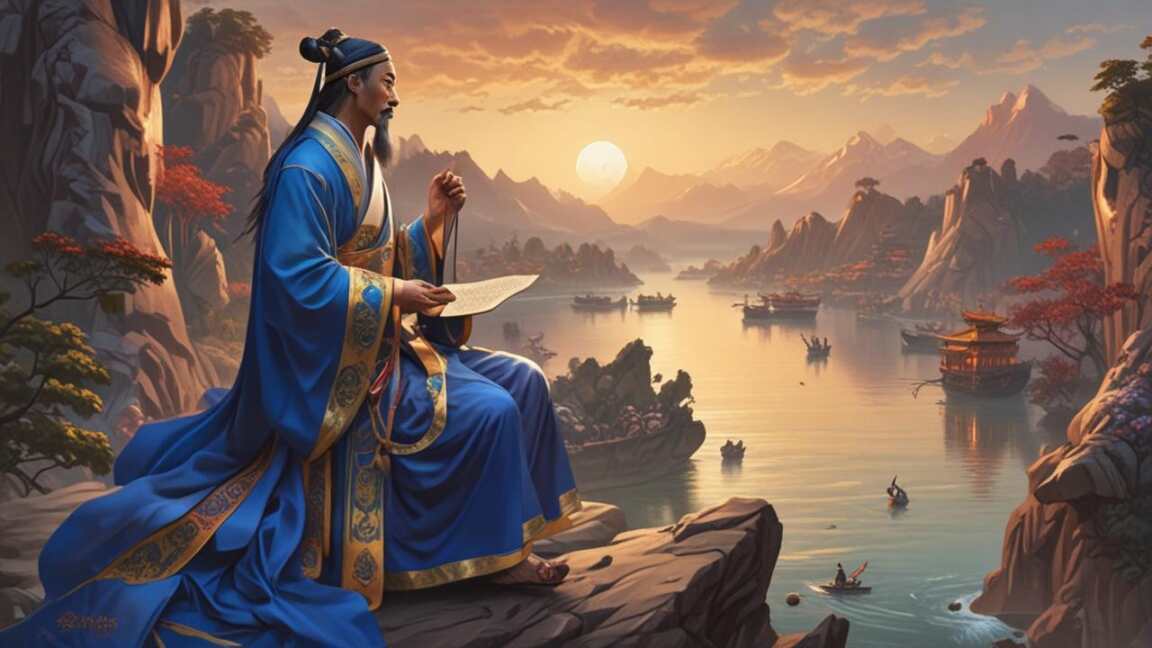
The core narrative begins in the Warring States period, around 340-278 BC, in the state of Chu, one of the dominant kingdoms of the era. Qu Yuan was a member of the royal family and a highly respected advisor. He championed political reforms and alliances to strengthen Chu against the powerful state of Qin.
However, his honest counsel made him enemies. Rival courtiers spread lies, accusing him of arrogance and treason. The king, believing the slander, stripped Qu Yuan of his titles and sent him into exile.
During his banishment, he wrote some of China’s greatest poetry, expressing his deep love for his country and his despair at its decline.
- His Role: Qu Yuan served as a minister and poet in the court of King Huai of Chu.
- His Cause: He advocated for a strong alliance system and internal reforms to resist Qin’s expansion.
- His Downfall: Slander from corrupt officials led to his dismissal and exile from the capital.
- His Poetry: Works like “Li Sao” (The Lament) are masterpieces of Chinese literature, filled with longing and moral anguish.
- His Despair: When the Qin army finally captured the Chu capital, Ying, in 278 BC, Qu Yuan was devastated.
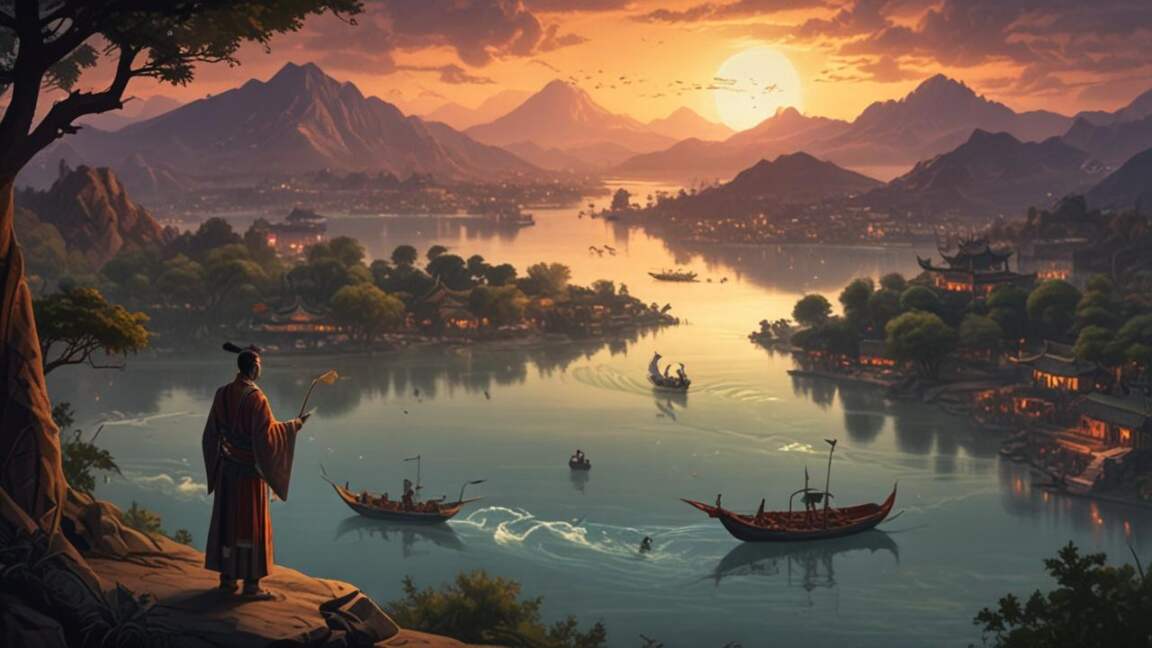
Heartbroken by the fall of his beloved capital and believing all hope for his nation was lost, Qu Yuan waded into the Miluo River on the fifth day of the fifth lunar month. He clutched a heavy stone to ensure he would sink. His act was one of ultimate sacrifice—a refusal to see his homeland subjugated and a final protest against corruption.
Warning: This story, while heroic, centers on a tragic suicide. It is commemorated as an act of profound love for one’s country, not as an act to be emulated.
How Did Qu Yuan’s Death Lead to Dragon Boat Races?
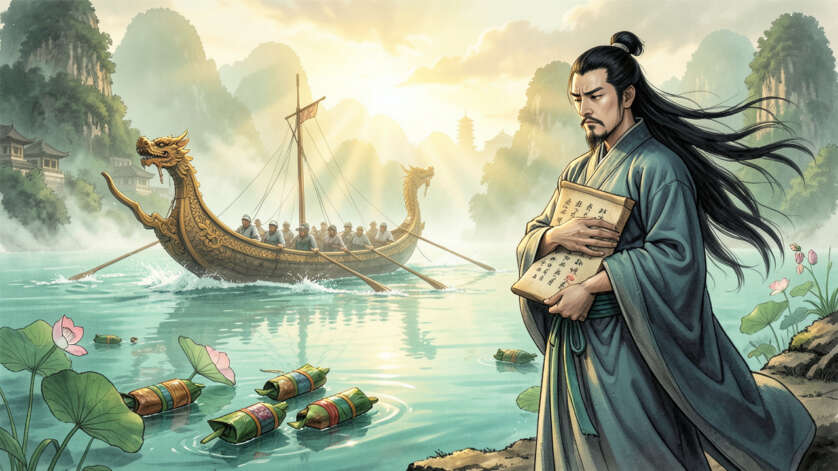
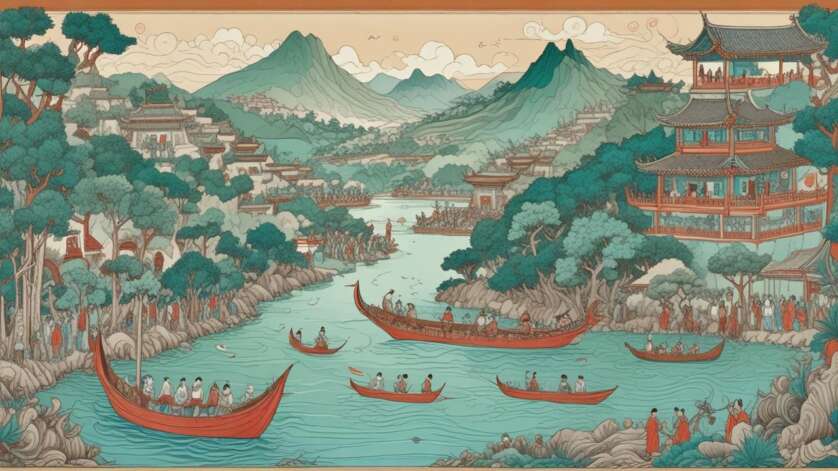
According to legend, local villagers who admired Qu Yuan rushed to the Miluo River in their fishing boats when they heard the news of his drowning. Their desperate race across the water was a search-and-rescue mission. They paddled furiously, beating the water with their paddles and dropping drums to scare away evil spirits and fish.
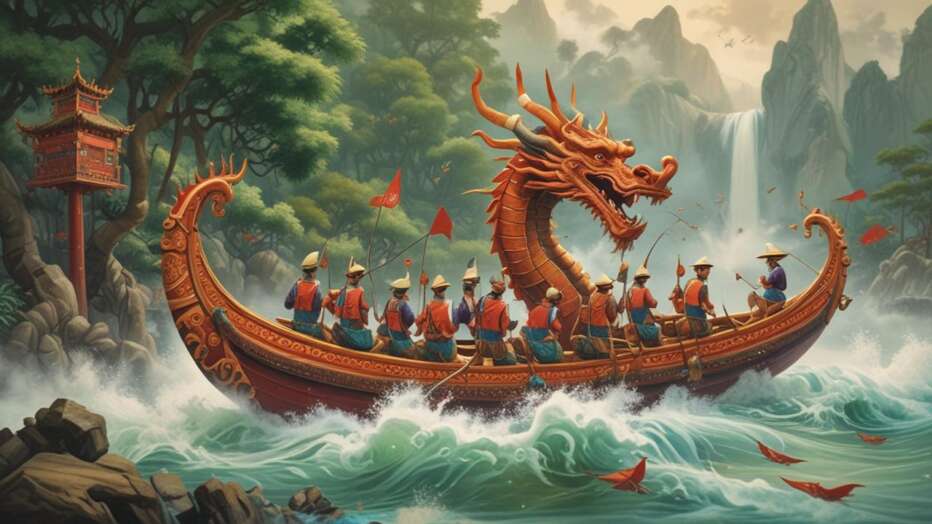
This frantic, organized effort to find and save the poet is said to be the direct origin of dragon boat racing. The teams represent the villagers’ boats, the drummer symbolizes the heartbeat of the community and the call to action, and the dragon head at the prow wards off water dragons and evil forces.
Archaeological evidence suggests that dragon boat racing predates the Qu Yuan story, with origins in ancient water-based rituals and ancestor worship. However, the legend of Qu Yuan provided a powerful, unifying narrative that fused these existing practices with a moral and historical lesson, ensuring their survival and spread across China and later, the world.
| Legendary Origin vs. Historical Roots |
|---|
| Legend: The race commemorates the villagers’ attempt to save Qu Yuan. |
| Historical Practice: Dragon boat ceremonies likely began as rituals to venerate water deities and ensure a good harvest. |
| Synthesis: The Qu Yuan story became the dominant explanation, adding a layer of human emotion and moral purpose to ancient traditions. |
| Cultural Impact: The narrative transformed a ritual activity into a national festival celebrating loyalty and remembrance. |
This blend of myth and history is common in cultural festivals, where a compelling story gives deeper meaning to long-standing customs.
Why Do People Eat Zongzi for the Dragon Boat Festival?
The tradition of eating zongzi—glutinous rice wrapped in bamboo or reed leaves—is also tied directly to Qu Yuan’s story. As the tale goes, after his body was in the river for days, the villagers were worried. They wanted to protect his remains from being eaten by fish and river spirits.
To do this, they threw sticky rice balls, wrapped in leaves, into the river. The idea was that the fish would eat the rice instead of Qu Yuan’s body. They also poured real wine into the water to intoxicate the river dragons, further protecting him.
Over time, these offerings evolved into the delicious food we enjoy today.
- The Shape: Traditional zongzi are pyramid-shaped, resembling the rice balls of legend.
- The Wrapping: Bamboo or reed leaves impart a unique, grassy aroma to the sticky rice.
- The Filling: Fillings vary widely by region. Northern Chinese styles often use sweet red bean paste, while southern styles are savory, filled with pork belly, salted duck egg, mushrooms, and chestnuts.
- The Symbolism: Eating zongzi connects families to the act of honoring and remembering Qu Yuan.
Tip: Making zongzi is a communal family activity. The wrapping technique is a skilled craft passed down through generations. If you try it, be prepared for a fun, sticky, and rewarding experience!
Modern zongzi are a culinary delight enjoyed not just during the festival but year-round. The act of unwrapping the fragrant leaves to reveal the savory or sweet rice inside is part of the experience. This tradition beautifully illustrates how a practical, protective gesture in the legend transformed into a beloved cultural staple.
How Did the Festival’s Traditions Evolve Over Time?
The Dragon Boat Festival, or Duanwu Jie, is more than just Qu Yuan’s memorial. Over 2000 years, it has absorbed various folk practices for protection, health, and celebration, especially as it falls during the peak of summer.
The fifth lunar month was traditionally considered a “poisonous” or unlucky month, when insects and diseases spread. Many festival customs are apotropaic, meaning they are designed to ward off evil and disease. This adds another layer to the holiday beyond the Qu Yuan narrative.
- Hanging Calamus and Mugwort: These aromatic herbs are hung on doors to repel insects and evil spirits.
- Wearing Perfume Pouches: Children often wear small cloth bags filled with fragrant herbs or cinnabar for protection.
- Drinking Realgar Wine: A toxic wine (now often replaced with safer alternatives) believed to drive away snakes and evil.
- Tying Five-Color Silk Threads: Braided threads in blue, red, white, black, and yellow are tied around children’s wrists to protect them from illness and misfortune.
- Bathing in Herbal Water: In some regions, people bathe in water infused with special herbs for purification.
These practices show the festival’s dual purpose: honoring a historical hero while also navigating ancient health and spiritual concerns related to the changing seasons. The dragon boat races themselves also became a powerful community event, fostering teamwork and village pride.
What Does the Festival Symbolize in Chinese Culture?
Beyond the historical and protective aspects, the story of Qu Yuan and the festival symbolize core Confucian values that remain important in Chinese culture. It is a living lesson in patriotism, integrity, and the consequences of political corruption.
Qu Yuan is the archetype of the loyal minister who loves his country more than his own life. His refusal to compromise his principles, even in exile, serves as a moral benchmark. The festival annually reinforces the ideal of serving one’s community with honesty and courage.
| Cultural Symbolism of the Dragon Boat Festival |
|---|
| Loyalty & Patriotism: Qu Yuan’s dedication to the Chu state is the primary symbol. |
| Integrity: He chose death over compromising his principles or serving a corrupt system. |
| Community Solidarity: The villagers’ race to save him represents collective action and care. |
| Resilience & Overcoming Evil: The apotropaic traditions symbolize the community’s fight against adversity. |
| Cultural Continuity: The festival preserves ancient legends, values, and culinary traditions. |
According to historical texts, Qu Yuan is also celebrated as the “Father of Chinese Literature.” His poetic voice introduced new rhythms and deep personal emotion into Chinese verse. Thus, the festival also commemorates literary achievement and the power of words to express profound human experience.
Why is the Dragon Boat Race the Festival’s Main Event?
Today, the spectacular dragon boat races are the festival’s most visible and energetic feature. The connection to Qu Yuan provides the emotional heart, but the race itself is a thrilling spectacle that embodies the festival’s spirit of energy and communal effort.
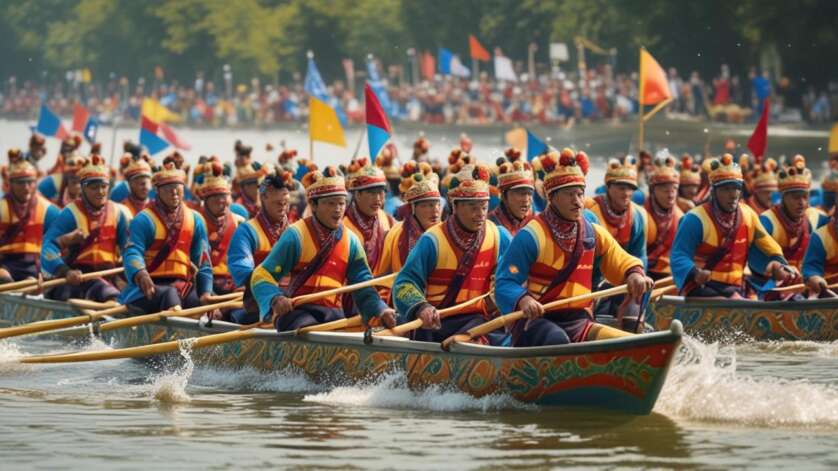
A standard dragon boat team consists of about 20 paddlers, a drummer at the front, and a steerer at the back. The synchronized paddling, driven by the thunderous beat of the drum, requires immense coordination and strength. It is both a sport and a performance art.
- The Drummer: Sets the pace and rhythm. The drumbeat is said to represent the heartbeat of the dragon, inspiring power and unity in the paddlers.
- The Paddlers: Work in perfect unison. Their collective effort mirrors the teamwork of the villagers in the legend.
- The Steerer: Guides the long, unwieldy boat, requiring expert skill and knowledge of the water.
- The Dragon Design: The boats are adorned with colorful dragon heads and tails, turning them into mythical creatures come to life.
Important: In recent decades, dragon boat racing has become an international sport, with teams and competitions all over the world, spreading Chinese cultural traditions globally.
The race is a visceral, audiovisual experience. The splashing water, the rhythmic chanting, the cheering crowds, and the sheer speed of the boats create an unforgettable atmosphere. It successfully transforms a tragic historical moment into a celebration of life, community, and competition.
How is the Festival Celebrated Around the World?
The Dragon Boat Festival has traveled far from its origins in the Miluo River. Chinese diaspora communities around the globe celebrate it, and its elements have been adopted internationally. The festival is a powerful tool for cultural exchange.
In cities with significant Chinese populations, such as Hong Kong, Singapore, San Francisco, and Vancouver, massive dragon boat races draw thousands of spectators and participants. These events often blend traditional ceremonies with modern sporting competition.
The core elements of the celebration remain consistent worldwide:
- Dragon Boat Races: The centerpiece event in international celebrations.
- Eating Zongzi:
- Cultural Displays: Traditional music, crafts, and storytelling about Qu Yuan are common.
- Health & Wellness Focus: The association with warding off summer illness resonates in modern wellness trends.
In 2009, the Dragon Boat Festival was inscribed on UNESCO’s Representative List of the Intangible Cultural Heritage of Humanity. This global recognition underscores its cultural significance and ensures its preservation. It is now a festival that belongs both to China and to the wider world.
Frequently Asked Questions
Who was Qu Yuan exactly?
Qu Yuan was a poet and minister who served the state of Chu during China’s Warring States period (circa 340-278 BC). He is revered for his patriotism, literary genius, and integrity. His collection of poems, “Chu Ci” (The Songs of Chu), is foundational to Chinese literature.
Is the Dragon Boat Festival only about Qu Yuan?
While Qu Yuan’s story is the most famous origin legend, the festival’s traditions also predate him and are tied to ancient seasonal rituals. It serves a dual purpose: honoring the poet’s memory and performing apotropaic rites to ensure health and safety during the summer months.
What is the significance of the five colors in the festival’s threads?
The five-color silk threads (blue, red, white, black, yellow) represent the five elements (wood, fire, metal, water, earth) and five directions (east, south, west, north, center) in Chinese philosophy. Wearing them is believed to create a protective talisman balancing these cosmic forces.
Are dragon boat races always competitive?
While modern races are often highly competitive sporting events, their core purpose in the festival is commemorative and communal. Many smaller, local races prioritize participation and celebration over fierce competition, keeping the focus on community spirit.
How do other Asian countries celebrate similar festivals?
Similar Duanwu-related festivals exist in Korea (Dano), Japan (Tango no Sekku, now Children’s Day), and Vietnam (Tết Đoan Ngọ). Each has local customs but shares the theme of warding off evil and celebrating the fifth day of the fifth month, often with water-based activities and special foods.
Final Thoughts
The story of Qu Yuan transforms a simple date on the calendar into a living narrative of courage, sacrifice, and communal love. His tale provides the moral and emotional core for the Dragon Boat Festival, linking ancient history to modern celebration. It reminds us that holidays can carry profound meaning.
From the thunderous drums on the water to the sticky, fragrant zongzi shared among family, every tradition traces back to acts of devotion for a beloved figure. This enduring legend ensures that the values of loyalty and integrity are paddled, wrapped, and celebrated generation after generation.