The Mid-Autumn Festival Legend: Chang’e’s Story
The Mid-Autumn Festival legend is a timeless story that forms the heart of one of Asia’s most important annual celebrations. This ancient tale of love, sacrifice, and a magical elixir explains why families gather under the full moon each autumn. Understanding this origin story deepens the appreciation for the festival’s traditions, from mooncakes to lanterns, connecting modern celebrations to a profound cultural heritage.
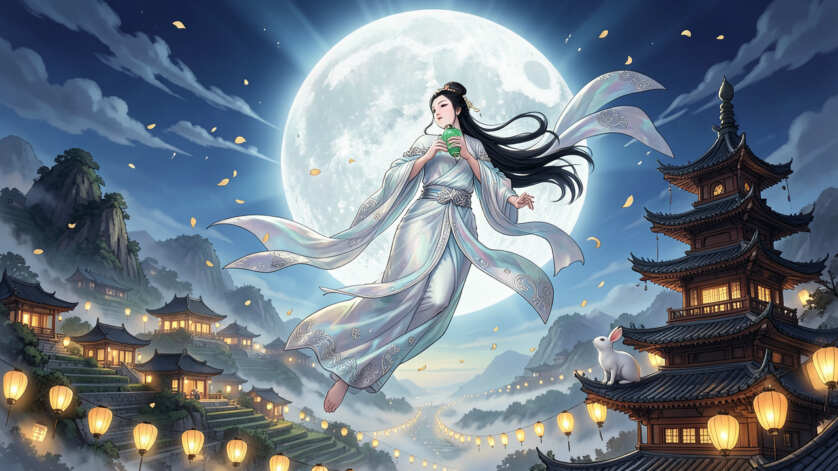
Simply put, the central Mid-Autumn Festival legend tells of a beautiful woman named Chang’e who consumed an elixir of immortality to prevent it from falling into the wrong hands, causing her to ascend to the moon. Her husband, Hou Yi, forever loved her, leaving out her favorite foods on the full moon night as an offering, a tradition that evolved into the festival itself.
Key Takeaways
- The core Mid-Autumn Festival legend centers on the archer Hou Yi and his wife, Chang’e, involving an elixir of immortality.
- Chang’e’s sacrifice—drinking the elixir to save it from a wicked disciple—is the pivotal moment that leads to her eternal residence on the moon.
- The story explains key festival traditions: eating round mooncakes symbolizes family reunion and was supposedly used to hide messages during a rebellion.
- The Jade Rabbit, who pounds medicine on the moon, is a beloved supporting character in the Mid-Autumn Festival legend.
- This Mid-Autumn Festival legend is not just a tale but a cultural touchstone influencing art, literature, and communal values across East Asia.
Who Are the Main Characters in the Mid-Autumn Festival Legend?
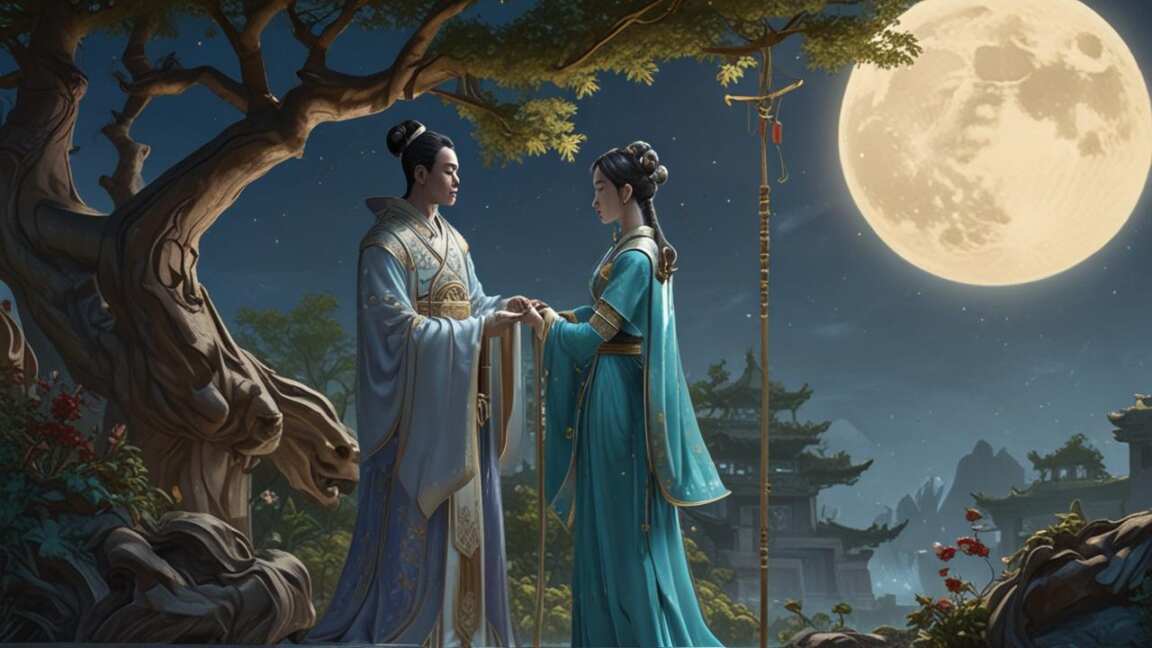
At its core, the Mid-Autumn Festival legend is a love story with mythological elements. The two primary figures are Hou Yi, a mortal archer of legendary skill, and his devoted wife, Chang’e. Their story takes place in a mythical version of ancient China where gods and mortals could interact.
Understanding their roles is key to grasping the legend’s emotional weight.
Hou Yi is celebrated as a hero who saved humanity. According to the legend, ten suns once scorched the earth, causing famine and despair. Hou Yi, with his unmatched archery, shot down nine of the suns, leaving one to provide light and warmth.
For this heroic deed, he was rewarded with the elixir of immortality from the Queen Mother of the West.
The Motivations and Fates of Chang’e and Hou Yi
- Hou Yi: Initially a revered hero, his desire for eternal life with Chang’e became a source of tragedy. His fate varies in different versions—some say he became a mortal again, while others claim he was banished to earth as punishment for his greed.
- Chang’e: Often portrayed as a figure of beauty, grace, and ultimate sacrifice. Her decision to drink the elixir was not born of selfishness but of a desperate need to protect its power from an evil disciple named Pang Meng.
- Pang Meng: The antagonist. A wicked apprentice of Hou Yi, he broke into their home to steal the elixir, forcing Chang’e’s fateful choice.
- The Jade Rabbit: A compassionate companion on the moon. It is said the rabbit pound the ingredients for a new elixir of life to help Chang’e return to earth one day.
- The Queen Mother of the West: A powerful deity who originally possessed the elixir and granted it to Hou Yi as a reward for his heroism.
Their relationship dynamic—a hero and his devoted wife separated by destiny—is what gives the Mid-Autumn Festival legend its enduring emotional appeal. It speaks of love, loss, and the eternal hope of reunion.
What is the Story of the Elixir of Immortality?
The elixir of immortality is the central magical element in the Mid-Autumn Festival legend. It is not a common potion but a rare substance crafted by the gods. In the story, the Queen Mother of the West gifted this singular elixir to Hou Yi after he completed his great task of shooting down the suns.
The gift was meant as a blessing for him and his wife to live together forever.
However, the elixir’s power created immediate tension. Hou Yi was overjoyed and brought it home to share with Chang’e. They planned to drink it together on an auspicious day.
This quiet moment of hope, however, was disrupted by betrayal. The very existence of the elixir had attracted the attention of Pang Meng, a morally corrupt disciple who coveted eternal life for himself.
Turning Point: The Night of the Theft
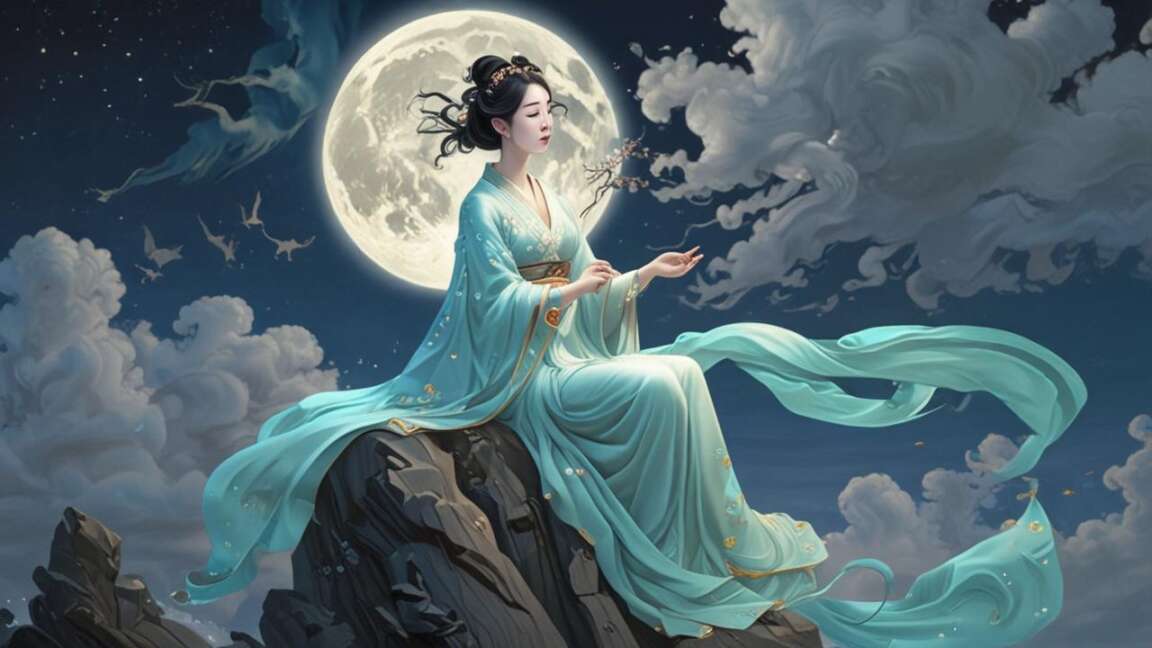
One evening, while Hou Yi was away hunting, Pang Meng broke into their home. He held Chang’e at swordpoint and demanded she hand over the elixir. Faced with an impossible choice—surrender the dangerous potion to a villain or consume it herself to keep it safe—Chang’e made a swift and sacrificial decision.
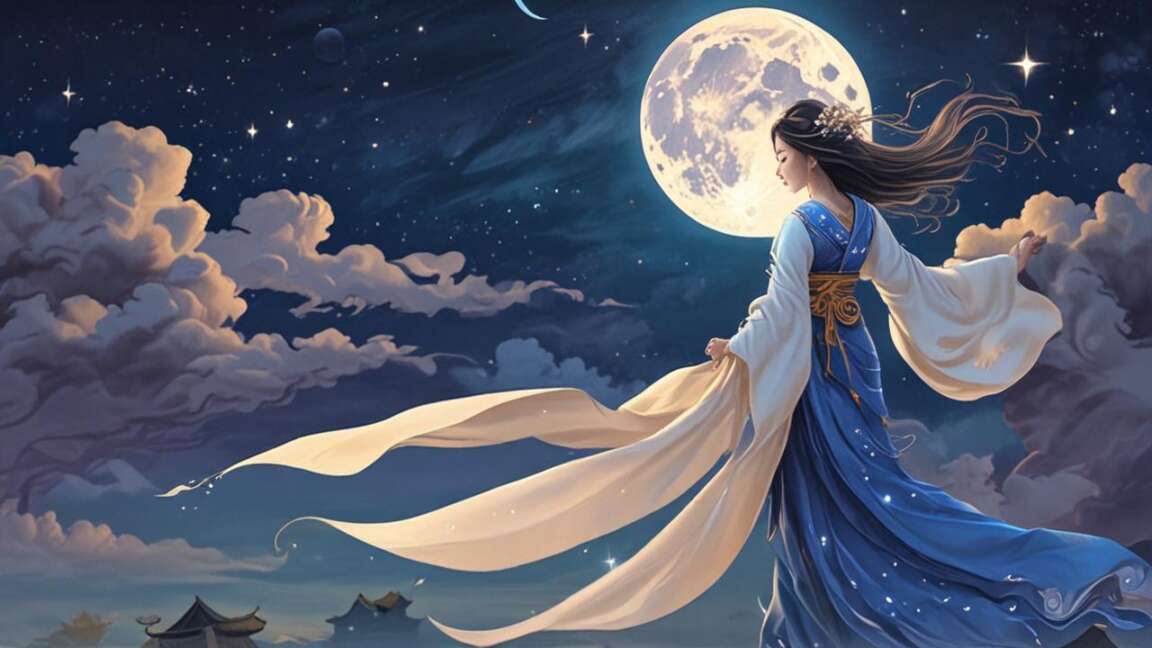
She drank the entire elixir. The immediate effect was a sensation of weightlessness, and she began to float upward, drifting out of the window and toward the sky.
Warning: Some darker versions of the legend state that Chang’e did not drink the elixir to save it, but because Hou Yi had become ambitious and power-hungry, and she feared what immortality would do to him. This version paints a more tragic picture of human fallibility.
Upon seeing this, the panicked Hou Yi returned home. Grief-stricken, he learned that the elixir had the unpredictable effect of sending the drinker to the moon, the closest celestial body. He could only watch as his wife transformed into an immortal being, forever residing in the Cold Palace of the Moon.
| Key Aspect of the Elixir | Details from the Legend |
|---|---|
| Origin | Created by deities; gifted by the Queen Mother of the West. |
| Purpose | To grant eternal life to Hou Yi and Chang’a as a reward for heroism. |
| Consequence | Consuming it alone causes the drinker to ascend to the moon, isolating them forever. |
| Symbolism | Represents both the desire for eternal love and the unintended, tragic consequences of that desire. |
The elixir transforms the story from a simple romance into a myth about sacrifice. Chang’e chose to lose her mortal life and her husband to save humanity from the hands of an unworthy man.
How Did Hou Yi Become Associated with the Moon?
In the aftermath of the tragedy, Hou Yi’s connection to the moon became eternal. Consumed by grief, he could not follow Chang’e to the moon. According to the most common version of the Mid-Autumn Festival legend, the Queen Mother of the West, moved by his sorrow, granted him a special gift: the ability to transform into a golden eagle (or sometimes a toad) so he could fly to the moon for brief, yearly visits.
These visits are said to occur on the 15th day of the 8th lunar month—the night of the Mid-Autumn Festival.
Another popular element is the Jade Rabbit. Unable to help Chang’e return, the gods sent a companion to the moon. This white rabbit pounds the herbs for a new elixir of immortality in a mortar, working tirelessly.
In some folklore, the rabbit is Hou Yi’s reincarnated spirit, forever tending to his wife’s needs. This adds a layer of poignant devotion to the legend.
The Moon as a Symbol of Reunion
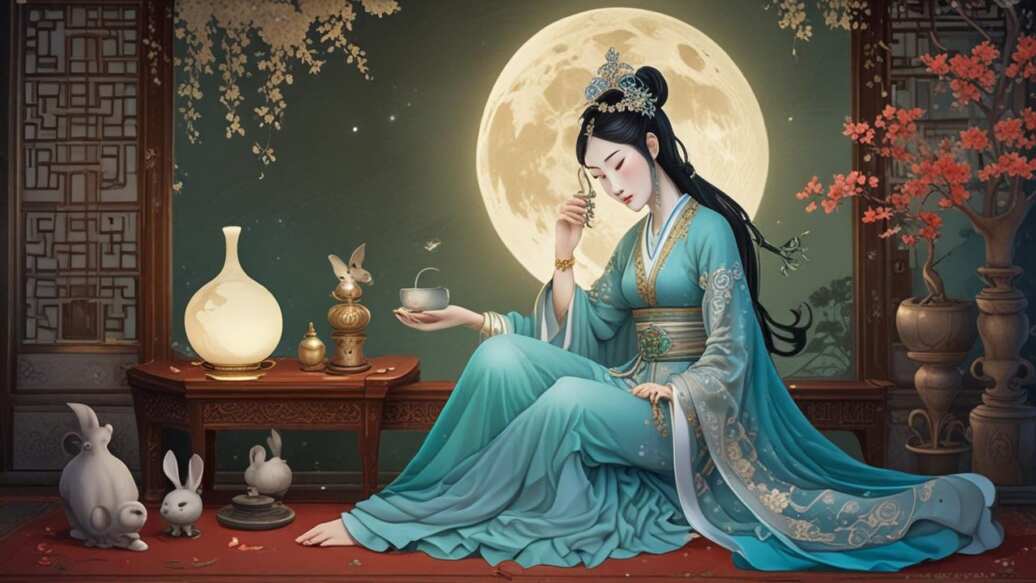
Hou Yi’s story transformed the full moon from a mere celestial object into a powerful symbol. For him, the moon was both a prison and a window—the place where his wife was forever held, but also the one place he could look at and feel connected to her. This turned the act of gazing at the moon into an act of remembrance and longing.
- Yearly Reunion: The legend establishes the full moon of the 8th lunar month as the one night the separated lovers can gaze upon each other from afar.
- Offerings: Hou Yi began the tradition of leaving out Chang’e’s favorite foods—round fruits like pomelos and mooncakes—under the moonlight as an offering.
- Prayer and Wishes: People started praying to the moon for marital fidelity, family unity, and for their own wishes to be granted, mirroring Hou Yi’s unfulfilled hope.
This narrative directly explains the core theme of the Mid-Autumn Festival: reunion. The roundness of the moon represents completeness and family wholeness. Families gather to share a meal, look at the moon, and celebrate being together, all rooted in Hou Yi’s poignant separation.
Why Do We Eat Mooncakes During the Festival?
The tradition of eating mooncakes is directly tied to another branch of the Mid-Autumn Festival legend, specifically a story of rebellion and clever communication. While the Chang’e legend explains the festival’s emotional origin, the mooncake tale provides a historical, culinary tradition. Mooncakes are round pastries filled with lotus seed paste or red bean paste and often contain a salted egg yolk center, symbolizing the full moon.
The most famous story linking mooncakes to the festival dates back to the 14th century. During the Mongol-led Yuan Dynasty, the Han Chinese people were oppressed. A brilliant strategist named Liu Bowen conceived a plan to coordinate a rebellion.
He needed a way to pass messages among the populace without alerting the Mongol guards.
The Hidden Message in the Pastry
Liu Bowen realized that during the Mid-Autumn Festival, the guards would be less suspicious of people exchanging festive pastries. He had bakers create thousands of mooncakes with a small piece of paper hidden inside each one. The note contained a simple instruction: “Revolt on the night of the Mid-Autumn Festival.”
Important: This story, while popular and taught in schools, is considered by many historians to be a folk legend rather than a verified historical fact. Its primary purpose in the Mid-Autumn Festival legend corpus is to give mooncakes a symbolic meaning of unity, secrecy, and collective strength.
On the designated night, rebels disguised as performers and worshippers gathered. When the signal was given, they launched a coordinated uprising that eventually led to the founding of the Ming Dynasty. Since that time, mooncakes have been more than a treat; they represent solidarity and a successful fight for freedom.
When families share mooncakes today, they symbolically break them apart to share prosperity and good fortune.
How Do Different Asian Cultures Interpret the Legend?
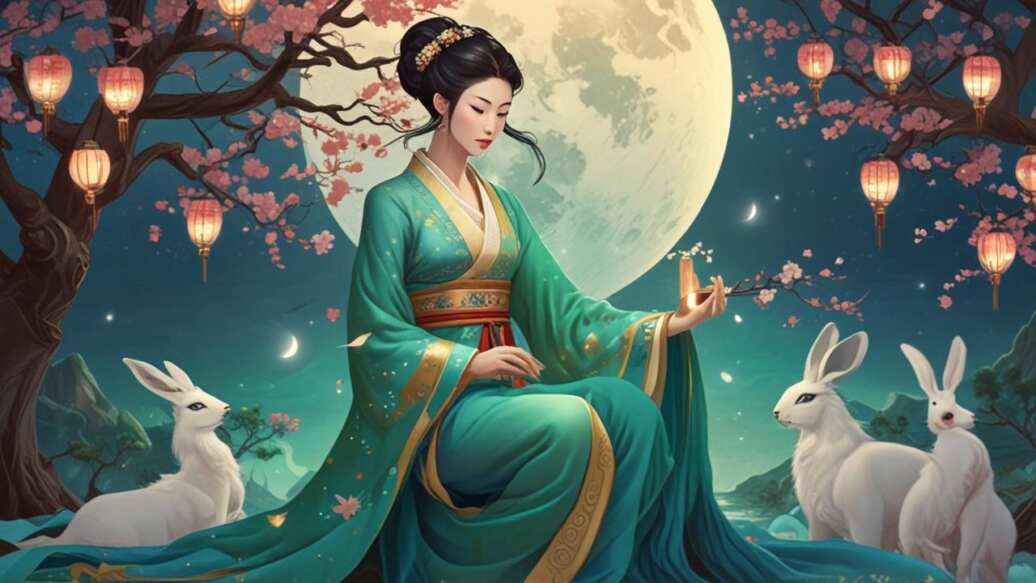
While the core story of Chang’e and Hou Yi remains consistent, the Mid-Autumn Festival legend has been adapted and woven into the cultural fabric of many nations. Each culture adds its own nuances, reflecting local values and historical context. This beautiful variation showcases the legend’s flexibility and universal appeal.
In China, the story is most complete, with detailed versions of the characters’ backgrounds. It is a time for family reunions, and the legend is often retold in animated films, operas, and children’s books. The focus is heavily on family unity and romantic devotion.
In Vietnam, the festival is called Tet Trung Thu, or the Children’s Festival. Here, the Mid-Autumn Festival legend is slightly modified. The Jade Rabbit is not a companion but a more prominent figure, sometimes called the “Casper” rabbit, who brings gifts.
The celebration is more child-centric, with lantern processions and lion dances.
| Country/Region | Festival Name | Unique Interpretations & Focus |
|---|---|---|
| China | Zhongqiu Jie | Emphasis on family reunion, romantic love, and the Hou Yi-Chang’e story. |
| Japan | Tsukimi | Focus on moon-viewing parties, gratitude for harvest, and offerings of tsukimi dango (round rice dumplings). |
| Vietnam | Tet Trung Thu | A “Children’s Festival” with lanterns, lion dances, and a focus on children’s learning and fun. |
| Korea | Chuseok | Primarily a harvest thanksgiving festival; emphasis on ancestral rites and returning to hometowns. |
| Singapore & Malaysia | Mid-Autumn Festival | Blends Chinese traditions with multicultural influences; huge bazaars with elaborate lantern displays. |
In Japan, the tradition of Tsukimi (moon viewing) is more about appreciating nature’s beauty than retelling the Chang’e myth. People gather to look at the full moon, offer seasonal foods like sweet potatoes and chestnuts, and pray for a good harvest. The legend is known but is not the central narrative.
What Are Common Modern Adaptations of the Legend?
The Mid-Autumn Festival legend is not static. It continues to be reinterpreted in contemporary culture, keeping the ancient story relevant for new generations. These adaptations appear in film, television, literature, and digital media, often blending traditional themes with modern sensibilities.
Animated films have been particularly effective in popularizing the story. Movies like Over the Moon (2020) use the core narrative of a girl traveling to the moon to find her mother, directly inspired by Chang’e. These stories add layers of adventure, emotional complexity, and stunning visuals that captivate global audiences while teaching the cultural origins of the festival.
On social media and in modern commerce, elements of the legend are used symbolically. Mooncake packaging frequently features illustrations of Chang’e, the Jade Rabbit, or the crescent moon. Brands create limited-edition gifts tying into themes of reunion and nostalgia.
The story’s themes of love and longing are also common motifs in poetry, pop songs, and greeting cards.
Themes That Resonate Today
- Sacrifice for Love: Chang’e’s choice remains a powerful metaphor for the lengths one will go to protect family and loved ones.
- The Pain of Separation: In an age of migration and global families, the story of Hou Yi and Chang’a resonates with anyone living far from their loved ones.
- Hope for Reunion: The festival itself, based on this legend, is a scheduled, hopeful occasion for families to reconnect.
- Feminist Reinterpretation: Some modern retellings frame Chang’e not as a victim, but as a powerful woman making an autonomous, albeit tragic, choice for the greater good.
These adaptations ensure the Mid-Autumn Festival legend remains a living story. It evolves to speak to contemporary concerns while preserving its ancient roots, proving its timeless narrative power.
When is the Mid-Autumn Festival Celebrated?
Timing is everything for the Mid-Autumn Festival legend to make sense. The festival is celebrated on the 15th day of the 8th month of the Chinese lunar calendar. This date always falls in September or October on the Gregorian calendar and, crucially, coincides with the full moon.
This astronomical alignment is the direct link between the celestial event and the earthly celebration.
The lunar calendar is agricultural, and the 8th month marks the autumn equinox, a time when crops are harvested, and the moon appears particularly large and bright in the sky. This full moon was seen as a symbol of completeness and abundance. The legend of Chang’e provides a poetic, human narrative to explain this natural phenomenon.
In the story, the 15th of the 8th month is the very night Chang’e ascended to the moon. It is also the night when Hou Yi, full of grief, left offerings for his wife. Therefore, celebrating on this specific date is not arbitrary; it is a reenactment of the legend’s climactic moment.
Families eat round mooncakes to symbolize the full moon and family unity, gaze at the sky to look for Chang’e, and offer incense to show remembrance.
Frequently Asked Questions
What is the moral of the Mid-Autumn Festival legend?
The primary moral is the supreme value of sacrifice for love and family. Chang’e’s story teaches selflessness, while the festival itself celebrates the importance of reunion and cherishing moments with loved ones. It also carries a cautionary note about greed, as seen in the antagonist Pang Meng.
Is the Jade Rabbit part of the original legend?
The Jade Rabbit is a later addition to the folk lore surrounding Chang’e. While not in the earliest written versions of the story, it has become an inseparable and beloved part of the Mid-Autumn Festival legend, symbolizing compassion and tireless devotion.
How are mooncakes connected to the story of Hou Yi?
Mooncakes are directly linked to Hou Yi’s practice of leaving food offerings for Chang’e under the moon. Their round shape represents the full moon and family reunion. The popular story of mooncakes carrying secret messages for a rebellion adds a layer of historical symbolism to this food tradition.
Do all Asian countries celebrate the Mid-Autumn Festival with the same legend?
No. While the Chang’e and Hou Yi story is widely known, the festival’s focus varies. In Korea (Chuseok) and Japan (Tsukimi), the emphasis is more on harvest thanksgiving and moon-viewing, with the Chinese romantic legend being less central to the celebration’s meaning.
Why is the full moon so important in this festival?
The full moon is the literal and symbolic stage for the legend’s drama. It represents the “Cold Palace” where Chang’e lives. Astronomically, it’s the brightest moon of the year.
Culturally, its round shape symbolizes completeness, prosperity, and family togetherness, making it the perfect symbol for a festival about reunion.
Final Thoughts
The Mid-Autumn Festival legend of Chang’e and Hou Yi is far more than a simple ghost story for the moon. It is a rich narrative of heroism, tragic love, and enduring devotion that provides the emotional and cultural foundation for a major global celebration. From the round mooncakes on your table to the act of gazing at the harvest moon, every tradition traces back to this ancient tale.
By understanding the legend, you connect with centuries of history, family values, and shared human hopes for reunion and wholeness, all reflected in the serene light of the autumn moon.