Empress Wu Zetian: China’s Only Female Emperor
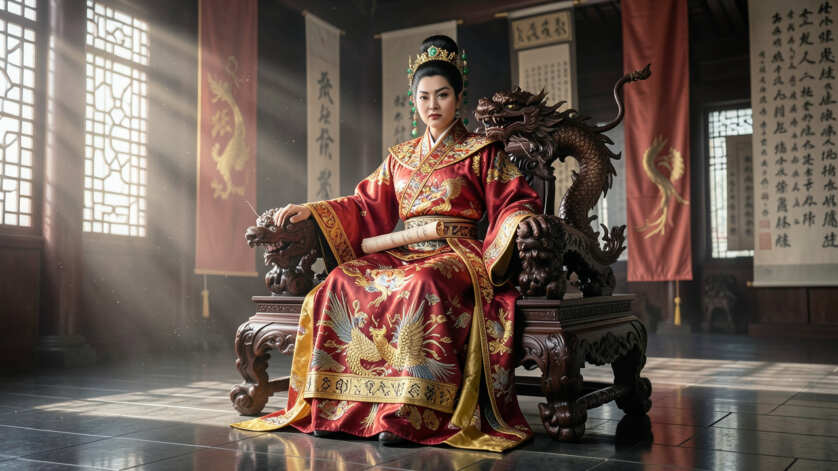
Empress Wu Zetian stands as one of the most powerful and controversial figures in Chinese history. Her unique rise to become the only woman to officially hold the title of Emperor of China in her own right challenges centuries of patriarchal tradition.
This article explores her dramatic journey from concubine to supreme ruler. We will examine her political strategies, major reforms, and the lasting legacy she left on the Tang Dynasty and Chinese civilization.
Simply put, Empress Wu Zetian was a brilliant political operator who seized power in the male-dominated Tang Dynasty. She ruled as the de facto and later actual emperor for nearly 50 years, implementing significant reforms and expanding the empire’s influence, ultimately founding her own short-lived Zhou dynasty.
Key Takeaways
- Empress Wu Zetian is the only woman in Chinese history to assume the title of Emperor, ruling during the late Tang Dynasty.
- Her path to power began as a low-ranking concubine, showcasing her exceptional political acumen and determination.
- She implemented meritocratic reforms, promoted Buddhism, and expanded China’s territory, leaving a complex legacy.
- Her reign, though marked by ruthlessness, was also a period of economic prosperity and cultural flourishing.
- Understanding her life provides critical insight into the possibilities and limitations of female power in ancient China.
Early Life and Entry into the Imperial Court
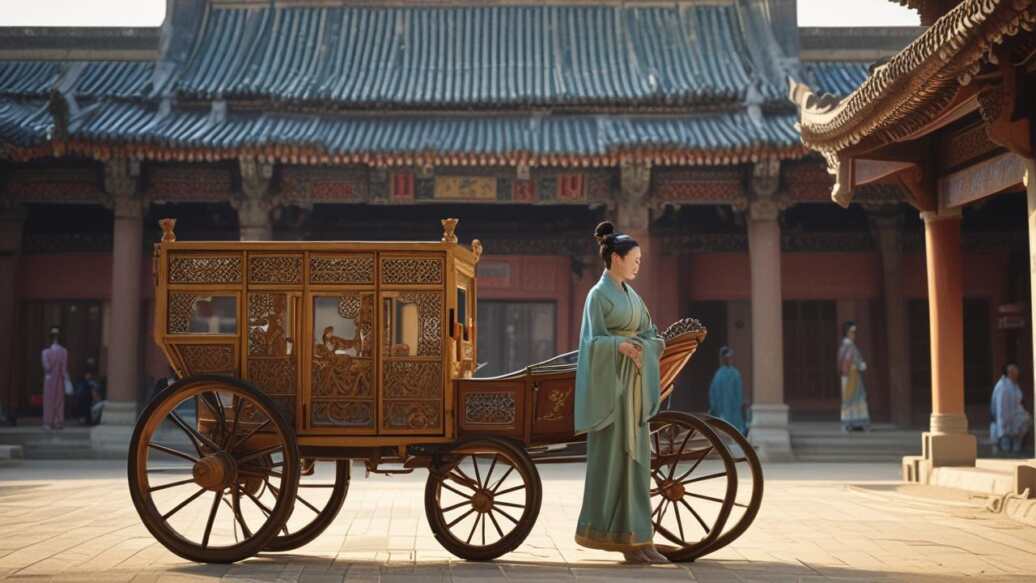
Wu Zetian was born in 624 AD into a family of successful merchants and government officials. Her father, Wu Shihuo, held mid-level positions in the Tang administration, providing her with a basic education in classics, poetry, and calligraphy. This was unusual for women of her time and gave her a crucial foundation for her future political life.
In 637 AD, at the age of 14, she was selected to enter the court of Emperor Taizong as a low-ranking concubine with the title Cai (talent). Her initial role was largely ceremonial, serving the emperor and his empress. She gained her first lessons in the ruthless nature of court politics, observing the emperor’s governance and the intricate power plays among senior officials and the imperial family.
Strategic Alliances and Widowhood
When Emperor Taizong died in 649, custom dictated that his concubines without children be sent to a Buddhist monastery to live out their days as nuns. Wu Zetian entered the Ganye Temple, but her story did not end there. She had caught the eye of the crown prince, Li Zhi, who succeeded Taizong as Emperor Gaozong.
Within a year, Gaozong arranged for her to return to the palace, first as a low-ranking concubine and soon as a powerful Consort Wu. She formed a critical alliance with Empress Wang, helping her to depose the rival Consort Xiao. This victory cemented her position but also created a powerful enemy in the now-disgraced empress.
How Wu Zetian Rose to Power
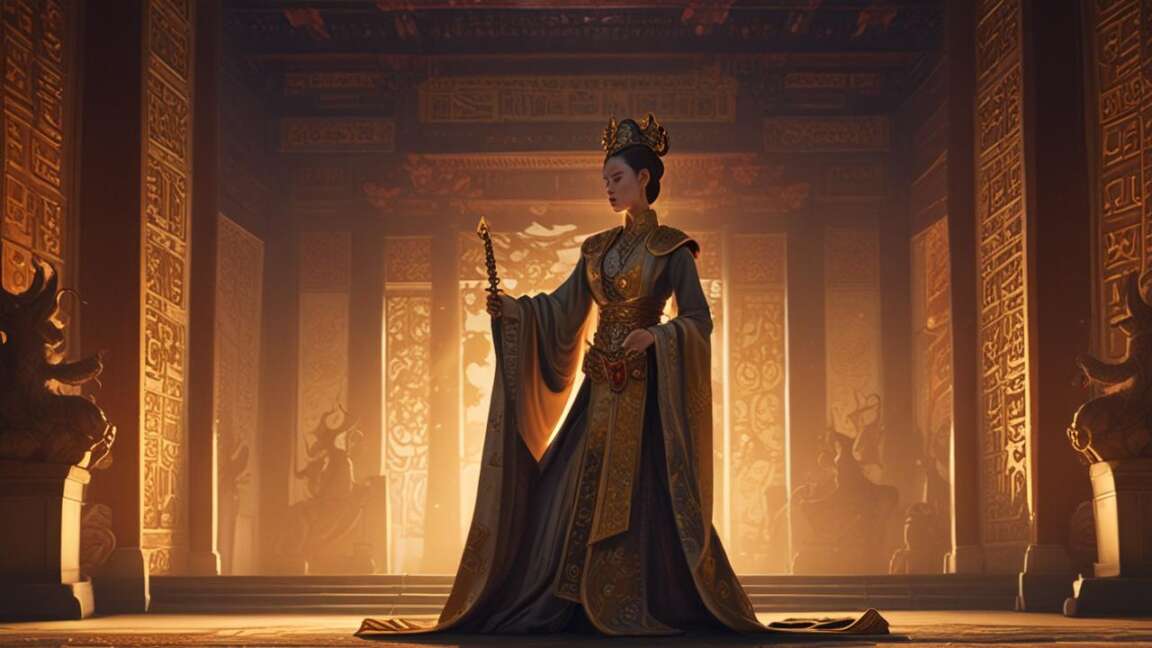
Her ascent from consort to ruler was a masterclass in patience, political maneuvering, and calculated risk. She did not seize power overnight but built her influence over decades, systematically eliminating rivals and consolidating her position within the imperial family structure.
The first major step came in 655 AD when she was elevated to the position of Empress, replacing the deposed Empress Wang. This was achieved through a bitter court struggle where she leveraged her popularity with the emperor, accused the empress of using witchcraft, and built a faction of powerful officials to support her cause.
From Empress to Regent
As Empress, Wu Zetian began participating directly in state affairs. When Emperor Gaozong suffered from a debilitating stroke in 660, she took over the day-to-day administration of the empire. For the next two decades, she was the effective ruler, co-governing with her ailing husband.
During this period, she built her own network of loyal officials, bypassing the old aristocratic families and promoting scholars based on merit.
After Gaozong’s death in 683, her son, Emperor Zhongzong, took the throne. However, Wu Zetian, now the Grand Empress Dowager, found his independent actions unacceptable. Within two months, she deposed him and installed her younger son, Emperor Ruizong, while retaining all real power herself.
What Made Her Reign Unique?
Wu Zetian’s rule was distinct in several fundamental ways that separated her from any other Chinese ruler. She openly defied Confucian ideology, which strictly forbade women from wielding political authority. Instead, she cultivated an image as the rightful ruler, a mantle she claimed through divine mandate.
A Strategy of Control and Fear
She employed a secret police force and encouraged informants to root out dissent, creating an atmosphere of fear that suppressed opposition. This was paired with a deliberate promotion of talented individuals from humble backgrounds, who owed their positions directly to her. This created a loyal bureaucracy dependent on her continued rule.
| Aspect of Her Rule | Description | Impact |
|---|---|---|
| Meritocratic Civil Service | Massively expanded the Imperial Examination system, recruiting officials based on exam results rather than birth. | Weakened the old aristocracy and created a more competent, loyal bureaucracy. |
| Religious Patronage | Strongly promoted Buddhism over Daoism and Confucianism, using it to legitimize her rule. | Buddhism became a major state-sponsored religion, influencing culture and politics for centuries. |
| Centralization of Power | Reduced the power of regional military governors and hereditary aristocrats. | Strengthened the central government’s control over the vast empire. |
| Legal and Agricultural Reforms | Compiled new law codes and promoted agricultural production through irrigation projects. | Contributed to economic stability and population growth. |
Important: Wu Zetian’s rise demonstrates her profound understanding of the systems around her. She used existing institutions, like the examination system, to build her own power base, effectively working within the system to transform it.
Major Reforms and Achievements of Her Reign
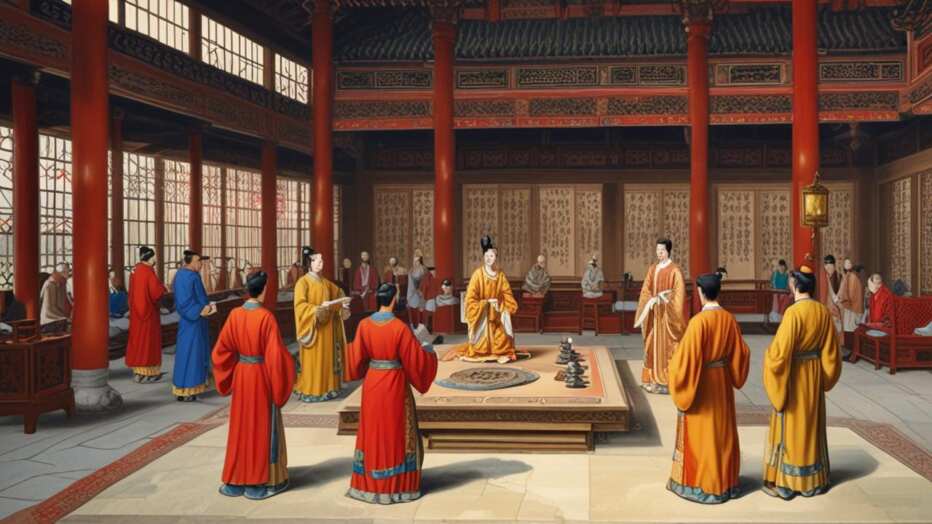
Once she took the title of Emperor in 690, establishing her own Zhou Dynasty, Wu Zetian launched a series of ambitious reforms. These policies aimed to strengthen the empire, enrich the treasury, and secure her controversial legacy as a legitimate ruler.
Economic and Administrative Breakthroughs
One of her most significant achievements was the refinement of the Equal-Field System. This policy redistributed land to peasants to boost agricultural output and tax revenue. She also introduced new coinage and simplified tax codes, which improved commerce and state finances.
Her support for the Imperial Examination system had a transformative effect. Historical records indicate that the percentage of officials from commoner backgrounds rose from under 10% to nearly 30% during her era. This created a new elite class whose loyalty was to the state and the emperor, not to ancient family lineages.
Cultural and Military Expansion
Under her rule, the Tang Dynasty saw cultural flourishing. The production of poetry, art, and Buddhist scriptures reached new heights. She commissioned the construction of magnificent temples and libraries, including the famed Tianjin Bridge.
Militarily, her generals achieved major victories. They expanded the empire’s borders deep into Central Asia, defeating the powerful Turkic Khaganates and establishing Chinese suzerainty over key Silk Road trade routes. This period saw the Tang Empire reach one of its greatest territorial extents.
Warning: The aggressive expansion and internal security measures came at a human cost. Her secret police suppressed dissent brutally, and court purges eliminated many members of the old Li family aristocracy.
Why Is Empress Wu Zetian Still Important?
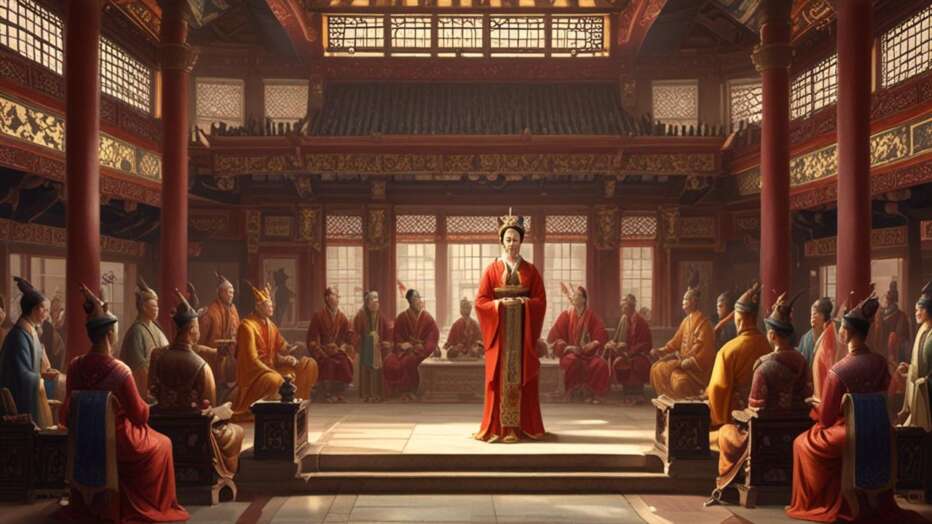
Her significance extends far beyond her historical era. As a figure, she represents a break in the pattern of history and serves as a powerful case study in leadership, ambition, and gender politics. For modern audiences, her story prompts important questions about power and perception.
A Symbol of Female Power and Historical Bias
For centuries, traditional historians—almost exclusively male and Confucian-trained—labeled her a cruel and immoral usurper. Modern scholarship re-evaluates this, often praising her administrative brilliance and the stability of her reign. She remains a key figure in discussions about the roles of women in history and the biases present in historical records.
Her story is a timeless lesson in resilience. From a palace concubine, she navigated a world designed to exclude her from power and rose to its absolute pinnacle. Her methods were often harsh, but they were effective within the brutal context of imperial politics.
Her Enduring Legacy on Chinese Society
Wu Zetian’s policies had lasting effects. The meritocratic bureaucracy she strengthened continued to be a hallmark of Chinese government for the next millennium. The promotion of Buddhism permanently altered the religious landscape of China.
Even her short-lived Zhou Dynasty is studied as an important transitional period between two great eras of the Tang.
Statues of her still stand in places like Luoyang, and she remains a prominent figure in Chinese popular culture, featured in countless dramas, novels, and films. Her life continues to fascinate, challenging traditional narratives about gender and authority.
The End of Her Dynasty and Final Years
By 705 AD, Wu Zetian was over 80 years old and in poor health. Her power, once absolute, began to wane as she grew more dependent on a small circle of court favorites. This created an opening for a group of disgruntled officials who had been sidelined during her later years.
The Palace Coup of 705
In February 705, a group of officials, led by the minister Zhang Jianzhi, launched a palace coup. They forced their way into the palace, killed her two closest male advisors (who were widely suspected of undue influence), and presented the empress with an ultimatum: abdicate in favor of her exiled son, the former Emperor Zhongzong.
With no real power left and facing the threat of violence, Wu Zetian had no choice but to comply. She was moved to a quiet palace where she lived under house arrest for the final months of her life. In December 705, she died at the age of 81.
How History Remembered Her
After her death, the restored Tang Dynasty disavowed her Zhou Dynasty, and historians loyal to the Li family wrote scathing critiques of her rule. For over a thousand years, she was portrayed primarily as a femme fatale who used manipulation and cruelty to achieve her ends. It was only in the 20th and 21st centuries that a more balanced historical reassessment began, focusing on her administrative achievements and political skill.
Who Studies Empress Wu Zetian and Why?
Her life is a subject of interdisciplinary study, attracting scholars from history, gender studies, political science, and Asian studies. Each field finds unique value in her story, as she breaks the mold of traditional historical actors.
- Historians: Analyze her reign to understand Tang Dynasty politics, governance structures, and the balance of power between court factions and regional military governors.
- Gender Studies Scholars: Examine her career as a critical case of a woman exercising supreme power in a deeply patriarchal society and how contemporary narratives constructed her image.
- Political Scientists: Study her strategies of building coalitions, patronage networks, and state control as timeless examples of political maneuvering.
- Sinologists: Use her era to explore the evolution of Chinese bureaucracy, religious policy, and imperial ideology.
- General Readers: Are drawn to the dramatic, soap-opera-like narrative of her rise, filled with romance, betrayal, and ambition.
Tip: When reading about Wu Zetian, always consider the source. Accounts from her era were often written by her opponents. Modern biographies by scholars like N. Harry Rothschild or Ping Yao provide more balanced perspectives.
Frequently Asked Questions
Was Wu Zetian a good or bad ruler?
The answer depends on the criteria. By traditional Confucian standards, she was terrible—a woman who overstepped her role. By modern political metrics, she was effective.
She presided over a stable, prosperous economy, expanded the empire’s borders, and strengthened the central bureaucracy through merit-based reforms. Her reputation is thus deeply polarized, ranging from a wise sovereign to a ruthless tyrant.
How did a woman become emperor in ancient China?
It was an unprecedented feat accomplished through a combination of personal acuity, opportunity, and the weakness of the men around her. She spent decades building influence as consort and regent, systematically eliminating rivals, and cultivating a loyal faction. When she finally took the title, she justified it by claiming a divine mandate from the Buddha, framing her rule as heaven’s will.
What happened to Wu Zetian’s children?
Her two sons who became emperors had troubled fates. Her eldest, Emperor Zhongzong, was deposed twice (once by her and later after her death). Her younger son, Ruizong, served as a puppet emperor during her later reign and was eventually restored after her death.
Both were overshadowed by their formidable mother and struggled to govern effectively in her wake.
What is Wu Zetian’s most lasting legacy?
Her most concrete legacy is likely the institutional reform of the civil service examination system. By championing merit over birthright, she helped lay the groundwork for the professionalized bureaucracy that became a hallmark of Chinese imperial governance for centuries. Culturally, her patronage of Buddhism left an indelible mark on Chinese religious practice.
Are there any famous sites associated with her in China today?
Yes, several. The Qianling Mausoleum in Shaanxi province, shared with her husband Emperor Gaozong, is the only tomb in China to hold two emperors. The site features the famous “Wordless Stele,” an enormous stone tablet with no inscription, left for future generations to judge her life.
The Longmen Grottoes also bear significant carvings commissioned during her rule.
Final Thoughts
Empress Wu Zetian’s life was a testament to the power of ambition and political genius. She shattered the highest glass ceiling of her time, ruling China with an iron will for nearly half a century. While her methods were often ruthless, her reign secured a period of stability and expansion for the Tang Dynasty.
Today, her story continues to captivate and challenge us. It reminds us that history is often more complex than the simple narratives we inherit, and that the legacy of even the most controversial leaders can be multifaceted and enduring. Understanding her helps us appreciate the intricate tapestry of Chinese history and the rare individuals who shaped its course.