Genghis Khan’s Lasting Impact on Chinese History
Genghis Khan’s impact on Chinese history is one of the most profound and transformative episodes in the region’s long timeline. The Mongol invasions of the 13th century did not simply lead to a change in rulers. They fundamentally reshaped China’s political structure, economic systems, and cultural landscape for centuries.
Understanding this impact is key to grasping the full story of the Yuan Dynasty and the legacy of the Mongol Empire in East Asia.
Simply put, Genghis Khan’s conquest initiated the Mongol rule of China, culminating in the Yuan Dynasty under his grandson Kublai Khan. This period integrated China into a vast Eurasian empire, accelerating cross-cultural exchange while also imposing foreign administrative systems and creating a unique, multi-ethnic society.
Key Takeaways
- Genghis Khan’s impact on Chinese history began with brutal invasions that dismantled the existing Jin and Song dynasties.
- The establishment of the Yuan Dynasty created China’s first foreign-led imperial government, introducing new administrative and social policies.
- Mongol rule significantly boosted trade and cultural exchange along the Silk Road, connecting China directly to Europe and the Middle East.
- The legacy of Mongol China is complex, involving both devastating warfare and a period of unprecedented connectivity and innovation.
What is Genghis Khan’s Impact on Chinese History?
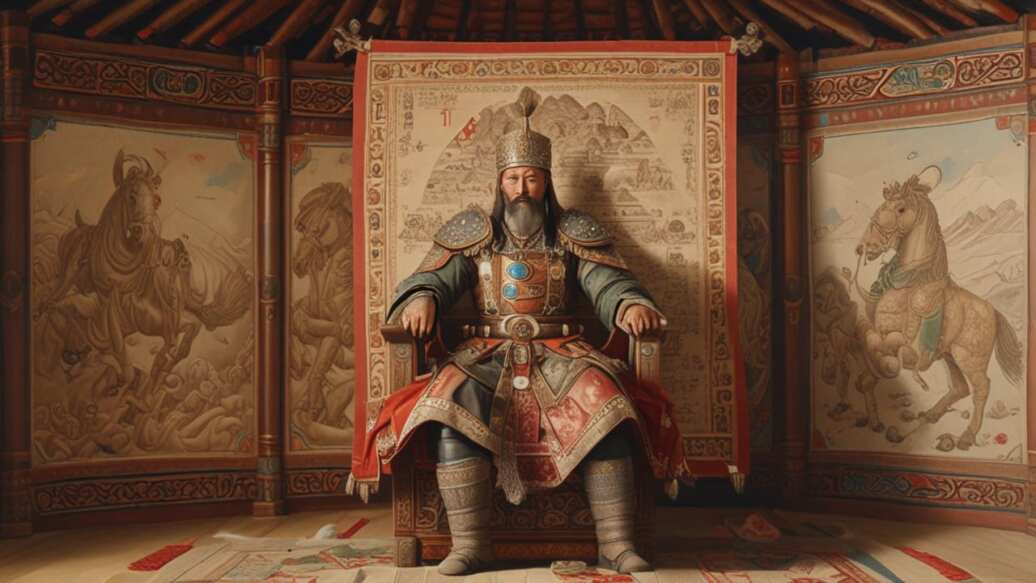
Genghis Khan’s impact refers to the wide-ranging consequences of the Mongol invasions led by the founder of the Mongol Empire, Temüjin, later known as Genghis Khan, and his successors on the Chinese heartland. This impact spans the 13th and 14th centuries, covering military conquest, political restructuring, economic change, and cultural fusion. It marks the transition from native rule under the Song Dynasty to the foreign-led Yuan Dynasty.
The consequences can be broken down into several key areas. The primary effect was military and political: the complete overthrow of existing Chinese states. This was followed by the implementation of a distinct Mongol administrative system.
Furthermore, the period saw a dramatic increase in transcontinental trade and interaction with Western civilizations.
- Military Conquest: The series of invasions, starting with the attack on the Jin Dynasty in the north and later the Southern Song, resulted in massive population displacement and loss of life.
- Political Restructuring: The establishment of the Yuan Dynasty in 1271 under Kublai Khan created a centralized, multicultural empire with Beijing (then Dadu) as its capital.
- Social Hierarchy: A rigid four-class system was introduced, placing Mongols at the top, followed by Central Asians, northern Chinese (Han), and southern Chinese at the bottom.
- Economic Integration: The Mongols secured and expanded the Silk Road, allowing for the free flow of goods, technologies, and ideas across Eurasia.
- Cultural Synthesis: Art, religion, and science from Persia, Central Asia, and Europe mingled with Chinese traditions, producing unique hybrid developments.
Tip: When studying this period, it’s helpful to distinguish between the initial conquests under Genghis Khan (who died in 1227) and the subsequent consolidation and rule by his descendants, particularly Kublai Khan.
How Did the Mongol Conquest Reshape China?
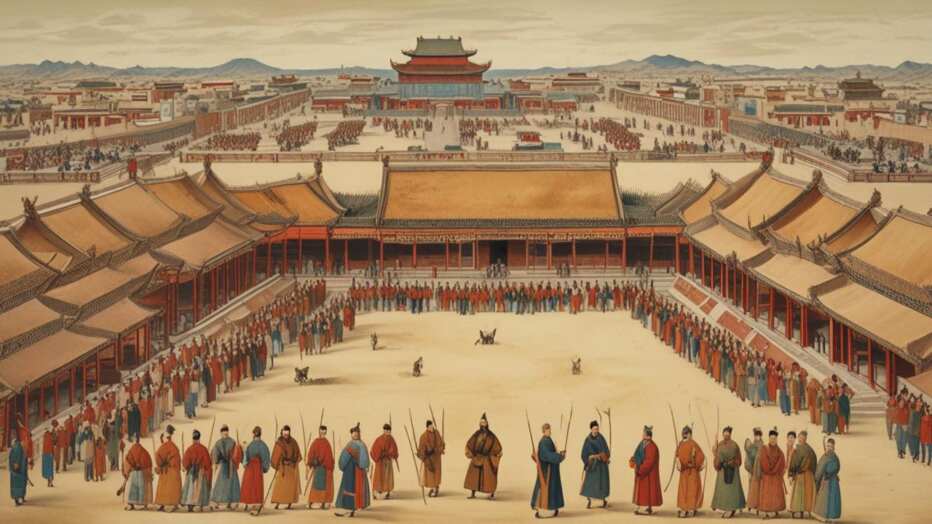
The Mongol conquest was a decades-long process of attrition and strategy. Genghis Khan first focused on the Jin Dynasty in northern China. His armies employed sophisticated siege tactics learned from conquered peoples in Central Asia.
After his death, his successors continued the campaign. The final blow came under Kublai Khan, who defeated the last Song resistance and unified all of China under Mongol rule for the first time in history.
The reshaping was physical and administrative. The old political boundaries were erased. The Mongols moved the center of power northward to Dadu (modern Beijing).
They introduced new governmental offices and a census system to manage the vast, diverse population. This centralized control was a hallmark of the new order.
| Pre-Mongol China (Song Dynasty) | Mongol-Controlled China (Yuan Dynasty) |
|---|---|
| Divided between northern and southern dynasties | Unified under a single central government in Beijing |
| Civil service exams for official positions | Administrative roles filled by Mongols and Central Asians |
| Economy based on agriculture and domestic trade | Economy heavily focused on international trade and tribute |
| Social structure based on Confucian principles | Strict four-class ethnic hierarchy |
According to historical accounts, the initial Mongol campaigns in northern China caused immense devastation, with some scholars estimating the population of the Jin territory dropped from over 40 million to under 10 million. This demographic collapse was a critical aspect of the conquest’s impact, leading to significant labor shortages that shaped Yuan economic policies.
What Was the Role of the Yuan Dynasty in Cultural Exchange?
The Yuan Dynasty acted as a monumental bridge between East and West. For the first time, China was part of a contiguous land empire stretching from Korea to Eastern Europe. This created an environment where merchants, missionaries, scientists, and administrators traveled freely.
The most famous example is Marco Polo, whose travels to Kublai Khan’s court documented this vibrant exchange for a European audience.
Cultural exchange occurred in several domains. Technological knowledge flowed in both directions. Gunpowder, printing, and the compass spread westward from China.
Meanwhile, Persian astronomy, Islamic medicine, and European artistic techniques entered China. The Mongols themselves were patrons of religious diversity, allowing Nestorian Christianity, Islam, and Buddhism to coexist, though they favored Tibetan Buddhism.
- Silk Road Trade: The Mongol Empire secured the trade routes, leading to a flourishing of commerce in silk, porcelain, spices, and precious metals.
- Artistic Fusion: Persian-style blue-and-white porcelain became a Chinese export staple, blending foreign aesthetics with local craftsmanship.
- Scientific Advancement: The Yuan court employed Persian astronomers to build the Gaoxing Observatory in Beijing, integrating foreign astronomical tables with Chinese records.
- Religious Pluralism: The Mongol rulers employed officials from various faiths, creating a cosmopolitan atmosphere in major cities like Dadu and Quanzhou.
- Agricultural Exchange: Crops like sesame, grapes, and spinach were introduced to China, diversifying its agriculture.
Important: This exchange was not always voluntary. Many artisans and scholars were forcibly relocated as part of the Mongol census and labor draft, creating multicultural cities but often at great human cost.
How Did Mongol Rule Influence Chinese Governance and Economy?
Mongol governance in China was a unique blend of steppe tradition and adapted Chinese bureaucracy. Kublai Khan maintained the imperial structure but filled key positions with Mongols and Central Asians, sidelining the traditional Chinese scholar-official class. He established the Bureau of Military Affairs and a separate Secretariat to ensure Mongol control over the military and key administrative functions.
Economically, the Mongols revitalized trade but struggled with agricultural management. Their reliance on foreign financial advisors, like the Muslim merchant Ahmad Fanakati, led to highly centralized and sometimes exploitative economic policies. The introduction of paper currency (chao) on a large scale was a revolutionary but ultimately unstable experiment due to overprinting and inflation.
- Administrative System: A parallel system of Mongol and Chinese offices was created, with Mongol holding supreme authority.
- Legal Code: The Mongols combined their own steppe law (Yasa) with elements of Chinese and Islamic law.
- Census and Taxation: A rigorous census was conducted to manage labor and taxation, with different tax rates for different ethnic classes.
- Agricultural Policy: The government initially neglected agriculture, focusing on tribute and trade. Later, they promoted farming to ensure food security and tax revenue.
- Trade Infrastructure: The Mongols built relay stations (yam) across the empire, facilitating communication and commercial transport.
Why Is the Legacy of Mongol China Still Relevant Today?
The legacy of Mongol China is relevant because it established precedents for a unified, multi-ethnic state under a centralized government. The Yuan Dynasty’s capital, Beijing, remained the political heart of China through the subsequent Ming and Qing dynasties to the present day. The idea of a vast, unified empire became a lasting political ideal.
Furthermore, the period accelerated globalization. The networks and cultural interactions fostered during Mongol rule laid the groundwork for the later Age of Exploration. The technological and knowledge transfers had enduring effects on both Chinese and global development.
Historically, it challenges simplistic narratives of Chinese history by highlighting periods of profound foreign influence and integration.
Warning: It is crucial not to romanticize this legacy. While connectivity increased, it was built on conquest, and the native Chinese Han population faced systemic discrimination and economic extraction for decades under Yuan rule.
What Are the Common Misconceptions About Mongol Rule in China?
A common misconception is that Mongol rule was entirely destructive with no positive outcomes. While the conquests were devastating, the subsequent Yuan period saw significant administrative innovations and cultural flourishing. Another myth is that the Mongols completely rejected Chinese culture.
In reality, they adopted many aspects of Chinese governance and art while maintaining their distinct identity at the top of the social hierarchy.
People often assume the Yuan Dynasty was simply a foreign occupation. It was more complex: it was a legitimate dynasty within the Chinese historical canon, despite its foreign origin. Kublai Khan actively promoted Confucian rituals and adopted Chinese imperial symbols to legitimize his rule, even as he kept Mongol customs alive at court.
- Misconception: The Mongols were cultural vandals. Reality: They were patrons of a hybrid culture and preserved many texts and artworks.
- Misconception: The Yuan Dynasty lasted for centuries. Reality: It lasted only 97 years (1271-1368) before being overthrown by the Ming Dynasty.
- Misconception: All Chinese people resisted Mongol rule. Reality: Many scholars and officials served in the Yuan government, adapting to the new political reality.
- Misconception: The Mongol Empire was solely Asian. Reality: It was a truly global phenomenon connecting Europe and Asia, with China as its eastern core.
How Should Historians View Genghis Khan’s Chinese Legacy?
Modern historians view Genghis Khan’s legacy in China through a multifaceted lens. They acknowledge the catastrophic human cost of the initial invasions while analyzing the long-term structural changes the Yuan Dynasty implemented. The focus is on the complexity of rule, the dynamics of cultural exchange, and the mechanisms of power in a multi-ethnic empire.
The scholarly approach has shifted from seeing it purely as a period of “barbarian” interruption to examining it as an integral, transformative chapter. Historians now study the Yuan era to understand early globalization, the management of diverse societies, and the resilience of Chinese institutions even under foreign rule. This nuanced view recognizes both the trauma of conquest and the undeniable reshaping of China’s place in the world.
Frequently Asked Questions
Who was Genghis Khan’s successor in China?
Genghis Khan died in 1227, long before the conquest of southern China was complete. The conquest was carried out by his sons and grandsons. His grandson Kublai Khan is the one who formally established the Yuan Dynasty in 1271 and completed the unification of China, becoming its first emperor.
Did the Mongols adopt Chinese culture?
Yes, partially. While maintaining their own language, military traditions, and religious practices at the highest levels, the Mongol rulers adopted many aspects of Chinese culture. This included the imperial bureaucracy’s structure, Confucian rituals for state legitimacy, Chinese architectural styles for palaces, and patronage of Chinese art forms like painting and drama.
What was the four-class system in Yuan China?
The Yuan Dynasty implemented a strict ethnic hierarchy. The classes were, from highest to lowest: Mongols (the ruling elite), Semu (Central Asians, Persians, and other non-Chinese minorities), Han (northern Chinese, including former Jin subjects), and Nanren (southern Chinese from the former Song Dynasty). This system determined legal status, employment opportunities, and taxation.
How did the Yuan Dynasty fall?
The Yuan Dynasty faced numerous challenges, including ethnic tensions, over-reliance on foreign officials, inflation from paper money overprinting, and natural disasters. A series of massive peasant rebellions, most notably the Red Turban Rebellion, emerged in the 1350s. These uprisings, led by figures like Zhu Yuanzhang, eventually toppled the Yuan government and established the Ming Dynasty in 1368.
Did Genghis Khan himself ever enter China?
Genghis Khan led the initial campaigns against the Jin Dynasty in northern China. Historical records indicate he personally led his armies and was present at the siege of major cities like Zhongdu (modern Beijing). However, he died in 1227 before the southern half of China was conquered, which was completed decades later under his descendants.
Final Thoughts
Genghis Khan’s impact on Chinese history was seismic, initiating an era of foreign rule that forever altered the nation’s political and cultural trajectory. The Yuan Dynasty, born from conquest, became a crucible of East-West interaction and a powerful centralized state. While its legacy is marked by both disruption and connection, understanding this period is essential to appreciating the full, complex tapestry of Chinese civilization.