The Monkey King Sun Wukong Explained: Origin, Powers & Legacy
The Monkey King Sun Wukong is one of the most iconic figures in Chinese literature and global pop culture. His story blends rebellion, wisdom, and adventure in a way that has captivated audiences for centuries. This guide breaks down his complete mythos, from his magical birth to his immortal status as a Buddhist protector.
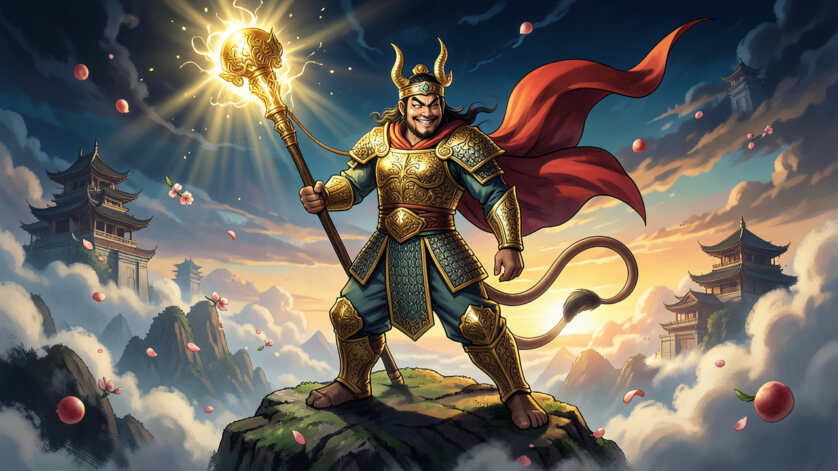
Simply put, Sun Wukong is a divinely born monkey who gains immense powers, defies heaven, and is later redeemed to become a key disciple on the journey to retrieve Buddhist scriptures. He is celebrated for his 72 transformations, his sentient weapon the Ruyi Jingu Bang, and his complex character arc from trickster to enlightened hero.
Key Takeaways
- Sun Wukong, the Monkey King, was born from a magical stone and became a master of immortality.
- His primary powers include 72 transformations and wielding the massive Ruyi Jingu Bang staff.
- The character is the main protagonist of the classic Chinese novel Journey to the West.
- Sun Wukong’s story has profoundly influenced modern media, inspiring countless adaptations worldwide.
- He represents themes of rebellion, redemption, and the journey to self-mastery.
What Is the Origin Story of Sun Wukong?
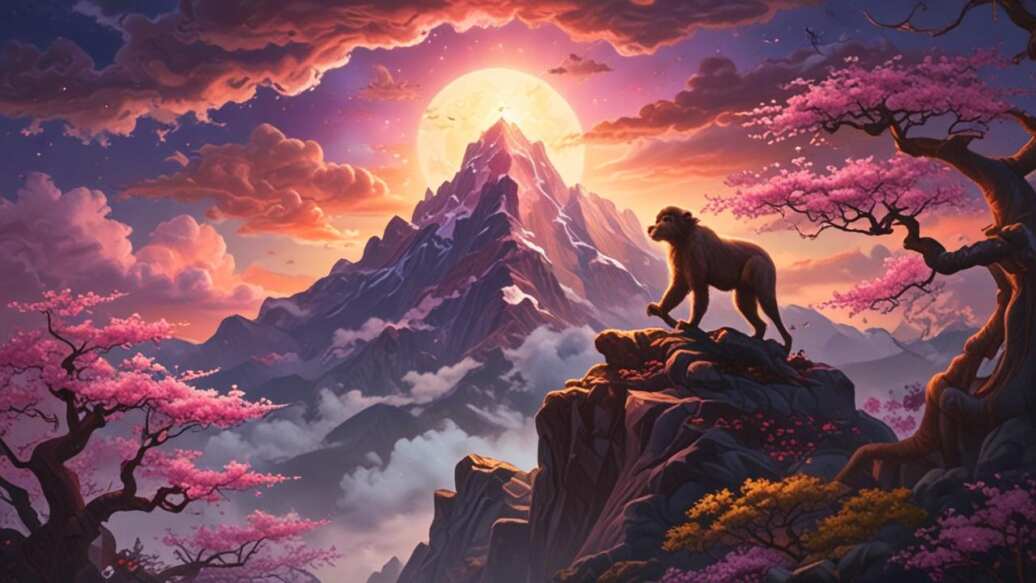
Sun Wukong’s origin story is rooted in the mythos of the classic novel Journey to the West, attributed to Wu Cheng’en. He does not have biological parents in the traditional sense. Instead, he was born from a mystical stone on the Mountain of Flowers and Fruit.
This stone had been nurtured by the forces of heaven and earth for eons. When it finally cracked open, it released a stone monkey who immediately caught the attention of the Jade Emperor. His birth was extraordinary, marked by a flash of light that reached the heavens.
- Magical Stone: Formed by the pure essence of Heaven and Earth, energized by the sun and moon.
- Early Leadership: After proving his bravery by jumping through a waterfall to discover the Water Curtain Cave, he was elected king by the other monkeys.
- Seeking Immortality: Fearing death, he left the mountain to seek a way to live forever, eventually finding a Taoist master.
- Mastering Taoism: He learned the 72 Transformations and the method of cloud-somersaulting from the Patriarch Subodhi.
- Rebellion Against Death: He erased his and his monkey kin’s names from the Book of Life and Death in the Underworld, securing their immortality.

What Are the Key Powers and Abilities of the Monkey King?
Sun Wukong possesses a formidable set of supernatural abilities granted through Taoist training and divine items. These powers make him one of the most powerful characters in Chinese mythology. His abilities are central to his character and his role in the story.
His powers can be categorized into physical, magical, and transformative abilities. Each category showcases a different aspect of his training and his inherent divine nature. Understanding these powers explains why he could challenge the entire heavenly bureaucracy.
| Ability Category | Specific Powers | Description |
|---|---|---|
| 72 Transformations | Shape-shifting, mimicry, elemental forms | Allows him to transform into animals, people, objects, and even elements like fire or water to deceive or attack enemies. |
| Cloud-Somersault | Instantaneous travel, flight | A single leap covers 108,000 li (about 33,554 miles), enabling him to traverse vast distances in moments. |
| Physical Might | Super strength, near-invulnerability | He possesses immense strength, can survive exposure to fire, water, and lightning, and is immune to most mortal ailments. |
| Divine Eyes | Fiery Golden Eyes, penetration | After surviving Laozi’s furnace, his eyes gained the power to see through any disguise or illusion, revealing a demon’s true form. |
| Immortality | Peaches, pills, erased name | His immortality is layered: from Taoist training, stealing peaches of immortality, consuming Laozi’s pills, and removing his name from the Book of Life and Death. |
These powers combined made him a rogue force that heaven itself struggled to contain. His only true limitations came from specialized magical restraints, most notably the band placed on his head by the Buddha.
How Did Sun Wukong Get His Famous Staff, the Ruyi Jingu Bang?
The Ruyi Jingu Bang is as iconic as the Monkey King himself. This magical weapon was not just forged; it was a treasure of the Dragon King of the Eastern Sea. Sun Wukong did not receive it as a gift—he took it by force after proving no one else could lift it.
The staff’s origins are divine. It was originally used by Yu the Great to measure the depth of the great flood and then sealed in the Dragon King’s treasury. It is made of a special iron star from the heart of a meteor, making it incredibly dense and durable.
- Size Manipulation: The staff can shrink to the size of a needle (which Wukong stores in his ear) or grow to pillar-like proportions at his command.
- Weight: It weighs 17,550 pounds (about 7,960 kg), a weight only Wukong and a few other divine beings can wield.
- Loyalty: The staff is sentient and responds only to Wukong’s will, making it an extension of his own power.
- Celestial Recognition: Its golden bands are a marker of its celestial origin, and it can be used to summon and command lesser spirits.
Tip: In many adaptations, the staff is called a “cudgel” or “bo staff.” The name Ruyi Jingu Bang translates to “As-You-Will Gold-Banded Staff,” highlighting its obedient and malleable nature.

What Was Sun Wukong’s Rebellion Against Heaven?
After acquiring his powers and weapon, Sun Wukong’s arrogance grew. He rejected his title “Bimawen” (Keeper of Horses), a low-ranking celestial position offered by the Jade Emperor. Believing himself to be equal to heaven, he launched an open rebellion.
This event is a cornerstone of his legend.
His rebellion involved taking the title “Great Sage Equal to Heaven” and occupying the Tushita Palace of the Taoist Master Laozi. He ate the Peaches of Immortality, drank the Jade Emperor’s celestial wine, and consumed Laozi’s pills of longevity, further amplifying his power. This was the ultimate act of defiance against the celestial order.
- Initial Offense: Defeating the celestial armies sent to capture him, led by various heavenly generals.
- Escalation: Conquering the entire palace of Heaven and forcing the Jade Emperor to retreat.
- The Buddha’s Intervention: The Jade Emperor ultimately sought help from the Buddha. Sun Wukong was wagered that he could not jump out of the Buddha’s palm.
- The Prison of Five Elements: After failing the bet, the Buddha trapped Wukong under a mountain of the same name for 500 years as punishment.
This rebellion showcased his raw power but also his hubris. It set the stage for his eventual redemption and began his journey from a rogue to a protector of the faith.

Why Was Sun Wukong Included in the Journey to the West?
Sun Wukong’s redemption arc begins when the monk Tang Sanzang (Tripitaka) is tasked with retrieving Buddhist scriptures from India. As a condition for his release from under the mountain, Guanyin, the Bodhisattva of Compassion, binds Wukong to protect Tang Sanzang on this journey. This divine mandate forces the proud Monkey King into servitude.
The dynamic between them is central to the novel. Wukong is powerful, experienced, and pragmatic. Tang Sanzang is compassionate, naive, and morally rigid.
Their conflicting personalities create tension, but also opportunities for growth. Wukong learns discipline, while Sanzang learns to trust in action.
| Reason for Inclusion | Narrative Purpose | Thematic Significance |
|---|---|---|
| Redemption for Rebellion | Provides a clear character arc from rebel to redeemer. | Illustrates the possibility of atonement and the power of second chances. |
| Complementary Strengths | Wukong’s combat power balances Sanzang’s spiritual authority and vulnerability. | Highlights the need for both strength and compassion in overcoming adversity. |
| Constant Temptation | Wukong’s rebellious nature tests Sanzang’s patience and faith repeatedly. | Represents the inner struggle between ego and enlightenment within a person. |
| Comic Relief & Heroics | Provides humor through his antics and awe through his heroic deeds. | Makes the spiritual journey accessible and entertaining, a core goal of the novel. |
The journey consists of 81 trials, each designed to test the pilgrims and teach them a lesson. Wukong is the primary problem-solver, often using his transformations and wits to defeat demons who have captured Sanzang. Each victory is also a step in his own path to enlightenment.
What Is Sun Wukong’s Cultural Impact and Legacy?
Beyond the pages of Journey to the West, Sun Wukong has become a global cultural icon. His story has been adapted into hundreds of films, television series, anime, manga, and video games. His influence extends far beyond China, shaping how the world perceives Chinese mythology.
In modern times, he is often a symbol of rebellion against unjust authority and the triumph of the underdog. His journey from a carefree monkey to a disciplined warrior resonates with audiences seeking stories of personal growth and redemption. He is a complex hero who appeals to both children and adults.
- Film and Television: From the 1960s television series Journey to the West to modern blockbusters like The Monkey King trilogy, he remains a box-office draw.
- Anime and Manga: He is the direct inspiration for Son Goku in Dragon Ball, which introduced the character to a massive global audience.
- Video Games: He appears as a powerful character in games like Smite, League of Legends (Wukong), and numerous mobile games.
- Literature and Academia: He is a frequent subject of study in comparative literature, exploring themes of chaos vs. order and Eastern philosophy.
- Statues and Festivals: He is a common figure in Chinese opera and is depicted in temples and cultural festivals worldwide.

How Does Sun Wukong Compare to Other Mythological Tricksters?
Sun Wukong shares archetypes with trickster gods and heroes from world mythology. These figures often challenge the gods, use cunning over brute force, and walk a line between chaos and order. Comparing him to others highlights his unique cultural context.
He is most frequently compared to the Norse trickster Loki or the Greek hero Hercules. While there are surface similarities, key differences emerge in their motivations and narratives. Wukong’s story is ultimately one of redemption and integration into the cosmic order, which is less common for Western tricksters.
Important: A key distinction is that Sun Wukong’s rebellion leads to punishment and a path to redemption, whereas figures like Loki often embrace their role as agents of chaos, culminating in events like Ragnarök.
The猴王 (Hóuwáng) or Monkey King represents a distinctly Eastern perspective on the trickster archetype—one where the chaotic energy can be harnessed and directed toward a noble, compassionate purpose through discipline and atonement.
Frequently Asked Questions
Is Sun Wukong a god or a demon?
Sun Wukong is a complex figure who transcends simple categorization. He is a divine being born from stone, but his rebellious actions initially branded him a demon by heaven. Ultimately, he is redeemed and becomes a Buddha, placing him in the celestial hierarchy.
His status changes throughout his story.
What does the band on Sun Wukong’s head represent?
The golden fillet placed on his head by Tang Sanzang (a trick by Guanyin) is a magical restraint. It represents the control of the ego and the mind. When a special phrase is chanted, it causes excruciating pain, forcing Wukong to obey his master and curb his violent impulses.
Are there different versions of the Monkey King story?
Yes, there are countless adaptations. The original 16th-century novel is just the source material. Each era, from Chinese opera to modern anime, reinterprets his character.
Some portray him as a pure hero, while others, like the original, show a more flawed and violent figure.
Why is he also called the “Stone Monkey”?
He is called the Stone Monkey (石猴, Shí Hóu) because of his origin. He was born from a magical stone on the Mountain of Flowers and Fruit. This name emphasizes his connection to the earth and nature before he gains his other titles like the Monkey King and the Great Sage.
Can anyone else wield the Ruyi Jingu Bang?
In most versions, the staff is bound to Sun Wukong’s will. Other beings may be strong enough to lift it physically, but they cannot command its size-changing abilities or use it effectively as a weapon. It is considered an extension of Wukong himself.
Final Thoughts
Sun Wukong’s journey from a chaotic stone monkey to an enlightened Buddha is a timeless tale of growth and redemption. His incredible powers and defiant spirit make him an unforgettable hero. The enduring legacy of the Monkey King Sun Wukong proves that a complex character navigating struggle, atonement, and ultimate purpose will always resonate with the human spirit.