
Critical Chopstick Rules to Never Break in China
Chopstick rules are a fundamental part of dining etiquette in China, and breaking them can unintentionally cause offense or misunderstanding. Respecting these customs shows cultural awareness and consideration for your hosts. This guide covers the essential do’s and don’ts you need to know for any meal in China.
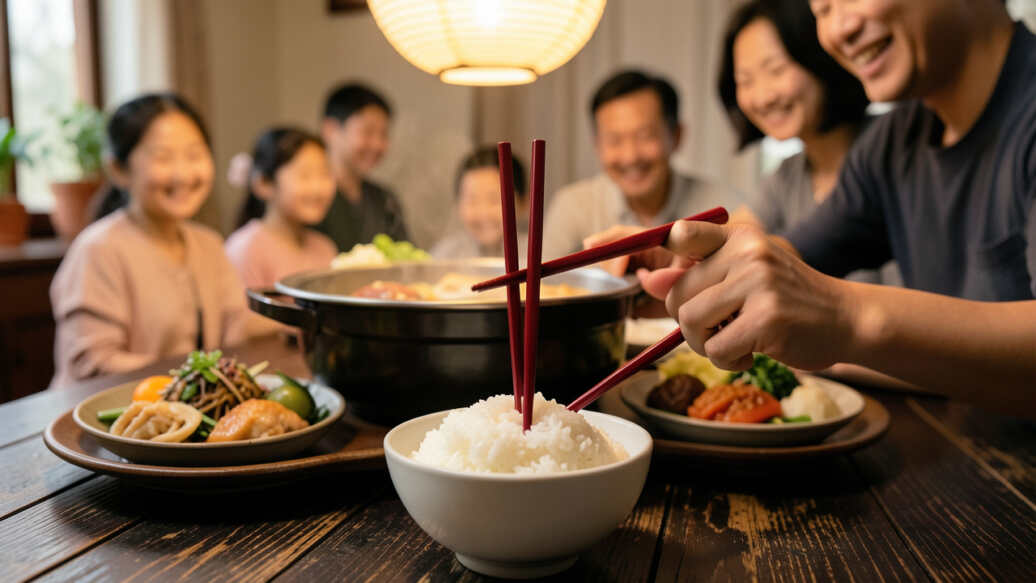
Simply put, the most critical chopstick rules to never break in China are to never stick them vertically into rice, never use them to point at people, and never tap them against your bowl. These actions are deeply associated with funeral rites and are considered highly disrespectful.
Key Takeaways
- Chopstick rules are deeply rooted in Chinese culture and respect for ancestors and the living.
- Avoiding major taboos like vertical placement or pointing is crucial for respectful dining.
- Proper handling and passing techniques demonstrate good manners and social awareness.
- Understanding these customs enriches your travel experience and builds positive relationships.
- When in doubt, observe your hosts and follow their lead with confidence.

What Is the Most Important Chopstick Rule in China?
The single most vital rule is to never stick your chopsticks vertically into a bowl of rice. This specific action is a direct replica of the incense sticks burned for the deceased at funerals and gravesites. Doing this at the dinner table is considered a terrible omen and deeply offensive to everyone present, especially your host.
It implies you are cursing the people you are eating with. Always rest your chopsticks horizontally across the top of your bowl or use the provided chopstick rest when they are not in use. This simple habit prevents the most serious breach of etiquette.
Why You Should Never Use Chopsticks to Point
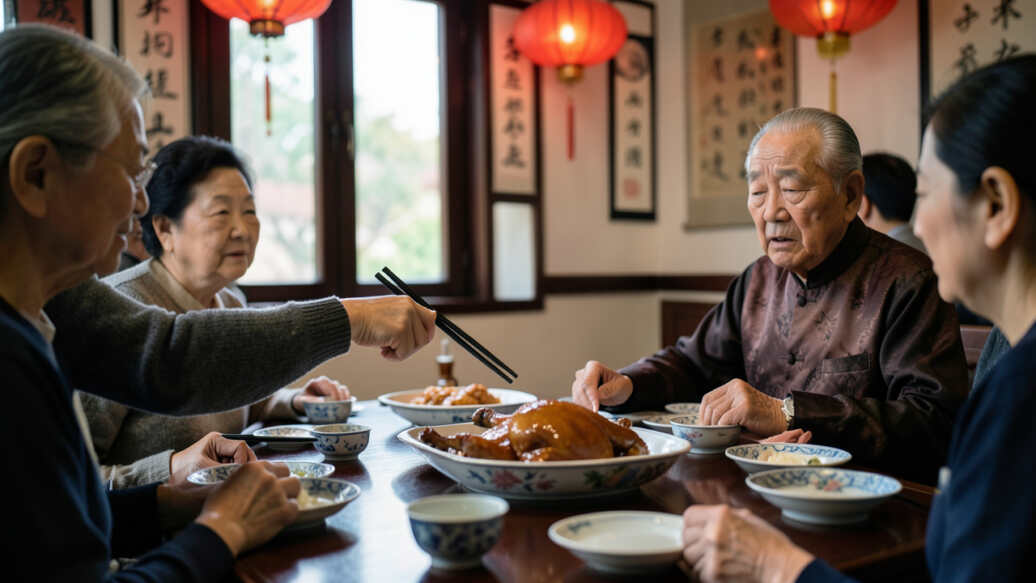
Using your chopsticks to point at a person, dish, or object is considered rude and aggressive. It is akin to pointing a finger directly in someone’s face, which is impolite in many cultures. In China, the gesture can be interpreted as accusing or singling someone out negatively.
Instead, if you need to indicate a dish, use the serving utensils provided or politely describe it. When talking, keep your chopsticks resting in your left hand or on the table. This small adjustment shows a high level of consideration for your dining companions.
How to Properly Use Chopsticks at a Chinese Meal?
Mastering a few key techniques will help you dine with confidence. Here are the core practices for proper chopstick usage:
- Holding Them Correctly: Hold one chopstick between your thumb and ring finger, using your index and middle fingers to control the second chopstick. The bottom stick should remain stationary while the top one moves.
- Using Serving Utensils: Always use the communal serving spoons or chopsticks (公筷, gōng kuài) provided for shared dishes. Never use your personal chopsticks to pick food from a communal plate.
- Resting Position: When pausing to eat or drink, rest your chopsticks neatly on the chopstick rest or horizontally across the rim of your bowl. Never cross them or stick them in the food.
- Picking Up Food: Securely grip food with the tips of your chopsticks. Avoid spearing food, as this is considered childish and inefficient. Practice with smaller items beforehand.
- Soup and Spoons: For soups and broths, use the ceramic spoons typically provided. It is acceptable to drink directly from the bowl for clear soups, but use the spoon for thicker congees or chowders.
Warning: Never spear a piece of food with a single chopstick and lift it to your mouth. This is not only inefficient but is also seen as a crude and improper way to eat.
What Are the Taboos When Passing Chopsticks?
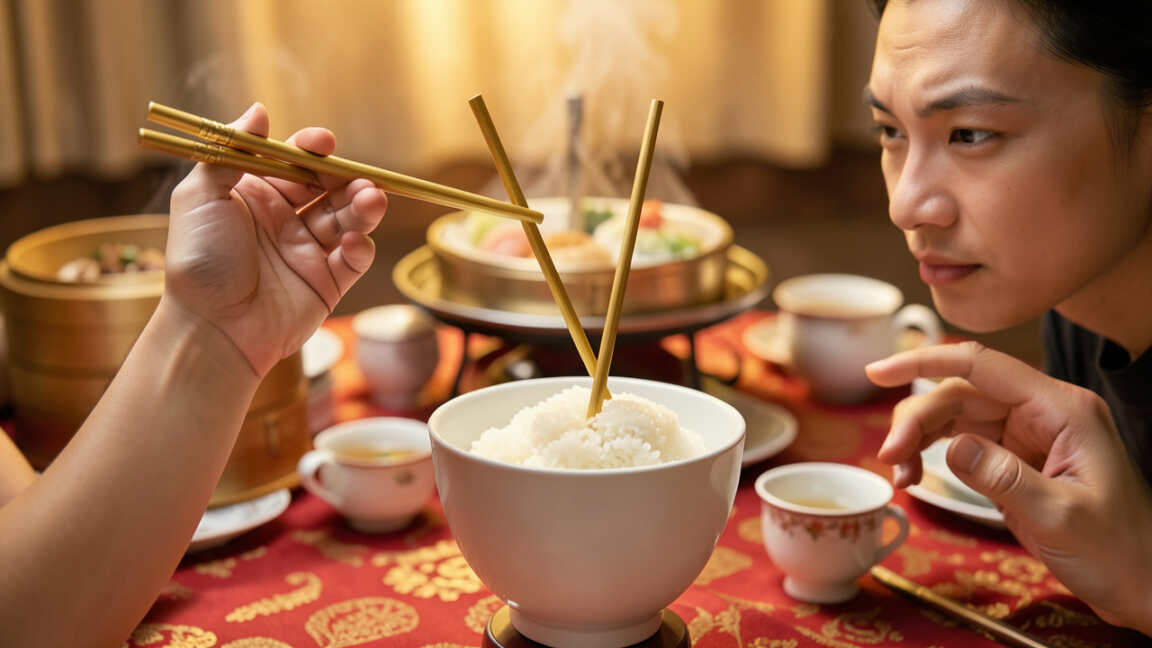
Passing food or handing chopsticks directly from one person to another is a major taboo. This act directly mimics a funeral custom where the bones of the deceased are passed between mourners. For this reason, you should never ask someone to pass you chopsticks, nor should you hand them your own.
The proper way to share food is to place the desired item onto the other person’s plate using serving utensils. If you must share your own food, place it directly in their bowl. Be mindful of this rule during family-style meals where dishes are passed around the table.
| Taboo Action | Why It’s Offensive | Polite Alternative |
|---|---|---|
| Sticking chopsticks vertically in rice | Imitates funeral incense, implies a curse | Rest horizontally on bowl or chopstick rest |
| Passing food directly with chopsticks | Mimics handling bones of the dead | Use serving utensils to place food in their bowl |
| Pointing at people with chopsticks | Seen as accusing, rude, and aggressive | Rest them or gesture with an open hand |
| Tapping your bowl with chopsticks | Resembles beggars calling for attention | Simply wait or verbally request more rice |
| Sucking on or licking chopsticks | Considered childish and greedy | Wipe them with a napkin if necessary |
This table summarizes the most significant chopstick taboos and their culturally appropriate alternatives. Remembering these distinctions will help you navigate any social dining situation gracefully.
How Do Chopstick Placement and Handling Convey Meaning?
How you handle your chopsticks speaks volumes before you even take a bite. Dropping your chopsticks is believed to bring bad luck, so hold them securely. If you accidentally drop them, you should apologize and pick them up immediately.
The way you hold them can also subtly convey your state of mind. Holding them too tightly may suggest you are stressed or in a hurry. Aim for a relaxed but firm grip.
According to cultural etiquette guides, the intricate rules surrounding chopsticks reflect Confucian ideals of harmony, respect, and social order.

What Are the Rules for Chopsticks During Festive Occasions?
During Chinese New Year and other celebrations, some rules become even more critical. For example, the first day of the Lunar New Year is when the most taboos are observed to ensure a lucky start to the year. You must absolutely avoid the vertical chopstick rule on this day.
Also, the shape of the bowl matters. Using a bowl with a flat, wide rim is considered proper, while a bowl that tapers to a narrow bottom is harder to balance chopsticks on and is best avoided at formal dinners. These nuances show a deep understanding of tradition.
Important: On the first day of Chinese New Year, it is also taboo to break any dishware, including bowls or plates. Be especially careful when handling your chopsticks and utensils during these festive meals.
What Are Proper Chopstick Etiquette Tips for Beginners?
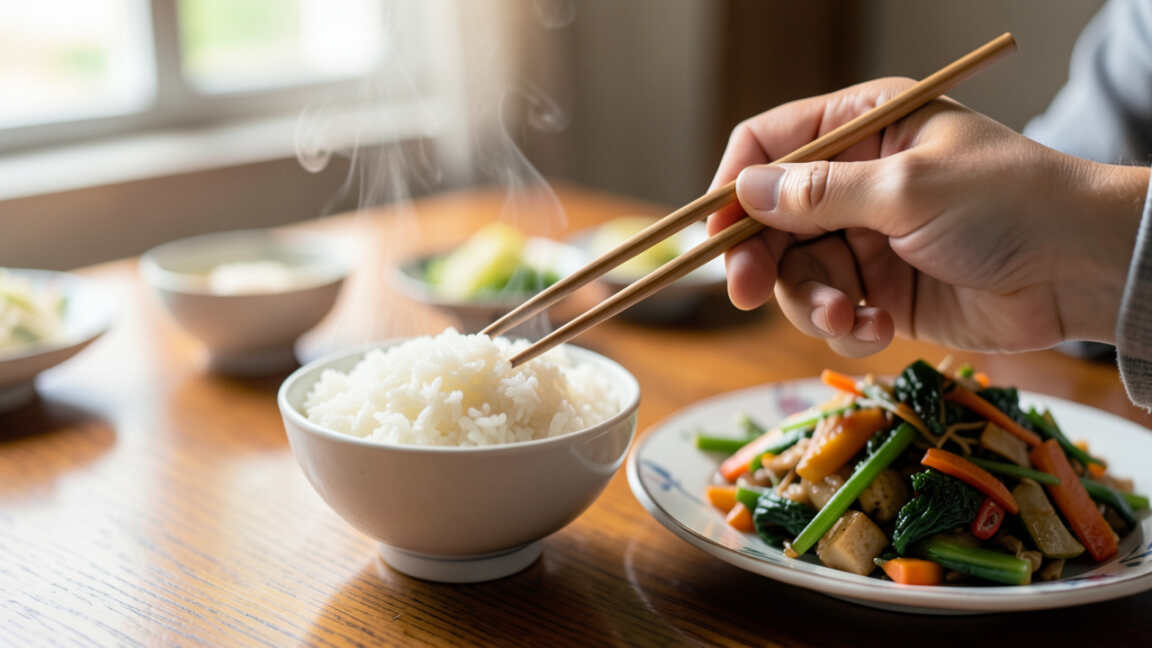
If you are new to using chopsticks, these practical tips will help you avoid mistakes and feel more at ease. Practice makes perfect, but awareness is the first step.
- Practice Before You Go: Spend time practicing picking up peanuts, beans, or pieces of fruit. This builds muscle memory so you aren’t struggling at the table.
- Follow the Host’s Lead: Your host will naturally demonstrate proper etiquette. Watch how they hold, use, and rest their chopsticks, and mirror their actions.
- Don’t “Dig” or “Hunt”: Avoid rummaging through a shared dish to find the best piece of meat. Take what is closest to you or use the serving utensils.
- Use the Chopstick Rest: If a rest is provided, use it. If not, placing them neatly across your bowl is the standard fallback. Never leave them askew on the table.
- Keep Your Chopsticks Parallel: When resting them, try to keep them aligned and parallel. Crossing them or leaving them in a “V” shape is not ideal.
- Clean Spills Immediately: If you drip sauce or broth, discreetly wipe it up with your napkin. Leaving a mess on the table or your chin is considered unsightly.
How Are Chopsticks Linked to Chinese Philosophy and Health?
Chopsticks are not just utensils; they are extensions of Chinese philosophical principles. Their design reflects the balance of Yin and Yang, with two parts working together in harmony. The blunt end represents Heaven, while the pointed end represents Earth, symbolizing the nourishment from earth sustaining people.
From a health perspective, using chopsticks promotes mindfulness and slower eating. Studies suggest that eating with chopsticks can reduce portion sizes and improve digestion because it requires more deliberate, smaller bites. This aligns with the traditional Chinese medical concept of mindful consumption for better health.
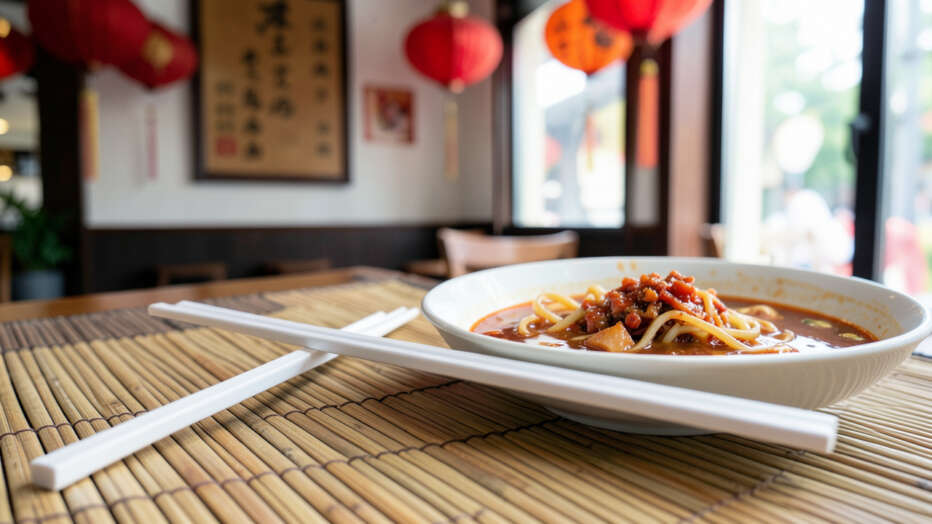
Why Do Some Restaurants Provide Plastic Disposable Chopsticks?
Disposable plastic chopsticks are common in casual eateries and for takeout. They are a modern convenience for hygiene and cost-efficiency. However, they are not typically used in formal settings or nice restaurants, where higher-quality bamboo or wood chopsticks are provided.
Even with disposable chopsticks, all the etiquette rules still apply. The plastic material does not excuse any breach of manners. You should still avoid the vertical stick-in-rice move and handle them with respect, even if you intend to discard them after the meal.
Frequently Asked Questions
What happens if you break chopsticks in China?
Accidentally breaking a pair of chopsticks is considered bad luck, as it can symbolize the breaking of a relationship. If it happens, you should calmly ask the server for a new pair without making a fuss. Overreacting or drawing attention to the broken pair is not necessary.
Is it rude to pick up your rice bowl?
No, it is not only acceptable but proper to lift your rice bowl closer to your mouth when eating with chopsticks. This prevents spills and is the correct way to eat rice. Leaving the bowl on the table and leaning over to eat from it is considered less refined and can be messy.
Can I use chopsticks to move plates or bowls on the table?
Yes, you can use chopsticks to gently push or reposition a shared dish that is out of reach. However, this is a casual gesture. In a very formal setting, it is more polite to ask a neighbor to pass the dish or wait until it is your turn to serve yourself.
What is the significance of the number of chopsticks?
The number itself is not significant. However, chopsticks always come in pairs, symbolizing the Yin-Yang duality and harmony. They are never used singly.
The focus is on the pair working together, not on a specific numerical count.
Should I leave chopsticks in the bowl when finished eating?
When you are completely finished with your meal, it is proper to place your chopsticks neatly on the chopstick rest or horizontally across the rim of your bowl. Leaving them inside the bowl, especially stuck vertically, is a major taboo as mentioned earlier. This clear placement signals to the server that you are done.
Final Thoughts
Understanding and respecting chopstick rules is a simple yet powerful way to show cultural appreciation when dining in China. By avoiding the major taboos and practicing proper handling, you convey respect and mindfulness to your hosts and fellow diners. These customs are not just about avoiding embarrassment; they are about participating thoughtfully in a rich cultural tradition. With these guidelines in mind, you can approach any Chinese meal with confidence and grace.