Ancient Silk Road Goods: What Traded Along This Historic Route
Ancient Silk Road goods were the lifeblood of a vast network that connected civilizations for centuries. This network was not a single path, but a web of overland and maritime routes linking East and West. Understanding what was traded reveals the deep interdependence between ancient empires, from Rome to Han China.
The exchange went far beyond silk. Merchants transported precious metals, exotic spices, revolutionary technologies, and even religious ideas. This commerce shaped economies, influenced cultures, and created the first truly globalized world.
Simply put, the Ancient Silk Road facilitated the exchange of high-value, low-volume luxury goods and raw materials. Silk, spices, gemstones, and glassware flowed west, while gold, silver, wool, and horses moved east. Beyond tangible items, it was a conduit for technologies, religions, and diseases that transformed societies along its path.
Key Takeaways
- Silk Road goods included luxury items like Chinese silk, Roman glassware, Indian spices, and Persian carpets.
- The trade was reciprocal, with technologies like papermaking and gunpowder moving west, and glass and metallurgy moving east.
- Maritime routes carried different bulk goods, such as porcelain and timber, compared to overland caravans.
- Diseases, most notably the Black Death, also traveled along these networks with devastating consequences.
- Modern archaeological finds continue to reveal the surprising diversity and reach of Silk Road trade.
What Were the Most Famous Silk Road Goods from China?
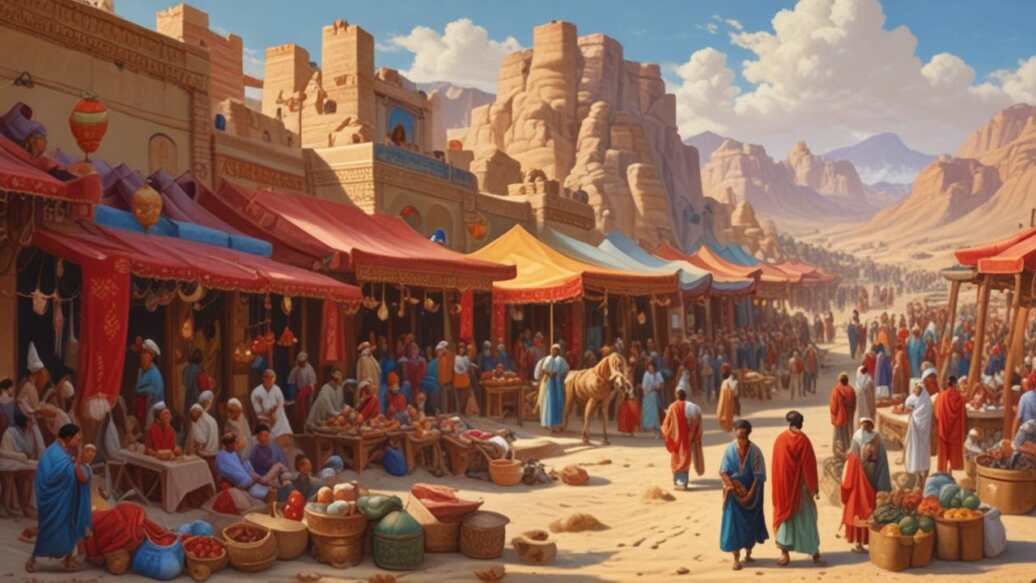
China’s primary export was its namesake treasure. But its contribution to global trade was broader. Chinese merchants offered unique products that were unrivaled in quality and craftsmanship.
The most prized was, of course, silk. This luxurious fabric was a state secret for centuries. Its production was a complex, multi-step process, and the resulting material was lightweight, strong, and shimmering.
Other key Chinese exports included:
- Silk Fabric and Yarn: Produced in countless varieties and used for clothing, tapestries, and currency.
- Porcelain: Later, during the Tang and Song dynasties, fine ceramics became a major export.
- Tea: Initially consumed for medicinal purposes, its popularity spread westward over time.
- Paper and Printing: Revolutionary technologies that later transformed learning in the Islamic world and Europe.
- Rhubarb: A medicinal root highly valued in Western pharmacology.
- Lacquerware: Elegant, durable decorative items made with tree sap.
| Chinese Export | Primary Destination | Notable Use or Impact |
|---|---|---|
| Silk | Roman Empire, Persia, Byzantium | Status symbol, diplomatic gift, currency |
| Porcelain | Middle East, Europe | Household goods, art, influenced European pottery |
| Paper | Abbasid Caliphate | Led to paper mills in Samarkand and Baghdad, revolutionizing record-keeping |
According to archaeological studies of Samarkand tombs, fragments of Chinese paper have been found dating to the 8th century, confirming the early westward transfer of this technology.
Tip: When researching, note that “Silk Road” is a modern term. Ancient merchants called these routes “the road(s) of lapis lazuli” or simply “the roads.”
What Did West Asia and the Mediterranean Trade Eastward?
The trade was not a one-way flow. The Roman Empire and its neighbors supplied goods that were equally vital. These items fed Chinese demand for rare materials and unique products from the West.
Gold and silver bullion were consistently needed to balance the trade deficit caused by Rome’s insatiable appetite for silk. Beyond precious metals, the West offered:
- Glassware: Roman glass, especially from Egypt and Syria, was a coveted luxury item.
- Precious Stones: Rubies, sapphires, and coral from the Mediterranean and Central Asia.
- Textiles: Fine woolen and linen fabrics from Egypt and the Near East.
- Wine and Olive Oil: Amphorae containing these have been found in Chinese archaeological sites.
- Metalware: Gold and silver plates, coins, and weapons.
- Coral and Amber: Mediterranean coral and Baltic amber were prized in Chinese art and medicine.
A famous account by the Greek historian Strabo mentions a Roman expedition that reached the Han court, likely traveling overland. Their goal was to establish a direct trade route, cutting out Parthian middlemen who taxed goods heavily.
How Did Goods Move Along the Overland Silk Road?
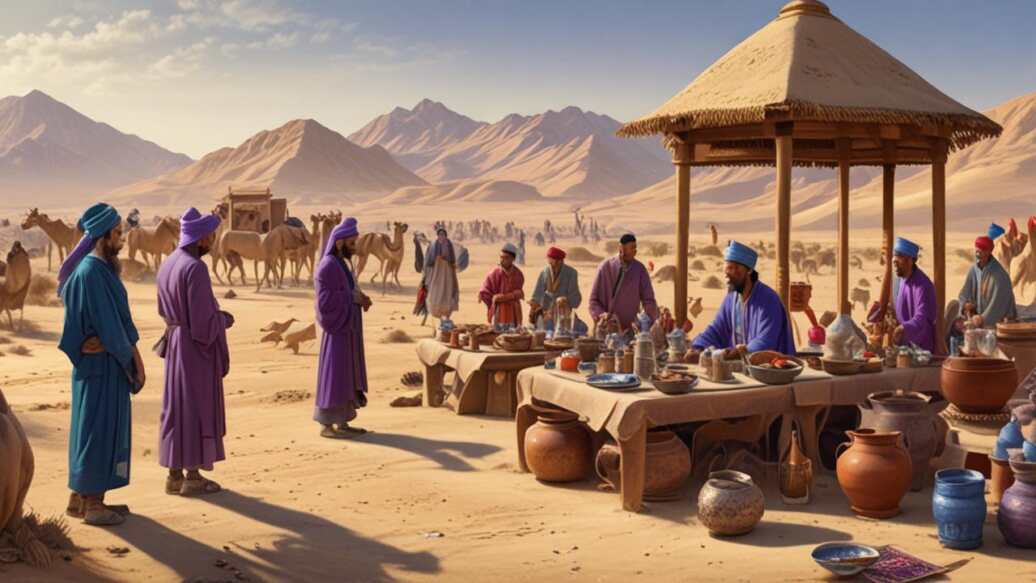
Transportation was slow, dangerous, and organized with precision. Caravans were the primary means of moving Silk Road goods across deserts and mountain passes. A typical journey could take months or even years.
The key to overland transport was the camel. The Bactrian camel, with its two humps, was perfectly adapted to the harsh terrain. A single caravan could include hundreds of camels and their handlers.
The process involved several stages:
- Local Assembly: Goods were collected in emporiums like Chang’an (Xi’an) or Antioch.
- Caravan Formation: Merchants formed large groups for protection against bandits.
- Waystations: Caravanserais provided shelter, water, and food along the route.
- Multi-Ethnic Handling: Goods changed hands multiple times. Sogdian merchants were famous middlemen.
- Final Markets: Products reached major hubs like Kashgar, Samarkand, or Baghdad for further distribution.
These caravans were not just commercial enterprises. They were moving communities with guards, cooks, guides, and officials. The Sogdian people, based in modern Uzbekistan and Tajikistan, became the unofficial managers of much of this trade.
Their language became the lingua franca of the Silk Road.
Warning: Many artifacts labeled as “Silk Road” finds are actually from the maritime routes or regional trade. The overland trade was primarily for high-value, compact luxury goods due to the high cost and risk of caravan transport.
What Goods Traveled the Maritime Silk Road?
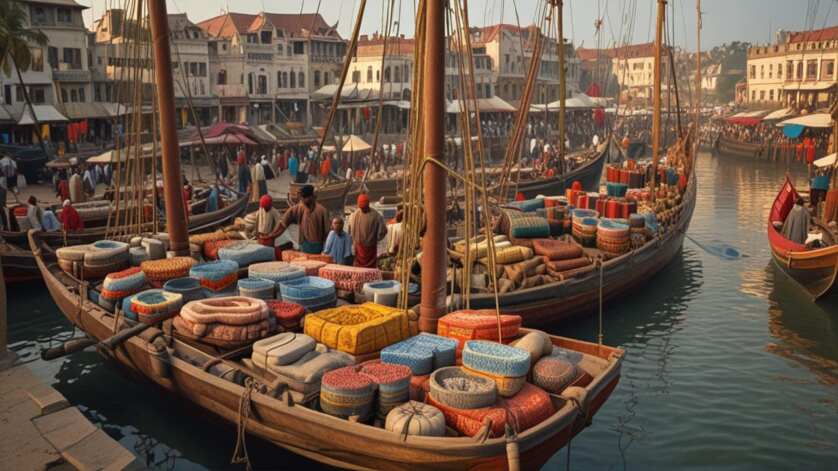
Often overlooked, the Maritime Silk Road was equally important, especially for bulkier or heavier items. Ships could carry vastly more cargo than camels. These sea lanes connected China to Southeast Asia, India, the Persian Gulf, and East Africa.
The Maritime Route carried a different product mix. Chinese porcelain was a major export due to its durability and weight. Spices from the Spice Islands (Maluku) were also transported via these sea routes.
Other key maritime goods included:
- Porcelain: Heavier than silk, it was ideal for ship transport.
- Spices: Pepper, cloves, nutmeg, and cinnamon from Southeast Asia and India.
- Timber and Resins: Woods like teak and aromatic resins for incense.
- Ivory and Exotic Woods: From Africa and South Asia.
- Tin and Metals: From the Malay Peninsula and other regions.
- Cotton Textiles: Indian cotton was a widespread trade good.
| Route Type | Primary Transport | Key Trade Goods | Major Risk |
|---|---|---|---|
| Overland | Camel Caravans | Silk, gems, glass, precious metals, paper | Banditry, harsh weather, political instability |
| Maritime | Dhows, Junks | Porcelain, spices, timber, bulk commodities | Storms, piracy, monsoon dependence |
The port city of Quanzhou in China was described by Marco Polo as one of the busiest in the world. Shipwrecks, like the Belitung shipwreck found off Indonesia, have yielded thousands of pieces of Tang dynasty ceramics, proving the scale of maritime trade.
What Intangible Goods Were Exchanged Along the Silk Road?
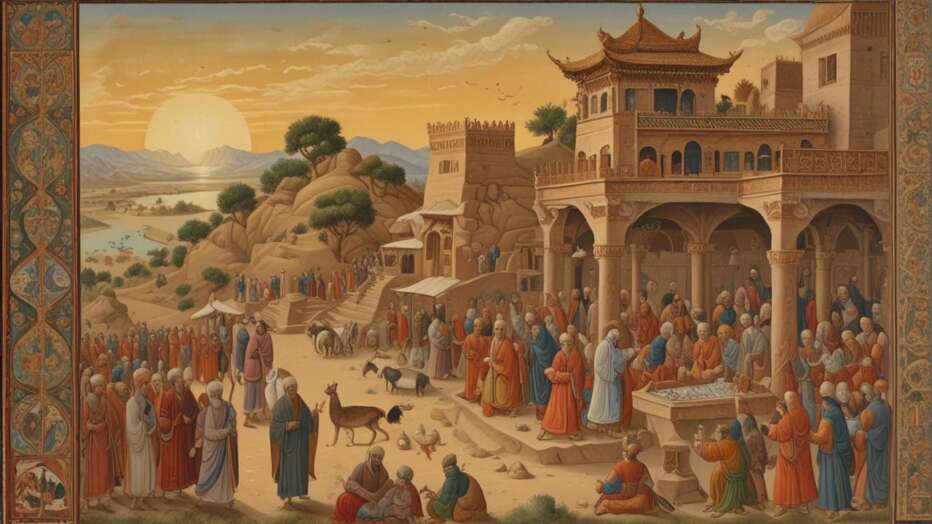
The most profound impact of the Silk Road may not have been in physical goods, but in ideas, beliefs, and technologies. These intangible items spread quietly with merchants and missionaries, permanently altering civilizations.
Religions were major “exports.” Buddhism traveled from India to China and beyond via Silk Road monasteries. Islam later spread along both overland and maritime routes into Central Asia and Southeast Asia. Alongside these came:
- Technologies: Papermaking, printing, gunpowder, the compass (moving west); glassmaking, metallurgy, viticulture (moving east).
- Artistic Styles: Greco-Buddhist art fused Hellenistic and Indian styles in Gandhara. Chinese motifs influenced Persian ceramics.
- Scientific Knowledge: Astronomy, mathematics (like the Indian numeral system), and medical knowledge were shared.
- Musical Instruments: The Chinese pipa and Persian lute share a common ancestor from the Silk Road.
- Culinary Exchanges: Ingredients like grapes, pomegranates, and sesame traveled east. Cooking techniques and recipes also diffused.
Tragically, this network also facilitated the spread of diseases. The most devastating was the Black Death (bubonic plague), which is believed to have traveled from Central Asia to Europe via Silk Road trade routes in the 14th century, killing a third of Europe’s population.
Important: DNA analysis of ancient skeletons has helped trace the movement of pathogens like Yersinia pestis (the plague bacterium) along trade networks, underscoring the unintended biological consequences of global connection.
Who Were the Key Players in Silk Road Trade?
The network was not operated by a single empire. It relied on a chain of diverse and skilled merchants, each controlling a segment of the route. These groups became experts in navigating both terrain and diplomacy.
The most prominent merchant communities included:
- Sogdians: Based in modern Uzbekistan and Tajikistan, they were the quintessential middlemen from the 4th to the 8th centuries. Their diaspora communities dotted the route from China to Byzantium.
- Arab and Persian Traders: Dominated the maritime routes and overland paths after the rise of Islam. They established trading posts from Guangzhou to Zanzibar.
- Indian Merchants: Played a key role in the Indian Ocean network, trading spices, textiles, and gems.
- Central Asian Turks and Mongols: Later, Turkic tribes and the Mongol Empire provided stability (the Pax Mongolica) and administrative protection, facilitating safer trade.
- Roman/Byzantine Traders: Often purchased goods in red Sea ports or Persian Gulf emporiums rather than traveling the full route themselves.
These merchants did not just trade goods. They acted as diplomats, translators, and cultural ambassadors. Their settlements, or trading colonies, were hubs where languages, faiths, and customs mixed freely.
How Did Silk Road Trade Impact Ancient Economies?
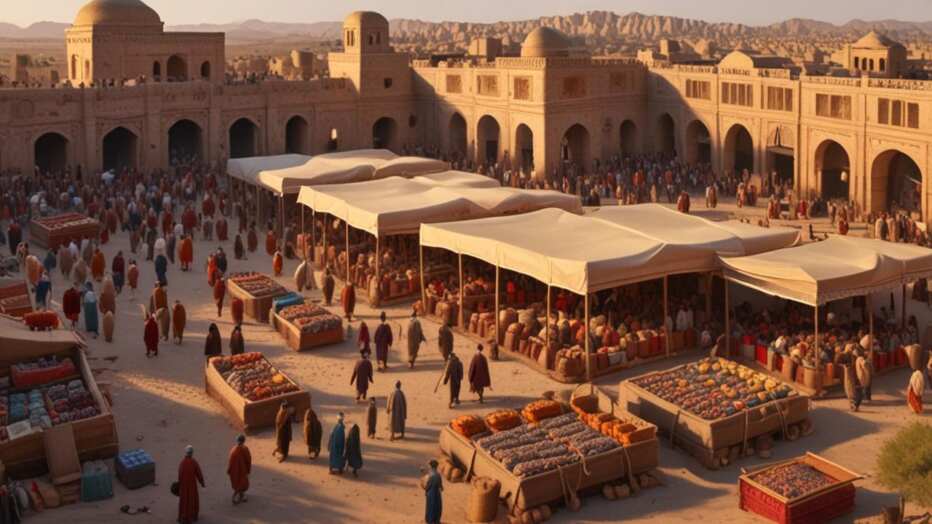
The flow of Silk Road goods created significant wealth and economic dependency. It stimulated local economies at key hubs and generated new industries. However, it also created vulnerabilities.
The economic effects were multifaceted. For producing regions, it meant a boom in specialized crafts. For transit regions, it brought taxes and service industries.
For end consumers, it introduced unprecedented luxury and choice. Here are the key economic impacts:
- Urbanization: Cities like Samarkand, Palmyra, and Kashgar grew rich as trade hubs.
- Specialized Production: Regions focused on exporting their comparative advantage (e.g., Chinese silk, Indian cotton).
- Monetary Systems: The use of gold and silver coinage (like Roman denarii and Chinese liang) facilitated transactions across vast distances.
- Financial Instruments: Early forms of credit and bills of exchange likely developed to avoid transporting large amounts of coin.
- Craft Guilds: In cities like Bukhara, powerful guilds emerged to regulate quality and trade of goods like carpets and ceramics.
However, over-reliance on trade could be disastrous. When the Roman Empire faced currency debasement in the 3rd century, it partly stemmed from a trade deficit caused by paying for Eastern luxuries with precious metals, draining gold reserves.
Frequently Asked Questions
What was the most valuable item traded on the Silk Road?
Silk was consistently one of the most valuable commodities, often worth its weight in gold in the Roman Empire. Later, Chinese porcelain became extremely prized. However, value varied by time and place; at certain points, spices, gemstones, or even slaves could be the most valuable.
Did ordinary people on the Silk Road get to use the traded goods?
For the most part, no. The goods were luxury items destined for aristocratic and wealthy classes. A Roman senator or a Chinese emperor benefited, not a common farmer.
However, the economic activity created jobs that benefited ordinary people in caravan towns.
Were there female merchants on the Silk Road?
Evidence suggests women played important roles, especially within merchant families and local markets. While long-distance caravan travel was predominantly male, women managed caravanserais, sold goods in markets, and produced trade items like textiles. Chinese tombs have been found with female merchants buried alongside trade goods.
How did papermaking technology spread westward?
According to historical accounts, the technology was introduced after the Battle of Talas in 751 CE. Chinese prisoners of war captured by the Abbasid Caliphate in Samarkand included papermakers, who taught the craft to their captors. From there, it spread to Baghdad, Damascus, and eventually Europe.
Is the Silk Road still used for trade today?
The original overland routes are not used for large-scale caravan trade, but the term “Silk Road” has been revived for modern infrastructure projects. China’s Belt and Road Initiative explicitly references this history, aiming to build modern trade corridors connecting Asia with Europe and Africa via roads, railways, and ports.
Final Thoughts
The story of Ancient Silk Road goods is fundamentally a story of human connection. Beyond silk and spices, the network transferred ideas, technologies, and even microbes that reshaped the ancient world. This exchange proved that economies and cultures thrive through interaction, not isolation.
The legacy of these routes endures in the foods we eat, the languages we speak, and the technologies we use today. The Silk Road remains a powerful testament to the enduring impact of global trade.