
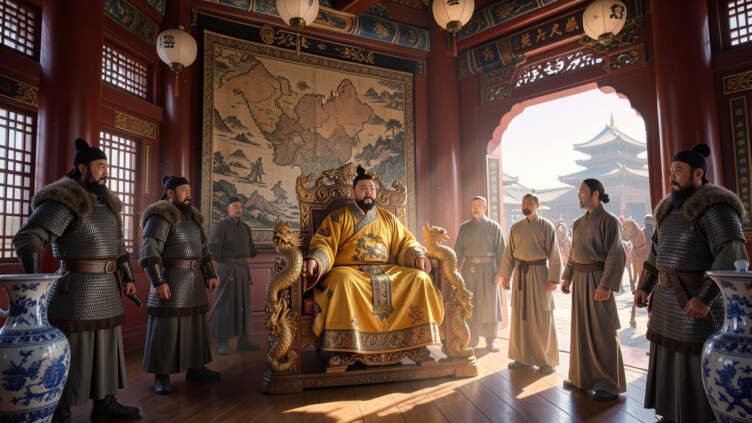
The Yuan Dynasty: Mongol Rule Over China
The Yuan Dynasty marks a unique and transformative period in Chinese history. Established by Kublai Khan in 1271, this era saw the Mongol Empire’s direct governance over the heartland of Chinese civilization. Understanding this dynasty is key to grasping the complexities of cultural exchange, administrative innovation, and the resilience of Chinese traditions under foreign rule.
Simply put, the Yuan Dynasty was a Mongol-led regime that ruled China from 1271 to 1368. It was the first time all of China was unified under non-Han Chinese rulers, resulting in a cosmopolitan empire with extensive trade and cultural fusion but also significant social stratification.
Key Takeaways
- The Yuan Dynasty was established by Kublai Khan, grandson of Genghis Khan, and ruled China for nearly a century.
- The Mongol rulers implemented a four-tiered social hierarchy that favored Mongols and placed the Han Chinese majority at the bottom.
- Despite foreign rule, this period saw flourishing international trade along the Silk Road and significant cultural and technological exchange.
- The dynasty’s administrative structure blended Mongol practices with traditional Chinese systems, creating a unique bureaucratic model.
- Internal strife, corruption, and natural disasters ultimately led to the dynasty’s collapse, paving the way for the Ming Dynasty.
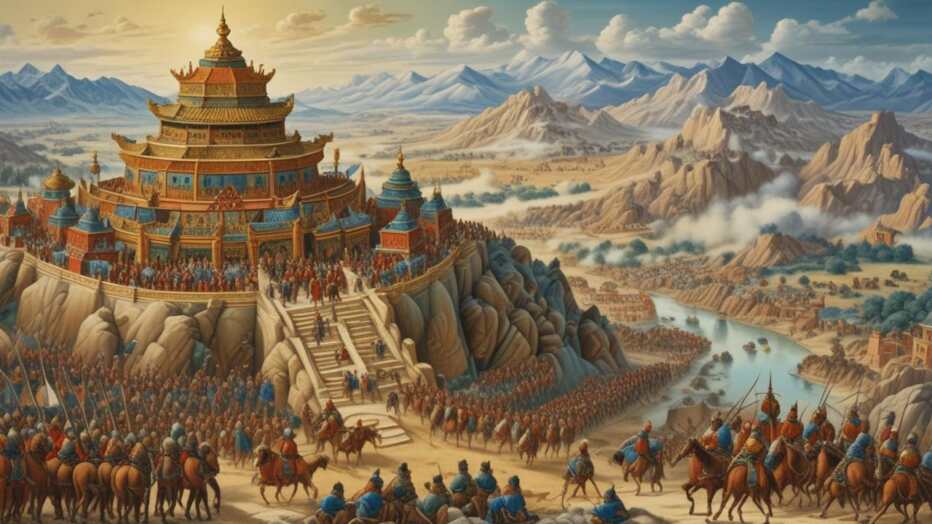
What Was the Yuan Dynasty and How Did It Begin?
The Yuan Dynasty, formally the Great Yuan, was the empire established by Kublai Khan after he completed the Mongol conquest of the Song Dynasty. Kublai Khan declared himself Emperor of China in 1271, adopting a Chinese dynastic name to legitimize his rule over the Central Plain.
The origins lie in the earlier conquests of Genghis Khan and his successors. After decades of warfare, Kublai Khan moved the Mongol capital from Karakorum to Khanbaliq, modern-day Beijing, signaling a shift from a nomadic empire to a settled, Sinicized administration. This move was crucial for governing the vast and populous Chinese territories.
- Mongol Unification: The steppe tribes were unified by Genghis Khan before turning their focus south toward China.
- Decades of War: The conquest of the Jin Dynasty in the north and the Southern Song Dynasty in the south took over 40 years of sustained military campaigns.
- Founding Emperor: Kublai Khan (r. 1260–1294) is considered the dynasty’s founder, though his grandfather Genghis Khan is revered as the patriarch of the Mongol Empire.
- Legitimacy Strategy: Kublai Khan actively adopted Chinese Confucian ideals and administrative practices to win over the local scholar-official class.
- Capital City: Khanbaliq (Dadu) served as the magnificent capital, designed to reflect both Mongol and Chinese architectural styles.
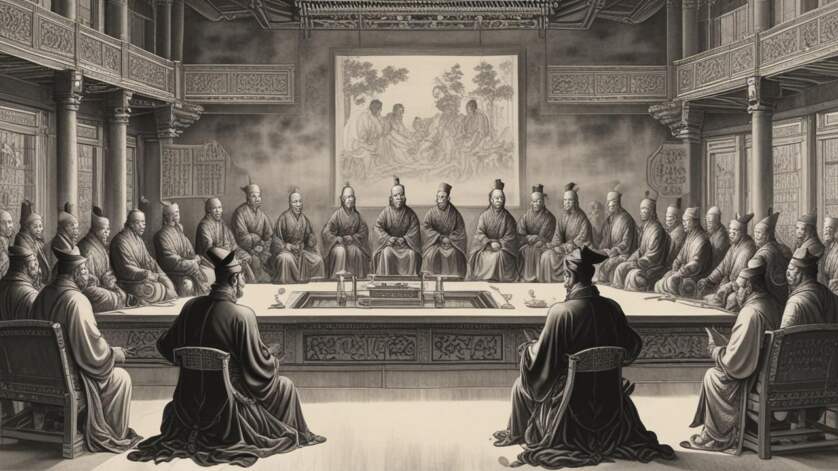
How Did the Mongols Govern China? The Four-Class System
The most infamous policy of the Yuan Dynasty was its formal social hierarchy. This four-tiered system classified subjects based on ethnicity and loyalty, institutionalizing discrimination and shaping daily life for over 90 years.
The system was not just social but also legal and economic. Privileges, tax burdens, and even legal punishments varied significantly between the classes. While the top two classes were ethnically Mongol and Turkic, the vast majority of the population fell into the lower two categories.
| Social Class | Description & Privileges | Approximate Population Share |
|---|---|---|
| 1. Mongols | The ruling elite. Held top government and military posts. Subject to lighter laws. | Less than 1% |
| 2. Semu (Various Color Classes) | Central Asians, Turks, Persians, and Europeans. Served as tax collectors, financiers, and officials. | Around 2-3% |
| 3. Han (Northern Chinese) | Descendants of the former Jin Dynasty territories. Had some administrative rights but faced heavy taxes. | Significant portion |
| 4. Nanren (Southern Chinese) | Former Song Dynasty subjects. At the bottom, subject to the harshest laws, restrictions, and labor duties. | Majority of the population |
This rigid stratification created deep-seated resentment, especially among the educated southern Chinese scholar class who were largely barred from official positions. It became a primary catalyst for the rebellions that eventually ended the dynasty.
Why Was the Yuan Dynasty a Period of Cultural Exchange?
Despite its repressive social policies, the Yuan Dynasty facilitated an unprecedented level of cross-cultural interaction. The Mongol Empire’s vast reach connected China to the Middle East, Europe, and beyond, creating a vibrant cosmopolitan network.
The Pax Mongolica, or Mongol Peace, secured trade routes for over a century, allowing safe passage for merchants, missionaries, and envoys. The Yuan court actively welcomed foreign experts, leading to a remarkable fusion of arts, sciences, and customs.
- Silk Road Revival: Trade in spices, silk, porcelain, and precious metals reached new heights, with merchants from Venice, Baghdad, and Bukhara living in Chinese cities.
- Religious Tolerance: Buddhism, Daoism, Confucianism, Christianity, Islam, and Manichaeism were all practiced and often supported by the court.
- Artistic Fusion: Persian-style blue-and-white porcelain emerged, combining Chinese craftsmanship with Islamic cobalt and motifs. Mongol court costumes influenced Chinese fashion.
- Technology Transfer: Gunpowder, printing, and compass technology spread westward. Astronomical knowledge and medical practices flowed into China from Persia and India.
- Marco Polo’s Famous Journey: The Venetian merchant’s 24-year sojourn at Kublai Khan’s court became the most famous Western account of the era, detailing the empire’s splendor.
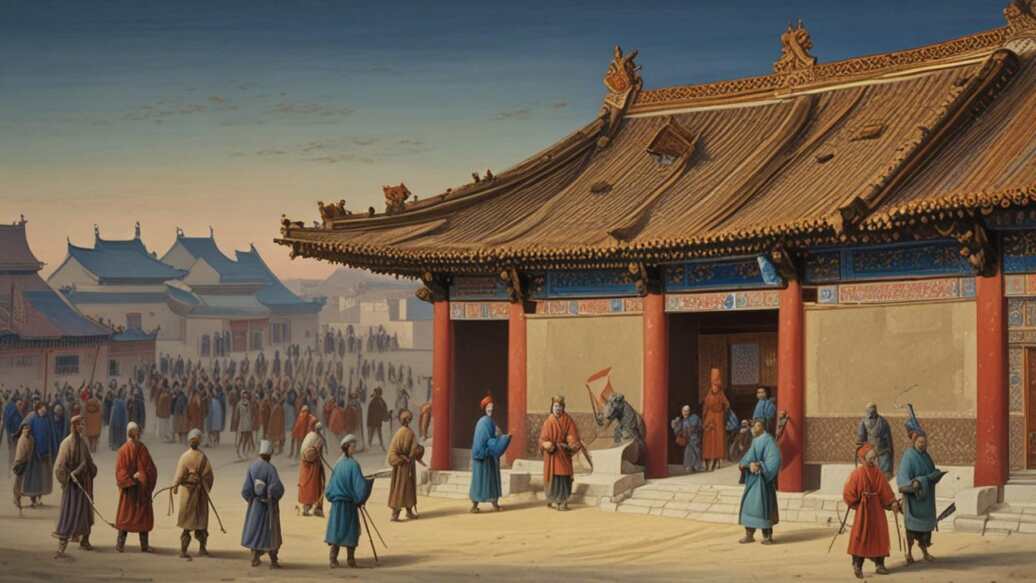
What Were the Key Administrative Innovations of the Yuan Rulers?
The Mongol rulers did not simply impose a foreign system. They created a hybrid bureaucracy that incorporated useful Chinese institutions while maintaining ultimate Mongol control. This approach aimed for efficient governance over a diverse empire.
One of the most significant innovations was the centralized secretariat system. This streamlined decision-making and reduced the power of local governors. The Yuan government also expanded infrastructure projects, most notably the Grand Canal, to transport grain and goods to the capital.
- Centralized Secretariat: A powerful central agency managed state affairs, drafting and implementing imperial edicts across the provinces.
- Provincial Administration: China was divided into 10 provinces, each governed by a Branch Secretariat. This structure laid the groundwork for later imperial administration.
- Enhanced Census and Tax System: Detailed population censuses were conducted to implement a complex tax system, including a house tax, land tax, and labor service levies.
- Monetary Reform: The Yuan issued the world’s first paper currency as the primary legal tender across the entire empire. This was a bold but ultimately inflationary experiment.
- Legal Codification: The Yuan Code revised earlier Chinese law codes, incorporating Mongol customary law and distinguishing punishments based on social class.
Warning: The Yuan monetary policy is a classic cautionary tale. The overprinting of paper money without sufficient silver reserves led to runaway hyperinflation, destroying public confidence in the currency and crippling the economy in the dynasty’s final decades.
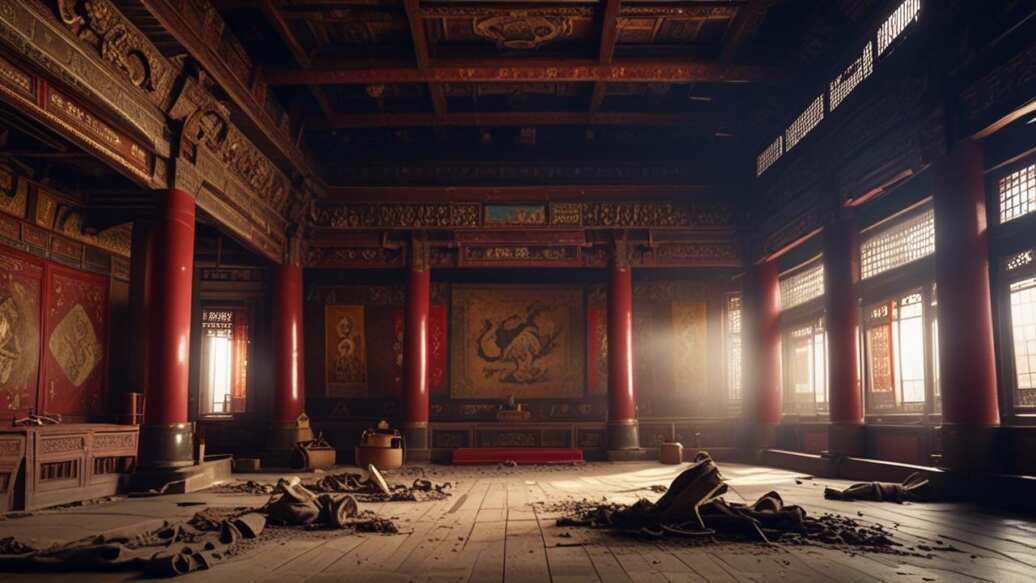
What Led to the Collapse of Mongol Rule?
The Yuan Dynasty’s fall was not sudden but resulted from a confluence of internal decay and external pressure. Decades of mismanagement had weakened the state, while natural disasters struck a population already burdened by heavy taxes and social inequality.
After Kublai Khan’s death in 1294, a period of weak succession followed, with frequent court coups and policy reversals. Corruption became rampant among the Mongol aristocracy and the Semu officials who managed finances.
Major Factors in the Dynasty’s Downfall
- Natural Disasters: A series of floods along the Yellow River and the subsequent plague epidemics killed millions and displaced countless others.
- Fiscal Crisis: Hyperinflation from paper money misuse and extravagant court spending exhausted the treasury.
- Social Unrest: The oppressed southern Chinese class, coupled with famine-stricken peasants, formed secret societies and rebellious groups.
- Military Stagnation: The Mongol military, once invincible, lost its edge. The reliance on foreign troops (like Korean and Javanese units) indicated internal fragility.
- The Red Turban Rebellion: This widespread peasant uprising, fueled by Buddhist millenarian beliefs and ethnic resentment, began in 1351 and became the catalyst for the dynasty’s end.
How Did the Yuan Dynasty Influence Art and Literature?
Paradoxically, one of the dynasty’s most lasting legacies is in the cultural arts it patronized. While the scholar-gentry class faced professional exclusion, many found creative expression in literature and visual arts, often reflecting their complex feelings about Mongol rule.
The most celebrated literary form of the era was zaju, a variety of drama or opera. These performances combined music, dialogue, and acting. Many plays contained subtle allegories criticizing the court or lamenting the state of society, using historical or fictional settings to avoid direct censorship.
| Artistic Domain | Key Developments & Figures | Notable Characteristics |
|---|---|---|
| Painting | Wenren (scholar) painting thrived. Figures like Zhao Mengfu pioneered a revival of ancient styles. | Less focus on realism, more on personal expression and calligraphic brushwork. Landscapes with a sense of solitude. |
| Poetry | Guan Hanqing and Ma Zhiyuan are renowned playwrights/poets. Their works often have melancholic or satirical tones. | Use of vernacular Chinese in drama. Themes of love, justice, and social criticism. |
| Ceramics | Innovation in blue-and-white porcelain, using imported cobalt from Persia. | Dense, intricate designs. A fusion of Chinese forms with Islamic floral patterns. |
| Historiography | Official histories of the preceding Liao, Jin, and Song dynasties were compiled under the Yuan court. | Significant scholarly effort that preserved historical records, following Chinese dynastic tradition. |
This artistic output provided a cultural bridge. When the Ming Dynasty took over, it inherited and continued many of these artistic trends, proving that Mongol rule did not erase Chinese culture but allowed it to evolve.
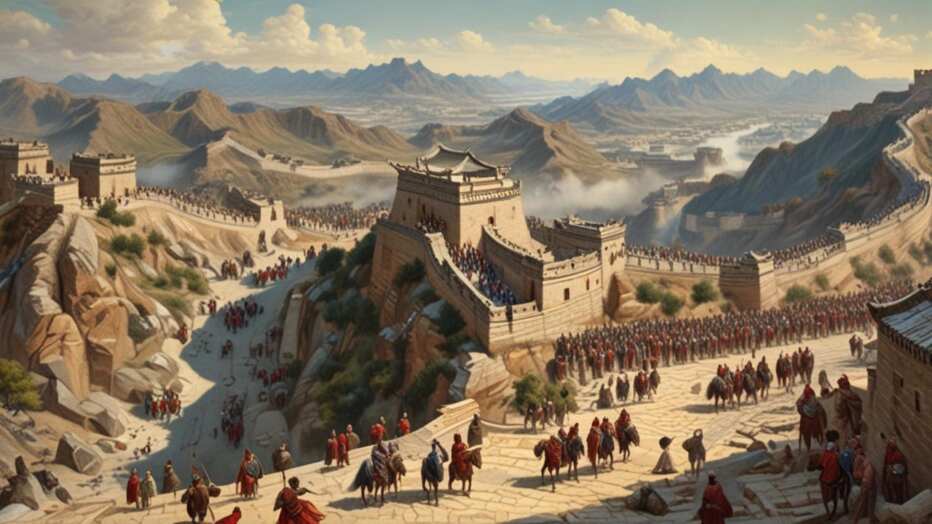
What Was the Legacy of the Yuan Dynasty in Chinese History?
The legacy of the Yuan Dynasty is complex and multifaceted. It was a period of both foreign domination and dynamic integration that left an indelible mark on China’s administrative, cultural, and demographic landscape.
Administratively, the provincial system and the bureaucratic structures refined by the Yuan were adopted with modifications by the succeeding Ming Dynasty. This demonstrated the practical effectiveness of many Mongol-led innovations.
Important: The Yuan Dynasty significantly expanded Chinese geography. The compilation of new maps and administrative divisions included Tibet and Xinjiang as integral parts of the empire for the first time, a claim later dynasties would uphold.
Socially, the dynasty’s end created a powerful narrative of Han Chinese resurgence. The founding of the Ming Dynasty was framed as the restoration of native Chinese rule, an ideological legacy that influenced Chinese nationalism for centuries.
Frequently Asked Questions
Was the Yuan Dynasty Chinese or Mongol?
It was a Mongol dynasty that ruled over a predominantly Chinese population. While the rulers identified as Mongol and maintained steppe customs, they adopted Chinese imperial titles, administrative practices, and Confucian rites to govern effectively and claim legitimacy as the rightful emperors of China.
Why did the Yuan Dynasty only last about 100 years?
The dynasty’s relatively short lifespan was due to several factors: the rigid social hierarchy that fostered rebellion, weak succession after Kublai Khan, rampant corruption, economic mismanagement leading to hyperinflation, and devastating natural disasters that weakened state control.
Did Kublai Khan successfully conquer Japan?
No, his attempted invasions of Japan in 1274 and 1281 both failed catastrophically. The second invasion, involving a massive fleet, was destroyed by a typhoon the Japanese called the “kamikaze” or divine wind. These failures strained the Yuan treasury and military.
What was the capital of the Yuan Dynasty?
The capital was Khanbaliq, which translates to “City of the Khan.” It was built on the site of modern-day Beijing and served as the political center of the Yuan Empire. Its location marked a permanent shift of China’s political center to the north.
How did the Yuan Dynasty affect daily life in China?
Daily life was heavily impacted by the social class system, which determined one’s occupation, taxes, and legal rights. However, for the average person, life continued with farming and trade. The dynasty’s great infrastructure projects, like expanding the Grand Canal, also affected regional economies and movement.
Final Thoughts
The Yuan Dynasty represents a pivotal chapter where the destiny of China was shaped by steppe nomads. It was an era of stark social contrasts, vibrant global exchange, and administrative experiments that would echo through later dynasties. By studying this period, we gain insight into the complex forces of conquest, adaptation, and cultural synthesis that define historical change.