
The History of the Forbidden City Explained
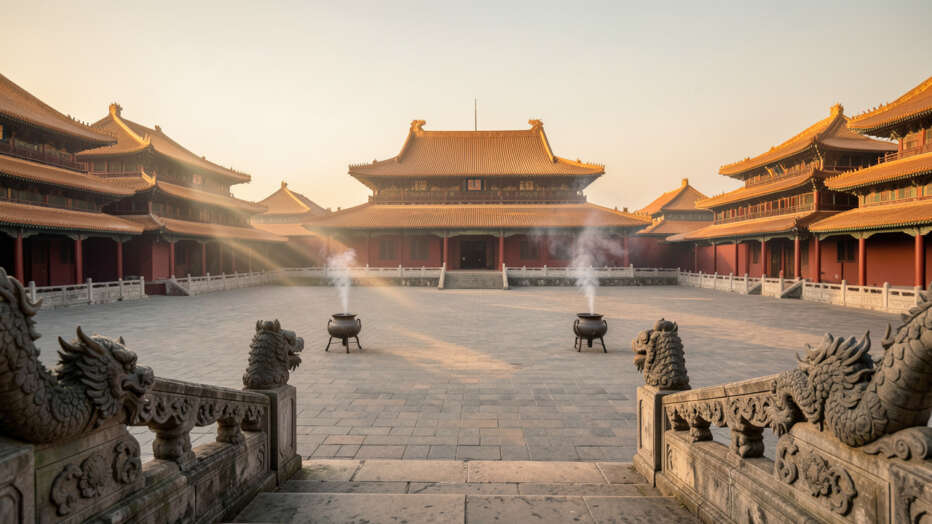
The history of the Forbidden City is a grand narrative of imperial power, architectural genius, and profound cultural legacy. For over five centuries, this walled palace served as the exclusive home for emperors of the Ming and Qing dynasties. It represents the pinnacle of traditional Chinese palatial design and remains one of the most significant historical sites in the world.
Understanding its past offers a direct window into the political and social structures of imperial China. From its construction as a symbol of cosmic order to its modern role as a public museum, the palace has transformed dramatically. This guide explores the key eras, pivotal events, and enduring importance of the world’s largest surviving palace complex.
Simply put, the Forbidden City was the imperial palace and political center of China for 24 emperors during the Ming and Qing dynasties, from 1420 to 1912. Today, it stands as a UNESCO World Heritage site and the Palace Museum, showcasing China’s rich imperial history and architectural heritage.
Key Takeaways
- The Forbidden City was constructed between 1406 and 1420 under the Yongle Emperor of the Ming Dynasty.
- It served as the imperial palace and exclusive home for 24 emperors, becoming the political heart of China.
- The complex is a masterpiece of Chinese palatial architecture, following strict feng shui and cosmological principles.
- Following the end of imperial rule, it was transformed into the Palace Museum, preserving its vast collections.
- Over 17 million people visit the Forbidden City annually, making it a global cultural landmark.
What is the Forbidden City? The Imperial Palace of China
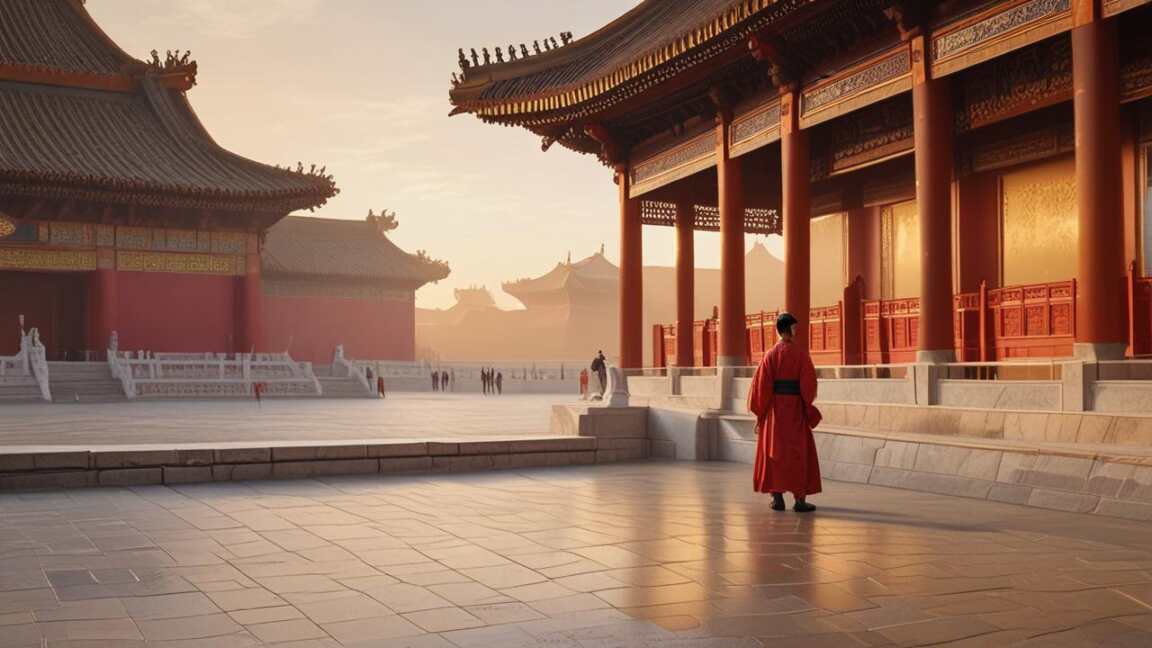
The Forbidden City, known in Chinese as Zijin Cheng, is a massive palace complex in central Beijing. It was the ceremonial and political center of the Chinese government for almost 500 years. Its name comes from the idea that the emperor’s residence was forbidden to ordinary people, accessible only with special permission.
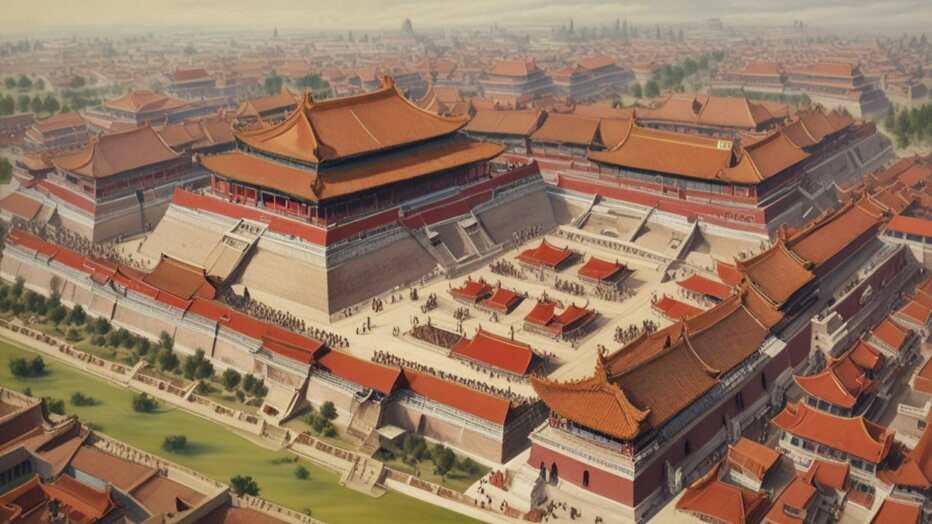
The entire compound covers over 180 acres and is surrounded by a 26-foot-high wall and a 171-foot-wide moat. It consists of 980 surviving buildings with nearly 9,000 rooms. The layout is symmetrical and meticulously organized, reflecting the hierarchical structure of the imperial court.
According to the UNESCO World Heritage Centre, the site is recognized as “the largest collection of preserved ancient wooden structures in the world.” It stands as an unparalleled example of Chinese architectural achievement and urban planning from a bygone era.
Core Design Principles and Symbolism
Every element of the Forbidden City was designed with deep meaning. The layout follows a central north-south axis, with the most important buildings placed along this line. The number nine, symbolizing the emperor and eternity, appears frequently in its design – most famously in the 9,999.5 rooms it was said to contain.
- Feng Shui: The palace is positioned with a mountain (Jingshan Park) behind it for protection and faces south for positive energy.
- Color Symbolism: Yellow roof tiles represent the emperor, while red walls symbolize good fortune and happiness.
- Imperial Hierarchy: Buildings for the emperor are in the southern Outer Court, while those for the empress and concubines are in the northern Inner Court.
| Key Fact | Detail |
|---|---|
| Total Area | 720,000 square meters (178 acres) |
| Length (North-South) | 961 meters (3,153 feet) |
| Width (East-West) | 753 meters (2,470 feet) |
| Number of Rooms | 8,728 (confirmed by museum surveys) |
This table provides a snapshot of the Forbidden City’s immense scale, which was intended to reflect the emperor’s supreme power over the vast empire.
How the Forbidden City Was Built: Construction and Early Ming Dynasty
The construction of the Forbidden City was one of the most ambitious building projects in human history. It began in 1406 after the Yongle Emperor decided to move the capital from Nanjing to Beijing. The project mobilized over a million laborers, including 100,000 artisans and soldiers.
The materials were sourced from all over China. Precious nanmu wood was transported from the southwestern forests, often floating down the Grand Canal. The massive marble slabs for the terraces and pathways were quarried from Fangshan, west of Beijing, and moved during winter by pouring water on the roads to create ice paths for sliding the stones.
Timeline of the Original Construction Phase
- 1406: The Yongle Emperor orders the construction of a new palace complex in Beijing to serve as the new imperial capital.
- 1406-1420: A 14-year construction period involving massive mobilization of resources and labor from across the empire.
- 1420: The Forbidden City is completed. The Yongle Emperor moves the capital and holds the first grand court session in the Hall of Supreme Harmony.
- 1421: Tragedy strikes when lightning strikes the three main halls, destroying them in a fire. This was seen as an ill omen.
The early Ming period was marked by several fires and subsequent reconstructions. The most significant early fire occurred in 1421, just a year after completion. It took decades for the main halls to be fully restored to their former glory.
Warning: The original construction relied on an estimated 1 million laborers, with countless lives lost. It remains a testament to both imperial ambition and the immense human cost of such monumental projects.
The Ming Dynasty Era: Power and Intrigue Within the Walls
For the first 200 years of its existence, the Forbidden City was the exclusive domain of the Ming Dynasty emperors. This era was characterized by periods of brilliant governance, court intrigue, and significant cultural development. The palace was the nerve center where all state affairs were conducted.
The emperors lived in the Inner Court, a vast collection of residences, gardens, and service buildings. The three great halls of the Outer Court—the Hall of Supreme Harmony, the Hall of Central Harmony, and the Hall of Preserving Harmony—were used for grand ceremonies, coronations, and receiving foreign envoys.
Notable Ming Emperors and Their Impact
- The Yongle Emperor (r. 1402-1424): The visionary behind the Forbidden City. He consolidated power, sent Admiral Zheng He on his famous voyages, and commissioned the compilation of the Yongle Encyclopedia.
- The Jiajing Emperor (r. 1521-1567): Known for his obsession with Taoism and alchemy, he rarely held court in the main halls, delegating power to officials like Yan Song.
- The Wanli Emperor (r. 1572-1620): After initial diligent rule, he withdrew from public duties for nearly 30 years, leading to governmental paralysis and rise of eunuch power.
The later Ming period saw a decline in imperial authority and an increase in factional strife within the palace. Eunuchs, who had access to the emperor’s private chambers, often wielded enormous behind-the-scenes power. This internal decay contributed to the dynasty’s eventual collapse.
| Ming Dynasty Period | Key Characteristics of Palace Life |
|---|---|
| Early Ming (1420-1450s) | Construction finalized, strong centralized power, first major fires and rebuilding. |
| Middle Ming (1460s-1560s) | Rise of eunuch influence, court factions, some emperors neglecting duty for personal pursuits. |
| Late Ming (1570s-1644) | Governmental stagnation, increased corruption, palace becomes less effective as a center of administration. |
How the Qing Dynasty Transformed the Forbidden City
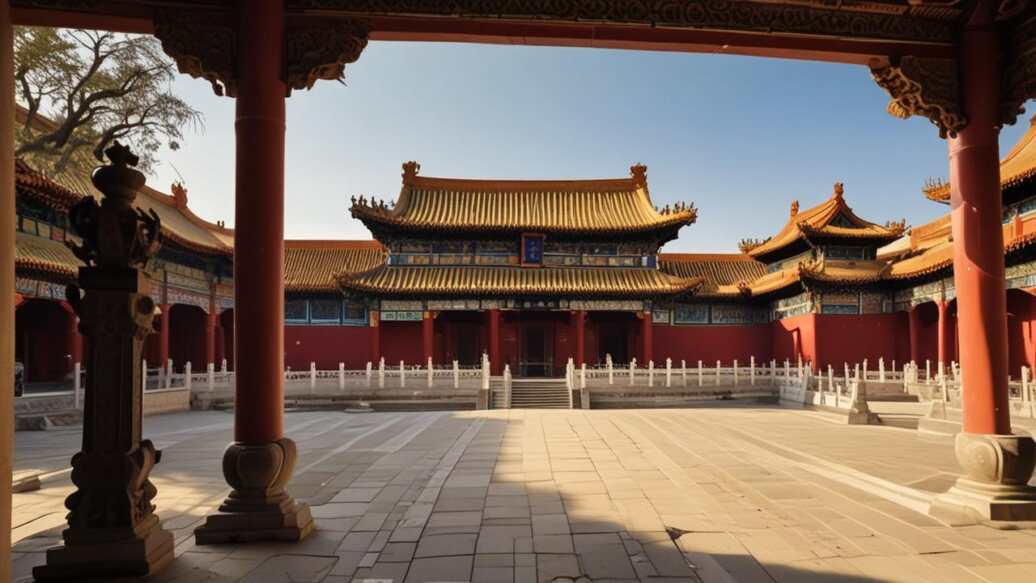
The transition from the Ming to the Qing Dynasty in 1644 marked a significant new chapter for the Forbidden City. The conquering Manchu emperors retained it as their imperial palace but made substantial modifications to reflect their own cultural identity. The complex remained the political heart of China for another 268 years.
The Qing rulers, particularly the Kangxi, Yongzheng, and Qianlong emperors, undertook major renovations and additions. They repaired fire-damaged structures, added new buildings for religious and cultural purposes, and enriched the palace with vast collections of art and literature from across their expanded empire.
Major Additions and Cultural Fusion
- Religious Structures: The Qing emperors added Tibetan Buddhist temples and shrines within the palace, such as the Hall of Compassion and Tranquility, reflecting their patronage of Tibetan Buddhism.
- Script and Language: Manchu script was added alongside Chinese on official plaques and documents throughout the palace, symbolizing dual ethnic governance.
- Garden Enhancements: The Qianlong Emperor, a great patron of the arts, built the exquisite Ningshou Garden complex in the northeast corner, a private retreat with theaters, studios, and artificial landscapes.
The Qing era also saw the Forbidden City become more of a secluded fortress. Strict rules controlled access, and the “inner court” grew more complex with an elaborate system of ranks and residences for the emperor’s consorts. This period culminated in the daily life portrayed in popular dramas, with its intricate protocols and harem politics.
Important: The Qianlong Emperor’s retirement palace within the Forbidden City, the Ningshou Gong, was meticulously designed to be a perfect miniature version of the entire complex, showing the Qing emperors’ deep investment in the site’s cultural significance.
Why the Forbidden City Became the Palace Museum
The fall of the Qing Dynasty in 1912 ended over 2,000 years of imperial rule in China. The last emperor, Puyi, was allowed to live in the Inner Court until 1924, when he was expelled by a warlord. The following year, on October 10, 1925, the Palace Museum was officially established, opening the doors of the Forbidden City to the public for the first time in history.
This transformation was profound. The “forbidden” became accessible. Scholars and conservators began the monumental task of cataloging, preserving, and protecting the imperial collections.
The museum houses an astounding collection of over 1.86 million artifacts, ranging from paintings and calligraphy to ceramics, jade, and imperial clothing.
The Process of Becoming a Public Museum
- 1924: Feng Yuxiang’s forces expel the last emperor, Puyi, from the Forbidden City.
- 1925: The Palace Museum is founded under the Republic of China government, with Li Shizeng as its first director.
- 1930s: Facing Japanese invasion, museum staff undertake the epic “artifacts relocation project,” moving treasures westward to protect them from looting and destruction.
- 1949: After the Chinese Civil War, the collections were split. The main collection remains in Beijing, while a significant portion was taken to Taiwan, forming the core of the National Palace Museum in Taipei.
- Present: The Palace Museum in Beijing has undergone major conservation and now receives millions of visitors annually, continuing its mission of preservation and education.
Tip: To fully appreciate the scale and history, plan to spend at least half a day at the Palace Museum. Entering from the south Meridian Gate and exiting north at the Gate of Divine Prowess is the standard route to see the main sights.
What Survived Wars, Fires, and Time: Preservation Challenges
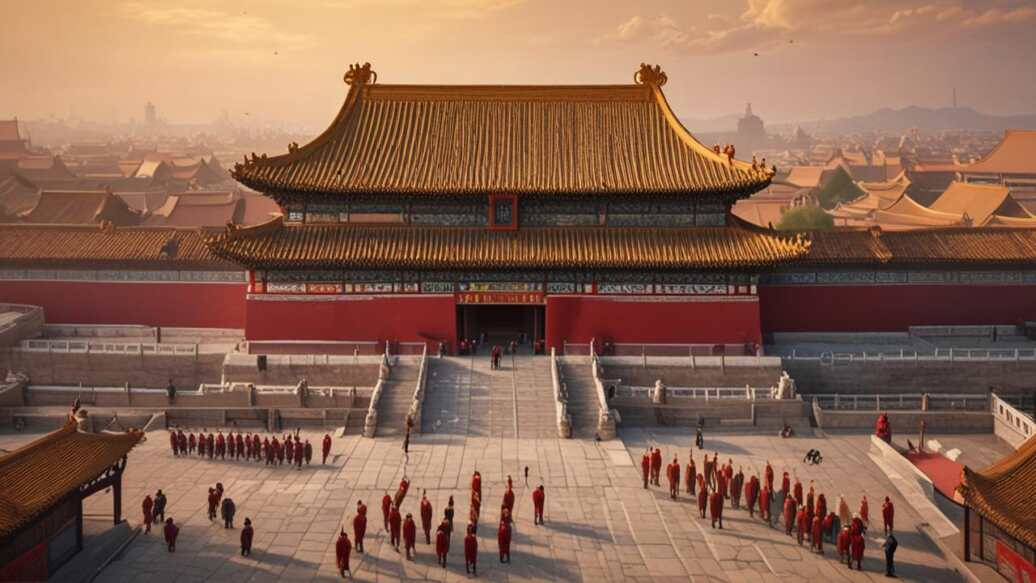
The survival of the Forbidden City over nearly 600 years is remarkable. It has endured fires, earthquakes, wars, and the wear of time. Its preservation has always been a challenge, requiring continuous maintenance and restoration.
The wooden structures are particularly vulnerable to fire and decay.
Historically, a dedicated bureau of craftsmen lived within the palace to perform constant repairs. Today, the Palace Museum employs modern conservation science alongside traditional craftsmanship. In 1987, it was inscribed as a UNESCO World Heritage Site, which has increased international cooperation in its preservation.
- Natural Disasters: A major earthquake in 1976, measuring 7.8 on the Richter scale, caused significant damage but the main structures survived due to their resilient bracket systems.
- Human Threats: During the Boxer Rebellion (1900), foreign troops occupied the palace. During the Cultural Revolution (1966-1976), Premier Zhou Enqai ordered troops to protect it from Red Guard destruction.
- Ongoing Restoration: Massive projects, like the 2002-2008 restoration of the Hall of Supreme Harmony, use traditional techniques to maintain historical accuracy.
| Preservation Challenge | Historical Response | Modern Approach |
|---|---|---|
| Fire | Bronze water vats (originally filled with water) placed throughout for firefighting. | Advanced fire detection systems, strict no-smoking policy, and modern fire suppression in key areas. |
| Wood Decay | Regular re-lacquering and replacement of damaged timbers by court artisans. | Climate-controlled storage for artifacts, environmental monitoring, and use of traditional materials in restoration. |
| Visitor Impact | Strict exclusion of the public maintained the palace’s integrity for centuries. | Daily visitor caps, raised walkways to protect pavement, and digital exhibits to reduce foot traffic in fragile areas. |
Who Should Visit the Forbidden City Today? A Modern Traveler’s Guide
Today, the Forbidden City, or Palace Museum, is one of the most visited museums in the world. It is a must-see for anyone interested in Chinese history, architecture, or art. Its appeal is broad, attracting students, scholars, photographers, and casual tourists alike.
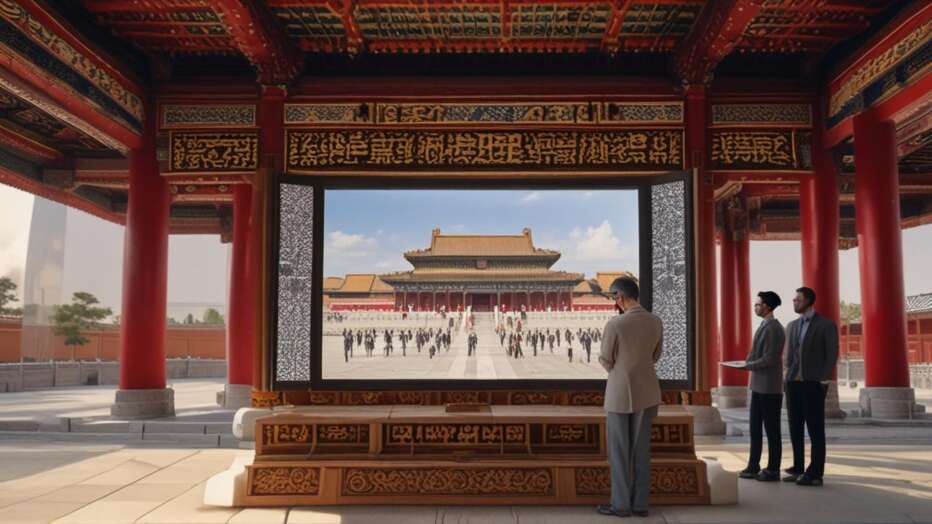
Visitors can explore the grand ceremonial halls, wander through the intimate gardens, and view rotating exhibitions of imperial treasures. The museum has also embraced technology, offering virtual tours, extensive online catalogs, and digital restoration projects that make parts of its collection accessible to a global audience.
Essential Tips for Planning Your Visit
- Booking: Purchase tickets online in advance through the official Palace Museum website or app. Daily visitor numbers are limited.
- Best Time to Visit: Weekdays in spring (April-May) or autumn (September-October) offer the best weather and smaller crowds.
- Must-See Highlights: The three great halls of the Outer Court, the Hall of Mental Cultivation in the Inner Court, the Imperial Garden, and the Clock Gallery.
- Audio Guides: Rent an audio guide or download the official app for detailed explanations of key buildings and artifacts.
- Accessibility: While much of the complex involves stone steps, the main north-south axis is relatively accessible, and wheelchairs are available for loan.
Future Directions: Conservation and Digital Innovation
The Palace Museum continues to evolve. Its primary mission remains the conservation of its unparalleled collections and the historic architecture. However, it also plays a vital role in research and public education.
Recent projects have focused on stabilizing weakened structures and using 3D modeling to document every detail.
The museum is a leader in cultural digitization. The “Digital Forbidden City” project aims to create high-resolution 3D models of every building and artifact. This not only aids in conservation planning but also allows global access to treasures that are too fragile to be put on permanent display.
It ensures the legacy of this imperial palace will endure for future generations.
Frequently Asked Questions
How long did it take to build the Forbidden City?
The original construction of the Forbidden City took approximately 14 years. It was ordered in 1406 by the Yongle Emperor and was largely completed by 1420, when the capital was officially moved to Beijing. The project involved mobilizing over a million workers from across the Chinese empire.
Why is it called the “Forbidden” City?
It was called the “Forbidden City” because access to the palace was strictly controlled and forbidden to ordinary people. Only the emperor, his family, concubines, and selected servants and officials were allowed inside. This enforced the sanctity and mystery of imperial power.
How many emperors lived in the Forbidden City?
A total of 24 emperors lived in the Forbidden City. This includes 14 emperors from the Ming Dynasty (1368-1644) and 10 from the Qing Dynasty (1644-1912). The last emperor, Puyi, lived there until he was expelled in 1924.
What is the difference between the Forbidden City and the Palace Museum?
They refer to the same physical complex. “Forbidden City” is the historical name for the imperial palace. The “Palace Museum” is the modern institution that manages and operates the site as a public museum, preserving its collections and history since 1925.
What major treasures are housed in the Palace Museum?
The Palace Museum holds over 1.86 million artifacts. Key collections include imperial ceramics (like famous blue-and-white porcelain), precious jades, intricate clocks, paintings from the Chinese masters, and vast archives of imperial documents and books, including rare editions of the Yongle Encyclopedia.
Final Thoughts
The history of the Forbidden City is the story of imperial China itself. From its construction as a symbol of absolute power to its current role as a guardian of national culture, it has witnessed the full arc of China’s last two major dynasties. Its walls hold the secrets of court politics, artistic achievement, and the daily lives of emperors.
Visiting or studying the Forbidden City provides a tangible connection to this complex past. Its careful preservation ensures that the grandeur of Ming and Qing architecture and the depth of Chinese artistic tradition remain accessible for all to appreciate. It stands today not as a forbidden place, but as a shared treasure of world heritage.