How the Silk Road Connected China to the World
The Silk Road was one of the most significant networks of trade routes in human history. It did not just move goods across continents; it shaped economies, cultures, and religions for over a millennium. Understanding how this ancient pathway linked China to the rest of the world reveals a story of human ingenuity and exchange.
This post explores the origins, key hubs, and lasting legacy of this legendary trade route. You will learn about the items traded, the challenges faced by merchants, and the profound cultural impact it left behind.
Simply put, the Silk Road was a vast web of overland and maritime routes that enabled the first major exchange between China and civilizations in the Mediterranean, Central Asia, South Asia, and the Middle East. It facilitated not just trade, but the transmission of ideas, technologies, and religions that shaped the ancient and medieval world.
Key Takeaways
- The Silk Road was not a single road but a complex network of land and sea routes operating for over 1,500 years.
- China’s primary exports included silk, porcelain, and tea, while it imported glassware, wool, and precious metals from the West.
- Major oasis cities like Samarkand and Kashgar served as vital hubs for rest, trade, and cultural exchange.
- The exchange went far beyond commerce, spreading religions like Buddhism and technologies like papermaking.
- Its decline resulted from the rise of direct maritime trade and the fall of key intermediary empires.
What is the Silk Road and How Did It Start?
The Silk Road gets its name from the lucrative trade in Chinese silk, a fabric so prized in Rome that it was worth its weight in gold. However, silk was just one commodity on a route that began to take shape as early as the 2nd century BCE. Its creation was linked to the diplomatic missions of Zhang Qian, a Han Dynasty envoy.
Emperor Wu of Han sent Zhang Qian westward to forge alliances against the nomadic Xiongnu tribes. While he did not secure his primary military objective, his travels opened Chinese eyes to the rich cultures and goods of Central Asia. This knowledge paved the way for organized trade.
The Han Dynasty’s Push Westward
The Han Dynasty’s need for powerful warhorses from Central Asia and its desire to extend influence were key catalysts. They established military garrisons and administrative posts along the route to protect caravans. This state support formalized what may have been sporadic earlier contacts into a sustained trade corridor.
- Primary Motivation: Securing alliances and access to Central Asian horses.
- State Involvement: Establishment of protectorates like the Western Regions to safeguard traders.
- Early Exports: Silk, lacquerware, and bronze mirrors moved west.
- Early Imports: Fermented dairy products, grapes, and alfalfa for horse fodder.
This initial phase set a pattern. The Silk Road thrived when powerful, stable empires like the Han, Tang, Mongol, and Persian empires controlled its segments, ensuring safety for merchants.
Key Hubs and Oasis Cities Along the Route
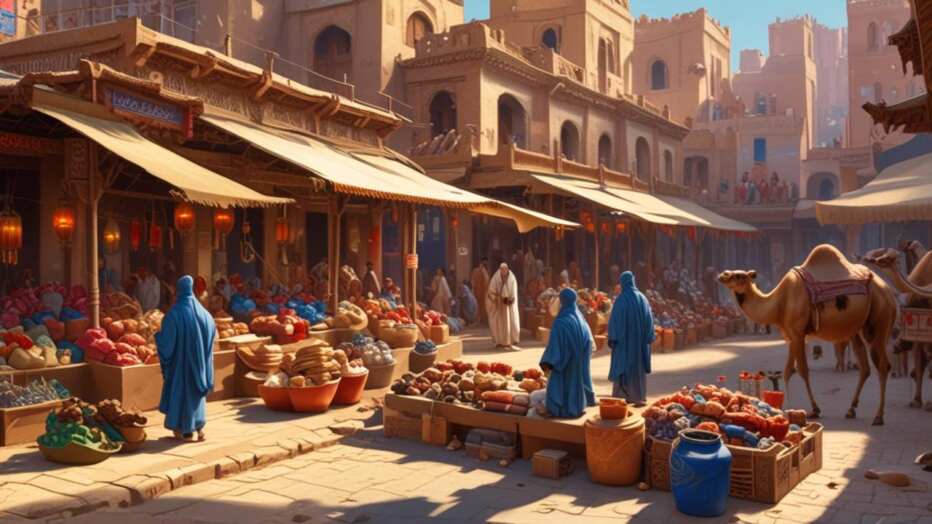
The Silk Road’s overland journey was perilous. Merchants relied on a chain of oasis cities that provided water, food, and protection. These cities became wealthy, cosmopolitan centers where languages, religions, and goods mixed freely.
They were the engines of the Silk Road.
Two primary routes branched out from China, skirting the harsh Taklamakan Desert to the north and south. They converged at key junctions before continuing westward. These routes were arteries of commerce and culture.
| Major Silk Road Hubs | Significance |
|---|---|
| Chang’an (Xi’an) | The eastern terminus, imperial capital of the Tang Dynasty, and starting point for most caravans. |
| Dunhuang | Gateway to the desert, famous for its Mogao Caves filled with Buddhist art and manuscripts. |
| Kashgar | Critical junction where the northern and southern desert routes met, teeming with diverse traders. |
| Samarkand | One of the oldest inhabited cities, a major center of Islamic learning, paper production, and craftsmanship. |
| Constantinople (Istanbul) | The western terminus, capital of the Byzantine Empire, and the final destination for many goods heading to Europe. |
These cities were more than rest stops. They were melting pots. A merchant from Persia might sell glassware to a Sogdian trader, who then transported it to a Chinese buyer in Chang’an, all while a Buddhist monk from India studied at a local monastery.
What Goods Were Traded on the Silk Road?
The trade goods of the Silk Road were diverse and moved in both directions. While China was famed for its silk, tea, and porcelain, it also imported a wide array of items that were previously unknown or rare in East Asia. This exchange transformed daily life and commerce across Eurasia.
From China to the West
Chinese exports were high-value, low-weight items ideal for long-distance caravan travel. These luxury goods were status symbols in foreign courts and markets.
- Silk: The most famous commodity, valued for its strength, beauty, and lightweight nature.
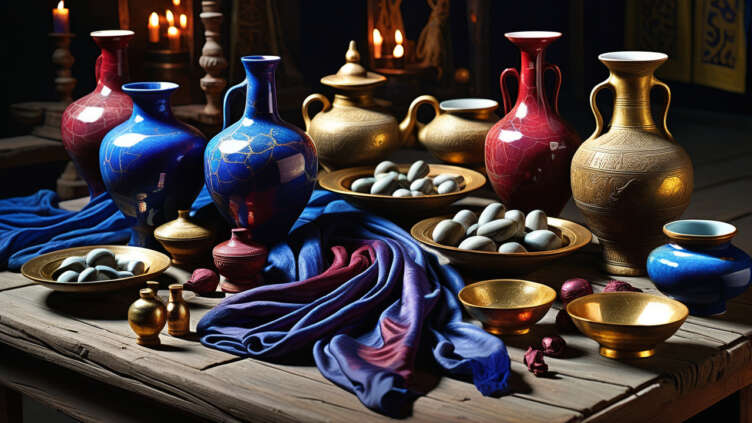
- Porcelain: Durable and beautiful ceramic wares, especially from later dynasties like the Song and Ming.
- Tea: Became a major export along overland routes and later via the Maritime Silk Road.
- Lacquerware: Exquisitely crafted items coated in glossy, durable lacquer.
- Spices: Ginger, cinnamon, and other spices cultivated in China.
From the West to China
Incoming goods were equally transformative. Many of these imports changed Chinese agriculture, art, and culture permanently.
- Glassware: Roman and Persian glass was highly prized for its clarity and craftsmanship.
- Precious Metals & Stones: Gold, silver, amber, and coral from the Mediterranean and Persia.
- Wool and Linen Textiles: Provided alternatives to Chinese silk for certain uses.
- Agricultural Products: Grapes (for wine), walnuts, pomegranates, and sesame.
- Livestock: Particularly powerful “heavenly horses” from the Fergana Valley.
| Direction of Trade | Key High-Value Goods | Impact on Receiving Region |
|---|---|---|
| Eastward (to China) | Glass, wine, grapes, carpets, gold | Enriched Chinese art, agriculture, and luxury markets. |
| Westward (to Rome/Europe) | Silk, porcelain, spices, lacquerware | Created immense demand, influenced fashion and diet. |
How Did Goods Travel Along the Silk Road?
The journey of a single bolt of silk from a Chinese workshop to a Roman noble could take years and pass through dozens of hands. Travel was slow, dangerous, and required immense preparation. Merchants used various methods depending on the terrain.
The primary mode of transport was the camel caravan. Bactrian camels, with their two humps, were perfectly suited for the harsh desert conditions of Central Asia. They could carry heavy loads and go days without water.
The Role of Sogdian Merchants
While Chinese and Roman merchants occasionally made long journeys, the true masters of the Silk Road were the Sogdians. From their cities in modern Uzbekistan and Tajikistan, they formed a vast commercial diaspora. They were skilled linguists and negotiators, often acting as middlemen.
Sogdian became the lingua franca of the Silk Road. Their merchant communities, or “colonies,” dotted the route from Persia to China. They organized caravans, managed finances, and navigated the complex politics of different kingdoms.
Maritime Routes: The Other Silk Road
The term “Silk Road” also encompasses a network of maritime trade routes connecting China’s southeastern ports to Southeast Asia, India, the Persian Gulf, and East Africa. This sea-based network became increasingly important from the Tang Dynasty onward.
Ships carried huge quantities of porcelain, silk, and tea, which were less suitable for camel transport. This route was faster for bulk goods but faced its own dangers, from monsoons to piracy. Key ports included Guangzhou (Canton) and Quanzhou in China, and Srivijaya in Southeast Asia.
Tip: To visualize the journey, remember the famous Chinese saying: “One can travel 1,000 miles with a horse, but only with a friend can one go farther.” Silk Road trade relied entirely on these networks of human cooperation across vast distances.
What Were the Major Challenges of Silk Road Travel?
Traders on the Silk Road faced a gauntlet of physical and human challenges. The routes crossed some of the most inhospitable terrain on Earth, from scorching deserts to high, freezing mountain passes. Success required courage, capital, and careful planning.
Geographic and Climatic Dangers
The environment was the first and greatest enemy. The Taklamakan Desert, whose name reportedly means “you go in but you don’t come out,” claimed countless lives and caravans. Similarly, the Pamir Mountains, known as the “Roof of the World,” presented treacherous, oxygen-thin passes.
- Desert Storms: Could bury entire caravans in sand.
- Lack of Water: Required precise knowledge of oasis locations.
- Extreme Temperatures: From freezing cold in mountain passes to deadly heat in the desert.
- Altitude Sickness: A significant risk when crossing high plateaus.
Human Threats and Political Instability
Even after surviving nature, merchants faced human dangers. Robbery was a constant threat, especially in remote areas. Warfare between nomadic tribes or empires could suddenly close routes or destroy oasis cities.
Customs duties and bribes at various checkpoints could eat into profits.
The political landscape was a major factor. The Silk Road flourished when large, stable empires like the Tang, Abbasid, or Mongol controlled long stretches. The Mongol Empire in the 13th and 14th centuries created the Pax Mongolica, a period of unprecedented safety and administrative unity that allowed merchants like Marco Polo to travel from Europe to China with relative ease.
Warning: The risks were monumental. It was estimated that a merchant might need to invest a decade’s worth of profit to fund a single caravan journey, knowing a 50% loss rate was common due to theft, loss, or spoilage.
How Did the Silk Road Facilitate Cultural Exchange?
The Silk Road’s most enduring legacy is not in the goods it carried, but in the ideas, beliefs, and technologies that spread along with them. It was history’s greatest highway for cultural diffusion, permanently altering the societies it connected.
The Spread of Religions
Missionaries and monks traveled alongside merchants. Buddhism made its monumental journey from India to China along the Silk Road. Monks established monasteries in oasis cities like Kizil and Dunhuang, where they created stunning cave art and translated scriptures.
Manichaeism and Nestorian Christianity also spread eastward.
Later, Islam spread eastward along the same routes, eventually becoming the dominant faith in Central Asia. This religious exchange created a spiritual landscape far richer than any single region could have developed alone.
Technology and Knowledge Transfer
Critical technologies crossed borders. Papermaking, invented in China, reached the Islamic world after the Battle of Talas in 751 CE, where Chinese prisoners revealed the secret. From there, it spread to Europe, revolutionizing record-keeping and scholarship.
Gunpowder, the compass, and printing techniques also traveled west.
Conversely, astronomy, mathematics (like the Indian numeral system), and medicine flowed eastward. Architectural styles blended, seen in the Buddhist pagodas that evolved from Indian stupas and the Islamic architecture that influenced designs in western China.
Artistic and Culinary Fusion
Art forms hybridized. Gandharan art, which combined Greek sculptural styles with Buddhist themes, is a prime example. Ceramics in Tang China incorporated motifs from Persian silverwork.
The culinary exchange was equally profound: China adopted grapes, wine-making, and new dairy products, while the West adopted new spices and cooking techniques.
Why Did the Silk Road Decline?
The overland Silk Road did not close overnight but faded over several centuries due to a combination of factors. The same forces that had made it powerful—stable empires and safe passage—began to unravel. The rise of maritime trade offered a more efficient alternative.
The Fall of Intermediary Empires
The fragmentation of the Mongol Empire in the 14th century ended the Pax Mongolica. The route became dangerous again as successor khanates fought. The Black Death, which also traveled along Silk Road routes, devastated populations in both Europe and Asia, reducing trade volumes.
The rise of powerful, expansionist Ottoman and Timurid empires disrupted traditional routes and imposed heavy tariffs. The journey became less profitable and more risky for European merchants.
The Rise of Maritime Trade
The most significant factor was the development of powerful, ocean-going ships in Europe during the Age of Exploration. Maritime routes could carry far more bulk cargo—like porcelain, spices, and tea—more directly and cheaply than camel caravans.
European powers like Portugal and Spain sought sea routes to Asia to bypass overland intermediaries. The discovery of the Cape of Good Hope route and the crossing of the Atlantic made the vast, slow, and expensive overland Silk Road economically obsolete for most long-distance trade.
Important: The “decline” was really a transformation. Overland trade continued on a smaller scale, and the cultural and demographic patterns established over centuries remained. The Silk Road’s legacy was embedded in the societies it had shaped.
What is the Modern Legacy of the Silk Road?
The ancient Silk Road may be a historical concept, but its legacy is profoundly active in the modern world. It is a powerful symbol of globalization, connectivity, and the benefits of cross-cultural exchange. This legacy manifests in several key ways.
Cultural and Archaeological Heritage
The physical remnants are UNESCO World Heritage sites. The Mogao Caves at Dunhuang, the ruins of Samarkand, and the Persian caravansaries are treasured cultural monuments. Archaeological finds, like the incredibly preserved textiles from the Tarim mummies or the Astana graves, continue to reveal details about life on the road.
Food is a living legacy. Noodles, dumplings, and countless spice blends that are now considered “native” to various cuisines are the result of centuries of exchange. The tea culture of China and the silk industry of Suzhou remain vibrant cultural icons.
Geopolitical Symbol and Initiative
In contemporary geopolitics, the term “Silk Road” has been revived. China’s Belt and Road Initiative, launched in 2013, explicitly references this history. It aims to create modern land and maritime infrastructure networks to foster trade and connectivity across Eurasia and beyond, echoing the ancient routes.
This initiative demonstrates how the concept of a Eurasian trade corridor continues to shape strategic thinking and economic policy. It highlights the enduring importance of the geographic spaces the ancient Silk Road once linked.
Lessons for Globalization
The Silk Road offers historical lessons. It shows that globalization is not a new phenomenon. It demonstrates that trade flourishes under conditions of political stability and security.
Most importantly, it proves that when people connect, the exchange of goods inevitably leads to a deeper exchange of ideas, beliefs, and innovations that benefit all.
Frequently Asked Questions
Why is it called the Silk Road if so many things were traded?
The name was coined in 1877 by German geographer Ferdinand von Richthofen. He used it to describe the historical trade routes because silk was the most famous and uniquely Chinese commodity that drove the initial, sustained long-distance trade. The name captured the essence of the luxury goods that made the journey worthwhile.
How long did it take to travel the entire Silk Road by camel?
The journey was not a single trip. A complete journey from Chang’an to Constantinople could take several years. It involved multiple stops for rest, trade, and waiting for favorable seasons or political stability.
Caravans typically traveled in stages, spending winters in oasis towns and covering distances only during safer, milder months.
Did Marco Polo use the Silk Road?
Yes, the Venetian explorer Marco Polo traveled to the court of Kublai Khan in China in the 13th century via the Silk Road. His detailed accounts, though sometimes exaggerated, provided Europeans with their first vivid description of the wealth and sophistication of the East, fueled by the safety of the Mongol-controlled routes.
What ended the importance of the overland Silk Road?
The primary factor was the rise of efficient European maritime trade in the 15th and 16th centuries. Sea routes could transport bulk goods like porcelain and spices more cheaply and directly. The political fragmentation of the Mongol Empire and the rise of the Ottoman Empire, which taxed overland routes heavily, also made the overland journey less attractive.
Are there any Silk Road routes still used today?
While not for traditional caravan trade, the geographic corridors remain vital. Modern railways, roads, and pipelines in Central Asia follow paths similar to ancient routes. Furthermore, the cultural and ethnic connections established centuries ago still define the social fabric of the region, linking communities from Xi’an to Istanbul.
Final Thoughts
The Silk Road stands as humanity’s first great experiment in globalization. It was a conduit not just for silk and spices, but for the very ideas that built civilizations. Its story reminds us that connection leads to innovation and that the exchange between cultures is a powerful engine of human progress.
The ancient paths may be quiet, but the legacy of the Silk Road is woven into the fabric of our modern, interconnected world.