
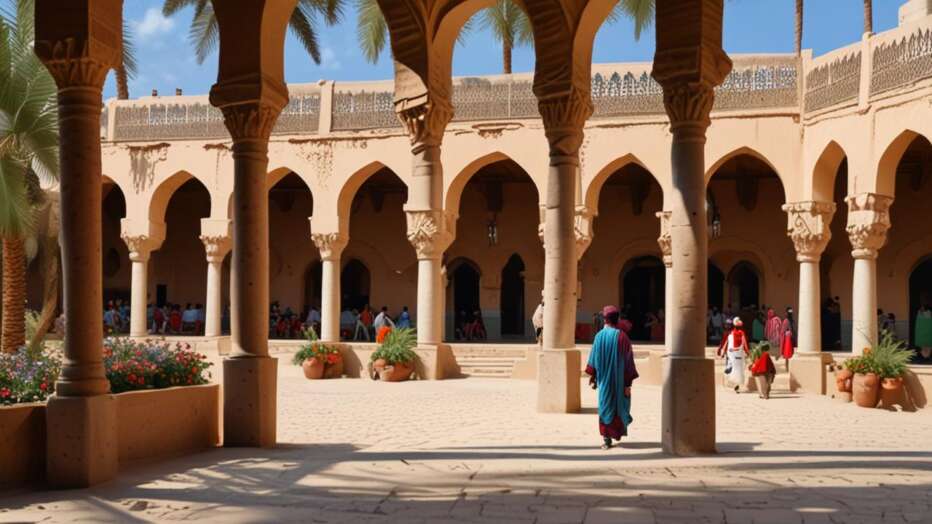
The Role of Oasis Cities Along the Silk Road
Oasis cities along the Silk Road were the vital beating hearts of ancient transcontinental trade. These desert settlements provided life-saving water, food, and shelter to merchants, camels, and armies crossing some of the world’s harshest terrains. Without them, the exchange of goods, ideas, and culture between East and West would have been impossible.
This post explains how these crucial hubs functioned, why they were strategically located, and the profound impact they had on shaping civilizations. You will learn about the different types of oasis stops and their lasting legacy.
Simply put, oasis cities were indispensable service stations and cultural melting pots in the desert. They offered water, protection, and trade facilities to caravans, directly enabling the long-distance commerce that defined the Silk Road and facilitating unprecedented cultural diffusion across Eurasia.
Key Takeaways
- Oasis cities were essential, planned infrastructure providing water, security, and logistics for Silk Road caravans.
- These settlements acted as crucial economic engines, where merchants traded goods, paid taxes, and stored wares.
- The role of oasis cities extended beyond commerce; they became centers for cultural exchange, religious spread, and technological transfer.
- Geopolitical control over key oases determined the rise and fall of empires and trade route dominance.
- Their decline followed the shift in trade routes and the advancement of maritime navigation.

What is an Oasis City on the Silk Road?
An oasis city was a substantial settlement built around a reliable water source in a desert or arid region. Unlike a simple watering hole, a true oasis city featured permanent architecture, a local economy, defensive structures, and complex social systems. It served as a critical node on the Silk Road network.
Water was the foundation of everything. This water came from natural springs, underground aquifers tapped via qanats (underground channels), or seasonal rivers. The presence of water allowed for agriculture, supporting local populations and providing provisions for transient caravans.
This made them strategic points of immense value to any controlling power.
The characteristics of a major Silk Road oasis city included:
- Permanent Water Infrastructure: Caravanserais, baths, and irrigation systems like qanats.
- Defensive Walls and Fortifications: To protect the valuable resources and trade goods from raids.
- Caravanserais (Caravan Inns): Large, fortified inns with courtyards, stables, and storage for merchants and animals.
- Markets and Bazaars: Designated areas for buying, selling, and bartering goods.
- Mixed Population: A blend of local inhabitants, traveling merchants, soldiers, and religious figures.
- Multicultural Religious Sites: Temples, mosques, churches, and stupas coexisting, reflecting the diverse travelers.
- Central Administrative Control: Governed by local rulers, governors, or imperial officials to collect tariffs and maintain order.
How Oasis Cities Functioned as Trade Hubs
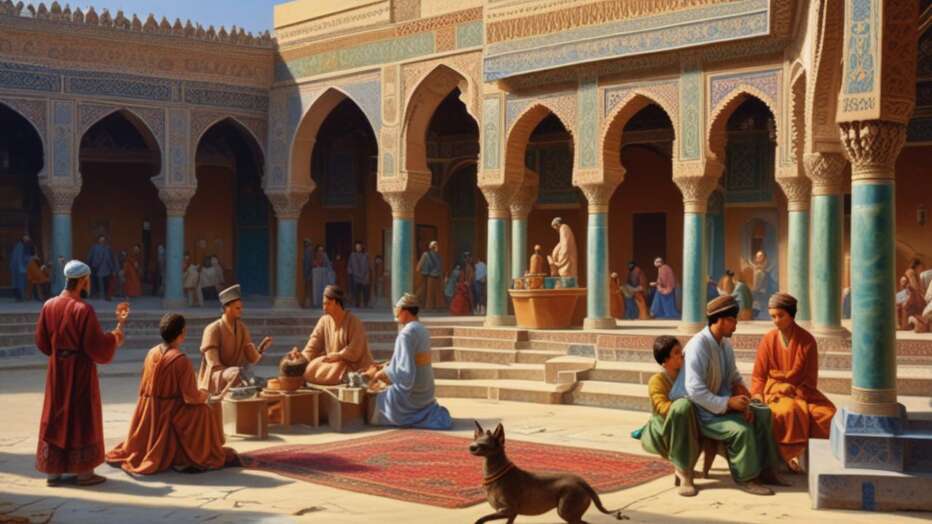
The primary function of an oasis city was to facilitate trade. Caravans, often consisting of hundreds of camels carrying silk, spices, precious metals, and other luxuries, would travel for weeks between these stops. The oasis city was a planned destination where multiple critical activities occurred simultaneously.
Upon arrival, merchants would sell items acquired from the previous leg of the journey. They would purchase new goods specific to the next region. They paid tolls and taxes to the local ruler, which was a major source of state revenue.
They also restocked essential supplies like food, water, and fodder for their animals.
The economic ecosystem was complex. Local artisans produced goods for sale to travelers. Money changers facilitated currency exchanges between the diverse empires’ coinages.
Scribes and translators provided essential services. The city’s economy was thus a hybrid of local production and transit trade.
The trade process in an oasis city typically followed these steps:
- Arrival and Clearance: The caravan would be inspected at the city gates, and tolls assessed based on the number and type of goods.
- Unloading and Lodging: Merchants and their goods would be housed in a caravanserai. Camels were watered, fed, and rested.
- Market Activity: For several days, merchants would frequent the bazaars, trading, negotiating, and sourcing new merchandise.
- Restocking and Repair: Purchasing food, water containers, and any needed repairs for equipment or caravan gear.
- Information Exchange: Travelers shared news about route conditions, prices in other cities, and political stability.
- Departure Preparation: Organizing the caravan for the next journey, hiring local guides familiar with the upcoming terrain.
Tip: When studying oasis cities, look for archaeological evidence of caravanserais. Their size and construction quality indicate the volume of trade a city handled and its importance to the ruling empire.
Why Were Oasis Cities Strategically Important?
The strategic importance of an oasis city cannot be overstated. Controlling a key oasis meant controlling a significant portion of trade revenue and movement. Empires like the Han, Tang, Mongol, and Persian empires fiercely competed for these choke points.
Geopolitically, these cities were fortresses. A garrison stationed at an oasis like Dunhuang or Kashgar could project power across the desert, protect merchants from bandits, and dominate the flow of goods. They also served as military staging grounds for campaigns along the frontier.
The location of an oasis city was never accidental. They were placed at precise intervals—typically a day’s caravan travel apart. They were also positioned at crossroads where major routes diverged or converged, maximizing their control over traffic and information.
| Type of Oasis City | Primary Strategic Role | Example Cities |
|---|---|---|
| Frontier Garrison | Military defense of the empire’s border and trade route access. | Kashgar, Hami (Gansu Corridor) |
| Crossroads Hub | Controlling the intersection of multiple major routes. | Samarkand, Bukhara, Turfan |
| Resource Outpost | Securing access to specific valuable resources (e.g., jade, horses). | Khotan (jade), Dunhuang |
| Administrative Capital | Governance of a larger region and tax collection. | Kashgar, Merv |
This table highlights that not all oasis cities served the same purpose. Their strategic value was tailored to their geographic and economic context.
What Goods Were Traded Through Oasis Cities?
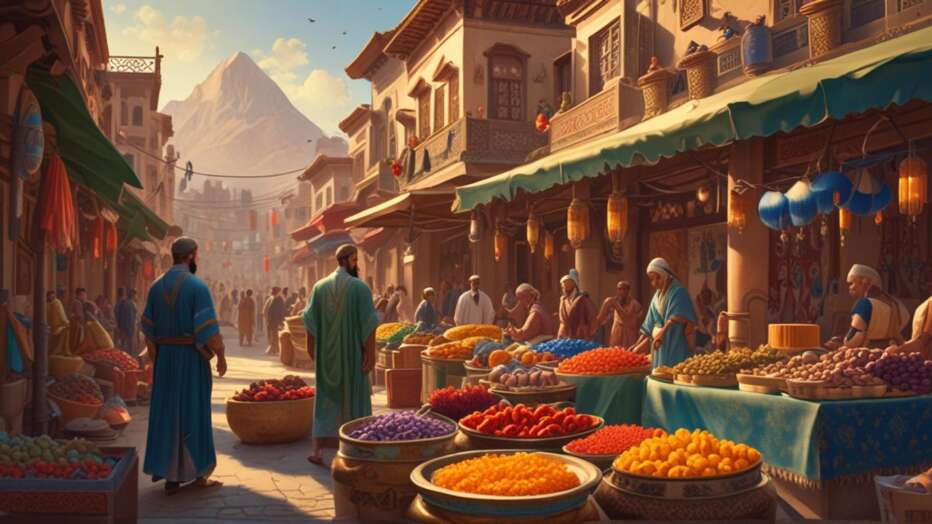
The variety of goods flowing through these desert hubs was staggering. Oasis cities were the points of transfer where Eastern products met Western demands and vice versa. The trade was not just about luxury items; it included everyday necessities and raw materials.
From China, silk was the most famous export, but tea, porcelain, paper, and gunpowder also traveled west. From the Mediterranean and Persia, merchants brought glassware, gold, silver, wool, linen, coral, and amber. The Indian subcontinent contributed spices like pepper, cotton textiles, and precious stones.
Central Asia itself supplied horses, jade, and furs.
- Eastbound Goods (from China):
- Silk textiles
- Porcelain pottery
- Tea
- Paper and printing supplies
- Lacquerware
- Westbound Goods (to China):
- Glassware and mirrors
- Gold and silver coins
- Wool and linen fabrics
- Wines and olive oil
- Coral, amber, and gemstones
- Intermediate Goods (from Persia, India, Central Asia):
- Spices (pepper, cinnamon, cloves)
- Cotton textiles
- Indigo dye
- Horses and camels
- Jade and precious stones
Important: The Silk Road’s name is a simplification. While silk was a primary driver, the trade network carried a vast array of commodities. Oasis cities were the critical sorting and redistribution points for this diverse cargo.

The Cultural and Religious Exchange at Oasis Cities
Beyond trade, the most profound role of oasis cities was their function as crucibles for cultural exchange. Merchants, monks, soldiers, and envoys carried not just goods but also ideas, technologies, and beliefs. The oasis, with its relatively safe and permanent environment, allowed these ideas to take root.
Buddhism, for instance, spread from India into Central Asia and China through the oasis cities of the Tarim Basin. Monks established monasteries in cities like Kucha and Khotan. Later, Islam followed similar routes, introduced by Arab and Persian merchants and missionaries.
Manichaeism and Nestorian Christianity also found footholds in these diverse communities.
This exchange was two-way. Chinese papermaking technology moved westward through Samarkand after the Battle of Talas in 751 CE. Astronomical knowledge, mathematical concepts (like the Indian numeral system), and agricultural techniques (such as new irrigation methods) all circulated through these hubs.
The oasis city was a living library of cross-civilizational learning.
What Was the Typical Layout of an Oasis City?
The physical layout of an oasis city was designed around its dual purpose: serving the desert and serving the caravan. The core element was always the water source, around which everything else was arranged. A typical city had distinct zones for different functions.
The most common plan included a fortified citadel or palace for the ruler and garrison, often on a high point. The bazaar area was central and bustling, usually adjacent to the main gates where merchants entered. The caravanserais were located near the gates and markets for convenience but were also large enough to house entire caravans.
A standard layout might include these key areas in order:
- Outer Defenses: High walls and moats surrounding the entire settlement.
- Caravan Gates & Quarters: The main entry points, with adjacent caravanserais and animal markets.
- Commercial District: The bazaar with specialized streets (e.g., one for textiles, another for metalsmiths).
- Residential Areas: Densely packed houses for local artisans, merchants, and officials.
- Religious Complexes: Mosques, churches, or temples, often located centrally as community anchors.
- Citadel/Administrative Center: The seat of political power and defense.
- Agricultural Oasis: The surrounding palm groves, gardens, and fields sustained by the water source, often on the city’s periphery.
Why Did Oasis Cities Decline?
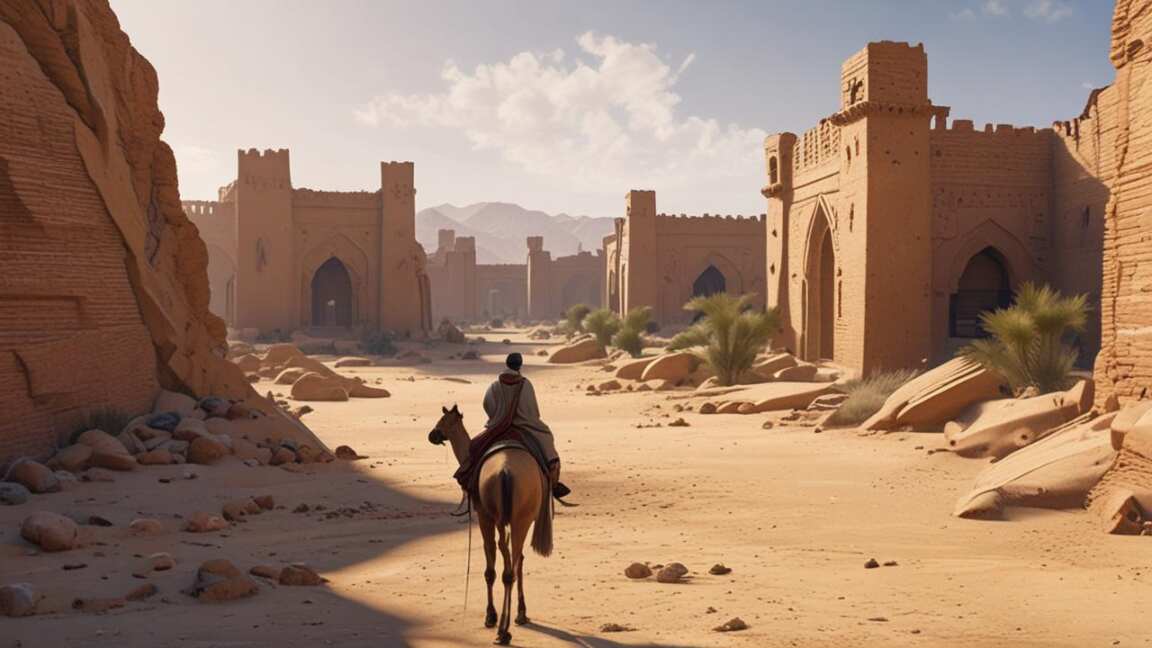
The decline of oasis cities was a slow process tied to the changing nature of global trade. The primary reason was the shift from overland caravans to maritime trade routes. By the 15th and 16th centuries, European maritime powers had developed sea routes to Asia that were cheaper and could carry more goods than camel caravans.
Political instability and conflict also played a major role. The fragmentation of the Mongol Empire, the rise of regional warlords, and constant skirmishes made the land routes increasingly dangerous and unreliable. Taxes and tolls levied by multiple petty rulers made overland trade prohibitively expensive.
Environmental changes contributed as well. Some oasis water sources dwindled due to overuse or climate shifts. The Silk Road’s golden age, secured under the Pax Mongolica, ended, and without a single powerful authority guaranteeing safety, trade diminished.
Merchants opted for the more secure, if lengthy, sea journeys.
Frequently Asked Questions
What was the most important oasis city on the Silk Road?
This is debatable, but Samarkand is often cited as the most significant. Located in modern Uzbekistan, it was a massive, wealthy metropolis and a crossroads of all major routes. Other critically important cities included Kashgar (the gateway between China and Central Asia), Merv (once one of the world’s largest cities), and Dunhuang (the western terminus of China’s Hexi Corridor).
How did oasis cities get their water?
Water was sourced from natural springs, rivers fed by mountain snowmelt, or ingenious man-made systems called qanats. Qanats are gently sloping underground tunnels that tap into aquifers at the base of mountains and channel water to the surface over long distances, allowing cultivation in otherwise arid plains. This technology was vital for the sustainability of large oasis cities.
Were oasis cities dangerous places for travelers?
They could be, but they were far less dangerous than the open desert. Inside the city walls, traders were protected from bandits. However, risks included disease, theft, price gouging, and getting caught in local political disputes.
The greatest danger was often just outside the city gates, making the oasis itself a much-sought-after sanctuary.
How long would a caravan typically stay in an oasis city?
Stays varied but commonly lasted from a few days to two weeks. The length depended on the size of the caravan, the amount of business to conduct, the time needed for animals to rest, and whether they were waiting to join a larger, more secure group for the next leg of the journey. Major hubs like Samarkand might see merchants stay even longer.
Do any oasis cities still exist today?
Yes, many do, though their roles have changed. Cities like Samarkand, Bukhara, and Kashgar are vibrant modern cities and UNESCO World Heritage sites. Dunhuang is a major tourist destination.
While they no longer serve as critical stops for transcontinental caravans, their historic cores remain as living museums to their past role on the Silk Road.
Final Thoughts
Oasis cities along the Silk Road were far more than simple watering holes. They were sophisticated urban centers that made global trade possible, serving as economic engines, cultural melting pots, and strategic pawns in imperial rivalries. Their legacy is a testament to human ingenuity in adapting to harsh environments and a powerful reminder of our deep history of interconnectedness.
By providing the essential infrastructure for survival and commerce, these desert jewels laid the groundwork for a network that shaped the ancient world and continues to influence our modern, globalized society.