How Zodiac Fortune Telling Differs From Western Horoscopes
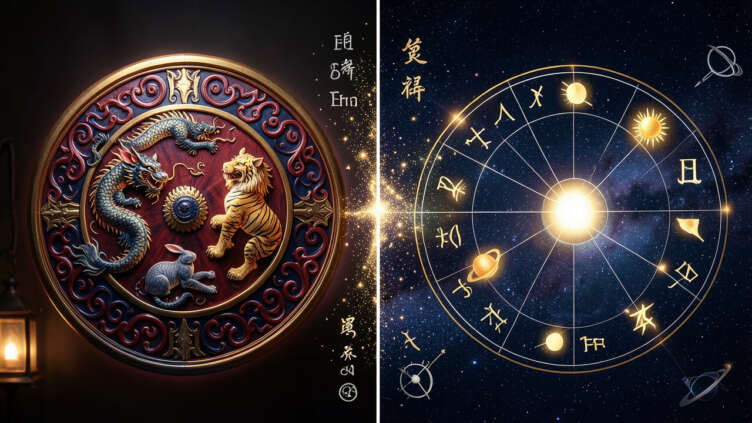
Zodiac fortune telling, rooted in the Chinese zodiac, assigns an animal sign based on the lunar birth year within a 12‑year cycle, while Western horoscopes assign a Sun sign based on the birth month within the tropical zodiac. The Chinese system incorporates the five elements and yin‑yang to interpret personality and luck, whereas Western astrology relies on a birth chart that maps the positions of planets like Mercury and Venus at the exact moment of birth. Understanding this distinction clarifies that zodiac fortune telling emphasizes year‑based traits and elemental influences, while Western horoscopes focus on monthly Sun signs and planetary transits for daily predictions.
Do you wonder how zodiac fortune telling differs from the daily horoscopes you see online? Both systems use celestial bodies, but they come from different cultural roots and serve different purposes.
Quick Verdict: Zodiac fortune telling (often Chinese zodiac) uses a 12-year animal cycle based on lunar years, focusing on personality traits and luck based on birth year. Western horoscopes use monthly Sun signs from the tropical zodiac, emphasizing planetary positions and daily predictions. The two systems have different calendars, signs, and methods of interpretation.
Key Takeaways
- Zodiac fortune telling (Chinese zodiac) assigns an animal sign to each lunar year, repeating every 12 years, while Western horoscopes assign a Sun sign based on your birth month within the tropical zodiac.
- Western horoscopes place heavy emphasis on the positions of planets like Mercury and Venus at your exact birth moment, whereas zodiac fortune telling relies primarily on your birth year and the five Chinese elements.
- The Chinese zodiac uses a yin-yang and five-element framework to interpret personality and fortune, while Western astrology uses houses, aspects, and cardinal/fixed/mutable modalities.
- Western horoscopes are often used for daily, weekly, or monthly predictions, while zodiac fortune telling is more commonly consulted for annual forecasts and major life decisions like marriage or business.
- Both systems have ancient origins – Chinese zodiac dates back to the Han Dynasty (over 2,000 years ago), and Western astrology to Babylonian times, around 2,400 years ago.
Quick Comparison Table
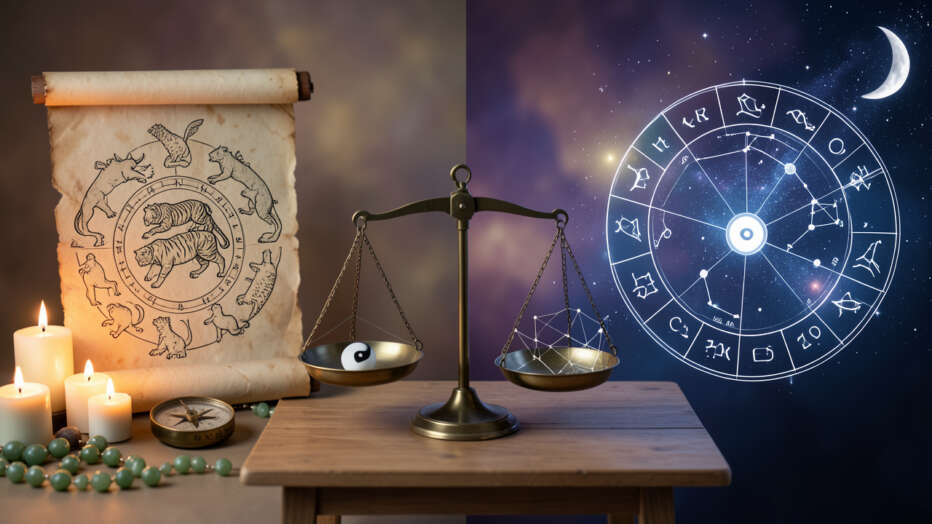
| Feature | Zodiac Fortune Telling (Chinese) | Western Horoscopes |
|---|---|---|
| Number of signs | 12 (one per lunar year) | 12 (one per solar month) |
| Cycle length | 12 years (each year repeats) | 12 months (each year same dates) |
| Basis of assignment | Lunar birth year | Solar birth month and day |
| Key components | Animal sign + element + yin/yang | Sun sign + rising sign + planets + houses |
| Primary prediction method | Yearly fortune, compatibility, element cycles | Daily/weekly transits, aspects, birth chart |
What Is Zodiac Fortune Telling?
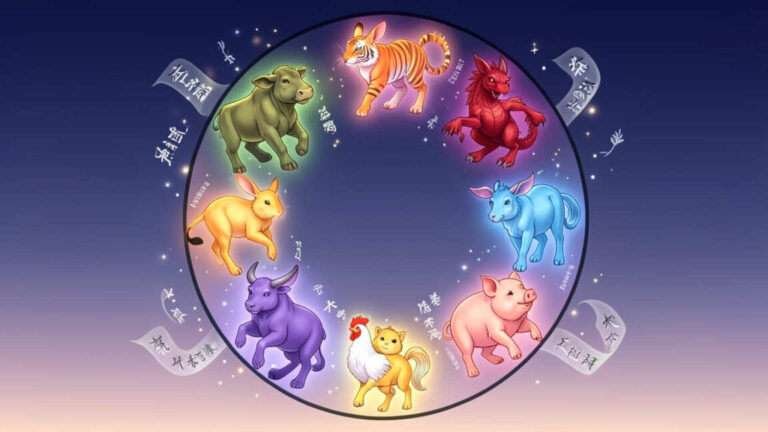
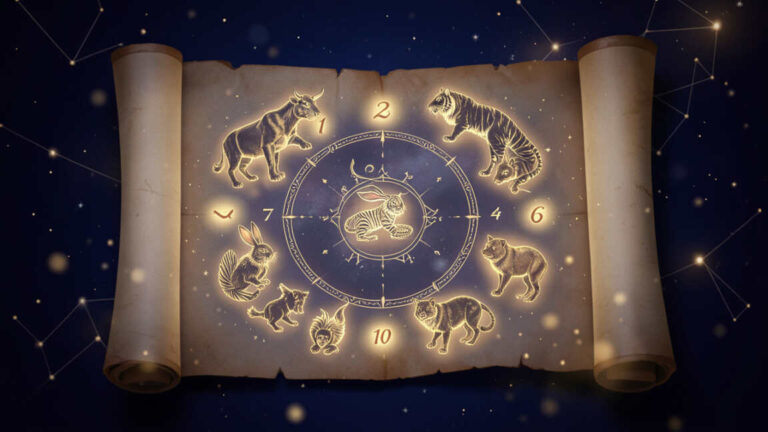
Zodiac fortune telling, often called Chinese zodiac or Shengxiao, is an ancient system that dates back over 2,000 years. It assigns an animal to each year in a 12-year cycle. The animals are Rat, Ox, Tiger, Rabbit, Dragon, Snake, Horse, Goat, Monkey, Rooster, Dog, and Pig.
Each animal sign has specific personality traits, strengths, and weaknesses. The system also incorporates the five Chinese elements – Wood, Fire, Earth, Metal, and Water – which rotate every two years. This adds another layer of complexity to how zodiac fortune telling differs from Western horoscopes.
How the Chinese Zodiac Works
Your sign is based on your birth year according to the Chinese lunar calendar. For example, 2023 was the Year of the Rabbit. The Chinese New Year changes each year (between January 21 and February 20), so a person born in January 2023 might actually be a Tiger if they were born before the lunar new year.
According to the, the zodiac cycle is linked to the orbit of Jupiter, which takes roughly 12 years to circle the Sun. Ancient Chinese astronomers used Jupiter’s position to mark time.
Role of Elements and Yin-Yang
Each animal sign is paired with one of the five elements and either yin or yang energy. This combination changes every 60 years – the full cycle of all 12 animals combined with all five elements. For example, 2024 is the Year of the Wood Dragon (yang Wood).
Zodiac fortune telling uses these combinations to predict fortune, compatibility, and best directions for the year. It is deeply rooted in Chinese culture and is still used today for naming babies, choosing wedding dates, and even selecting business partners.
What Are Western Horoscopes?
Western horoscopes, also known as Western astrology, are based on the tropical zodiac. This system divides the sky into 12 equal parts of 30 degrees each, starting at the vernal equinox. Your Sun sign is determined by the position of the Sun at your birth.
Western astrology has its roots in Babylonian and Hellenistic traditions. It was refined by Claudius Ptolemy in the 2nd century AD in his work the Tetrabiblos. Today, it is the most popular form of astrology in North America and Europe.
Components of a Western Birth Chart
A full Western horoscope is not just your Sun sign. It includes:
- Sun sign – your core personality and ego
- Moon sign – your emotions and inner self
- Rising sign (Ascendant) – how others perceive you
- Planets – Mercury, Venus, Mars, Jupiter, Saturn, Uranus, Neptune, Pluto
- Houses – 12 areas of life (career, relationships, home, etc.)
- Aspects – angles between planets that create dynamics
According to the, over 90% of young adults in the U.S. know their Sun sign. However, only about 30% know their rising sign or Moon sign.
Tip: If you want a more accurate Western horoscope, always use your exact birth time and location. Free birth chart calculators from Astro.com can give you a full reading.
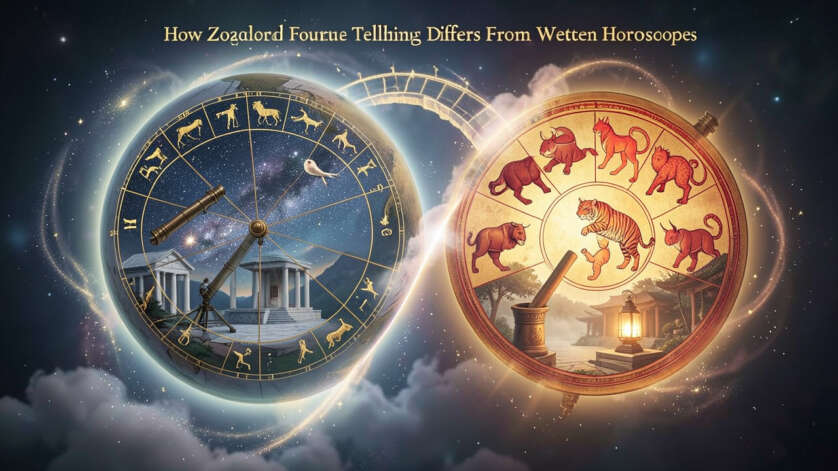
How Zodiac Fortune Telling Differs From Western Horoscopes: Key Differences
The fundamental difference lies in the calendar. The Chinese zodiac uses a lunar calendar, while Western horoscopes use a solar calendar. This changes the entire basis of sign assignment.
1. Sign Assignment Method
In zodiac fortune telling, your sign is fixed by your birth year. Everyone born in the same lunar year shares the same animal sign. In Western horoscopes, your Sun sign changes roughly every 30 days, so your birth month determines your sign. Two people born in the same year but different months have different Sun signs.
2. Number of Signs and Cycle
Both have 12 signs, but the Chinese cycle repeats every 12 years, while the Western cycle repeats every 12 months. This means your Chinese zodiac sign stays the same for your entire life, while your Western Sun sign is based on your birth date and does not change either – but the predictions change daily.
3. Role of Planets and Elements
Western astrology heavily involves all planets visible to the naked eye (plus outer planets). The Chinese zodiac does not use planets at all – only the five elements and yin-yang. This is a major way how zodiac fortune telling differs from Western horoscopes.
4. Purpose and Application
Zodiac fortune telling is often used for annual fortune predictions, especially during Chinese New Year. People consult it for major life decisions like marriage, moving, or starting a business. Western horoscopes are more commonly read for daily guidance, self-reflection, or entertainment.
5. Compatibility Systems
Chinese zodiac compatibility is based on the animal signs’ positions in the cycle. For example, Rat and Ox are considered compatible, while Rat and Horse are not. Western compatibility uses Sun signs and other planetary aspects, often grouped by element (Fire, Earth, Air, Water).
Important: According to the, about 29% of American adults believe in astrology. In China, a 2018 survey found that over 40% of people consult the Chinese zodiac for decisions.
Common Myths vs Facts About Zodiac Fortune Telling and Western Horoscopes
Many people confuse these two systems. Here are three common myths and the facts that set them straight.
Myth 1: All Astrology Systems Are the Same
Fact: The Chinese zodiac and Western horoscopes have completely different origins, methods, and purposes. The Chinese system is tied to lunar cycles and elements, while the Western system uses solar positions and planets. You cannot swap signs between the two.
Myth 2: Your Chinese Zodiac Sign Is Based on Your Birth Month Like Western Signs
Fact: Your Chinese zodiac sign depends on your birth year in the lunar calendar, not the month. If you were born in January or February, you may fall into the previous year’s sign. Always check the exact lunar new year date.
Myth 3: Western Horoscopes Are Scientifically Proven
Fact: Both systems are considered pseudosciences. has stated that astrology is not a science. However, cultural belief in these systems remains strong. The Chinese zodiac is treated as a cultural tradition rather than a predictive science.
Pros and Cons of Each System
| Aspect | Zodiac Fortune Telling (Chinese) | Western Horoscopes |
|---|---|---|
| Easy to learn | Very simple – just know your birth year | Moderate – requires birth time for accuracy |
| Depth of analysis | Limited to year sign + element, less personalized | Highly detailed with houses and aspects |
| Cultural relevance | Strong in East Asia, especially China, Korea, Japan | Strong in the West, especially USA and Europe |
| Predictive style | Annual forecasts, luck for the year | Daily, weekly, monthly transits |
| Tools needed | Just a Chinese zodiac calculator | Birth chart calculator with exact time |
How Does Zodiac Fortune Telling Differ From Western Horoscopes in Practice?
Let’s look at a concrete example. Suppose you were born on March 15, 1996.
Western horoscope: You are a Pisces (February 19 – March 20). Pisces is a water sign ruled by Neptune. Your Sun sign personality is described as intuitive, artistic, and empathetic. Your daily horoscope might say something about romantic opportunities due to Venus entering your 7th house.
Chinese zodiac: 1996 was the Year of the Rat (from February 19, 1996, to February 6, 1997). Since your birthday is March 15, 1996, you are a Fire Rat (element Fire). Rats are considered clever, resourceful, and charming. Your 2025 fortune might predict good luck in networking but caution in financial investments.
Both systems give you a label and predictions, but the underlying logic is completely different. This is a core example of how zodiac fortune telling differs from Western horoscopes.
Which System Should You Use?
Your choice depends on your goals. If you want a quick, year-long outlook based on your birth year, Chinese zodiac fortune telling is simple and culturally rich. If you want a detailed personality analysis and daily guidance, Western horoscopes offer more depth.
Many people use both. They read their daily Sun sign horoscope for fun and consult their Chinese zodiac animal for annual compatibility or career advice.
Warning: Never make major life decisions solely based on either system. Both are symbolic and not predictive in a scientific sense. Always combine with practical thought.
Frequently Asked Questions
Can you have both a Chinese zodiac sign and a Western Sun sign?
Yes, you can have both. Your Chinese zodiac is based on your birth year, and your Western Sun sign is based on your birth month. They are independent of each other, so you can access predictions from both systems.
Is Chinese zodiac more accurate than Western horoscopes?
Neither system is scientifically accurate. According to a study by the, double-blind tests show no correlation between birth signs and personality. Accuracy is subjective – each system has its own internal logic.
Why are there different animals in the Chinese zodiac but only symbols in Western zodiac?
The Chinese zodiac uses real animals because of a folk legend about a race ordered by the Jade Emperor. The Western zodiac uses mythological symbols (Ram, Bull, Twins, etc.) tied to constellations. Both serve as easy-to-remember representations.
Do the seasons affect Western horoscopes?
Yes, Western horoscopes are tied to the tropical zodiac, which aligns with the seasons. For example, Aries starts at the spring equinox. This seasonal link does not exist in the Chinese zodiac, which is lunar-based.
How do I find my Chinese zodiac sign if I was born in January 1997?
Chinese New Year in 1997 fell on February 7. If you were born before that date, you are still a Rat (1996 sign). After February 7, you are an Ox. Always check the exact lunar new year date for your birth year.
Final Thoughts
Zodiac fortune telling and Western horoscopes both offer fascinating ways to explore personality and fate, but they come from completely different traditions. The Chinese zodiac uses a 12-year animal cycle with elements, while Western horoscopes use a monthly solar system with planets and houses. Understanding these differences helps you appreciate each system on its own terms.