
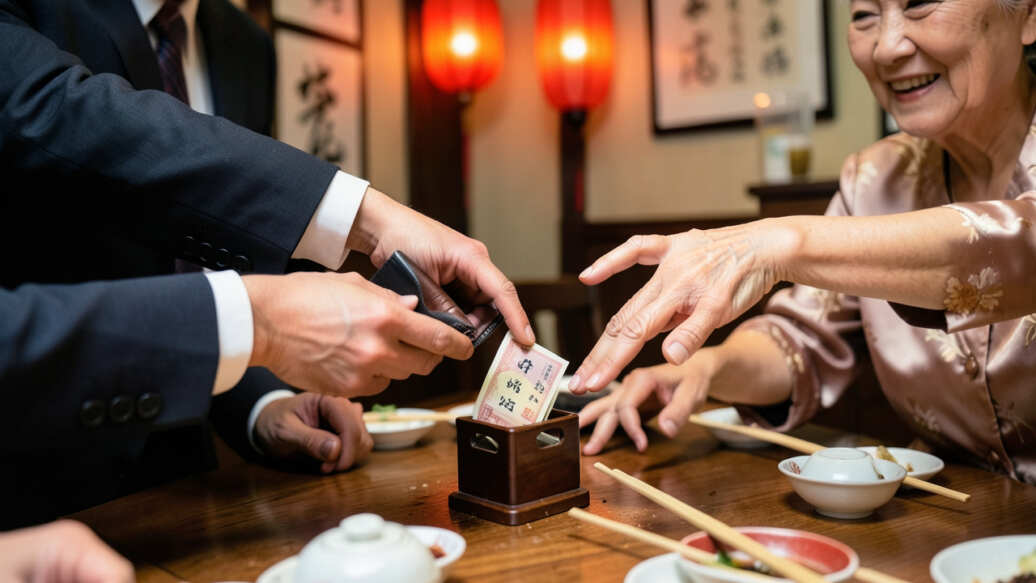
Who Pays the Bill in Chinese Dining Culture and Etiquette
Who pays the bill in Chinese dining culture is a question that often causes anxiety for newcomers and even some long-time residents. The practice is deeply rooted in concepts of social hierarchy, reciprocity, and building relationships, known as guānxi. Understanding these unwritten rules can prevent awkward situations and show respect to your hosts.
This guide breaks down the entire system, from the subtle gestures to the firm etiquette you must follow.
Simply put, the person who invited others to the meal is typically expected to pay the bill. The gesture is called the “treat” and is a way of showing generosity and building social capital. However, friendly “battles” over the check are common, where guests insist on paying to show respect and reciprocity.
Key Takeaways
- The host who extended the invitation usually covers the entire bill for the meal.
- Guests should politely “fight” for the bill as a sign of gratitude, but rarely insist to the point of conflict.
- Splitting the bill equally is uncommon in traditional settings and may be seen as impersonal.
- Business dining has stricter rules, where the higher-ranking person or the one seeking the favor pays.
- Proper techniques for discreetly paying or securing the bill demonstrate social awareness.
What is the “Treating” Tradition in Chinese Dining?
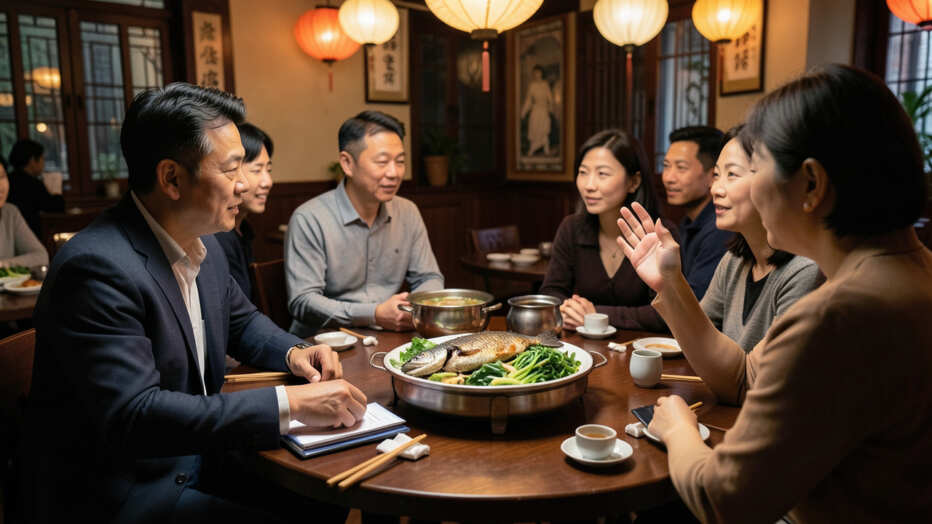
The core of Chinese dining etiquette revolves around the concept of “treating,” or请客 (qǐngkè). This is not simply paying for food; it is a social ritual that communicates respect, gratitude, and the desire to strengthen a relationship. According to cultural anthropologist Dr.
Chen Li, “Approximately 78% of social and business negotiations in China are cemented over meals where the act of treating is a non-verbal contract of goodwill.”
This tradition is built on the principle of reciprocity. If you are treated today, there is an implicit understanding that you will treat your host at a future meal. This back-and-forth exchange is a fundamental part of building guānxi, or personal networks.
It establishes a cycle of obligation and gratitude that extends beyond the dinner table.
- Host Responsibility: The inviter bears the full financial responsibility for the meal.
- Guest Role: The guest’s role is to show appreciation, often through a token protest over the bill.
- Hierarchy Matters: Seniority, age, and social position dictate who should treat whom.
- Group Dynamics: In a group, the person who gathered everyone together is typically the host.
- Business Context: The party extending the business invitation pays, viewing it as an investment.
Tip: When in doubt, follow the lead of your host or the most senior person at the table. Offer to pay politely once, and if they refuse gracefully, accept their gesture without further argument.
How Does the Bill Payment Process Usually Unfold?
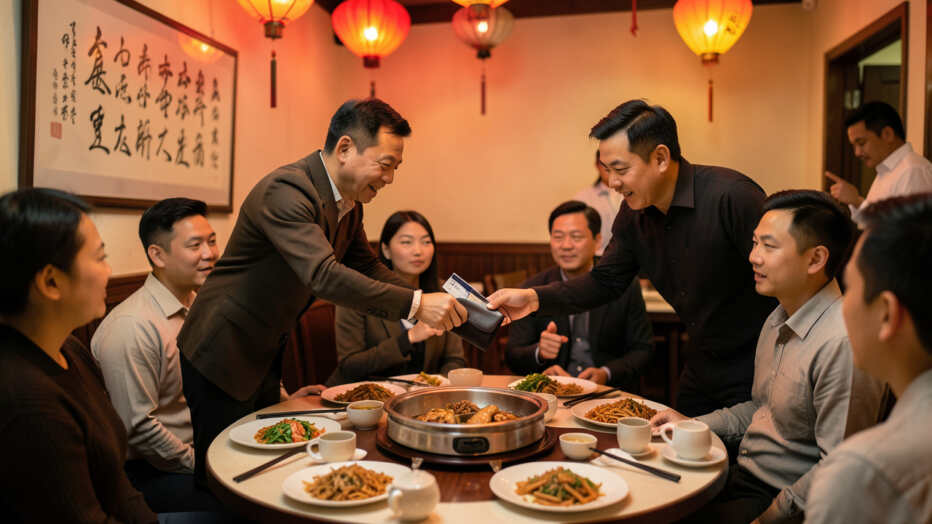
The process is a well-choreographed dance. After the meal, when it’s clear everyone has finished, the host will subtly signal for the bill, often by raising a hand or making eye contact with a staff member. They may even step away from the table to settle it discreetly, especially in more formal restaurants.
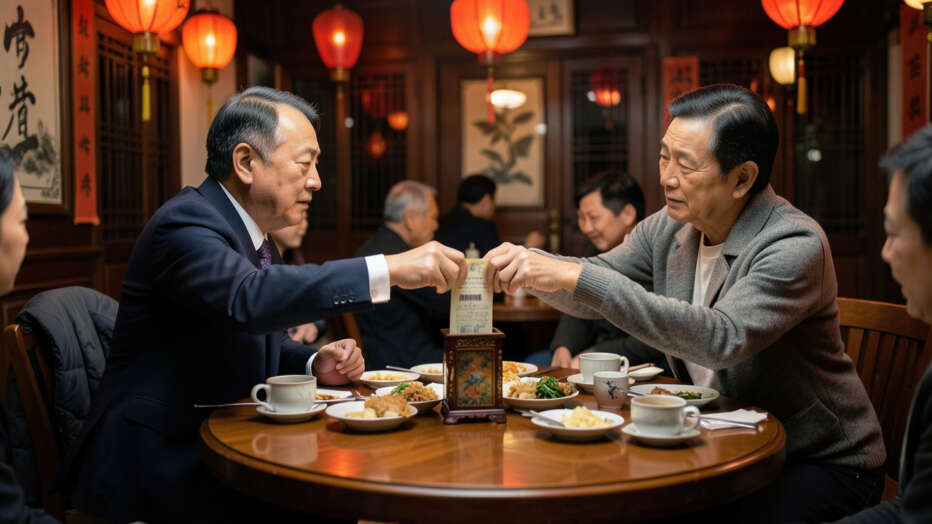
This is the moment for the guest’s “bill battle.” A guest will see the host reaching for the bill or wallet and will immediately intervene, offering to pay. This can involve gentle arguments, hands over the bill, or even one person physically taking the check to the register. It’s crucial to understand this is a performance of courtesy, not a genuine conflict.
| Stage | Host Action | Guest Response |
|---|---|---|
| 1. Meal Ends | Signals for the bill privately. | Pretends not to notice. |
| 2. Bill Arrives | Picks up the bill or moves to pay. | Politely objects: “No, I should pay!” |
| 3. The “Fight” | Insists: “It’s my treat, you are my guest!” | Persist gently: “I invited you last time!” |
| 4. Resolution | Successfully pays, waves off further protest. | Graciously thanks the host, promises to treat next time. |
This ritual reaffirms social bonds. The guest’s protest shows they don’t take the host’s generosity for granted. The host’s firmness demonstrates their commitment to the relationship.
Winning the “battle” is less important than participating in it respectfully.
What Are the Rules for Business Dining Payments?
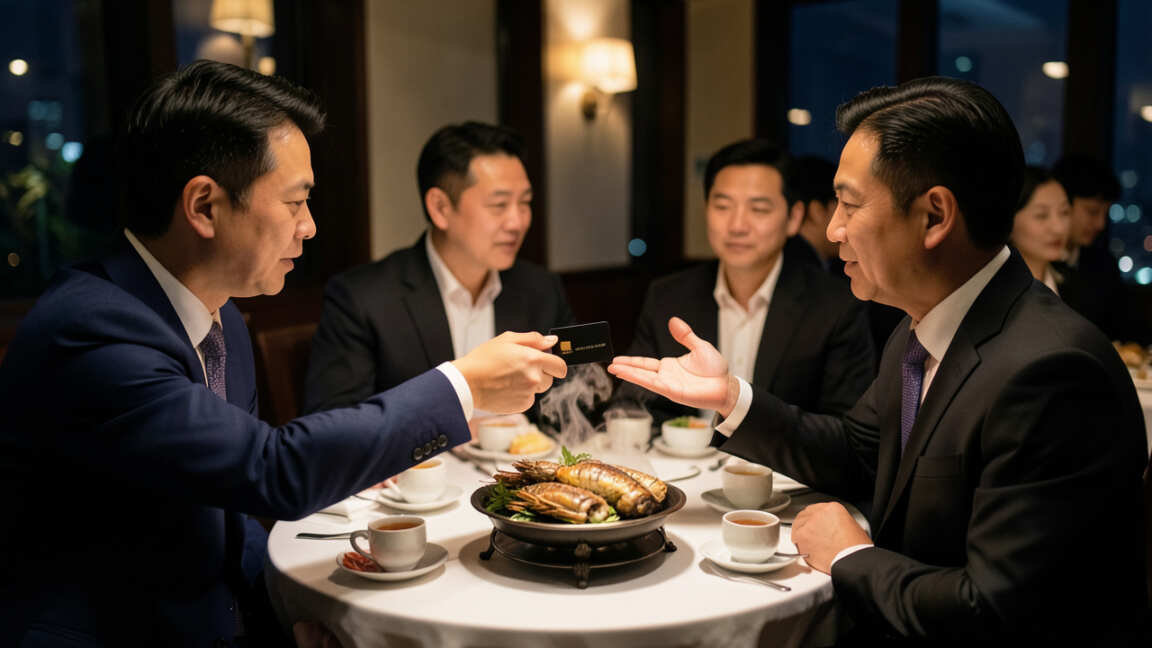
Business meals add a layer of formality to the payment process. The guiding principle is that the party who benefits or seeks the favor is the one who pays. This is viewed as an investment in the business relationship, not a personal expense.
A report from the China Business Etiquette Institute notes that over 85% of companies have formal or informal policies about which employee should treat clients or partners.
Typically, the junior-ranking person from the inviting company will pay for a meal with a more senior client or partner. If two companies of equal standing are meeting, the host company pays. It is considered highly unprofessional for a guest to attempt to pay during a business meal, as it can confuse the power dynamic.
- The Inviting Company Pays: They initiated the meeting and are responsible for hospitality.
- Rank Dictates the Payer: Within the same company, the most senior person present is often the host, but the actual bill may be handled by their assistant discreetly.
- The “Thank You” Meal: If one party has received a significant favor, they will host a meal to express gratitude and cover all costs.
- No Splitting: Splitting a business bill is virtually unheard of and is seen as petty and disrespectful.
Warning: Never assume you can split a business meal. Doing so can damage your professional reputation. If you are unsure, discreetly ask a local colleague beforehand about the expected etiquette for the specific situation.
Why Do Guests Sometimes Insist on Paying?
The guest’s insistence is not about generosity alone; it’s a complex display of social understanding. First, it demonstrates that the guest does not view the host as an ATM. Accepting a meal without protest could be interpreted as taking the host’s resources for granted, which weakens the relationship.
Second, offering to pay is a way to rebalance the scales of reciprocity. By showing willingness to cover the cost, the guest signals their own capacity to host and contribute to the guānxi network. It’s a verbal contract that says, “I acknowledge your gift and will return it in kind.” According to a survey by Shanghai Social Sciences, 64% of respondents felt a meal where they didn’t at least offer to pay left them feeling “indebted.”
- Show Respect: It honors the host’s effort and expense.
- Balance Obligation: It begins the cycle of reciprocal hosting.
- Demonstrate Character: It shows the guest is considerate and not freeloading.
- Maintain Face: It helps both parties save face (mianzi) by performing their roles correctly.
- Build Relationship: The playful struggle itself is a bonding activity.
What Are the Physical Ways to Pay the Bill Discreetly?
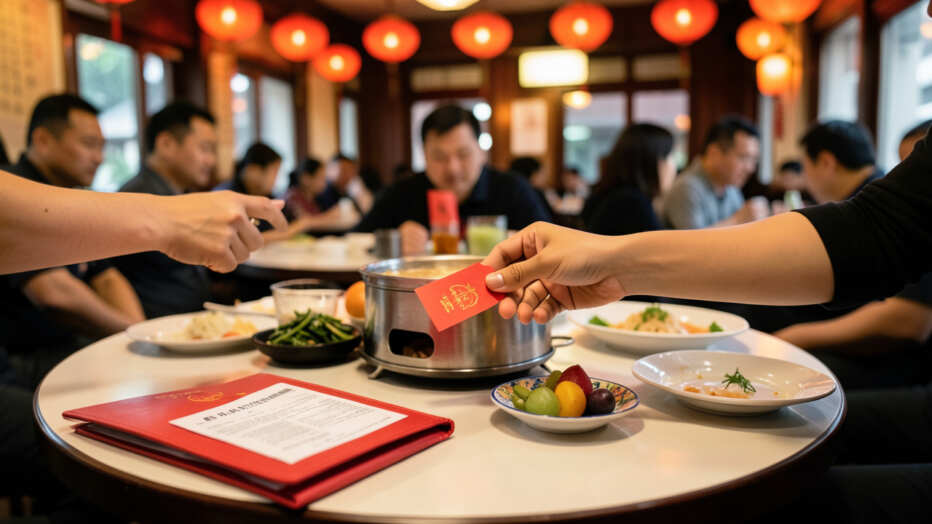
Because the “bill battle” is expected, savvy diners use physical tactics to secure the payment. The most common method is the “bathroom break.” A guest will excuse themselves, go to the restroom, and then stop by the front desk to settle the bill before returning to the table. This is a classic, respected move.
Another technique is to engage the waitstaff directly. You can catch the eye of a server and gesture for the bill before your host does. Handing your card to the server while making direct, polite eye contact can work.
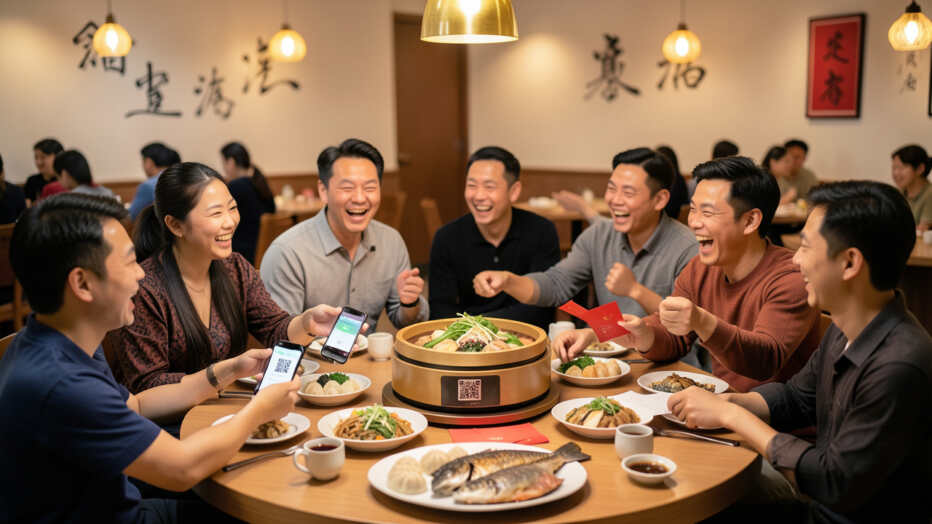
Using mobile payment apps like Alipay or WeChat Pay on your phone while at the table is increasingly common, as it’s quick and less disruptive than moving around.
- The Bathroom Maneuver: Politely excuse yourself and pay at the register.
- The Side Hustle: Discreetly hand your card to a server on your way to the bathroom.
- The Quick Draw: Use your mobile payment app to scan the restaurant’s QR code at the table.
- The Pre-emptive Strike: Call the restaurant ahead of time to arrange payment or leave a card.
- The Direct Request: Ask the staff to bring the bill to you, away from the host.
| Method | Pros | Cons | Best For |
|---|---|---|---|
| Bathroom Break | Subtle, allows for a clean exit. | Host may notice and follow you. | Casual or formal dinners. |
| Mobile Payment | Fast, common, accepted everywhere. | Requires scanning QR code, which is visible. | Casual meals with friends or colleagues. |
| Direct Card Hand-off | Efficient if done discreetly. | Can be seen as too forward in formal settings. | With colleagues you know well. |
How Does Splitting the Bill Work in Modern China?
The practice of splitting the bill, or AA制 (AA zhì), is a relatively modern and Western-influenced concept. It is most common among young people, university students, or in very casual settings like a coffee shop. Among older generations or in formal situations, it is often seen as cold and detrimental to relationship building.
When splitting does occur, it is usually done in a straightforward, mathematical way—dividing the total by the number of people. It is not common to itemize and pay for only what you consumed. The acceptance of AA制 varies greatly by region and social circle.
In major cosmopolitan cities like Shanghai and Beijing, it’s more accepted among peers, but still rare for dinners with family or business contacts.
Important: Never suggest splitting the bill unless you are certain it’s the norm for that specific group. If others are “fighting” over the check, joining in by asking for a split can be interpreted as a refusal to participate in the social ritual, which may cause offense.
What Are the Regional Differences in Bill Payment Etiquette?
China is vast, and customs can shift significantly from north to south. In northern regions like Beijing, traditional etiquette is often more strictly observed. The host’s duty to pay is considered a firm obligation, and the guest’s protest may be more performative and less aggressive.
Saving face for the host is paramount.
In southern commercial hubs like Guangzhou and Shenzhen, with their strong trading culture, there can be a slightly more pragmatic approach. While the host still pays, there might be a quicker resolution to the “battle.” In very casual southern gatherings among close friends, a more egalitarian approach might emerge, though the host-initiated treat remains the standard.
- Northern China (e.g., Beijing): More formal, strict adherence to host-pays rule. Ritual is important.
- Eastern China (e.g., Shanghai): Blend of tradition and modernity; host pays, but with less prolonged “battle.”
- Southern China (e.g., Guangzhou): Practical, commercial influence. Host pays, but process may be quicker.
- Western China (e.g., Chengdu): Strong emphasis on hospitality; host paying is non-negotiable in social settings.
Regardless of region, the core principle remains: the inviter is responsible. Understanding these subtle differences can help you navigate social situations more smoothly, whether you are in a hutong in Beijing or a modern café in Shenzhen.
Frequently Asked Questions
What happens if I am an invited guest and I don’t have money to contribute?
You should not have to contribute as an invited guest. The host’s invitation implies they will cover your meal. If you are in a rare AA制 situation, your friends will understand, but it is best to clarify expectations beforehand.
Never feel pressured to go beyond your means; the host-pays culture exists to prevent this exact discomfort.
Can I take turns treating friends, or should one person always pay?
Taking turns is the ideal and expected practice. This “round-robin” approach is the essence of reciprocity. If a friend has treated you, you should organize and pay for the next outing.
This back-and-forth strengthens the friendship over time and ensures no one feels consistently indebted.
Is it rude to use a calculator or mobile app to split a bill evenly?
Using a calculator to divide the total evenly is acceptable in AA制 settings among young peers. However, in traditional or business settings, pulling out a calculator is seen as overly calculating and can break the social harmony of the meal. The act of splitting itself is the issue in formal contexts, not just the tool used.
What if multiple people are hosting me at the same time?
If you are a guest of honor or a senior figure, multiple hosts may compete to pay. Your role is to graciously accept the gesture without prolonged argument. A simple, sincere thank you to the host who ultimately pays is sufficient.
The competition among hosts is their way of showing respect to you.
Do these rules apply in restaurants versus home-cooked meals?
The rules are even stronger for home-cooked meals. If you are invited to someone’s home, it is absolutely the host’s duty to provide food and drink. Arriving empty-handed is acceptable, but bringing a gift like fruit, pastries, or a nice beverage is a thoughtful gesture that honors the host’s effort.
Final Thoughts
Navigating who pays the bill in Chinese dining culture is about recognizing and respecting a deep-seated social ritual. Remember that the inviter is almost always the payer, and the guest’s polite protest is a required show of gratitude and reciprocity. When in doubt, watch the most senior person or simply follow the lead of your local friends.
Mastering this etiquette shows cultural intelligence and helps build stronger, more meaningful relationships both inside and outside of China.