How to Read a Zodiac Compatibility Chart Step by Step
To read a zodiac compatibility chart step by step, start by identifying both individuals’ Sun signs and then check their modalities—cardinal, fixed, or mutable—to gauge natural harmony. Next, compare Moon signs for emotional connection and Venus signs for romantic dynamics, followed by examining rising signs and major planetary aspects such as trines or squares. The practical takeaway is that the elements, Moon, and Venus placements often reveal deeper compatibility than Sun signs alone.
A zodiac compatibility chart shows how two people’s astrological signs relate to each other. This guide explains each step to read and interpret these charts clearly.
Quick Verdict: Simply put, reading a zodiac compatibility chart involves comparing Sun signs, Moon signs, Venus signs, and rising signs between two people. You also check elements like fire, earth, air, and water along with planetary aspects such as conjunctions and trines. Focus on the big three placements and the element balance for a clear starting point.
Key Takeaways
- A zodiac compatibility chart compares multiple birth chart placements between two people, not just their Sun signs.
- The elements (fire, earth, air, water) and modalities (cardinal, fixed, mutable) reveal natural harmony or friction between signs.
- Moon sign and Venus sign compatibility often matters more for emotional and romantic connection than Sun sign alone.
- Planetary aspects like trines and sextiles indicate ease, while squares and oppositions signal growth areas in relationships.
- According to a Pew Research Center study, approximately 29% of Americans believe in astrology, making compatibility readings a popular tool for self-reflection.
What You Need Before Reading a Zodiac Compatibility Chart
To read a compatibility chart, you need accurate birth data for both people. This includes birth date, exact birth time, and birth location. Without the exact time, your rising sign and house placements will be off.
You also need access to a reliable chart calculation tool. Many free websites and apps generate synastry charts and composite charts with just birth data. The most common tools include Astro.com, Cafe Astrology, and TimePassages.
Having a basic understanding of astrological terms helps you get more from the chart. You should know the meanings of Sun, Moon, rising, Venus, and Mars signs. You should also recognize the four elements and three modalities.
Tip: If you do not know your exact birth time, use 12:00 PM as a default. This will make your Moon sign and rising sign less accurate, but your Sun sign and Venus sign will still be correct.
What Are the Key Components of a Compatibility Chart
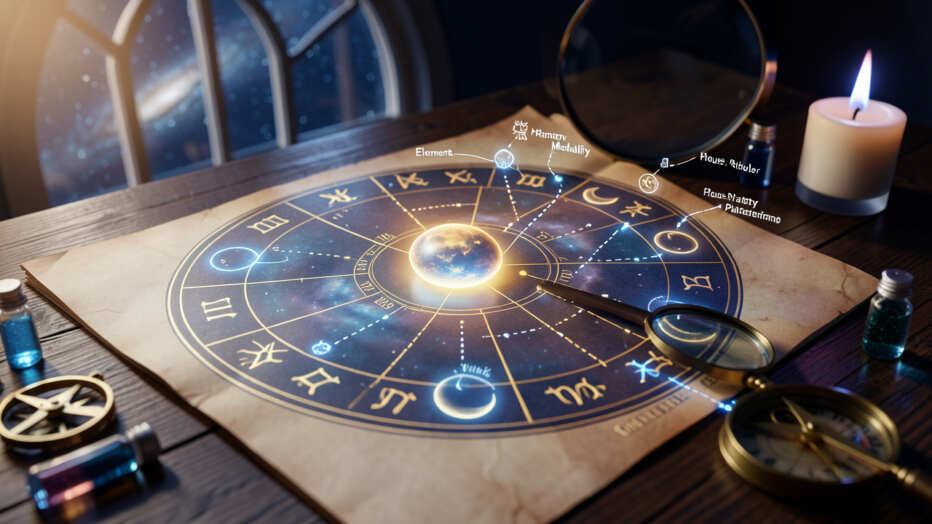
A compatibility chart includes several layers of information. Each layer adds depth to the overall reading. The most important components are listed below.
- Sun signs – Represent core identity, ego, and basic personality. This is the sign most people know.
- Moon signs – Represent emotions, instincts, and how a person feels inside. This is crucial for emotional compatibility.
- Rising signs (Ascendant) – Represent the outward personality and first impressions. This shapes how others see you.
- Venus signs – Represent love style, romance, and what you find attractive. This is key for romantic compatibility.
- Mars signs – Represent passion, drive, and how you assert yourself. This shows conflict and attraction patterns.
According to the National Science Foundation, astrology beliefs remain common among young adults, with many using these placements for self-understanding. Each of these five components plays a distinct role in a relationship.
How to Read a Zodiac Compatibility Chart Step by Step
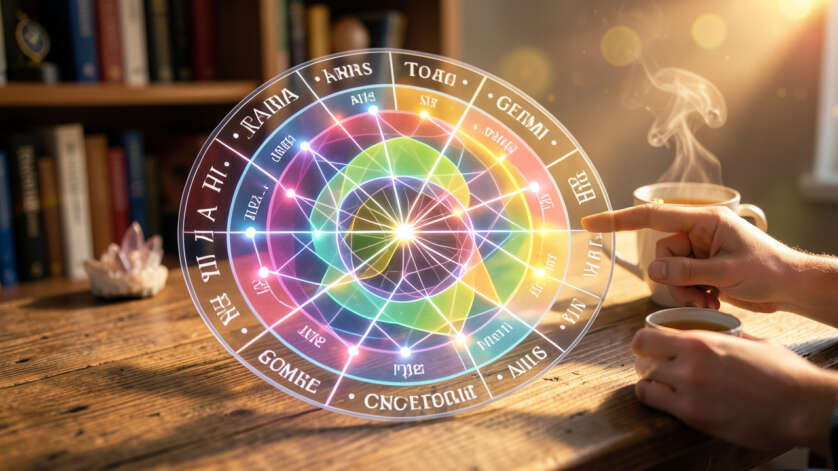
Follow these steps to read any zodiac compatibility chart. Take your time with each step before moving to the next. The goal is to build a full picture of the relationship dynamics.
Step 1 – Identify Both Sun Signs
Start with the most basic layer. Find the Sun sign for each person. Write them down side by side. Then check the element of each Sun sign.
Fire signs (Aries, Leo, Sagittarius) pair best with other fire signs or air signs. Earth signs (Taurus, Virgo, Capricorn) pair best with other earth signs or water signs. Air signs (Gemini, Libra, Aquarius) pair best with other air signs or fire signs. Water signs (Cancer, Scorpio, Pisces) pair best with other water signs or earth signs.
Same element pairings create natural understanding. Complementary elements like fire and air or earth and water also work well. Opposite elements like fire and water or earth and air often create friction.
Important: Sun sign compatibility is just one piece of the puzzle. Two people with incompatible Sun signs can still have a great relationship if their Moon signs or Venus signs align well.
Step 2 – Check the Modalities
Modalities describe how a sign expresses its energy. There are three modalities: cardinal, fixed, and mutable. Each modality has a different approach to life and relationships.
| Modality | Traits | Signs | Compatibility Notes |
|---|---|---|---|
| Cardinal | Initiating, leader, action-oriented | Aries, Cancer, Libra, Capricorn | Best with fixed or mutable for balance |
| Fixed | Stable, stubborn, consistent | Taurus, Leo, Scorpio, Aquarius | Two fixed signs can clash over control |
| Mutable | Adaptable, flexible, change-oriented | Gemini, Virgo, Sagittarius, Pisces | Pairs well with any modality |
Same modality pairings can create both harmony and tension. Two cardinal signs may compete for leadership. Two fixed signs may struggle with change. Two mutable signs may lack direction. Mixed modalities often balance each other out.
Step 3 – Compare Moon Signs for Emotional Connection
The Moon sign reveals how a person feels, processes emotions, and seeks comfort. This placement is vital for long-term relationship success. Two people with compatible Moon signs understand each other on a deep emotional level.
Check if the Moon signs fall in the same element. A Cancer Moon pairs well with a Pisces Moon (both water). A Taurus Moon pairs well with a Virgo Moon (both earth). If the Moon signs are in opposite signs, emotional needs may conflict.
According to a YouGov survey, about 25% of Americans believe in astrology, and many experienced readers say Moon sign compatibility predicts relationship satisfaction better than Sun sign matching. Pay close attention to this placement.
Step 4 – Check Venus Signs for Love and Romance
Venus rules love, romance, beauty, and what you value in relationships. Venus sign compatibility shows how two people express affection and what they find attractive. This is different from Sun sign or Moon sign compatibility.
- Venus in fire signs – Loves excitement, spontaneity, and grand gestures. Needs passion and adventure.
- Venus in earth signs – Loves stability, physical touch, and practical acts of service. Needs security and routine.
- Venus in air signs – Loves intellectual connection, conversation, and social experiences. Needs mental stimulation.
- Venus in water signs – Loves emotional depth, intimacy, and romantic gestures. Needs emotional safety.
Venus signs in the same element create natural romantic harmony. Venus signs in complementary elements can also work, but they require more understanding and compromise.
Step 5 – Examine the Rising Signs
The rising sign, also called the Ascendant, represents the mask a person wears in public. It shapes first impressions and initial attraction. Two people with compatible rising signs often feel an instant sense of recognition.
Rising signs in the same element create immediate comfort. A Leo rising may feel drawn to a Sagittarius rising. A Capricorn rising may respect a Taurus rising. Rising signs in opposing elements may create initial awkwardness.
The rising sign also determines the house system in your birth chart. This affects where planets fall in the houses during synastry. The house overlays show which areas of life the relationship impacts most.
Step 6 – Look at Planetary Aspects
Planetary aspects are the angles between planets in two charts. These angles show how the energies interact. Aspects are the most technical part of reading a compatibility chart.
The five major aspects are listed below. Each one has a different meaning for the relationship.
- Conjunction (0 degrees) – Strong merging of energies. Intense connection but can create over-identification.
- Sextile (60 degrees) – Easy flow and natural support. This aspect brings harmony and opportunity.
- Square (90 degrees) – Tension and challenge. This aspect creates friction that leads to growth.
- Trine (120 degrees) – Smooth and effortless connection. This aspect brings natural understanding.
- Opposition (180 degrees) – Polarity and balance. This aspect creates attraction of opposites but requires compromise.
According to the American Federation of Astrologers, professional astrologers number in the thousands worldwide, and most agree that aspects are the most revealing part of a compatibility reading. Trines and sextiles indicate ease. Squares and oppositions show areas for growth.
Warning: Do not assume a chart with many squares and oppositions is bad. These aspects create chemistry and drive growth. A chart with only trines and sextiles can feel boring over time because there is no challenge.
Step 7 – Check the House Overlays (Synastry)
Synastry is the practice of overlaying one person’s planets onto the other person’s houses. This shows which areas of life the relationship activates. Each house represents a different life theme.
For example, if Person A’s Venus falls in Person B’s 7th house of partnership, this creates strong romantic potential. If Person A’s Mars falls in Person B’s 4th house of home and family, this can create tension in domestic life.
The most important houses for relationship compatibility include the 1st house (self), 4th house (home), 5th house (romance and fun), 7th house (partnership), 8th house (intimacy and transformation), and 10th house (public life).
Step 8 – Review the Composite Chart
A composite chart is a single chart created from the midpoint of both birth charts. It represents the relationship itself as a third entity. This chart shows the strengths and challenges of the partnership as a whole.
Focus on the composite Sun, Moon, and Venus placements. These reveal the relationship’s core identity, emotional tone, and love style. The composite Ascendant shows how the relationship appears to others.
If the composite chart has a strong 7th house or Libra influence, the relationship is partnership-oriented. If the composite chart has heavy Capricorn or Saturn influence, the relationship requires hard work but can be lasting.
Common Mistakes to Avoid
Beginners often make these errors when reading compatibility charts. Avoiding them will give you more accurate and helpful readings.
- Relying only on Sun signs – Sun sign compatibility alone is incomplete. Moon, Venus, and rising signs often matter more for relationship success.
- Ignoring the Moon sign – Emotional compatibility is critical for long-term relationships. The Moon sign reveals how a person needs to be nurtured and understood.
- Treating squares as dealbreakers – Square aspects create tension, but they also create chemistry and growth. Many strong relationships have multiple squares between charts.
- Forgetting to check the houses – House overlays show where the relationship affects daily life. A planet in the 12th house can indicate a secret or karmic connection.
- Reading without context – A compatibility chart is a snapshot of potential, not a prediction. People grow and change, and conscious effort can overcome difficult aspects.
Tip: Start with a simple synastry reading using just Sun, Moon, Venus, and rising signs before you dive into aspects and house overlays. This gives you a solid foundation for more advanced work.
Pro Tips for Better Readings
Experienced astrologers use these techniques to get deeper insights from compatibility charts. Apply them to your own readings for better results.
- Check the chart ruler – The planet that rules the rising sign is called the chart ruler. Its placement in the other person’s chart is highly significant for the relationship dynamic.
- Look at the 7th house – The 7th house rules partnerships and relationships. Planets in this house or the ruler of this house in a synastry chart carry extra weight for romantic compatibility.
- Consider the lunar nodes – The North Node and South Node in synastry show karmic connections. When one person’s planets touch the other person’s nodes, the relationship feels fated or destined.
- Use orbs wisely – An orb is the degree of separation between two planets in an aspect. A 1-degree orb is very tight and powerful. A 6-degree orb is weak. Stick to 3-5 degrees for meaningful aspects.
- Practice with real couples – Read charts for couples you know well. Compare the chart dynamics with what you observe in their actual relationship. This builds your intuition and accuracy.
Frequently Asked Questions
What is the first step to read a zodiac compatibility chart step by step?
The first step is to identify both people’s Sun signs and their elements. This gives you a basic overview of how the two core personalities interact. According to most astrologers, element compatibility is the fastest way to assess natural harmony.
Can two people with incompatible Sun signs have a good relationship?
Yes, absolutely. Sun sign incompatibility can be balanced by strong Moon sign, Venus sign, or rising sign compatibility. Many successful couples have challenging Sun sign pairings but strong emotional and romantic alignment in other placements.
What does a square aspect mean in a compatibility chart?
A square aspect (90 degrees) creates tension between the two planets involved. This tension often shows up as friction or conflict in the relationship. However, squares also create chemistry, passion, and motivation to grow and change together.
How important is the rising sign for compatibility?
The rising sign is important for first impressions and initial attraction. It shapes how two people present themselves to each other and to the world. Compatible rising signs create an instant sense of ease, but they are less critical than Moon and Venus signs for long-term success.
What is the difference between synastry and a composite chart?
Synastry compares two individual birth charts to see how the planets interact between them. A composite chart creates a single new chart from the midpoint of both birth charts, representing the relationship itself. Both methods are useful, and most astrologers use them together for a complete reading.
Resources and Tools
- Astro.com – The most comprehensive free tool for generating synastry and composite charts. Includes detailed interpretations.
- Cafe Astrology – Offers free compatibility reports with easy-to-read explanations for beginners.
- TimePassages App – A mobile app that generates charts and provides interpretations. Good for learning on the go.
- The Astrology Podcast – A weekly podcast that covers advanced synastry and relationship astrology topics.
- American Federation of Astrologers – A professional organization that offers educational resources and certification programs.
Final Thoughts
Learning to read a zodiac compatibility chart step by step starts with the basics: Sun signs, Moon signs, and Venus signs. Add elements, modalities, and aspects as you gain confidence. The best readers combine technical knowledge with intuition and practice. Start with charts for people you know and build your skills from there.