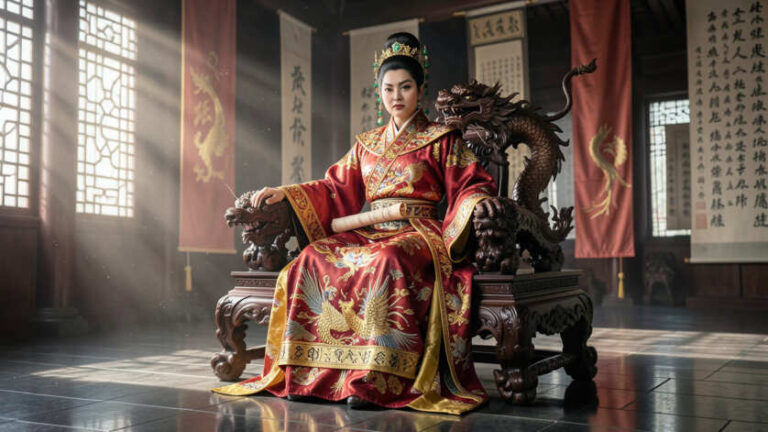

Sun Tzu’s The Art of War Explained for Modern Leaders
Sun Tzu’s The Art of War is one of the most influential treatises on strategy ever written. Its timeless principles continue to shape thinking in business, sports, and leadership. This guide breaks down its core philosophy and shows you how to apply it today.
Simply put, The Art of War is an ancient Chinese military text that teaches the principles of winning through strategy, intelligence, and psychological advantage, rather than brute force. Its lessons are universal and apply directly to modern competitive environments.
Key Takeaways
- Sun Tzu emphasizes that supreme excellence is winning without fighting, achieved through superior strategy and intelligence.
- The text outlines 13 chapters, each focusing on a different aspect of warfare, from strategic planning to the use of spies.
- The Art of War is not about aggression; it is about understanding yourself, your opponent, and the environment to ensure victory.
- Modern applications of Sun Tzu’s teachings are vast, influencing corporate strategy, negotiation, and personal development.
- Success relies on adaptability, preparation, and exploiting the weaknesses of your competition.
What is Sun Tzu and The Art of War?
The Art of War is a Chinese military treatise dating from the Late Spring and Autumn Period (roughly 5th century BC). The work is attributed to the ancient Chinese military strategist Sun Tzu. Its core thesis is that effective warfare is a matter of vital importance to the State.
Sun Tzu’s philosophy centers on the idea that the greatest victory is one that requires no battle. He argues that the skillful leader subdues the enemy’s troops without fighting. This is accomplished through intellect, maneuvering, and understanding the fundamental laws of conflict.
The text is surprisingly concise. It contains about 6,000 characters in 13 chapters, each devoted to a specific aspect of warfare. Despite its brevity, its wisdom is profound.
It covers topics from military organization and planning to espionage and the moral law.
- Author: Attributed to Sun Wu (Sun Tzu), a general, strategist, and philosopher.
- Period: Composed during China’s Spring and Autumn Period.
- Structure: 13 chapters, each a self-contained essay on a specific topic.
- Core Theme: The psychology of war and how to win with minimal cost.
- Legacy: The foundational text of East Asian military strategy.
Historians debate whether Sun Tzu was a real historical figure or a composite. Regardless, the text itself has endured for over 2,500 years. Its principles were used by famous leaders like Mao Zedong and General Norman Schwarzkopf.
Today, it is required reading in military academies worldwide.
How The Art of War Works: Core Strategic Principles
Sun Tzu’s system is built on a foundation of knowledge and preparation. Victory goes to the one who knows when to fight and when not to fight. The text operates on the principle that all warfare is based on deception.
He identifies five fundamental factors that must be appraised to determine the outcome of any campaign. These factors are the Moral Law, Heaven, Earth, The Commander, and Method and Discipline. A leader must constantly analyze these elements.
The method works by first securing an advantageous position and then challenging the opponent. It advocates for flexibility and changing tactics based on the situation. Rigidity is a path to defeat.
- Moral Law (Dao): Causes the people to be in complete accord with their ruler.
- Heaven (Tian): Signifies night, day, cold, heat, and the seasons.
- Earth (Di): Covers distances, danger, open ground, narrow passes, and life and death.
- The Commander (Jiang): Stands for the virtues of wisdom, sincerity, benevolence, courage, and strictness.
- Method and Discipline (Fa): Encompasses the organization of troops, rank, and the maintenance of supplies.
By evaluating these five factors, a general can forecast victory or defeat. This analysis must happen before any conflict begins. Preparation and intelligence are therefore more valuable than brute strength.
Tip: Apply this principle to business. Before a product launch, analyze your market (Earth), timing (Heaven), team (Commander), company culture (Moral Law), and processes (Method).
The 13 Chapters: A Breakdown of Key Lessons
The 13 chapters form a comprehensive manual for strategic thinking. Each chapter builds on the last, creating a complete system. Here is a breakdown of the most critical chapters and their modern takeaways.
| Chapter | Key Lesson | Modern Application |
|---|---|---|
| 1. Laying Plans | War is a matter of vital importance. Calculate chances. | Strategic planning and risk assessment. |
| 2. Waging War | Prolonged warfare drains resources. | Avoiding costly, drawn-out market battles. |
| 3. Attack by Stratagem | Supreme excellence is breaking resistance without fighting. | Winning market share through innovation, not price wars. |
| 5. Energy | Use indirect methods to create direct impact. | Flanking maneuvers and niche market attacks. |
| 11. The Nine Situations | Adapt your strategy to the terrain. | Pivoting strategies based on market conditions. |
Chapter 3, “Attack by Stratagem,” is arguably the most famous. It states that the highest form of generalship is to baulk the enemy’s plans. The next best is to prevent the junction of the enemy’s forces.
The next in order is to attack the enemy’s army in the field. The worst policy of all is to besiege walled cities.
Warning: Do not interpret this as passivity. Sun Tzu advocates for vigorous, decisive action – but only when the conditions for victory are clearly established. Attacking blindly is foolish.
Another key chapter is “Maneuvering” (Chapter 7). It speaks of the importance of turning the devious into the direct. Sun Tzu advises showing benefit where there is danger.
This confuses the opponent and allows you to seize the advantage. In business, this could mean highlighting a weakness in a competitor’s product as an opportunity for your own.
Who Can Benefit From Sun Tzu’s Teachings Today?
The principles of The Art of War are not limited to military commanders. They are universal principles of conflict and strategy. Anyone operating in a competitive environment can derive value from its lessons.
Sports coaches use its concepts to outmaneuver opponents. Politicians study its tactics for campaigning and negotiation. Most notably, corporate leaders and entrepreneurs have embraced its teachings for navigating the business world.
- C-Suite Executives: For corporate strategy, mergers, acquisitions, and competitive positioning.
- Entrepreneurs and Startups: For understanding market dynamics and competing against larger incumbents.
- Sales and Marketing Professionals: For strategic pitching, understanding customer psychology, and competitor analysis.
- Legal Professionals: For trial strategy, negotiation tactics, and dispute resolution.
- Athletes and Coaches: For game planning, psychological warfare, and adapting to an opponent’s style.
The book’s relevance stems from its focus on fundamental truths about conflict, intelligence, and human nature. It teaches you to think several moves ahead. It emphasizes the importance of information and self-knowledge above all else.
Important: The goal is not to become ruthless, but to become strategic. Understanding these principles helps you anticipate challenges and make informed, decisive choices.
How to Apply The Art of War in Business Strategy
Applying Sun Tzu to business requires translating ancient concepts into modern context. The core tenets of intelligence, positioning, and deception are directly transferable. Here is a practical framework.
- Know Yourself (Chapter 3): Conduct an honest assessment of your company’s strengths, weaknesses, resources, and capabilities. This is your SWOT analysis.
- Know Your Enemy (Chapter 3): Study your competitors exhaustively. Understand their strategies, costs, culture, and leadership. Use tools like competitive intelligence software.
- Calculate the Chances (Chapter 1): Before entering a new market or launching a campaign, do the math. Analyze market size, potential return, and required investment.
- Shape the Battlefield (Chapter 5): Don’t compete on the terms set by your rivals. Create a new category, redefine the value proposition, or focus on an underserved niche.
- Use Deception Ethically (Chapter 1): This means strategic misdirection, not lying. It can involve publicizing a minor feature to hide a major innovation or timing your moves for maximum surprise.
- Strike at Weakness (Chapter 6): Identify and attack the competitor’s weak points. This could be their poor customer service, outdated technology, or inflexible pricing.
According to a study published in the Academy of Management Journal, companies that adopt adaptive, unconventional strategies inspired by Sun Tzu’s principles show greater resilience during market disruptions. A survey by the Harvard Business Review also found that 85% of successful CEOs read history or military strategy books for leadership insights.
Common Misconceptions About The Art of War
Many people misunderstand Sun Tzu, viewing the text as a manual for ruthless, amoral conduct. This is a significant misinterpretation. The book is primarily about efficiency and effectiveness, not cruelty.
One major misconception is that it promotes endless deception. Sun Tzu actually warns that deception has limits. He states that one cannot rely on spies alone or trick an enemy indefinitely.
The goal of deception is to create an opportunity for decisive, often final, action.
Another myth is that the book advocates for avoiding conflict at all costs. While it does prioritize winning without fighting, it recognizes that war is sometimes necessary. The advice is about how to fight intelligently when you must.
| Common Misconception | The Reality According to Sun Tzu |
|---|---|
| It’s about deception and trickery. | Deception is a tool to create advantage. The real victory comes from superior strategy and understanding. |
| It teaches you to always avoid a fight. | It teaches you to avoid unnecessary or unfavorable fights. It heavily details how to fight effectively. |
| It’s only for military conflict. | Its principles are universally applicable to any competitive or strategic endeavor. |
| It advocates for a “win at all costs” mentality. | It advocates for winning smartly. A costly, pyrrhic victory is worse than a negotiated peace. |
Understanding these distinctions is crucial for applying the text’s wisdom correctly. It is a guide to becoming a more effective and intelligent leader, not a villain.
The Historical Impact of Sun Tzu’s Work
The influence of The Art of War extends far beyond its ancient Chinese origins. It was introduced to Japan in the 8th century and became a core text for the samurai. It later spread to Europe and the Americas, profoundly shaping military thought.
In the 20th century, it influenced leaders like Mao Zedong, who used its guerrilla warfare tactics. During the Vietnam War, General Giap’s strategies showed clear Sun Tzu principles. Western leaders like General Norman Schwarzkopf credited the book for insights during the Gulf War.
Its impact is not confined to the battlefield. Japanese industrialists used it to guide their corporate strategies post-World War II. Today, it is integrated into the curricula of top business schools like Harvard and INSEAD.
The principles of agile response and competitive positioning are direct descendants of Sun Tzu’s teachings.
- Japanese Management: Concepts like Kaizen (continuous improvement) and just-in-time manufacturing reflect Sun Tzu’s emphasis on efficiency and preparation.
- Startup Culture: The lean startup methodology mirrors the book’s advice to start small, test assumptions, and pivot quickly.
- Diplomacy: Negotiators use its principles to understand the other party’s position and find paths to resolution without overt conflict.
The text’s endurance lies in its abstraction. By dealing with universal principles of conflict, it transcends specific technologies or eras. Its wisdom remains potent because human nature and strategic logic are constants.
Frequently Asked Questions
What is the main message of The Art of War?
The main message is that victory is best achieved through superior strategy, preparation, and intelligence, rather than through brute force or direct confrontation. It emphasizes winning without fighting by understanding yourself, your opponent, and the situation completely.
How many chapters are in The Art of War?
There are 13 chapters in total. Each chapter is a self-contained essay that focuses on a specific aspect of warfare, from strategic planning and troop organization to the use of terrain and spies.
Is The Art of War still relevant today?
Yes, it is highly relevant. Its principles of strategy, psychology, and competition are applied in modern business, sports, negotiation, and leadership. The core ideas about adapting to circumstances and understanding your competition are timeless.
How should a beginner approach reading The Art of War?
A beginner should read a translation with explanatory commentary to grasp the context. Focus on understanding the core principles of each chapter rather than getting lost in the archaic details. Reflect on how each lesson applies to your own professional or personal challenges.
What is the “supreme excellence” Sun Tzu talks about?
The supreme excellence is to break the enemy’s resistance without fighting. This means winning through superior strategy, psychological advantage, and positioning so that the opponent either surrenders or is rendered ineffective before a direct conflict even occurs.
Final Thoughts
Sun Tzu’s The Art of War offers a timeless framework for strategic thinking. Its focus on intelligence, preparation, and adaptability makes it essential reading for any leader. By applying its principles, you can navigate competition with greater insight and achieve your objectives more efficiently.
The path to victory often lies not in direct confrontation, but in superior understanding.