
Zhou Dynasty Mandate of Heaven: Origins and Significance
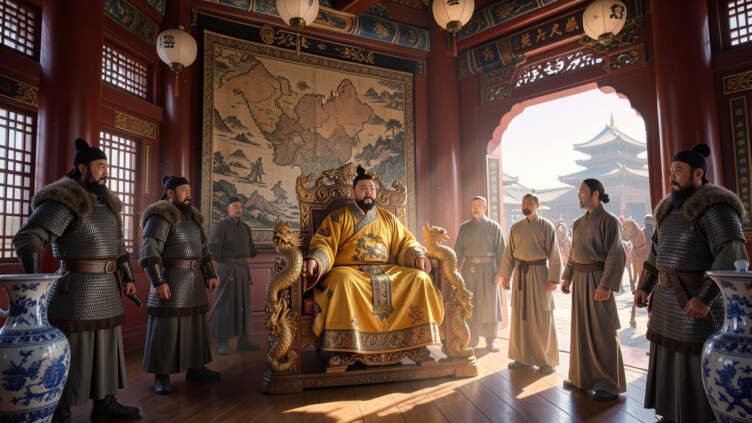
The Mandate of Heaven fundamentally shaped ancient Chinese political philosophy for over a thousand years. This core concept emerged during the Zhou Dynasty to legitimize their rule and overthrow the preceding Shang Dynasty. Understanding this doctrine is key to grasping the rise and fall of Chinese imperial power throughout history.
This article explores the historical origins, key principles, and lasting impact of the Mandate of Heaven under the Zhou Dynasty. We will break down how this ideology worked, its practical application, and why it remains a crucial topic in world history and political theory.
Simply put, the Mandate of Heaven was a divine justification for rule, stating that a just leader held a heavenly mandate to govern, which could be revoked for corrupt or incompetent leadership. The Zhou Dynasty used this to overthrow the Shang, creating a political theory that influenced Asian governance for millennia.
Key Takeaways
- The Mandate of Heaven was a Zhou Dynasty concept that justified their overthrow of the Shang Dynasty, claiming divine approval for a virtuous ruler.
- This political theory asserted that heaven granted authority to a just leader, but this mandate could be lost through moral failure, leading to rebellion.
- Under the Zhou, the mandate became hereditary but was contingent on the ruler’s ability to maintain harmony and prosperity for the people.
- The concept introduced a revolutionary idea of accountability, where natural disasters and social unrest were seen as signs of a lost mandate.
- The Zhou Dynasty established a feudal system under this mandate, which shaped Chinese social and political structures for centuries.
What Is the Historical Origin of the Mandate of Heaven?
The Mandate of Heaven was not an ancient belief but a brilliant political innovation of the early Zhou Dynasty. When the Zhou people, led by King Wu, overthrew the powerful Shang Dynasty around 1046 BCE, they needed a powerful justification for their actions. Simply claiming victory in battle was not enough to win the loyalty of the vast Shang population and other regional lords.
The Zhou leadership developed the concept that supreme authority, the “Mandate,” came from Heaven, a universal, morally concerned force. They argued the final Shang king, Di Xin, had been deeply immoral and neglectful of his duties. His cruelty and decadence meant Heaven had withdrawn its mandate from him and transferred it to the virtuous Zhou rulers.
- Shang Precedent: The Shang Dynasty already worshipped a high god called Shangdi. The Zhou co-opted this concept, referring to the same supreme power as “Heaven” (Tian).
- Propaganda Need: The Zhou required a moral argument to consolidate control over a larger territory and population than any previous dynasty.
- Flexible Justification: Unlike hereditary right alone, the Mandate provided a reason for dynastic change that could be applied to future rebellions as well.
- Historical Texts: Early Zhou documents like the “Book of Documents” contain speeches where King Wu and the Duke of Zhou explicitly state their received mandate.
This origin story established a powerful precedent. It framed political power not as an absolute right but as a moral responsibility entrusted by a higher cosmic order.
How Did the Zhou Dynasty Legitimize Their Rule with This Concept?
The Zhou did not just state they had the Mandate; they actively built their entire governance around demonstrating it. Their legitimacy rested on proving they were worthy stewards of Heaven’s will through both ritual and practical administration. This created a new model of responsible kingship.
King Wu, the conqueror, and especially his brother, the Duke of Zhou, who acted as regent, were portrayed as paragons of virtue. They emphasized ritual propriety, care for the people’s welfare, and the maintenance of cosmic harmony. The Duke of Zhou was even said to have established the foundational rites of the Zhou state to ensure continuous communication with Heaven.
| Legitimacy Tactic Under the Zhou | How It Demonstrated the Mandate |
|---|---|
| Elaborate Ritual Sacrifices | Offerings to Heaven and ancestors showed the ruler’s unique connection to the divine realm. |
| Feudal Enfeoffment System | Distributing land to relatives and allies created a network of loyal vassals, extending the ruler’s virtuous rule. |
| Emphasis on Virtue (De) | Promoting the ruler’s moral character as the foundation of political stability and cosmic order. |
| Control of Bronze Casting | Producing ritual bronze vessels, symbols of authority and communication with spirits, affirmed their celestial mandate. |
This systematic approach transformed the Mandate from a mere claim into the operational principle of the state.
What Are the Core Principles of the Mandate of Heaven Doctrine?
The doctrine was built on several interlinked ideas that made it both powerful and adaptable. These principles defined the relationship between the ruler, the people, and the cosmos. They created a system where political power had inherent conditions and limits.
At its heart was the idea that Heaven was a moral force concerned with the welfare of the people. The ruler was the “Son of Heaven,” a link between the divine and human realms. His primary duty was to maintain harmony and prosperity for all under heaven.
- Moral Contingency: The mandate was not permanent. It depended entirely on the ruler’s virtue and competence. A single generation of corrupt rule could forfeit it.
- Popular Welfare as a Sign: The well-being of the people was the chief indicator of Heaven’s favor. Peace, abundance, and contentment proved the ruler had the mandate.
- Natural Signs and Omens: Heaven communicated its pleasure or displeasure through natural phenomena. Good harvests and calm weather signified approval.
- Right to Rebellion: If a ruler was tyrannical and the people suffered greatly (through famine, floods, earthquakes), it was a sign the mandate had been lost. Rebellion to overthrow such a ruler was not only justified but was a duty to restore cosmic order.
Important: The rebellion principle was the most revolutionary aspect. It provided a theoretical framework for regime change, making it an integral part of the political cycle rather than an aberration.
Why Was the Mandate of Heaven More Than Just a Political Tool?
While born as a justification for the Zhou takeover, the Mandate quickly evolved into the foundational ethical philosophy of Chinese statecraft. It bound together religion, philosophy, and governance into a single coherent worldview. Its principles influenced later schools of thought, most notably Confucianism.
Confucius and his followers revered the early Zhou rulers, especially the Duke of Zhou, as models of sage leadership. The Confucian emphasis on ruler’s virtue, ethical governance, and the Mencius idea of “the people are the most important element in the state” are direct extensions of Mandate thinking.
- Checks on Power: It provided an ethical check on autocracy, suggesting that power must be exercised justly.
- Social Stability: By linking prosperity to just rule, it encouraged long-term planning and public works.
- Cultural Unity: It offered a shared narrative for a diverse population, explaining the rise and fall of states within a common moral framework.
- Historical Consciousness: It taught that history was cyclical and driven by moral cause and effect, not just by fate or random chance.
This deeper philosophical role ensured the doctrine long outlived the Zhou Dynasty itself.
How Did the Doctrine Evolve During the Eastern Zhou Period?
The Eastern Zhou period (770-256 BCE), especially the Spring and Autumn and Warring States eras, severely tested the Mandate theory. The Zhou royal house had become weak, the feudal lords fought constant wars, and social order broke down. This chaotic reality seemed to contradict the idea of a stable, Heaven-mandated rule.
In response, thinkers adapted the Mandate concept. Instead of seeing the chaos as proof the doctrine was false, they reframed it as proof of its accuracy. The chaos itself was the sign that the Zhou had lost their mandate, and it was now up to a new, virtuous leader to unify the land and restore order.
| Period | Political Reality | Interpretation of the Mandate |
|---|---|---|
| Western Zhou | Strong central rule under the king. | The mandate is secure and demonstrated through effective feudal governance. |
| Eastern Zhou (Spring & Autumn) | Regional lords are powerful; Zhou king is ceremonial. | The mandate is symbolically with the Zhou but practically with virtuous lords who maintain order in their states. |
| Eastern Zhou (Warring States) | Total war between competing states. | The mandate is in flux. It belongs to whichever ruler can demonstrate virtue by unifying the land and ending suffering. |
This adaptation was crucial. It preserved the doctrine’s relevance and made it the perfect tool for the eventual founding of the Qin Dynasty in 221 BCE.
Who Were the Key Figures Associated with the Mandate Under the Zhou?
Several individuals played pivotal roles in articulating and embodying the Mandate of Heaven doctrine during its formative and later stages. Their stories became the archetypes of virtuous and failed rulership according to the mandate.
The most important were the early Zhou leaders who created the ideology, and later philosophers who codified it into a permanent political tradition.
- King Wen of Zhou: The revered patriarch who laid the groundwork for the Zhou rise. He was portrayed as exceptionally virtuous, making Heaven’s decision to grant the mandate to his family seem inevitable.
- King Wu of Zhou: The conqueror who led the rebellion against the Shang. He publicly declared the withdrawal of the mandate from the Shang and its bestowal upon himself.
- The Duke of Zhou (Dan): King Wu’s brother and the true architect of Zhou governance and the Mandate theory. He established the rituals and administrative systems that proved Zhou worthiness.
- Confucius (551-479 BCE): While not a Zhou ruler, he profoundly shaped the legacy of the Mandate. He looked back to the early Zhou as a golden age of virtuous rule and made its principles core to his teachings.
- Mencius (372-289 BCE): He explicitly and forcefully argued for the right of the people to rebel against a tyrant, making the “withdrawal of the mandate” doctrine even clearer and more revolutionary.
Tip: When studying these figures, focus on how their actions and writings reinforced the core idea that political power is a moral trust from Heaven, not a personal possession.
What Lasting Impact Did This Concept Have on Chinese History?
The Mandate of Heaven became the unofficial constitution of imperial China. Every subsequent dynasty, from the Qin to the Qing, claimed it to justify their rule. The pattern of dynastic rise, corruption, popular rebellion, and a new dynasty claiming the mandate became a recurring theme in Chinese history.
The concept provided a unique mechanism for political regeneration. It allowed the Chinese civilization to survive and thrive through numerous dynastic collapses because the underlying system of legitimacy could be renewed. A new dynasty could emerge from the ashes of the old, claiming to have restored order and virtue.
- Dynastic Cycle Explanation: It offered a logical reason for the cyclical nature of Chinese political history—moral rise and fall.
- Justification for Peasant Rebellions: Major uprisings, like the one that ended the Ming Dynasty, were often led with the explicit goal of “restoring the mandate” from a corrupt ruler.
- Influence on Neighboring States: The doctrine was adopted in Korea, Vietnam, and Japan, shaping the political theories of the entire East Asian cultural sphere.
- Modern Echoes: Even in modern Chinese political discourse, themes of national rejuvenation and restoring historical greatness can be seen as secular echoes of the mandate’s promise of order and prosperity.
Its impact cannot be overstated. It provided the conceptual glue that held together the world’s longest continuous civilization.
Frequently Asked Questions
What exactly did “Heaven” mean in the Mandate of Heaven?
Heaven (Tian) was not a personal deity like in Western religions. It was a cosmic, moral force—an impersonal principle of order and justice that oversaw human affairs. It responded to the moral conduct of the ruler, granting or withdrawing approval based on that conduct and its effect on the people.
Did the Zhou Dynasty believe they were the only ones who could ever hold the Mandate?
No, and this is a key point. The Zhou doctrine explicitly stated that the mandate could be transferred to any virtuous ruler, not just to their descendants. This flexibility is what allowed the theory to justify future revolutions and the rise of new dynasties like the Qin and Han.
How were natural disasters interpreted under the Mandate of Heaven?
Events like floods, famines, earthquakes, or strange astronomical occurrences were seen as direct messages from Heaven. They were interpreted as signs of the ruler’s displeasure with the current mandate holder. A series of disasters would suggest the mandate was being withdrawn and that the ruler needed to correct his ways.
Is the Mandate of Heaven the same as the European “Divine Right of Kings”?
No, they are fundamentally different. The Divine Right of Kings asserted that a monarch’s authority came directly from God and was absolute and hereditary, often with no condition for removal. The Mandate of Heaven was conditional, based on the ruler’s virtue, and included the right of the people to rebel against a tyrant.
What was the practical consequence of the Mandate for the common people?
In theory, it empowered the common people by making their welfare the ultimate measure of a ruler’s legitimacy. While in practice peasant revolts were rarely successful in forming new dynasties, the doctrine gave suffering populations a moral and philosophical justification for their discontent and resistance.
Final Thoughts
The Mandate of Heaven, as formulated and practiced by the Zhou Dynasty, was a revolutionary concept that transcended its original purpose as political propaganda. It established a powerful tradition of conditional leadership where the moral welfare of the people was the measure of a ruler’s divine right to govern. This idea provided stability, ethical grounding, and a blueprint for renewal that shaped imperial China for millennia and continues to influence cultural and political thought in East Asia today.