Zodiac Predictions: How Seriously Are They Taken Today
Zodiac predictions are widely consumed but taken with varying seriousness, with most people treating them as entertainment or self-reflection rather than absolute truth. Surveys indicate that about a third of adults read horoscopes regularly, though only a minority use them for major life decisions. The practical takeaway is that zodiac forecasts serve best as tools for introspection when used wisely, not as definitive guides.
Millions of people check their zodiac forecast every day, while others dismiss the entire practice as superstition. This post explores how seriously zodiac predictions are actually taken in modern life.
Simply put, zodiac predictions are widely consumed but viewed with varying degrees of seriousness. A significant portion of the population reads horoscopes for entertainment or self-reflection, while a smaller, dedicated group uses them for life guidance. Most people fall somewhere in between, treating astrology as a fun tool for introspection rather than absolute truth.
Zodiac predictions are forecasts based on the positions of celestial bodies, primarily the Sun, Moon, and planets, relative to the 12 zodiac signs. These predictions are often delivered as horoscopes, which can be daily, weekly, or monthly. They claim to offer insights into personality traits, relationships, and future events.
Most people recognize their Sun sign, which is determined by their date of birth. However, a complete astrological reading includes the Moon sign and rising sign, which add depth and nuance. Modern zodiac predictions have evolved from ancient traditions to become a staple of modern media, from newspaper columns to sophisticated smartphone apps.
Key Takeaways
- Zodiac predictions are consumed by a wide audience, but the level of belief varies significantly across age groups and cultures.
- Younger generations, particularly Millennials and Gen Z, are more likely to engage with astrology through apps and social media platforms.
- The psychological appeal of zodiac predictions often stems from the Barnum effect, where vague statements feel personally meaningful.
- While few people base major life decisions solely on horoscopes, many use them as a tool for self-reflection and personal insight.
- Astrology has become a booming industry, with dedicated apps like Co-Star and The Pattern generating significant revenue and user engagement.
How Many People Actually Believe in Zodiac Predictions
Belief in zodiac predictions is more common than many people assume. According to, approximately 30% of Americans believe in astrology. This number climbs among younger adults, with nearly 37% of people under 30 considering it a legitimate practice.
Data from the reveals a different picture. Their surveys show that most Americans view astrology as “not at all scientific.” This highlights a key distinction: people might read zodiac content without necessarily “believing” in its scientific accuracy. Women are more likely than men to report belief in astrology, with rates around 35% compared to 20% for men.
| Demographic | Belief in Astrology | Reads Horoscopes Regularly |
|---|---|---|
| Ages 18-29 | ~37% | ~40% |
| Ages 30-49 | ~28% | ~25% |
| Ages 50+ | ~15% | ~12% |
| Women | ~35% | ~30% |
| Men | ~20% | ~15% |
Important: Data from Pew Research Center and NSF indicates that while belief is moderate, the consumption of zodiac content for entertainment is significantly higher, especially among younger demographics.
Why Do People Turn to Zodiac Predictions
The popularity of zodiac predictions is not just about the stars. It is deeply tied to human psychology. People have a natural desire to find patterns and meaning in chaos. Astrology offers a ready-made framework for understanding the self and others.
One key psychological principle is the Barnum effect. This is the tendency for people to accept vague, general personality descriptions as uniquely applicable to themselves. Horoscopes often use this technique. They contain broad statements that could apply to anyone, but the reader feels a personal connection.
Another reason is the reduction of anxiety. During uncertain times, such as a job change or a breakup, people look for guidance. Zodiac predictions provide a sense of control and foresight, even if that control is illusory. It is a tool for processing emotions and planning for the future.
- Pattern seeking: Humans are wired to find connections, even where none exist. Astrology provides a neat structure for interpreting life events.
- Social bonding: Discussing zodiac signs is a low-stakes way to connect with others. It is a shared language that makes conversations about personality and relationships easier.
- Self-discovery: Many people use astrology as a mirror. Reading about their sign gives them a chance to reflect on their own habits, strengths, and weaknesses.
- Cultural normalization: As more influencers and celebrities talk about astrology, it becomes a mainstream topic. This reduces the stigma around reading horoscopes.
The Rise of Astrology Apps and Social Media
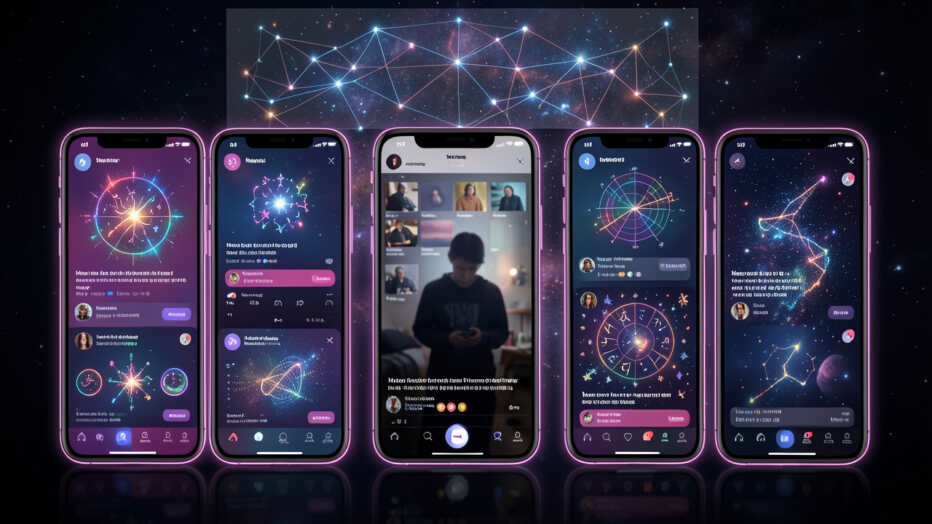
Technology has transformed how people engage with zodiac predictions. Gone are the days of waiting for the Sunday newspaper. Now, personalized horoscopes are available instantly on mobile devices.
Apps like Co-Star and The Pattern have revolutionized the industry. They use algorithms to generate detailed birth charts and daily insights. These apps often feel accurate because they analyze multiple data points, including your exact time and place of birth. The user experience is designed to feel personal, modern, and shareable.
Social media platforms, especially TikTok and Instagram, have also played a huge role. Astrologers with large followings create short, engaging videos about upcoming transits or zodiac sign compatibility. This has normalized zodiac talk among younger users. Users often share their sign’s “mood” or “prediction” for the week, making astrology a social activity.
Popular Astrology Platforms
Each app offers a different experience. Some focus on data and algorithms, while others prioritize human connection.
- Co-Star – Known for its NASA-sourced data and blunt, direct horoscopes. It is highly popular among Gen Z.
- The Pattern – Focuses on deep psychological insights and relationship dynamics between different patterns.
- Sanctuary – Offers live chat readings with professional astrologers, bridging the gap between DIY apps and professional services.
- TimePassages – A robust app for learning the technical aspects of astrology and tracking transits.
Tip: For the most accurate reading, know your exact birth time, date, and location. This allows apps to calculate your Rising sign and Moon sign, which add significant depth to your zodiac predictions.
What Zodiac Predictions Are Not
Despite their popularity, there are several common misconceptions about zodiac predictions. It is important to separate the practice from its myths.
- Myth: Zodiac predictions are scientifically proven. Fact: The scientific community, including the National Science Foundation, classifies astrology as a pseudoscience. No controlled studies have demonstrated the predictive power of horoscopes beyond chance. The appeal is psychological, not empirical.
- Myth: Your Sun sign determines everything. Fact: A birth chart is complex. It includes the Moon sign, rising sign, and the positions of 10 planets across 12 houses. Reducing a person to their Sun sign is a simplification. Real astrological practice is much more nuanced.
- Myth: Zodiac signs dictate your personality completely. Fact: Astrology offers a language for personality, but genetics, environment, and personal experiences are the main drivers of who you are. Zodiac signs can be a tool for self-reflection, but they do not define your fate or character in a fixed way.
How to Use Zodiac Predictions Wisely
If you enjoy astrology, there is no harm in using it as a tool. The key is to maintain a balanced perspective. Here are some tips for engaging with zodiac content in a healthy way.
- Use it for self-reflection, not decision-making. Let a horoscope prompt you to think about your feelings. Do not let it dictate major life choices like moving or ending a relationship.
- Learn your full chart. Go beyond the Sun sign. Understanding your Moon and Rising signs gives a much richer picture of your personality and motivations.
- Treat it as a conversation starter. Asking someone about their zodiac sign can be a fun way to break the ice. It is a low-stakes social tool.
- Question the source. Some apps and astrologers are more focused on engagement and revenue than accuracy. Look for creators who explain their reasoning.
- Stay grounded in reality. Enjoy the insights, but always prioritize real-world evidence and your own judgment over a prediction.
Frequently Asked Questions
What are zodiac predictions based on?
Zodiac predictions are based on the positions of the Sun, Moon, and planets in relation to the 12 zodiac constellations. Astrologers interpret these positions to create horoscopes for specific signs or birth charts.
Are zodiac predictions real or just entertainment?
Most major scientific organizations, including the National Science Foundation, consider astrology a pseudoscience. For many people, zodiac predictions are a form of entertainment or a tool for introspection, not a literal guide to the future.
Why do millenials and Gen Z take astrology seriously?
Younger generations have grown up with the internet and apps like Co-Star and The Pattern, which present astrology in a personalized and modern format. Social media has also normalized discussing zodiac signs as a way to understand personality and relationships.
Can zodiac predictions help with relationships?
Many people use zodiac compatibility to understand relationship dynamics. Astrology can offer a language to discuss strengths and challenges. However, healthy relationships depend on communication and mutual respect, which are more important than zodiac compatibility.
What is the Barnum effect in astrology?
The Barnum effect is a psychological phenomenon where individuals believe that vague, general personality descriptions are specifically about them. Horoscopes often use this effect by making broad statements that apply to a wide audience but feel personally relevant.

Final Thoughts
Zodiac predictions are taken seriously by a dedicated minority, but their real power lies in mass appeal as a tool for reflection and entertainment. The modern era has made astrology more accessible than ever through apps and social media. Whether you are a skeptic or a believer, the global fascination with the stars shows no signs of fading.