How Chinese Naming Customs Reflect Family Hopes
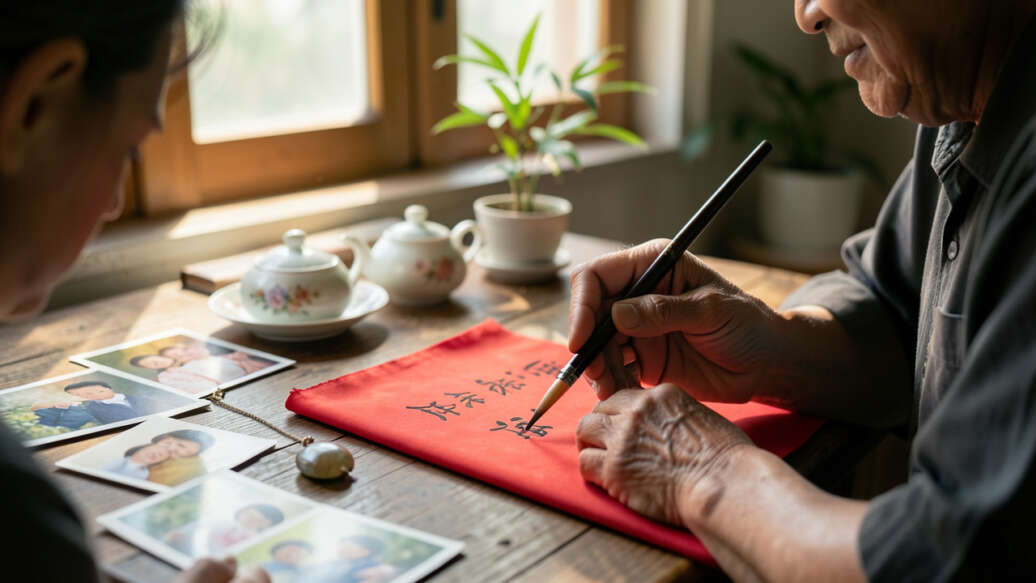
Chinese naming customs are far more than just labels; they are profound expressions of a family’s deepest wishes and aspirations for their child. This tradition weaves together poetry, philosophy, and personal history into a single, powerful identity. Understanding these customs offers a unique window into the values that shape one of the world’s oldest continuous cultures.
This guide explores how names are crafted to carry hopes for prosperity, virtue, and a bright future. You will discover the core elements, traditional principles, and modern influences that make Chinese naming a meaningful art form passed down through generations.
Simply put, Chinese naming customs are a deliberate process where characters are chosen to embed a child with specific virtues, blessings, and connections to family legacy, directly reflecting the parents’ highest hopes for their child’s character and destiny.
Key Takeaways
- Chinese naming customs transform a name into a vessel for family hopes, using characters that symbolize specific virtues like wisdom, strength, or kindness.
- The process is deeply intentional, often consulting classical texts like the I Ching, poetry, and the principles of the Five Elements to ensure balance and auspicious meaning.
- Surnames are strictly patrilineal and unchanging, while given names (1-2 characters) are where creative and hopeful meanings are concentrated.
- Modern influences, including global connectivity and a desire for uniqueness, are evolving traditional practices while still honoring their core purpose.
- Common mistakes include focusing only on sound or trendiness without considering the character’s meaning, stroke count, and cultural connotations.
What Are the Core Elements in Chinese Names?
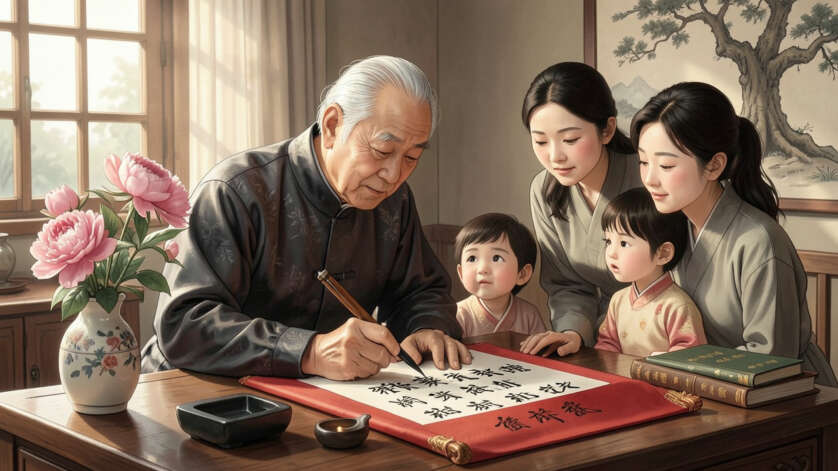
A Chinese name is structured with the family name first, followed by the given name. This order places the collective family identity before the individual, a core Confucian value. The given name, typically one or two characters, is where the rich layer of hope and meaning resides.
Each character is selected not just for how it sounds, but for its individual meaning, visual composition, and even how its strokes add up.
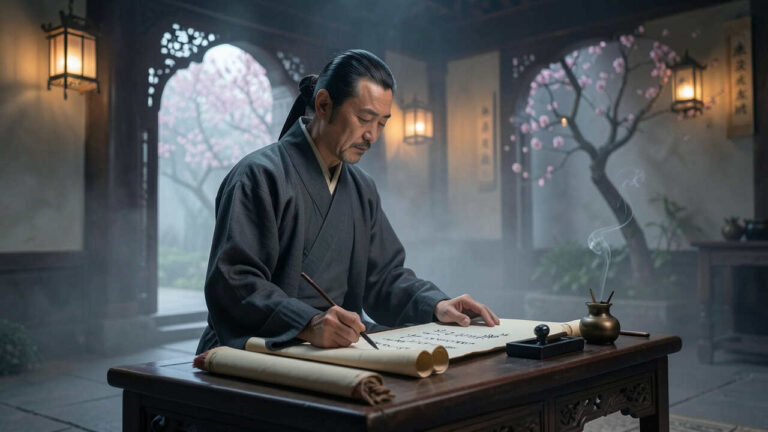
The choice of characters is influenced by several factors. Parents often look to classical literature for inspiration. Poems from the Tang Dynasty or passages from philosophical texts can provide a source of beautiful and meaningful characters.
Another key factor is the Chinese zodiac and the concept of the Five Elements (Wood, Fire, Earth, Metal, Water), which are believed to affect a person’s destiny.
- Surname (姓, xìng): Inherited from the father, it connects the child to their ancestral lineage and clan. Over 4,000 surnames exist in China, with the top few covering a vast portion of the population.
- Given Name (名, míng): The personal name chosen by parents. Its meaning is the primary vehicle for expressing hopes. For example, the character “安” (ān) means peace, while “杰” (jié) means heroic.
- Generational Name (字辈, zìbèi): Historically, many families used a poem or set sequence of characters for the second character of the given name. This linked siblings or cousins and maintained family order across generations.
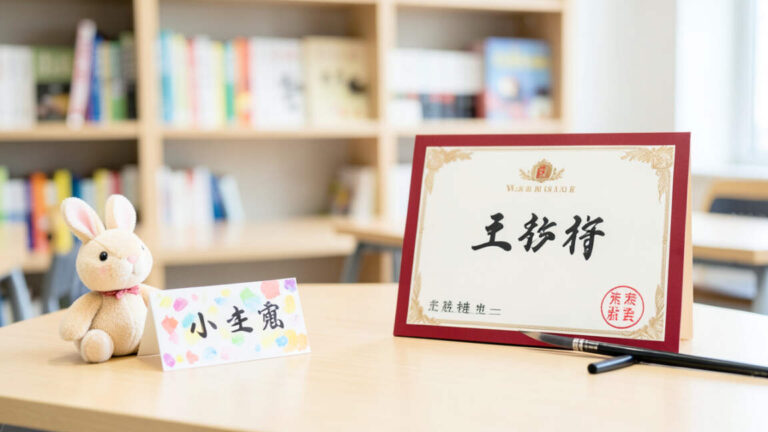
- Nickname (小名, xiǎomíng): A casual, often affectionate childhood name. It might be derived from the given name, use the “Little” prefix (小), or be a playful term like “Little Tiger.”
The interplay of these elements creates a name that is both deeply personal and rooted in a larger familial and cultural context. The hope is that the name’s inherent meaning will guide the child’s character development.
| Name Component | Purpose & Hope Expressed | Example Character & Meaning |
|---|---|---|
| Surname | Ancestral belonging and family honor. | 王 (Wáng) – King; 李 (Lǐ) – Plum tree. |
| Given Name (1st char) | Primary carrier of personal virtue and blessing. | 明 (Míng) – Bright; 慧 (Huì) – Wise. |
| Given Name (2nd char) | Adds nuance, often for gender distinction or poetic flow. | 雪 (Xuě) – Snow (often feminine); 松 (Sōng) – Pine (often masculine). |
| Generational Name | Creates kinship bonds and respects family tradition. | “国” (Guó – Nation) might be shared by all cousins in one generation. |
This structured approach ensures a name is not just a soundscape but a carefully constructed symbol of identity and aspiration.
How Do Chinese Naming Customs Work Today?
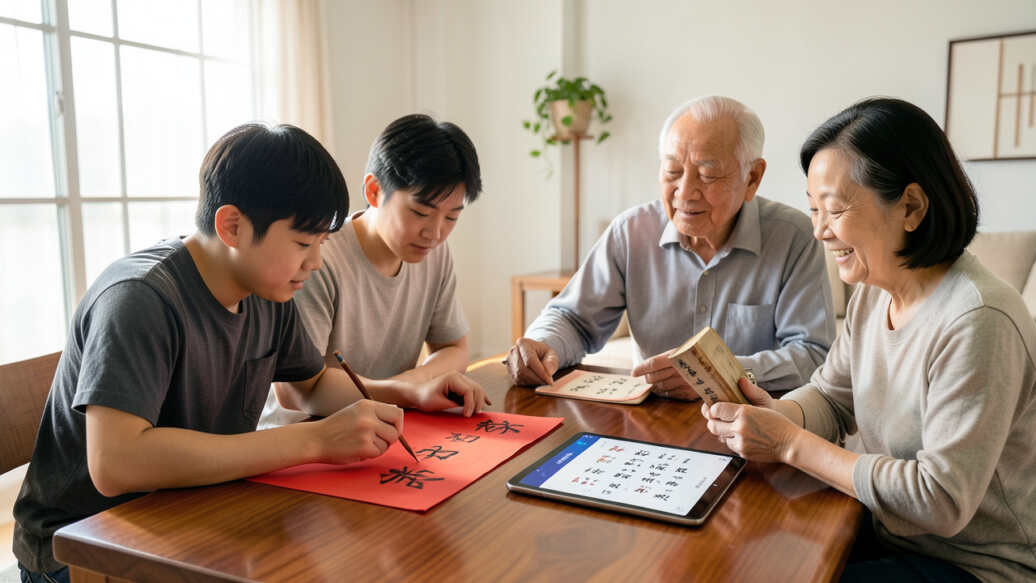
The modern process of choosing a Chinese name balances ancient wisdom with contemporary life. It often begins with a consultation, sometimes with a naming expert or using traditional reference books. Parents consider the Five Elements, analyzing the child’s birth chart (the Eight Characters or Ba Zi) to identify which elements are lacking.
A name with characters representing the needed element is then chosen to create cosmic balance and support a fortunate life path.
The sound of the name is also critical. It must be pleasant to the ear and, ideally, free of unfortunate homophones. For instance, the number four (四, sì) sounds like the word for death (死, sǐ), so characters with that pronunciation or stroke count are often avoided.
The goal is a name that sounds harmonious and carries only positive associations.
Today, many parents use a combination of methods. They might research characters in dictionaries, browse baby name websites, and then perform their own checks for meaning and phonetic appeal. Some still seek guidance from naming masters (起名先生, qǐmíng xiānsheng), who provide a list of recommended characters based on complex calculations.
- Birth Chart Analysis: A professional or reference guide analyzes the child’s birth date and time to determine their elemental balance (e.g., lacking Water).
- Character Research: Parents compile a list of characters with the desired elemental property (e.g., water radicals like 氵 or characters meaning river, rain).
- Meaning & Connotation Check: They verify each character’s core meaning, historical usage, and any negative associations.
- Sound & Flow Test: The full name (surname + given name) is spoken aloud to ensure it is euphonic and easy to pronounce. Homophones are checked.
- Stroke Count & Simplicity: Some consider the total stroke count for calligraphic balance or to match numerological beliefs (e.g., lucky numbers).
- Final Decision & Registration: The chosen name is entered on the official household registration (户口, hùkǒu), making it legally binding.
Tip: When considering a name, think about how it might be abbreviated or turned into a nickname in school or at work. A name that is easily turned into a positive nickname (like “An An” from 王安) can be a lovely social asset.
This structured yet adaptable process ensures the name remains a meaningful gift from the parents, thoughtfully prepared for the child’s journey through life.
What Role Do the Five Elements and Zodiac Play?
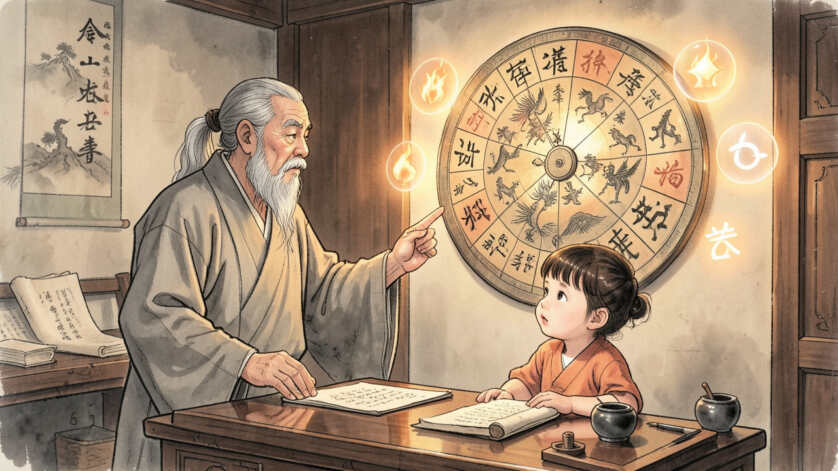
The concepts of the Five Elements (五行, Wǔ Xíng) and the Chinese zodiac are fundamental to many traditional naming decisions. These systems are believed to describe the dynamic relationships in the universe and within a person. A harmonious name can help align a child with the cosmos, while a discordant one might be thought to create challenges.
This adds a layer of metaphysical hope—wishing for a child whose life is in balance with natural forces.
The Five Elements theory posits that Wood, Fire, Earth, Metal, and Water generate and overcome each other in a cycle. A child’s birth time reveals their personal elemental makeup. If a child is born with a “weak” element in their chart, their name can incorporate characters associated with the “nurturing” element to strengthen them.
For example, a child lacking Fire might be given a character with the fire radical (灬) or meaning “sun” or “light.”
| Element | Associated Characters & Radicals | Hope Expressed |
|---|---|---|
| Wood (木) | 林 (Lín – Forest), 柏 (Bǎi – Cypress), 木 radical (木). | Growth, vitality, compassion. |
| Fire (火) | 烨 (Yè – Glorious), 炎 (Yán – Flame), fire radical (灬). | Passion, brilliance, dynamism. |
| Earth (土) | 坤 (Kūn – Earth), 培 (Péi – Cultivate), earth radical (土). | Stability, reliability, nurturing. |
| Metal (金) | 锐 (Ruì – Sharp), 钰 (Yù – Precious jade), metal radical (钅). | Determination, justice, prosperity. |
| Water (水) | 淼 (Miǎo – Vast water), 泽 (Zé – Marsh), water radical (氵). | Wisdom, adaptability, fluidity. |
The Chinese zodiac animal (one of 12) is also considered. Certain animals are believed to have inherent traits or clashes with other animals. The name might be chosen to complement the zodiac’s nature or mitigate any perceived weaknesses.
A Rat-born child, for instance, might be given a character suggesting courage to counteract timidity, or a character with the “field” radical (田), as rats are not favored in fields, to symbolically overcome that challenge.
Important: While deeply traditional, belief in these systems varies widely. Some families use them as a primary guide, others as one of many considerations, and some not at all. The hope, in all cases, is for the child’s well-being.
How Have Modern Influences Changed Naming Practices?
Globalization and digital life have introduced new considerations into Chinese naming customs. The internet has made character meanings, trends, and potential negative homophones instantly searchable. Parents are more aware than ever of how a name might be perceived in an international context, leading to choices that balance Chinese tradition with global accessibility.
A significant trend is the rise of unique and creative names. As China’s population grew, parents sought to avoid the extremely common names of previous generations (like 强 Qiáng for boys or 芳 Fāng for girls). This has led to a surge in using rarer, more literary characters, sometimes drawn from obscure classical texts.
The hope here is for the child to stand out and have a distinctive identity.
- Search Engine Testing: Parents now often “Google” a prospective name to check its existing associations and ensure it doesn’t belong to a controversial public figure or have negative search results.
- Social Media Handle Availability: In an ironic twist, the availability of a username on platforms like WeChat can influence the desirability of a given name.
- Bilingual Considerations: Names are increasingly chosen for their ease of pronunciation by non-Chinese speakers. Characters with simple sounds and clear pinyin romanization are favored.
- Influence of Pop Culture: Characters from popular TV dramas, novels, or even video games can see a surge in popularity as parents draw inspiration from beloved fictional heroes.
- Decline of Generational Names: The practice of using a fixed generational character has faded in urban areas, as families prioritize individual meaning over lineage sequencing.
Despite these changes, the core purpose remains intact. Whether a name is ancient or modern, creative or traditional, it is still chosen with the fundamental hope of giving the child a strong, positive, and auspicious start in life. The methods evolve, but the intention endures.
What Are Common Mistakes to Avoid When Choosing a Name?
The pressure to choose a perfect name is immense, and several common pitfalls can undermine a parent’s good intentions. One major mistake is prioritizing sound over meaning. A name might be trendy or phonetically pleasing, but its character could carry a trivial, overly common, or even negative meaning.
Another error is ignoring the name’s visual balance; a very simple surname paired with an overly complex given name character can be cumbersome to write.
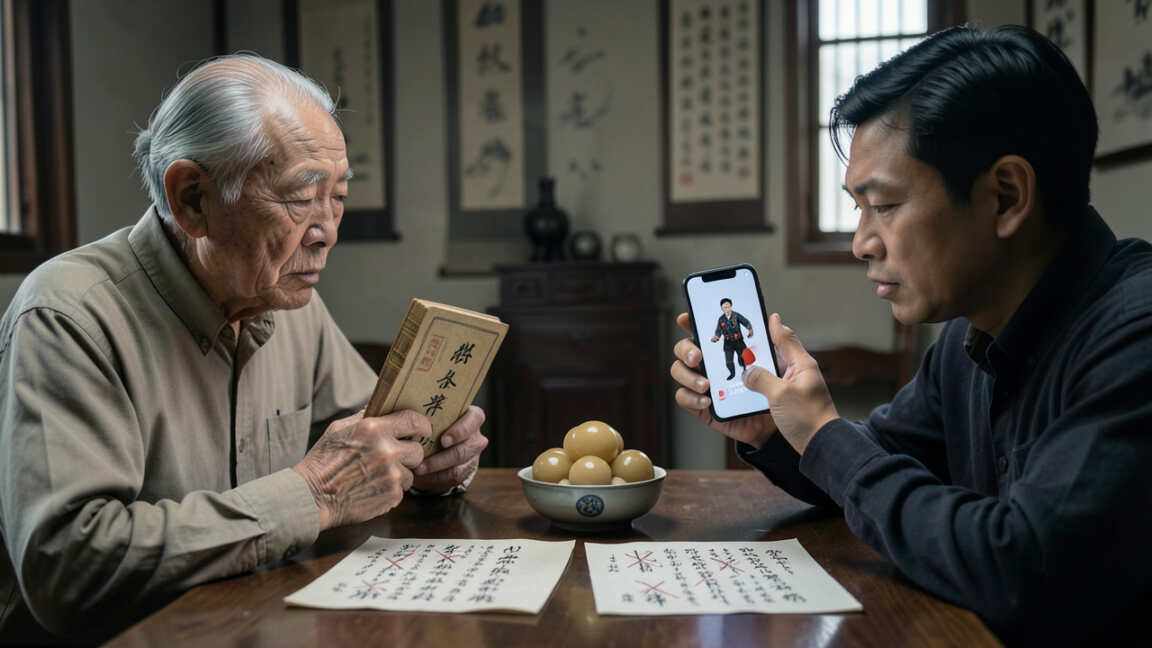
A frequently overlooked aspect is the full name’s homophonic story. Saying the name aloud and listening for unfortunate phrases is crucial. A name like 杜子腾 (Dù Zǐténg) sounds fine in isolation but resembles the phrase for “stomach ache” (肚子疼, dùzi téng).
Such names can become a source of teasing during childhood. Consulting with family and friends can help catch these awkward pairings.
Finally, chasing a rare character for uniqueness can backfire. Extremely obscure characters can cause constant issues with official systems, computer input methods, and daily life. The hope of giving a unique name can turn into a practical burden for the child.
The balance lies in being distinctive without being dysfunctional.
Warning: Avoid using characters with overly negative meanings (death, sickness, poverty) or those that belong to a revered historical or mythological figure, as this can be seen as arrogant or presumptuous.
The best practice is to test the name rigorously: write it out, say it aloud, type it on a phone, and ask for honest feedback from trusted elders and peers before finalizing it.
Frequently Asked Questions
Can Chinese people choose their own names?
Traditionally, no. The name is given by parents or sometimes grandparents as a first gift and responsibility. In modern times, while most still receive their name from parents, some individuals choose to legally change their name as adults to better align with their identity.
This is a significant decision and less common than in Western cultures.
Why are some characters so complex? Does that mean they are better?
Complex characters are often chosen for their rich, layered meanings or poetic references, not just their stroke count. A complex character from a classical poem might be chosen for its deep cultural resonance. Simplicity is not inherently better; the priority is the meaning and the balance it brings to the name as a whole.
Extremely complex characters can, however, be impractical for daily use.
How do Chinese names work for mixed-race or non-Chinese families?
For families with Chinese heritage, choosing a Chinese name is a beautiful way to connect a child to that part of their identity. For non-Chinese families, adopting a Chinese name is a sign of deep respect for the culture. In such cases, it is highly recommended to consult a native speaker or naming expert to ensure the name is meaningful, appropriate, and free of unintended connotations.
Is it bad luck to name a child after a living elder?
Yes, traditionally it is considered highly disrespectful and taboo. Naming a child directly after a grandparent or ancestor (especially a living one) implies a replacement or disrespect for the elder’s established identity and status. It is, however, acceptable to use a character from an elder’s name as part of the child’s name to honor them indirectly.
Do Chinese names have meanings that can predict the future?
The belief is that a name does not predict the future but can influence a person’s path by embodying and reinforcing desired virtues. A name meaning “strength” doesn’t magically grant physical power, but it can inspire and remind the child and community of that aspiration, potentially shaping their character over time through a kind of cultural and familial reinforcement.
Final Thoughts
Chinese naming customs are a timeless practice where every stroke and meaning is imbued with a family’s dreams. They connect a child to their heritage, the natural world, and a future filled with promise. This tradition shows that a name is never just a name—it is a blessing, an identity, and the first story written about a person’s life.
Whether guided by the stars, classical poetry, or modern pragmatism, the process remains one of profound care. It ensures that from their very first breath, a child is surrounded by the words and wishes that their family hopes will define them.