Understanding Milk Names vs. Formal Chinese Names: Key Differences
Milk names are a unique and intimate part of Chinese naming culture, standing in stark contrast to formal given names. Understanding the difference between these two naming conventions provides deep insight into family dynamics, affection, and the cultural values of China. This guide explores what milk names are, how they are formed, and why they differ so fundamentally from the formal names used in official and public life.
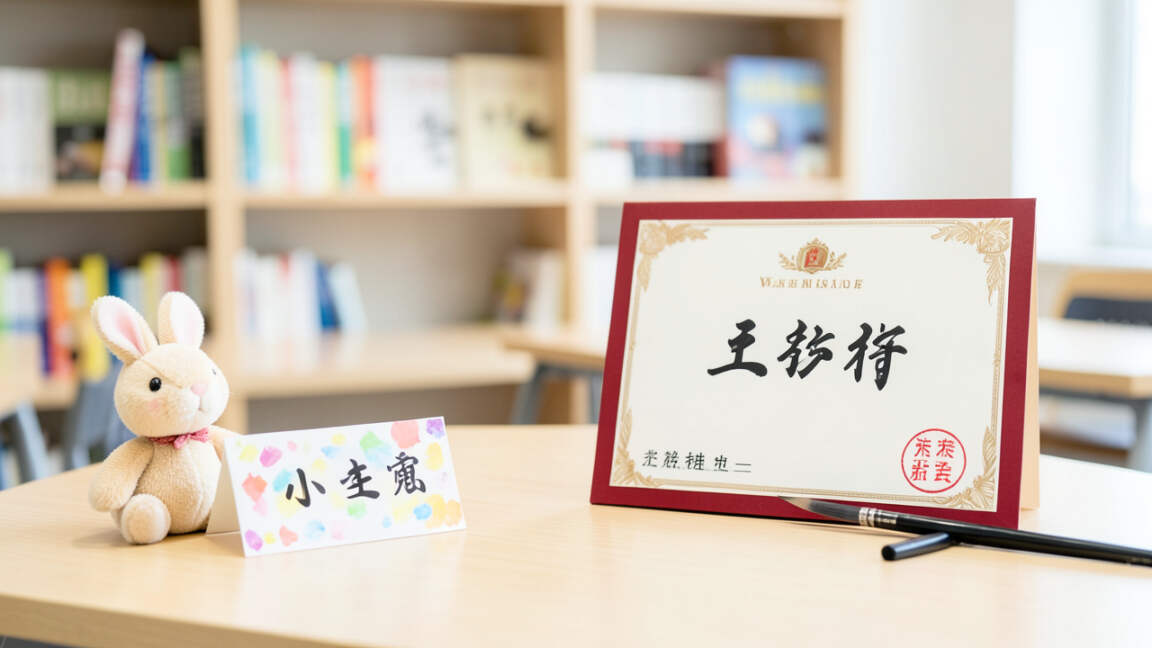
Simply put, a milk name is an affectionate nickname used within the family, often for young children, while a formal Chinese name is the official, given name used for all public and legal purposes. The milk name is informal and personal, whereas the formal name carries cultural weight and identity.
Key Takeaways
- Milk names are informal nicknames used almost exclusively within the family to show affection, typically for children.
- Formal Chinese names are the official names given at birth and used on all documents, reflecting parental aspirations and cultural heritage.
- The structure of a milk name is simple and playful, often using reduplication or cute descriptors, unlike the carefully chosen characters of a formal name.
- While milk names fade with age, a person’s formal name remains for their entire lifetime, tying them to their family and personal identity.
- Understanding this distinction is key to appreciating the layers of meaning in Chinese personal and family relationships.
What Are Milk Names in Chinese Culture?
A milk name (乳名, rǔmíng) is the first name a child in China often receives, used within the intimate circle of the family. It is a term of endearment, not for official use. The name is given by parents or grandparents shortly after birth and is meant to be sweet, simple, and easy for a toddler to say.
The origin of the term “milk name” relates to the period when a child is still being nursed or is very young. It signifies a time of innocence and direct familial care. These names are steeped in a desire for the child’s health and simplicity, often avoiding the formality of the official name-giving ceremony.
- Used primarily by parents, grandparents, and very close relatives.
- Typically used until the child enters school, sometimes continuing privately into adulthood.
- The name serves as a sign of deep affection and closeness within the family unit.
- Common themes include health, simplicity, and auspiciousness, but in a casual way.
In many families, using a person’s milk name as an adult is a special gesture reserved for those who knew them from infancy. It creates a private language of love that separates family from the outside world. This practice underscores the importance of the family sphere in Chinese social life.
How Formal Chinese Names Are Structured
A formal Chinese name (名字, míngzì) is a carefully crafted identity marker given to a child, often with great deliberation. It typically consists of two or three characters: a family name (surname) followed by a one or two-character given name. The choice of characters is deeply significant, drawing from poetry, philosophy, and aspirational meanings.
The process of choosing a formal name can involve consulting fortune-tellers, analyzing the child’s birth date and time (Ba Zi), and considering the balance of the five elements (Wu Xing). Parents and elders pour hopes for the child’s future, intelligence, and moral character into these chosen characters.
| Component | Formal Name | Milk Name |
|---|---|---|
| Purpose | Official identity, legal, social | Affectionate, private, familial |
| Structure | Surname + 1 or 2 given name characters | Often single character, reduplicated, or a cute phrase |
| Origin of Name | Careful selection from literature, astrology, family hopes | Spontaneous, playful, based on a trait or auspicious word |
| Usage Context | School, work, government, all public interactions | At home, with close family only |
The formal name is what appears on a Chinese ID card (身份证, shēnfènzhèng) and is the name registered at birth with local authorities. Its permanence and public nature demand a level of gravitas and auspiciousness that a milk name does not require.
Why Do Families Use Milk Names?
Families use milk names for several culturally and emotionally significant reasons. First, the practice is rooted in a protective superstition. In the past, infant mortality was high, and evil spirits were thought to be attracted to beautiful or formal names.
A plain or even slightly ugly milk name was believed to trick spirits into ignoring the child, ensuring their safety until they were old enough to have their formal name.
Second, the milk name is a powerful tool for bonding. It creates an exclusive family identity. When a parent calls their adult child by their milk name, it instantly reverts to a dynamic of care and protection, dissolving the formality of the outside world.
It is a verbal hug that reinforces family ties.
Tip: If a Chinese friend shares their milk name with you, it is a significant sign of trust. It means they consider you close enough to be part of their inner family circle.
Furthermore, the simplicity of a milk name is practical. Young children often struggle to pronounce complex, two-character given names. A reduplicated character like “Doudou” (豆豆) or a simple noun like “Taozi” (桃子, meaning peach) is much easier for a toddler to learn and use for themselves, aiding in their early verbal development.
Common Forms and Patterns of Milk Names
The construction of milk names follows several playful and affectionate patterns. The most common form is reduplication, where a single character is repeated. This creates a rhythmic, baby-talk sound that is inherently endearing.
- Reduplicated Characters: Using a character from the formal name or an auspicious word twice. Examples: 安安 (Ān’ān, for peace), 乐乐 (Lèlè, for happiness), 甜甜 (Tiántián, for sweet).
- Animal or Plant Names: Calling a child after a cute animal or a fruit, signifying they are a precious part of nature. Examples: 小虎 (Xiǎohǔ, little tiger), 猫猫 (Māomao, kitten), 果果 (Guǒguǒ, fruit).
- Little + : Using the prefix “小” (xiǎo) meaning “little” before a noun describing a desired trait. Examples: 小宝 (Xiǎobǎo, little treasure), 小福 (Xiǎofú, little fortune).
- Cute Descriptors: Based on a physical characteristic or a funny habit from infancy, like 胖胖 (Pàngpàng, chubby) or 闹闹 (Nàonao, noisy one).
These names are not meant to be profound. Their power lies in their simplicity and the emotional context in which they are used. A grandmother calling “Doudou” across the courtyard is not just saying a name; she is invoking a whole world of shared history and love.
How to Use and Respond to a Milk Name
Knowing the social rules around milk names is crucial to avoid awkwardness or offense. For foreigners interacting with Chinese people, the general rule is simple: always use the formal name unless explicitly invited to do otherwise. Calling someone by their milk name can be perceived as overly familiar or disrespectful if you are not part of their close family.
If a Chinese person tells you their milk name, it is a sign of deep trust and friendship. You should acknowledge this gesture warmly. However, it might still be appropriate to continue using their formal name in mixed company, asking them which they prefer in private settings.
- First Meeting: Always use the formal name (Surname + Given Name). This shows respect.
- Workplace: Use the formal name or the professional title. Milk names have no place in professional environments.
- With Close Friends: If they use your nickname, you might reciprocate, but be guided by their lead.
- With a Friend’s Family: If their parents call them by their milk name, you can listen but should continue using the formal name until asked.
- If Unsure: Always err on the side of formality. It is better to be slightly too respectful than too familiar.
Responding when someone uses your milk name (if you have one) is context-dependent. With family, it’s natural. In front of others, it might be a gentle reminder of your private bond.
Understanding this nuance is part of navigating Chinese social etiquette.
The Evolution of Milk Names in Modern China
The practice of giving milk names is evolving with rapid urbanization and changing family structures. In the past, it was a universal tradition. Today, in major cities, some younger parents are moving away from the custom, or choosing milk names that are more modern and less rooted in superstition.
With the influence of global culture, some milk names are now borrowed from English (e.g., 艾米, Àimǐ for Amy) or are fashionable-sounding Chinese phrases. However, the core function remains: to create a private, affectionate identifier within the family. The protective superstition has largely faded, but the emotional bonding function endures strongly.
Warning: Do not assume you can give a Chinese person a milk name. The name is given by family at birth. Creating your own nickname for someone can seem presumptuous unless it’s a universally accepted nickname within a friend group.
Interestingly, the internet has given new life to milk names. Netizens create playful, anonymous identities for themselves online, which function similarly to milk names—personal, informal, and separate from their real-world identity. This digital extension shows the enduring appeal of the concept.
Legal Status and Public Records
It is critical to understand that milk names have absolutely no legal status in China. They do not appear on any official document. The name registered with the Public Security Bureau and printed on the Resident Identity Card (居民身份证) is the only legal name.
This formal name is required for everything from opening a bank account and signing contracts to getting married and traveling.
There is a separate concept of a “childhood name” (小名, xiǎomíng) that can sometimes be registered with a school, but even this is not the legal name. The milk name exists purely in the oral tradition of the family. If a legal dispute were to arise, the milk name would be irrelevant; only the registered name matters.
This legal distinction reinforces the cultural separation between the private and public self in Chinese life. The formal name represents you to society and the state, while the milk name represents you to your family. This duality is a mirror of the Chinese cultural emphasis on the collective (public identity) versus the in-group (familial intimacy).
Frequently Asked Questions
Can a milk name become a formal name?
It is rare but possible. Occasionally, if a milk name is particularly auspicious and the family strongly prefers it, it might be adopted as the given name for official registration. However, this is uncommon because milk names are often too casual or simplistic for a formal lifelong name.
The formal name selection process is typically separate and more deliberate.
Do adults still use their milk names?
Within the family, yes. A mother might still call her adult son by his milk name during a private conversation. However, in public, at work, or with friends, the formal name is used exclusively.
The use of the milk name in adulthood becomes a powerful, non-verbal cue of intimacy and nostalgia.
What if I have a Chinese friend and don’t know their milk name?
You should not ask for it or expect to know it. The milk name is private family information. If they choose to share it, it is a privilege.
Your default should always be to use their formal name. They may have an English nickname they use with foreign friends, which is a different category altogether.
Are milk names the same as nicknames in Western cultures?
They are similar but not identical. Western nicknames are often chosen by the individual or friends and can change over time. Chinese milk names are given by family at birth and are deeply tied to early childhood and family tradition.
They carry a weight of familial history that a casual nickname might not.
Is the practice of milk names dying out?
Not at all, though its form may change. While some urban parents may skip the practice, surveys and cultural commentators suggest it remains widespread, especially outside major metropolitan areas. The emotional need for a private, affectionate family identifier is universal, ensuring the tradition adapts rather than disappears.
Final Thoughts
The distinction between milk names and formal Chinese names is a beautiful illustration of how language shapes personal and family identity. One name is for the world, built with intention and cultural meaning. The other is for the home, built with love and simplicity.
Understanding both is key to appreciating the depth and care embedded in Chinese personal relationships and the elegant duality of public and private life.