The Meaning Behind Chinese Wedding Candy and Sweets
Chinese wedding candy and sweets carry deep cultural significance and are more than just delicious treats served at a celebration. They represent wishes for a sweet, prosperous, and harmonious life for the newlyweds. Understanding the symbolism behind these confections offers a fascinating glimpse into the rich traditions of a Chinese wedding, where every detail is chosen to attract good fortune and joy.
This post explores the common types of sweets, their specific meanings, and how they are presented during the wedding festivities. You will learn why these particular items are chosen and the heartfelt messages they convey to the couple and their guests.
Simply put, Chinese wedding candy and sweets are symbolic offerings given to guests to share in the couple’s happiness and to bless the union with sweetness, fertility, and a lifetime of prosperity. Each sweet is selected for its auspicious name or appearance.
Key Takeaways
- Chinese wedding candy is primarily symbolic, with each sweet carrying a specific blessing for the couple’s future.
- The presentation and color, especially the use of auspicious red, are as important as the candy itself for conveying good wishes.
- Common wedding sweets include candies, dried fruits, and cakes with names that sound like words for “double happiness,” “fertility,” or “longevity.”
- These treats are often distributed in beautifully decorated packets or boxes to guests as a gesture of gratitude.
- Understanding the meaning behind Chinese wedding sweets enriches the experience of attending or planning a traditional ceremony.
What is the Symbolism of Chinese Wedding Candy?
The core philosophy behind Chinese wedding candy is the concept of sharing joy and auspiciousness. Food, especially sweets, is a universal language of celebration. In a Chinese context, it becomes a deliberate ritual.
By offering sweets to every guest, the couple and their families are symbolically spreading the sweetness of their new marriage throughout their community, hoping it will bring happiness to all who share it.
The symbolism is deeply rooted in linguistic puns and visual metaphors. The Chinese language is rich with homophones, and many foods are chosen because their names sound like words for blessings. For example, candy is called “táng” (糖), which sounds like the word for “sweet” in a figurative sense—a sweet life.
- Sweetness (甜, tián): Represents a sweet, pleasant, and harmonious married life free from bitterness.
- Fertility and Abundance: Many sweets, like melon seeds, symbolize a wish for many children and a family that grows and thrives.
- Double Happiness (双喜, shuāngxǐ): This iconic character is often printed on candy wrappers and decorations, directly linking the sweets to the wedding’s core theme of doubled joy.
- Prosperity and Good Fortune: The use of red packaging and golden accents signifies wealth and good luck being bestowed upon the couple.
Tip: When attending a traditional Chinese wedding, accepting and eating a piece of the offered candy is a polite way to participate in the blessing and show your support for the couple.
The distribution of candy often happens during the tea ceremony or as guests arrive at the banquet. It serves as a delicious icebreaker and sets a warm, celebratory tone for the entire event.
How Are Wedding Sweets Presented and Distributed?
The presentation of Chinese wedding candy is an art form in itself, designed to be visually striking and thematically consistent with the wedding’s decor. Sweets are rarely handed out loosely. Instead, they are carefully packaged in favor boxes, organza bags, or intricate red and gold packets.
The packaging itself is a gift and a keepsake for the guests.
The act of distribution is a key part of the hospitality. It is typically managed by the bride and groom’s family members or a designated wedding planner. The method of distribution can vary:
- At the Tea Ceremony: Close family members might be offered specific sweets as part of the ritual while serving tea to elders.
- Welcome Table: A beautifully arranged table near the entrance often holds pre-packaged candy boxes for guests to take upon arrival.
- Banquet Tables: Sweets can be part of the table setting or placed in a central bowl for guests to enjoy after the main meal.
- Dessert Table: A modern addition where various wedding sweets are showcased as part of the dessert spread.
The color scheme is paramount. Red is non-negotiable for most elements as it symbolizes luck, joy, and love. Gold represents wealth and prestige.
White and black are typically avoided in packaging as they are associated with mourning.
| Distribution Method | Primary Purpose | Common Packaging |
|---|---|---|
| Welcome Table | First impression, guest greeting | Pre-made favor boxes or bags |
| Tea Ceremony | Specific family blessing | Small, elegant trays or dishes |
| Banquet Table | During-meal treat, centerpiece | Decorative bowls or central favor |
Regardless of the method, the goal is to ensure every guest feels included in the celebration and leaves with a tangible piece of the couple’s happiness.
What are the Most Common Types of Chinese Wedding Sweets?
The selection of sweets is highly traditional. While modern couples may innovate, certain items remain staples due to their powerful auspicious meanings. These are the most common categories you will encounter.
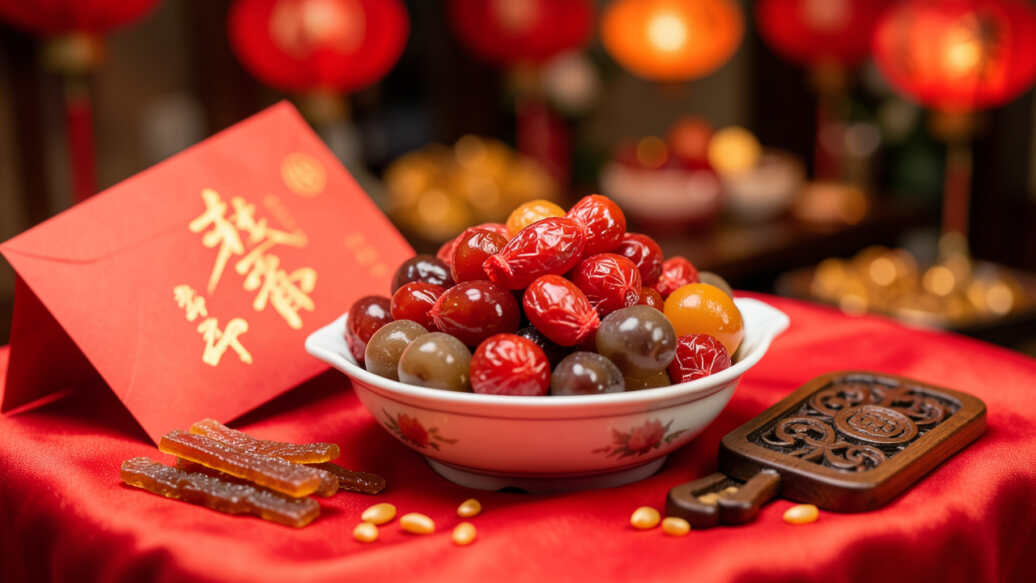
- Candied Fruits and Seeds: This category is rich with symbolism. Candied lotus seeds (莲子, liánzǐ) are a top choice because the word for “lotus” sounds like “continuous,” and “seed” implies fertility. Dried longans (龙眼, lóngyǎn), which mean “dragon’s eye,” are also popular, as are candied melon seeds, which represent growth and good health.
- Red Bean and Date Pastries: Red beans (红豆, hóngdòu) symbolize romance and longing, making them perfect for a wedding. Dates (枣, zǎo) are a homophone for “early,” so they are often paired with peanuts (生, shēng, meaning birth) to form the blessing “早生贵子” (zǎo shēng guìzǐ)—”May you have a noble child soon.”
- Cookies and Pastries: Almond cookies (杏仁饼, xìngrén bǐng) are common, with the almond shape sometimes representing a woman’s breast, symbolizing nourishment and fertility. Wedding cakes or pastries featuring the “double happiness” character are also central. In some regions, a “marriage cookie” (嫁女饼, jià nǚ bǐng) is specifically gifted.
- Modern Additions: Today, high-end chocolate truffles, French macarons in red and gold, and beautifully packaged western-style candies are often incorporated, blending tradition with contemporary elegance. The packaging remains key to maintaining the symbolic message.
Warning: Avoid giving gifts or candies in odd numbers, as even numbers are considered lucky and harmonious. Also, never present gifts in sets of four, as the word for “four” (四, sì) sounds like the word for “death” (死, sǐ).
The variety ensures there is something for everyone, and the combination tells a comprehensive story of the blessings the family wishes to bestow.
Why is the “Eight Treasure Box” So Significant?
The Eight Treasure Box (八宝盒, bābǎo hé) is a pinnacle of Chinese wedding candy presentation. It is a decorative box, often octagonal or round, divided into eight compartments. Each compartment holds a different symbolic sweet or nut, creating a curated collection of blessings in one stunning centerpiece.
The “eight” is a lucky number in Chinese culture, representing prosperity and infinity. The treasures inside can vary by region and family tradition, but common contents almost always include:
- Lotus Seeds (莲子): For continuous happiness and fertility.
- Dried Longans (龙眼): For the “dragon and phoenix” motif (the groom and bride) and nobility.
- Peanuts (花生): For vitality and the blessing of early children (“shēng” means birth).
- Dates (枣): For early fulfillment of blessings (“zǎo” means early).
- Dried Figs or Apricots: For sweetness and the wish that the couple’s life is never bitter.
- Almonds (杏仁): For good health and, traditionally, fertility.
- Candied Melon (冬瓜糖): For growth and good family lineage.
- Walnuts or Pistachios (核桃/开心果): Walnuts symbolize harmony (they look like a brain), and pistachios literally mean “happy fruit.”
This box is not just for guests. It is often presented by the bride’s family to the groom’s family as a sign of goodwill and to showcase the elaborate blessings prepared for the union. The preparation of the Eight Treasure Box is a labor of love, with each ingredient carefully selected and arranged.
How Do Regional Variations Influence Wedding Sweets?
China is vast, and wedding customs can differ significantly between regions, including the types of sweets served. The underlying symbolism remains consistent, but the specific treats might change based on local availability and culinary traditions.
In Cantonese (Guangdong) traditions, the presentation is often exceptionally elaborate. You might find intricately shaped pastries like “wife cakes” (老婆饼, lǎopó bǐng) and a strong emphasis on dried seafood like abalone in gift boxes, alongside sweets, symbolizing luxury. The “sweet box” (礼饼, lǐbǐng) given to relatives is a major tradition.
In Fujian and Taiwanese weddings, the “six gifts” (六礼, liùlǐ) are important, and sweets are a part of this formal proposal ritual. Pineapple tarts are popular because the Hokkien word for pineapple (“ong-lai”) sounds like “prosperity comes.”
Northern Chinese weddings might feature more wheat-based sweets and pastries. Candied hawthorn (tanghulu) on a stick can symbolize a sweet, linked life. The use of melon seeds is particularly prominent here.
| Region | Notable Wedding Sweet Tradition | Key Symbolic Sweet |
|---|---|---|
| Cantonese | Elaborate “Sweet Box” for relatives | Wife Cakes, layered pastries |
| Fujian/Taiwanese | Part of the formal “Six Gifts” | Pineapple Tarts (“prosperity”) |
| Northern China | Prominent use of seeds and nuts | Melon seeds, candied hawthorn |
These regional differences highlight the adaptive nature of tradition. While the core language of symbols—luck, fertility, sweetness—stays the same, the local dialect of food adds unique character to each celebration.
How Have Modern Couples Adapted Wedding Candy Traditions?
Contemporary Chinese weddings are a blend of deep-rooted tradition and personal expression. While respect for symbolism is paramount, modern couples are finding creative ways to incorporate wedding candy that reflect their personal stories and contemporary tastes.
One major adaptation is the design and packaging. Couples often hire graphic designers to create custom wrappers for candy and cookies featuring their names, wedding date, or a personal monogram alongside the traditional “double happiness” character. This makes the favor feel uniquely theirs while honoring the tradition.
The contents are also evolving. While the classic auspicious items remain, they might be accompanied by gourmet chocolates, artisanal lollipops, or even mini bottles of honey. Some couples replace some traditional sweets with snacks that have significance to their relationship—perhaps the candy from their first date or a local delicacy from where they met.
Another modern trend is the experience-based approach. Instead of just a take-home box, a “candy bar” or interactive dessert station might be set up. Here, guests can fill their own bags with a selection of treats, making it a fun activity.
The station is still decorated in auspicious colors and includes symbolic items like lotus seeds and dates as prominent options.
Important: When modernizing, the key is intentionality. Any new addition should still align with the positive energy of the day. Avoid candies with negative names or associations, even if they are trendy.
The shift towards personalization shows that the core meaning of the tradition—sharing joy and blessing—is timeless. The form it takes is beautifully evolving with each generation.
Frequently Asked Questions
What is the most important symbolic food at a Chinese wedding?
While many foods are symbolic, lotus seeds and dates are among the most crucial. Their combination creates the potent blessing “早生贵子” (may you have a noble child soon), which is a primary wish for the newlyweds from their elders. The red color of the dates also signifies joy.
Can I give modern sweets like chocolate at a traditional Chinese wedding?
Yes, you can, but with care. Modern sweets should be incorporated thoughtfully, often alongside traditional ones. The most important factor is the packaging, which should use auspicious colors like red and gold and ideally incorporate the “double happiness” symbol to maintain the ceremonial aesthetic and meaning.
Why is the number eight so important in the Eight Treasure Box?
In Chinese culture, the number eight (八, bā) is extremely lucky because it sounds like the word for “prosper” or “wealth” (发, fā). An Eight Treasure Box is therefore a container filled with eight distinct blessings, making it a comprehensive and profoundly auspicious gift.
What does it mean if I receive a packet of candy at the wedding door?
Receiving candy upon entry is a gesture of welcome and shared happiness. It signifies that the couple and their families are sharing the sweetness of their joy with you. Accepting it politely is a way of acknowledging the invitation to participate in and bless their new life together.
Are there any sweets that are avoided at Chinese weddings?
Generally, sweets with negative connotations are avoided. This includes bitter candies or items with names that sound like words for separation, loss, or sorrow. Bitter melon, despite being a vegetable, would never appear due to its name.
The focus is exclusively on positive phonetic and visual symbolism.
Final Thoughts
Chinese wedding candy and sweets are far more than refreshments. They are edible blessings, meticulously chosen and presented to weave a tapestry of hope, joy, and prosperity around the new couple. From the humble melon seed to the elaborate Eight Treasure Box, every item tells a story of cultural values and familial love.
Whether you are attending a traditional ceremony or planning your own, appreciating the meaning behind these confections adds a profound layer to the celebration. They remind us that the sweetest marriages, like the best candy, are built on a foundation of shared blessings and community support.