
Why Pomegranates Symbolize Fertility in Chinese Tradition
Pomegranates symbolize fertility in Chinese tradition due to their vibrant seeds and historical associations with abundance. This deep-rooted connection appears in weddings, art, and folklore across centuries. Understanding this symbolism reveals much about cultural values and human hopes for family and prosperity.
Simply put, the pomegranate’s countless seeds make it a powerful, visual metaphor for having many children. This symbol is deeply embedded in Chinese culture, representing a wish for a large, prosperous family lineage, especially in marriage ceremonies and New Year celebrations.
Key Takeaways
- The core reason for the pomegranate’s fertility symbol is its abundance of seeds, representing the wish for many offspring.
- This symbolism is prominently featured in Chinese wedding rituals and New Year decorations.
- The fruit’s positive meaning extends to general abundance, prosperity, and a blessed life.
- Cultural expressions include specific idioms, folk tales, and common artistic motifs.
- Understanding this symbol provides insight into traditional values of family and continuity.

What is the Core Reason Pomegranates Mean Fertility in China?
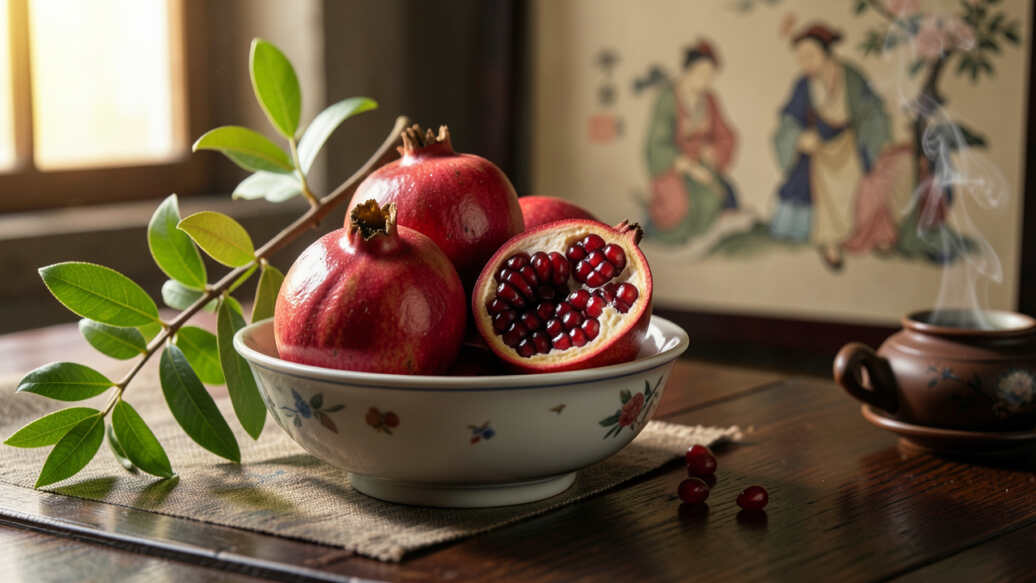
The link between pomegranates and fertility in China is straightforward yet profound. It comes down to one visible, striking feature: the overwhelming number of seeds inside a single fruit. When you slice open a pomegranate, you find hundreds of jewel-like arils packed tightly together.
This natural abundance directly mirrors the cultural desire for a large family with many children.
In traditional Chinese society, having numerous sons was crucial for continuing the family line, performing ancestral rites, and ensuring old-age security. The pomegranate became the perfect emblem for this aspiration. Its seeds are not just numerous; they are also bright, red, and bursting with life, symbolizing vitality and the fruitful outcome of a marriage.
- Visual Metaphor: The sheer quantity of seeds is an unmistakable representation of “many descendants.”
- Positive Connotations: The fruit’s round shape and red color also signify unity and good fortune, enhancing its favorable status.
- Historical Document: References appear in texts dating back to the Han Dynasty, solidifying its symbolic role early in Chinese history.
- Linguistic Connection: The Chinese word for pomegranate, “shíliú” (石榴), sounds similar to phrases meaning “generations together” or “true and continuous.”
| Symbolic Element | Traditional Interpretation |
|---|---|
| Many Seeds | Desire for many children and a growing family. |
| Red Color | Joy, celebration, and vitality. |
| Round Shape | Completeness, unity, and harmony in the family. |
| Sweet Taste | The sweetness of a happy, blessed life. |
Tip: When you see pomegranates in Chinese art or decor, look at how they are depicted. Often, they are shown whole and ripe, sometimes alongside peaches (longevity) or lotus (purity), to create a复合 symbolism of a full, blessed life.
How Did This Symbolism Become Established in History?
The association is not a modern invention. It has roots stretching back over two thousand years to the Han Dynasty (206 BCE–220 CE). Historical texts and poetry from this era began to use the pomegranate as a metaphor for fertility and abundant offspring.
One famous story tells of Emperor Wu being gifted a pomegranate by a diplomat from Central Asia, from where the fruit originated.
His consorts, eager to please him, split the fruit open. The dazzling display of seeds delighted the Emperor. This event, whether historical or apocryphal, cemented the fruit’s positive image in the imperial court and, consequently, among the populace.
Over centuries, this symbolism filtered down through all levels of society and became a standard part of Chinese cultural vocabulary.
- Han Dynasty Origins: Early textual references appear in poems and court records, linking the fruit to desire for heirs.
- Tang Dynasty Flourishing: During this prosperous era, artistic motifs featuring pomegranates on ceramics, textiles, and paintings became widespread.
- Ming and Qing Dynasties: The symbolism was deeply entrenched. Pomegranate patterns were common on wedding furniture, dowry items, and official robes.
- Modern Continuity: The meaning has persisted into contemporary times, appearing in New Year couplets, gift packaging, and modern design.
The persistence of this symbol is a testament to the stability of core cultural values around family and lineage. Even as society has changed, the pomegranate remains a recognizable and potent emblem of these enduring hopes.
Where Does the Pomegranate Appear in Chinese Culture Today?
You will encounter this symbol in various aspects of modern Chinese life, especially during significant events and festivals. Its presence serves as a living link to traditional beliefs and well-wishes. The most prominent contexts are weddings and the Lunar New Year.
During a traditional Chinese wedding, you might see pomegranates embroidered on the bride’s dress, printed on invitations, or placed in decorative bowls at the venue. They are given as gifts to the newlyweds, conveying a direct blessing for a quick marriage and many healthy children. The message is clear and heartfelt, delivered through this ancient symbol.
- Wedding Decorations: Red fabric with pomegranate motifs, table centerpieces with real or silk fruit.
- Lunar New Year: Posters (nianhua) often feature pomegranates alongside other auspicious symbols like fish and tangerines.
- Gift-Giving: During New Year visits, gifts may include art, decor, or even food items with pomegranate designs.
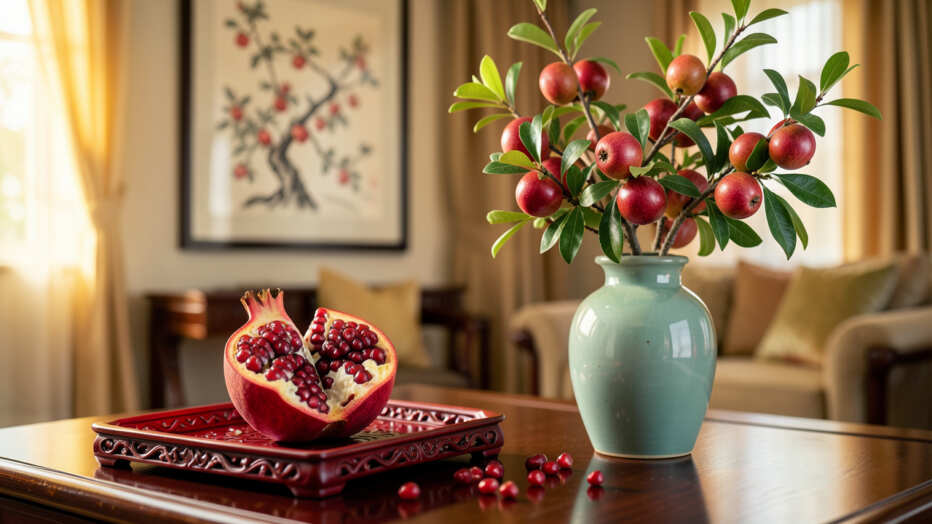
- Home Decor: It’s common to find pomegranate patterns on vases, wall hangings, and furniture in homes honoring traditional aesthetics.
- Personal Adornment: Jewelry, especially jade or enamel pieces shaped like pomegranates, are popular gifts for women.
| Cultural Context | Common Expressions |
|---|---|
| Weddings | “May your family tree be as full as a pomegranate.” |
| New Year | “Wishing you a year of ‘shíliú’ (fullness and continuity).” |
| Art & Design | Imagery of pomegranates with birds (symbolizing joyful partnership). |
| Idioms | “Kāi huā jié shí” (to blossom and bear fruit, often implying having children). |
Warning: While the symbolism is overwhelmingly positive, context matters. Offering pomegranates to a couple known to be childless by choice could be inappropriate. Sensitivity to individual circumstances is always important.
How Do the Science and Folklore of Pomegranates Connect?
The symbolic power of the pomegranate is enhanced by its genuine nutritional benefits, which ancient observers could observe. In traditional Chinese medicine, the fruit is associated with nourishing the blood and generating fluids, properties linked to reproductive health. Modern science confirms it is packed with antioxidants, vitamins, and compounds that support overall well-being.
This connection between symbolic meaning and practical benefit created a powerful synergy. The pomegranate wasn’t just a metaphor; it was also considered a food that could physically promote the very fertility it symbolized. This dual role made its status even more secure in cultural practices and dietary traditions.
- Traditional Chinese Medicine (TCM): The fruit is used to “generate fluids” and “stop diarrhea,” believed to support bodily harmony necessary for conception.
- Nutrient Density: High levels of folate, vitamin K, and antioxidants are linked to reproductive health and reducing oxidative stress.
- Ancient Observation: People noticed healthy animals and people who consumed pomegranates, reinforcing the symbolic link.
- Folk Rituals: In some regions, pomegranate leaves or bark were historically used in herbal remedies aimed at aiding fertility.
This intertwining of observed science, medical theory, and cultural symbolism is a hallmark of many traditional beliefs. The pomegranate stands as a perfect example where a plant’s tangible properties elevated its metaphorical status.

Why Does the Symbolism Remain Strong in Modern Times?
In a rapidly modernizing China, one might expect ancient symbols to fade. However, the pomegranate’s meaning endures for several compelling reasons. Firstly, the core human desire for family and continuity is timeless.
While family structures have evolved, the wish for a happy, flourishing family persists. The pomegranate provides a beautiful, non-verbal way to express this enduring hope.
Secondly, the symbol has become a cherished part of cultural identity. It appears in films, literature, and media, constantly reinforcing its recognition. It also offers a point of connection to heritage for younger generations and for the global Chinese diaspora.
Using or recognizing the symbol is a way to participate in a shared cultural history.
- Enduring Values: The wish for progeny and family prosperity remains a fundamental value across generations.
- Cultural Continuity: The symbol acts as a thread connecting present-day practices to a rich historical past.
- Aesthetic Appeal: The pomegranate is simply beautiful, making its symbol easy to incorporate into modern art and design.
- Commercial Adoption: Brands use it in packaging and marketing to evoke tradition, quality, and good fortune.
- Global Recognition: As Chinese culture gains global visibility, its symbols, like the pomegranate, are better understood and appreciated internationally.
The symbol has successfully transitioned from being a literal wish for sons in an agrarian society to a broader emblem of a vibrant, abundant family life. This adaptability is key to its longevity.
The pomegranate is not alone in carrying symbolic weight within Chinese culture. It exists within a rich ecosystem of auspicious symbols. Understanding its “neighbors” helps contextualize its specific role.
Other fruits often symbolize different aspects of a good life, complementing the pomegranate’s focus on fertility.
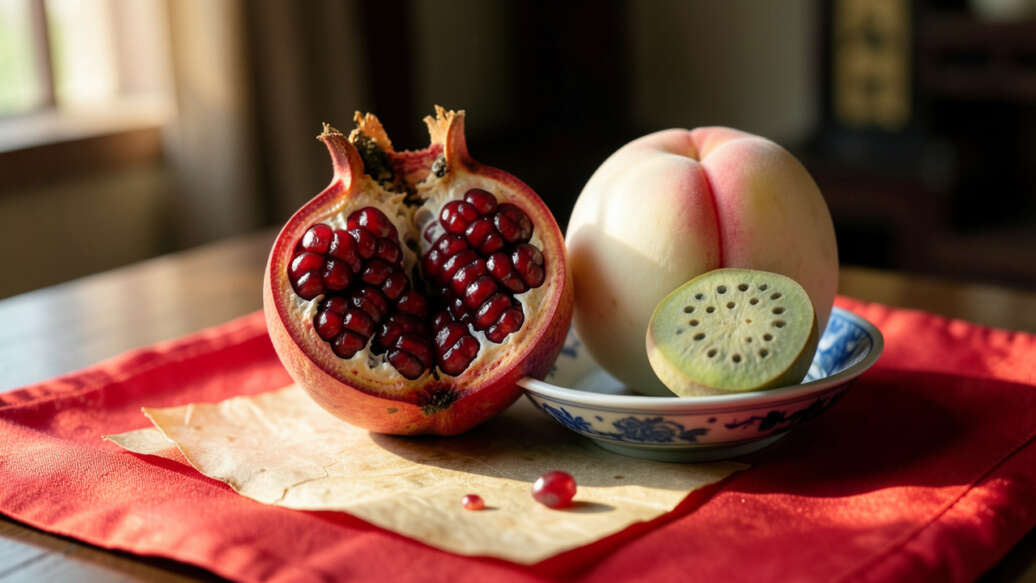
For example, the peach is the preeminent symbol of longevity. A peach combined with a pomegranate in an image would wish someone both a long life and many descendants. Tangerines and oranges, with their golden color and round shape, symbolize wealth and good luck.
Together, these fruits paint a picture of a complete, blessed existence.
- Peach: Longevity and immortality (associated with the goddess Xiwangmu).
- Tangerine/Orange: Wealth and good fortune (their names sound like “luck” and “gold” in Chinese).
- Lotus: Purity, spiritual enlightenment, and harmony (as it rises clean from the mud).
- Bamboo: Integrity, resilience, and flexibility (it bends but doesn’t break).
- Watermelon: Family reunion and abundance (its many seeds and round shape).
| Symbol | Primary Meaning | Often Paired With |
|---|---|---|
| Pomegranate | Fertility, Abundance | Peach, Lotus |
| Peach | Longevity, Immortality | Pomegranate, Crane |
| Tangerine | Good Luck, Wealth | Oranges, Bamboo |
| Lotus | Purity, Enlightenment | Pomegranate, Birds |
Important: The meaning of a symbol can sometimes shift regionally or over centuries. However, for major symbols like the pomegranate, the core association remains remarkably consistent across China and among Chinese communities worldwide.
How Does This Compare to Pomegranate Symbolism in Other Cultures?
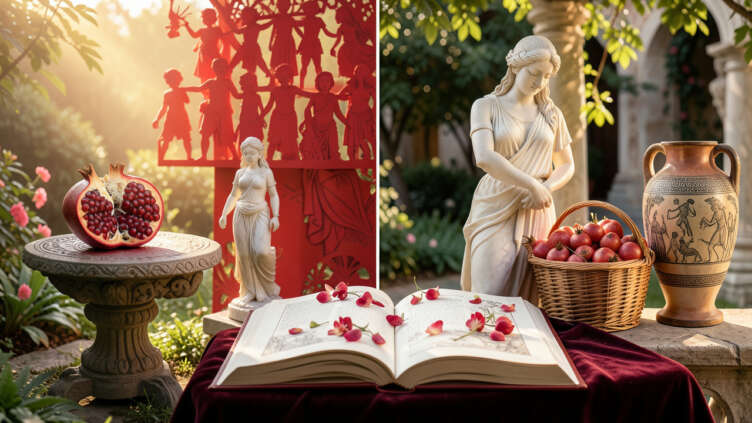
The pomegranate’s association with fertility is remarkably universal, but its specific nuances differ across cultures. In ancient Greece and Rome, it was linked to the goddesses Persephone and Juno, symbolizing marriage, death, and rebirth. In Judaism, it is said to contain 613 seeds, corresponding to the 613 mitzvot (commandments), representing righteousness and wisdom.
Comparing these reveals a fascinating pattern. While the core theme of abundance and life force is common, the cultural “package” varies. In China, the emphasis is overwhelmingly on earthly family prosperity and lineage.
In other traditions, the symbolism often extends into the spiritual or moral realm. The fruit’s biological characteristics inspire different cultural narratives.
- In Chinese Culture: Primarily secular and family-oriented – a wish for many children and a prosperous household.
- In Ancient Mediterranean Cultures: More closely tied to goddess myths, the underworld, and cyclical concepts of death and rebirth.
- In Jewish Tradition: Focuses on intellect, spiritual abundance, and adherence to divine law.
- In Christianity: Often represents the Church’s unity and the fullness of Christ’s suffering and resurrection.
- In Islamic Tradition: Mentioned in the Quran as a fruit of paradise, symbolizing the delights of heaven.
Despite these differences, the pomegranate’s visual impact creates a shared global language of plenty. Each culture has distilled its own profound meaning from the same natural object.
Frequently Asked Questions
Is the pomegranate symbol only for hoping for sons?
Historically, the emphasis was indeed on sons for lineage continuation. In modern usage, the symbolism has broadened to represent a wish for any children and a generally large, happy, and flourishing family, regardless of gender.
Can I give a pomegranate gift to anyone?
It is generally a positive and welcome gift, especially during New Year or to a newly married couple. However, be mindful of the context. Offering it to someone who is not in a life stage where fertility wishes are appropriate might be awkward.
Are pomegranates eaten during specific festivals for this reason?
While not a mandatory ritual food like dumplings for New Year, fresh pomegranates might be served during festive meals in season, and dishes or desserts featuring pomegranate seeds are enjoyed for their auspicious symbolism and refreshing taste.
How is the symbol used in modern Chinese design?
You’ll find pomegranate motifs on everything from high-end fashion patterns and home textiles to digital stickers and corporate logos. Designers use it to add a touch of traditional elegance and positive meaning to contemporary products.
Does the fruit have any negative symbolism in China?
No, the pomegranate has an almost universally positive connotation in Chinese culture. Its association with fertility, abundance, and family prosperity makes it one of the most auspicious symbols, with no significant negative interpretations.
Final Thoughts
The enduring power of the pomegranate as a symbol of fertility in Chinese tradition stems from its perfect fusion of visible abundance and deep cultural values. From ancient imperial courts to modern digital greetings, it conveys a timeless and heartfelt wish for a flourishing family. Recognizing this symbol offers a meaningful glimpse into the hopes and aesthetics that have shaped Chinese culture for millennia.