
Master the Four Tones of Mandarin With Easy Examples
Understanding the four tones of Mandarin is the single most important step to sounding natural in this global language. Without correct tones, even perfect vocabulary and grammar can lead to complete confusion. This guide breaks down each tone with clear explanations and practical examples to help you master them quickly.
Many learners find tones intimidating at first, but they follow predictable patterns. We will cover the shape of each tone, common pitfalls, and effective practice methods. By the end, you will see why tones are a logical system, not a random obstacle.
Simply put, Mandarin uses four distinct pitch contours to give different meanings to the same syllable. Mastering these four tones is non-negotiable for clear communication and is the foundation of accurate Mandarin pronunciation.
Key Takeaways
- The four tones of Mandarin are flat, rising, dipping, and falling, each changing a syllable’s meaning entirely.
- Consistent practice with tone pairs, not isolated syllables, builds natural-sounding fluency.
- Visual tools like Pinyin marks and tone diagrams are essential for beginners to internalize the pitch patterns.
- Listening and mimicking native speakers accelerates your ability to produce and distinguish the tones correctly.
- Mispronouncing a tone can create a completely different word, so paying attention to context is a useful backup strategy.

What Are the Four Tones of Mandarin?
In Mandarin Chinese, a syllable spoken with a different pitch contour can have a completely unrelated meaning. The tone is an integral part of the word itself, not just emphasis. For example, the syllable “ma” can mean “mother,” “hemp,” “horse,” or “to scold,” depending solely on the tone used.
This tonal system is fundamental to the language. It allows for a relatively limited set of sounds to create a vast vocabulary. For new learners, approaching tones as the “music” of the language is a helpful mindset.
Each tone has a characteristic shape or “melody” that must be reproduced accurately.
The four tones are standardized in Putonghua, the official dialect of Mainland China. While regional accents exist, mastering these core tones will make you understood everywhere. The system is written using diacritic marks over the vowels in Pinyin, the official romanization system.
| Tone | Pinyin Mark | Pitch Contour | Description |
|---|---|---|---|
| 1st Tone | mā | High, flat | Sustained high pitch, like singing a steady note. |
| 2nd Tone | má | Rising | Starts mid-low and rises, like asking “Huh?” |
| 3rd Tone | mǎ | Dipping | Falls from mid-low, then rises again (often shortened). |
| 4th Tone | mà | Falling | Starts high and falls sharply, like a command. |
This table shows how a single consonant-vowel combination changes meaning with each tone. Recognizing this pattern is the first step. The next is training your ear and mouth to produce each contour automatically.

How Do You Pronounce the First Tone?
The first tone is a high, steady, and level pitch. Imagine humming a single, clear note without any change. Your voice should stay comfortably high and flat from start to finish.
It is often described as the “singing” tone because of this sustained quality.
A common mistake is letting the pitch waver or drift down. To practice, place your hand under your chin and say the syllable. You should feel minimal movement in your jaw or throat.
The sound should feel relaxed, not strained or forced.
Tip: Record yourself saying a first-tone syllable and compare it to a native speaker’s audio. Focus on matching the pitch height and keeping it level throughout.
Examples of words using the first tone include “bāo” (bag), “gāo” (tall), and “hēi” (black). Listen closely to how the pitch remains constant. This tone appears frequently in compound words, so getting it right from the start is crucial.
How Do You Pronounce the Second Tone?
The second tone is a rising tone, starting from a middle pitch and rising to a high pitch. Think of the intonation used in English when you ask a surprised question like “Really?” The pitch goes up smoothly. It should feel like a natural, questioning lift.
A key characteristic is that it starts lower than the first tone. Don’t begin at a high pitch. The rise should feel deliberate and complete.
Imagine your voice traveling up a short ramp from a mid-point to the top.
Words with the second tone include “rén” (person), “wén” (writing), and “shuí” (who). Practice by saying a word and letting your pitch rise clearly. The final pitch should be as high as your comfortable first-tone pitch.
This consistency between tone 1 and the peak of tone 2 is important for clear speech.
| Second Tone Word | Pinyin | Meaning | English Equivalent Intonation |
|---|---|---|---|
| 来 | lái | to come | “Yes?” |
| 谁 | shuí | who | “What?” |
| 食 | shí | food | “Really?” |
Using this comparison table can help you map the unfamiliar Mandarin tone onto an English intonation pattern you already use. While the match isn’t perfect, it provides a useful starting point for your ear and voice.

How Do You Pronounce the Third Tone?
The third tone is the most complex, often called the “dipping” tone. Its full form starts at a mid-low pitch, dips down to a low pitch, and then rises again. However, in natural speech, it is frequently shortened to just the low dip without the final rise, especially before another syllable.
This low, slightly creaky quality makes it distinct. When pronounced in isolation, you will hear the full “dip and rise.” The key is to reach the low point. Some describe it as the tone where your voice feels like it “falls asleep” momentarily before waking up.
Warning: A common error is making the third tone sound like the second tone. Ensure your pitch starts lower and goes even lower before any rise. The dip is the essential feature.
Words with the third tone include “wǒ” (I/me), “nǐ” (you), and “hěn” (very). Practice the full dipping contour in isolation first. Then, practice “half-third” tones, where the final rise is omitted, to sound more natural in flowing sentences.
How Do You Pronounce the Fourth Tone?
The fourth tone is a sharp, decisive falling tone. It starts high and drops quickly and forcefully to a low pitch. Imagine the short, angry command “Stop!” in English.
The energy is strong, and the drop is sudden.
This tone often conveys a sense of finality or emphasis. It should feel short and direct. Avoid dragging it out.
The pitch movement is from high to low in a swift, straight line, not a curve.
Examples are “bù” (no/not), “shì” (is/are), and “qù” (to go). The clarity of this tone is important for avoiding misunderstandings. For instance, “mā” (mother, 1st tone) vs.
“mà” (to scold, 4th tone) highlights how a different tone creates a different word.

What Is the Neutral Tone and When Is It Used?
While the four main tones are fundamental, Mandarin also uses a fifth, neutral or “light” tone. This tone is short, soft, and unstressed. It does not have its own pitch contour; instead, its pitch is determined by the tone of the syllable that comes before it.
Neutral tones are common in grammatical particles and the second syllable of many common words. For example, the question particle “ma” (吗) and the possessive particle “de” (的) are always neutral. In the word “māma” (妈妈, mother), the second syllable is light and short.
Important: Don’t confuse a neutral tone with no tone. It is a distinct, unstressed quality. Its pitch depends on the preceding tone, making it part of the word’s overall tonal pattern.
The rules for neutral tones can be complex, but encountering them in context is the best way to learn. Initially, focus on mastering the four main tones, as they form the core of the language. The neutral tone will become more intuitive as you practice common vocabulary.
How to Practice Mandarin Tones Effectively
Theory is only half the battle. Consistent, focused practice is required to train your ear and muscle memory. Effective practice moves from isolated syllables to common syllable combinations.
You must hear and produce tones in the context of real words and phrases.
Start with tone drills using minimal sets—groups of syllables that differ only in tone. “mā, má, mǎ, mà” is the classic example. Say them in sequence, exaggerating the pitch contours at first.
This builds your muscle memory for each distinct shape.
Next, practice “tone pairs.” This involves combining different tones together, as almost all real words are at least two syllables. Common pairs include 1-1, 1-4, 4-1, and 3-3. Practicing these pairs helps you learn how tones interact and influence each other in natural speech.
- Isolate and Exaggerate: Spend time with single-syllable drills. Exaggerate the rise, fall, or dip until it feels automatic.
- Use Tone Pairs: Move to two-syllable combinations. Focus on the flow between the two tones.
- Shadow Native Audio: Listen to a short phrase and repeat it immediately after, mimicking the exact pitch and rhythm.
- Record and Compare: Record your practice sessions. Compare your tone contours to native audio using apps or online resources.
- Label New Vocabulary: When learning a new word, always write its Pinyin with the correct tone mark. Say it aloud with the tone multiple times.
| Practice Method | What It Trains | Example Activity |
|---|---|---|
| Minimal Set Drills | Ear discrimination & muscle memory for each tone | Saying “bāo, báo, bǎo, bào” in sequence. |
| Tone Pair Drills | Flow and transition between tones | Practicing words like “fēicháng” (1-2) or “yīnyuè” (1-4). |
| Shadowing | Rhythm, intonation, and natural tone sandhi | Repeating after a podcast or textbook audio clip. |
| Recording Feedback | Self-correction and accuracy | Using a voice memo app to play back and compare. |
This table outlines a structured approach. By combining these methods, you address both the mechanical production of tones and their application in real language. Patience is key; building this skill takes time but is immensely rewarding.
Why Do Tones Matter So Much in Mandarin?
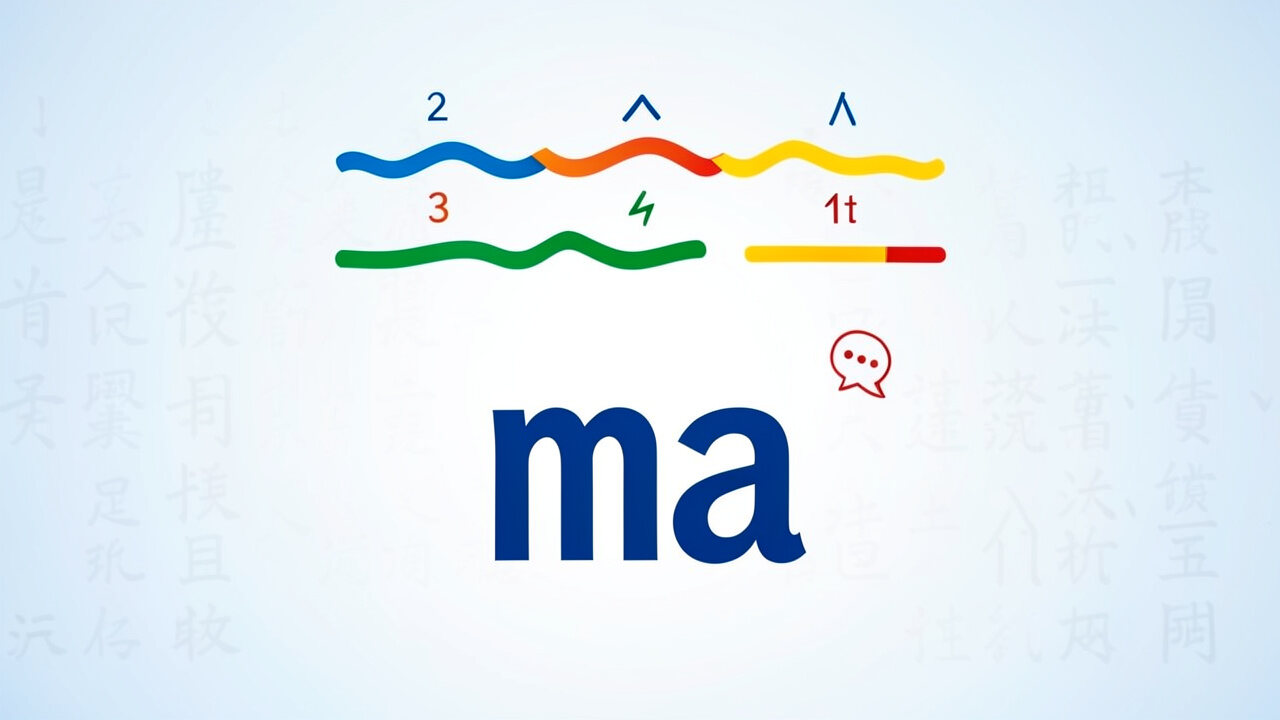
Tones are not optional embellishments; they are as fundamental as consonants and vowels. In a tonal language, changing the tone changes the core meaning of the word. This is different from English, where pitch often conveys emotion or grammatical function (like a rising pitch for a question), but not lexical meaning.
The practical impact is direct. Saying “wǒ xiǎng wèn nǐ” (I want to ask you) with a mispronounced tone on “wèn” (to ask) could change the sentence’s meaning entirely. Clear tones ensure your message is understood correctly and prevent embarrassing or confusing situations.
According to research in second language acquisition, early and accurate training in tones leads to better long-term pronunciation and comprehension. Learners who treat tones as an afterthought often struggle to be understood later and find it difficult to correct ingrained habits. Investing time upfront saves significant effort down the road.
What Are Common Tone Mistakes and How Can You Avoid Them?
Even dedicated learners make predictable tone errors. Awareness of these pitfalls allows you to watch for them in your own speech. The most frequent mistake is flattening all tones, often defaulting to a mid-level pitch similar to English.
This makes your speech sound monotonic and hard to understand.
Another common issue is confusing the 2nd and 3rd tones. Remember: the 2nd tone rises from a middle point, while the 3rd tone dips low first. The 3rd tone is the lowest point in the Mandarin pitch range.
Practicing them back-to-back helps solidify the difference.
Tone sandhi, the rule where tones change in certain combinations, can also be confusing. The most important rule is that two consecutive 3rd tones change the first to a 2nd tone (e.g., “nǐ hǎo” is pronounced “ní hǎo”). Don’t try to memorize every rule immediately.
Instead, learn common words and phrases as chunks, and the correct tonal patterns will become familiar.
Tip: When in doubt, over-pronounce the tones. Exaggerating them in practice makes them clearer and more automatic in casual speech. You can soften them later for a more native-like flow.
How Do Tone Pairs and Tone Sandhi Work?
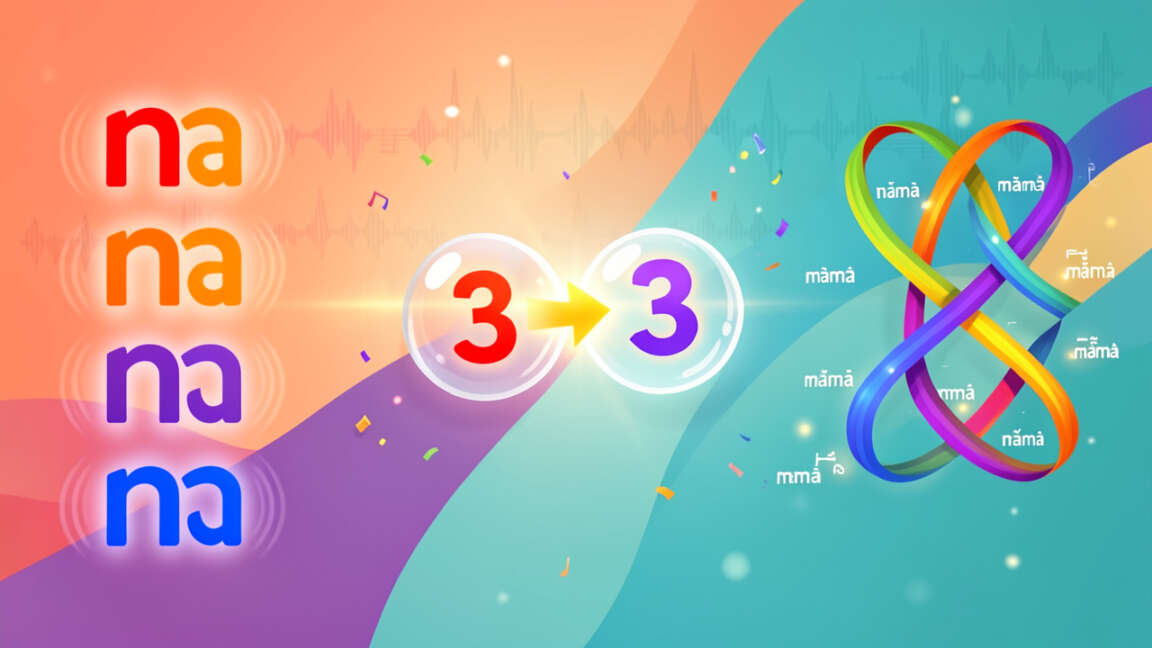
Tone pairs are simply the tonal patterns of two-syllable words. Since most Mandarin words have two or more syllables, practicing these combinations is essential. The four main two-syllable tone combinations are 1-1, 1-4, 4-1, and 2-4.
Internalizing these patterns will dramatically improve your naturalness.
Tone sandhi refers to the systematic tone changes that occur in connected speech. The most fundamental rule, as mentioned, is the 3rd tone sandhi (3 + 3 becomes 2 + 3). Another rule is that the word “yī” (one) changes to a 2nd tone before a 4th tone and to a 4th tone before other tones.
These rules might seem complex, but they are predictable. The best way to learn them is not through memorization of rules, but through repeated exposure to and practice of common phrases. When you learn a new word, learn it with its full tonal pattern, and practice it within a simple sentence.
For example, practice the phrase “wǒ yào shuǐ” (I want water). Here, “wǒ” (3rd tone) followed by “yào” (4th tone) retains its full dipping form, but in rapid speech, it might sound more like a half-third tone. “Shuǐ” (3rd tone) at the end of the sentence is pronounced with its full dip and rise.
Context and repetition are your guides.
Frequently Asked Questions
Can I learn Mandarin without focusing on tones?
It is extremely difficult and not recommended. Without tones, you will struggle to understand others and be misunderstood yourself. While you might grasp isolated words, fluid conversation will be very challenging.
Treat tones as a core part of the language from day one.
How long does it take to master Mandarin tones?
With consistent daily practice, most learners develop a solid grasp of the four tones within 2-3 months. Achieving native-like subtlety and automaticity can take much longer. The key is regular, focused practice of listening and speaking, even for just 15-20 minutes a day.
Are the tones the same in all Mandarin dialects?
The four tones described are standard for Putonghua (Mainland Mandarin) and Guoyu (Taiwanese Mandarin). Some regional dialects, like Cantonese, have even more tones. The rules and values can differ slightly in other Mandarin variants, but the four-tone system is the standard for learners.
What is the best app for practicing tones?
Several apps are excellent for tone practice. Pleco is a must-have dictionary with native audio for every word. For drills, apps like Tone Trainer or Chinese Pronunciation Wiki offer interactive exercises.
Always use apps that provide clear, high-quality native speaker audio.
How do I know if I’m using the correct tone?
Regular recording and comparison with native audio is the most reliable method. Use your smartphone to record yourself saying words and phrases. Then, find the same word on a dictionary app and listen to the native pronunciation.
Focus on matching the pitch contour, not just the overall sound.
Final Thoughts
The four tones of Mandarin form a logical and learnable system that is key to clear communication. By understanding the distinct pitch contour of each tone and practicing them through drills, tone pairs, and listening, you build a strong foundation. Remember that consistency and early focus on tones prevent difficult-to-break habits later.
With dedicated practice, you will find the tones becoming a natural part of your Mandarin speech.