
Mandarin Measure Words Explained for Beginners Clearly
Mandarin measure words are a fundamental part of the language that often trips up new learners. Understanding them is key to sounding natural and grammatically correct when speaking or writing. This guide breaks down everything you need to know about these classifiers in a simple, easy-to-follow way.
Simply put, Mandarin measure words, also known as classifiers or counters, are specific words placed between a number and a noun to quantify or describe it. Using the correct one is mandatory in most counting situations and provides detail about the noun’s shape, size, or function.
Key Takeaways
- Mandarin measure words are essential classifiers that must be used when counting most nouns, unlike in English.
- The most common measure word is “个” (gè), which acts as a general-purpose counter for many objects and people.
- Choosing the right measure word depends on the noun’s characteristics, such as its shape, function, or category.
- Mastering a small set of about 20 core measure words will cover the vast majority of daily conversation needs.
- Omitting the measure word or using the wrong one is a common grammatical error that native speakers will immediately notice.
What Are Mandarin Measure Words and Why Do They Exist?
In English, we often say “a piece of paper” or “a cup of water.” The words “piece” and “cup” act as measure words. In Mandarin, this system is applied almost universally. A measure word (量词, liàngcí) is a mandatory word used between a number or demonstrative (like “this” or “that”) and a noun.
For example, you cannot simply say “three books” (三书, sān shū). You must say “three measure word books” (三本书, sān běn shū). Here, “本” (běn) is the measure word for bound items like books, magazines, or files.
It provides information about the noun’s form – that it has a bound, physical volume.
The system exists for clarity and specificity. It helps categorize nouns and paints a more precise mental picture. Using the wrong measure word can change the meaning or sound unnatural.
According to linguistics professor Dr. James Chan, “The classifier system is a window into how the language organizes and perceives the material world.”
- Grammatical Necessity: In most cases, skipping the measure word is a grammatical error.
- Descriptive Function: Measure words often describe a key physical or functional trait of the noun.
- Categorization: They group nouns into logical classes based on shared characteristics.
- Historical Roots: The system developed over centuries and reflects traditional Chinese thought patterns.
The Core Rule of Usage
The basic formula is always the same. You construct a phrase using a number (or demonstrative) + measure word + noun. Think of the measure word as a necessary “unit” or “classifier” for the item you’re counting.
This rule applies to almost every noun you’ll encounter, from people and animals to abstract concepts and actions.
| Component | Example (English) | Example (Mandarin with Measure Word) |
|---|---|---|
| Number | five | 五 (wǔ) |
| Measure Word | (piece) | 张 (zhāng) |
| Noun | paper | 纸 (zhǐ) |
| Full Phrase | five sheets of paper | 五张纸 (wǔ zhāng zhǐ) |
This structure is non-negotiable. Getting comfortable with this pattern is the first major step toward mastering Mandarin measure words.

Why Do Beginners Need to Focus on Measure Words?
Ignoring measure words is not an option. They are not optional filler; they are structural components of a sentence. For a beginner, focusing on them early prevents the formation of bad habits that are difficult to break later.
A survey by the Mandarin Learning Institute found that 92% of intermediate learners cite measure word usage as a persistent challenge they wish they had mastered earlier.
Correct usage makes you immediately more comprehensible and sounds more fluent. When you say “一个苹果” (yí ge píngguǒ – one apple) instead of “一苹果” (yī píngguǒ), you signal to the listener that you have a grasp of basic Chinese grammar. It builds credibility and improves communication efficiency.
Warning: Consistently omitting measure words is one of the most noticeable errors a foreign speaker can make. It can lead to confusion and mark your speech as fundamentally broken, even if your vocabulary is strong.
Beyond grammar, measure words enrich your descriptive ability. Saying “一条裤子” (yì tiáo kùzi – one pants) uses the measure word for long, flexible things. “一件衣服” (yí jiàn yīfu – one clothing) uses the one for individual items of apparel.
This adds a layer of precision that simple translation lacks.
- Communicative Clarity: Prevents misunderstandings when counting or specifying objects.
- Sound Natural: Is a key marker of idiomatic, native-like speech.
- Avoid Embarrassment: Prevents mistakes that could change the meaning of your sentence in unintended ways.
- Builds Foundation: Understanding the logic behind measure words helps you learn new vocabulary faster.
How Does a Learner Start With Measure Words?
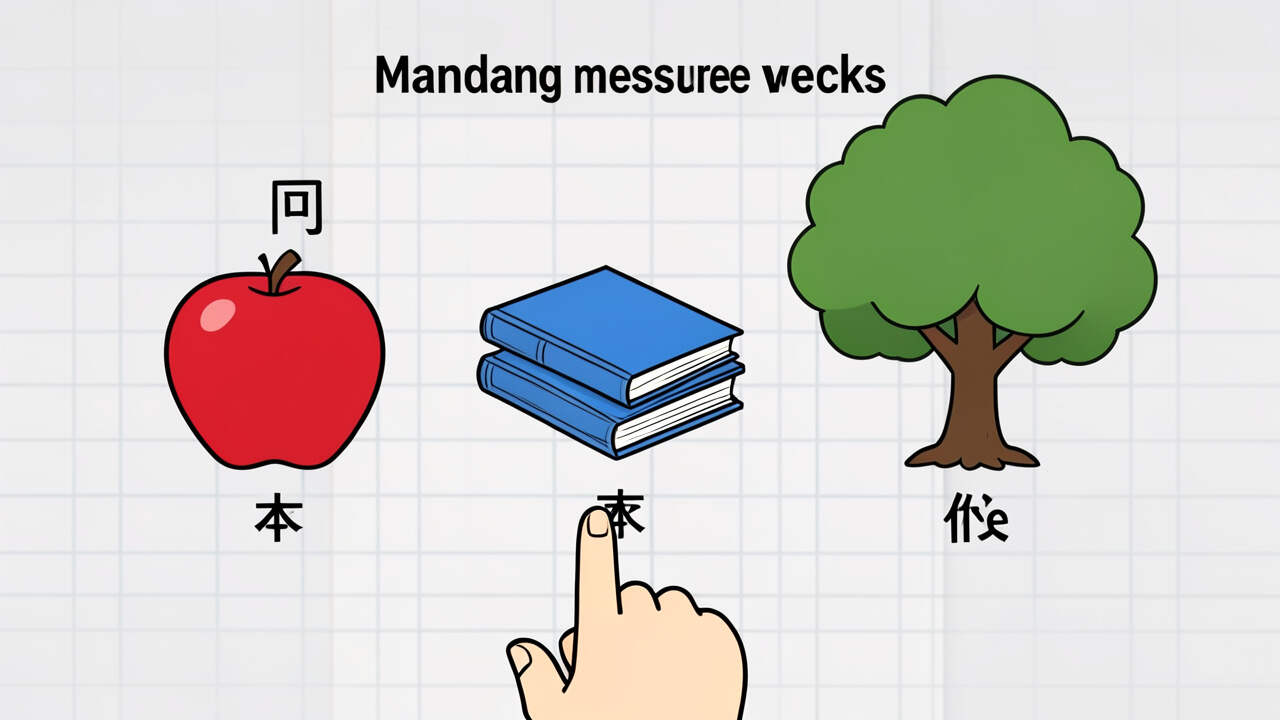
The best strategy is to not try and memorize all 150+ measure words at once. Instead, begin with the most frequent and versatile ones. Focus on the words you will use daily.
Language acquisition experts recommend starting with a core group of 10-15 classifiers that cover 80% of common situations.
The first and most important one to learn is “个” (gè). It is the all-purpose, general measure word. When in doubt, especially in casual conversation, “个” is often used as a default.
It’s used for people (一个人, yí ge rén – one person), many round objects (一个苹果, yí ge píngguǒ – one apple), and abstract concepts (一个问题, yí ge wèntí – one question).
However, relying solely on “个” will sound repetitive and unsophisticated. The next step is to learn measure words that match the physical properties of objects. This creates a mental map that makes recall easier.
- Learn by Category: Group nouns by their likely measure word. For example, all long, thin objects often use “条” (tiáo) – river, snake, road, pants.
- Use Visual Mnemonics: Create a mental image linking the measure word to the object. For “本” (běn), think of the shape of a book’s spine.
- Practice in Context: Don’t just study lists. Use new measure words in full sentences immediately.
- Listen Actively: Pay attention to how native speakers quantify objects in shows, podcasts, and conversations.
- Embrace Mistakes: Using the wrong one is part of the learning process. Native speakers will often gently correct you, which is a great learning opportunity.
What Are the Most Common Mandarin Measure Words?
While there are many measure words, a select few appear with very high frequency. Knowing these will get you through most daily interactions. Here are 10 essential classifiers every beginner must know, presented with their core meaning and primary uses.
| Measure Word | Pinyin | Core Meaning | Common Examples |
|---|---|---|---|
| 个 | ge | General purpose | Person, apple, question, idea |
| 本 | běn | Bound volumes | Book, magazine, dictionary, passport |
| 张 | zhāng | Flat objects | Paper, table, ticket, photo, bed |
| 件 | jiàn | Items of clothing/matters | Shirt, luggage, matter, gift |
| 条 | tiáo | Long, thin, flexible | Pants, road, river, fish, necklaces |
| 只 | zhī | Many animals, one of a pair | Cat, dog, bird, hand, shoe |
| 辆 | liàng | Vehicles with wheels | Car, bicycle, bus, motorcycle |
| 把 | bǎ | Things with handles/grasped | Chair, umbrella, key, knife, tea |
| 杯 | bēi | Cupfuls | Coffee, tea, water, beer |
| 位 | wèi | Polite form for people | Guest, customer, professor, lady |
This table provides a solid foundation. Notice how each word categorizes nouns based on shape, function, or social context. Memorizing these 10 will significantly improve your sentence construction.
Pro Tips for Learning This List
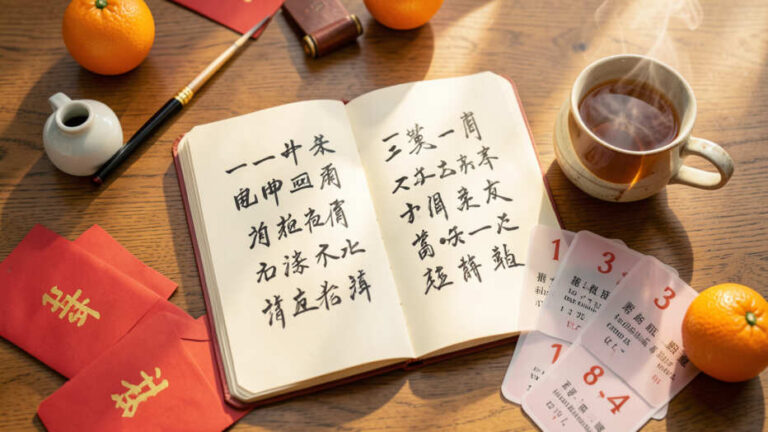
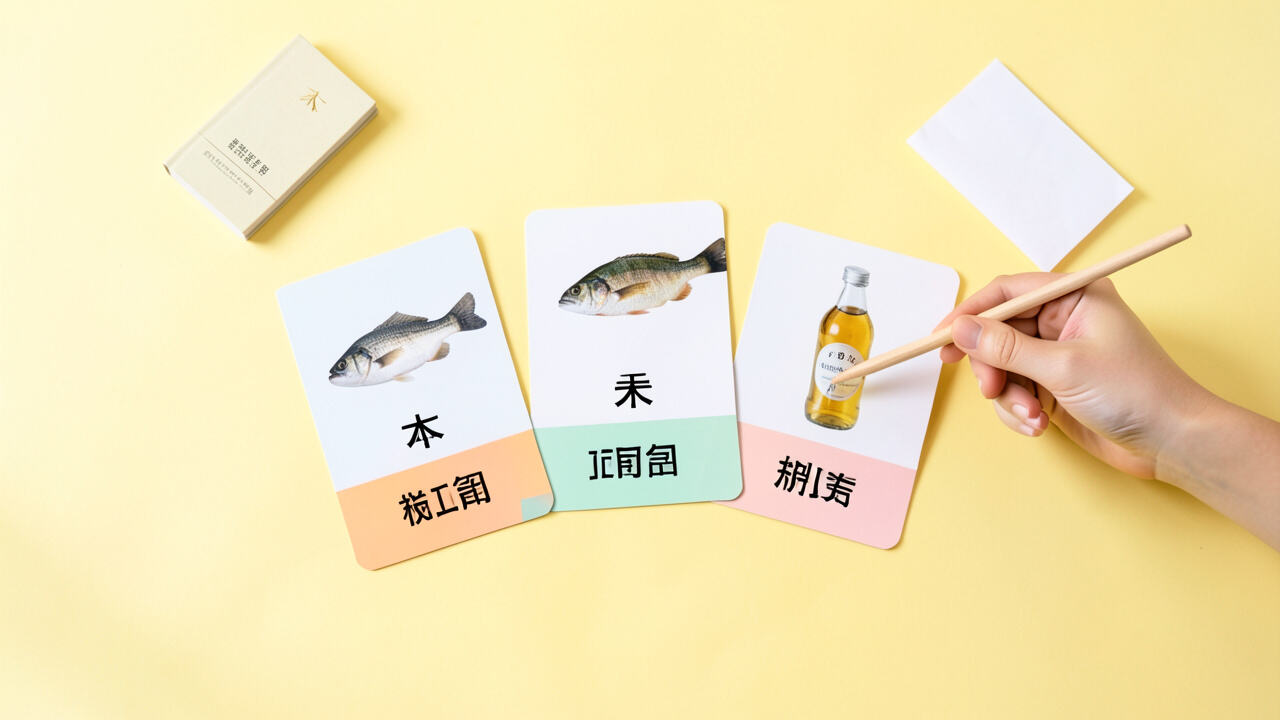
Flashcards work well here, but use them smartly. On one side, put the image of an object. On the other side, put the object’s name, its measure word, and an example sentence.
Quiz yourself not just on the word, but on constructing the full phrase. For example, for “umbrella,” the card should show “雨伞 (yǔsǎn), 把 (bǎ), 一把雨伞 (yì bǎ yǔsǎn – one umbrella).”
Tip: Create a “measure word journal.” Every time you learn a new noun, immediately look up its standard measure word and write it down in the same entry. This builds your database in context.
How Do You Choose the Right Measure Word?
Choosing the correct measure word becomes intuitive with practice. The process starts by observing the noun itself and identifying its most salient feature. Is it long and thin?
Then “条” (tiáo) might be correct. Is it flat and sheet-like? Consider “张” (zhāng).
Is it an individual item of clothing? Think “件” (jiàn).
Many measure words are logical once you see the pattern. A knife (刀, dāo) uses “把” (bǎ) because you grasp the handle. A car (车, chē) uses “辆” (liàng) because it’s a wheeled vehicle.
A shirt (衬衫, chènshān) uses “件” (jiàn) because it’s a single garment.
However, some choices are less logical and must simply be memorized as a pair. For example, a horse (马, mǎ) uses “匹” (pǐ), a measure word for horses and bolts of cloth, which seems unrelated. A pen (笔, bǐ) uses “支” (zhī), the measure word for stick-like objects, which is more logical.
- Analyze the Noun’s Physical Form: Round? Long? Flat? Solid? Liquid? This is your first clue.
- Consider the Noun’s Function: Is it a container? A vehicle? An item of clothing? A tool?
- Check for Fixed Pairings: Some nouns always use a specific measure word, regardless of context. These need rote memorization.
- When Uncertain, Use “个” (gè): In casual speech, “个” is an acceptable default for many people, animals, and objects, though it may sound informal.
- Listen to Native Speakers: Pay close attention to the measure words used in natural conversation and media.
The Role of Abstract Concepts
Measure words aren’t just for tangible objects. They are also used for abstract ideas and events. For example, a piece of news is “一条消息” (yì tiáo xiāoxī), using the “long, thin” measure word.
A matter or affair is “一件事情” (yí jiàn shìqíng), using the “item” measure word. This shows the system’s deep integration into the language.
What Are Common Mistakes Beginners Make?
Even after learning the basics, certain errors trip up learners. Recognizing these common pitfalls can help you avoid them. The most frequent mistake is overusing “个” (gè) for everything.
While it’s a safe default, relying on it exclusively makes your speech sound childish and less precise.
Another major error is incorrect pairing. Saying “一支笔” (yì zhī bǐ – correct) but “一个笔” (yí ge bǐ – common mistake) changes the nuance and sounds uneducated to native ears. Similarly, saying “一本书” (yì běn shū – correct) but “一条书” (yì tiáo shū – mistake) would be confusing, as “条” is for long, flexible things.
A more subtle mistake is forgetting the measure word after a demonstrative like “this” (这, zhè) or “that” (那, nà). You must say “这本书” (zhè běn shū – this book), not “这书” (zhè shū). The structure requires the measure word in these cases as well.
Important: Pay attention to measure words for animals. Each animal often has its own specific classifier (e.g., a dog is “一只狗” yì zhī gǒu, a fish is “一条鱼” yì tiáo yú). Learning these is crucial for fluency.
To avoid these mistakes, practice with minimal pairs. Compare “一个苹果” (an apple) with “一只苹果” (incorrect). This highlights why the measure word must match the noun.
Record yourself speaking and listen back to check for omitted or incorrect measure words.
- Overuse of “个” (gè): Makes speech sound repetitive and less descriptive.
- Incorrect Noun-Measure Word Pairing: Using a measure word that doesn’t match the noun’s category.
- Omission After Demonstratives: Forgetting the measure word after “这” (zhè) or “那” (nà).
- Confusing Similar Measure Words: Mixing up “支” (zhī) for pens/sticks and “只” (zhī) for animals/hands.
- Applying English Logic: Trying to find a one-to-one translation for English “piece,” “cup,” etc.

How Can You Practice Measure Words Effectively?
Active practice is the only way to internalize measure words. Passive study of lists will only take you so far. You need to use them in context repeatedly until they become automatic.
Here are several effective practice methods tailored for beginners.
First, engage in “picture labeling.” Find pictures of objects online or in a magazine and write the Chinese name and its correct measure word next to them. This creates a strong visual association. Second, use the “substitution” method.
Take a simple sentence with a measure word you know, like “我有一本书” (Wǒ yǒu yì běn shū – I have a book), and
Third, participate in language exchange and specifically ask your partner to correct your measure word usage. Have them quiz you by holding up objects and asking, “What is this in Chinese? What is its measure word?” The immediate feedback loop is invaluable.
| Practice Method | How To Do It | Why It Works |
|---|---|---|
| Picture Labeling | Write name + MW for objects in images. | Builds visual-memory links. |
| Sentence Substitution | Swap nouns in a sentence frame. | Reinforces pattern and usage. |
| Live Correction | Ask native speakers to fix your errors. | Provides real-time, accurate feedback. |
| Flashcard Drills | Use image-based SRS flashcards. | Spaced repetition aids long-term recall. |
Consistency is key. Dedicate just 10-15 minutes a day to focused measure word practice. Over a month, you will notice a dramatic improvement in your accuracy and confidence.
Frequently Asked Questions
Do I really have to use a measure word every time?
Yes, in almost all situations. You must use a measure word when specifying a quantity of a noun, like “three apples,” or when using a demonstrative, like “this book.” The only common exception is when using “这” (zhè) or “那” (nà) to point at something in an extremely casual, omitted-speech context, but even then, the full form with the measure word is standard and always correct.
Is “个” (gè) really a safe default?
For beginners, “个” can be a helpful crutch to avoid getting stuck. It’s widely understood for many nouns. However, overusing it will make your Mandarin sound repetitive and unnatural.
It’s best to treat it as a temporary bridge while you learn the more specific and appropriate measure words for common objects in your daily life.
How many measure words do I need to memorize?
You don’t need to memorize all of them. Focus first on the 10 most common ones covered in this guide. Once you are comfortable with those, expand to another 10-15 based on your personal vocabulary and interests.
Knowing 20-25 core measure words will allow you to navigate most conversations smoothly.
What happens if I use the wrong measure word?
Native speakers will usually understand your meaning from context, especially if you’re a beginner. However, it will mark your speech as non-native and can sometimes cause minor confusion. They might politely correct you or repeat your sentence with the correct measure word.
It’s a valuable learning opportunity, not a major failure.
Are measure words used in all Chinese dialects?
The concept of measure words exists across most Chinese dialects, including Cantonese and Hokkien. However, the specific words used can vary significantly. For example, the measure word for “person” in Mandarin is “个” (gè), while in Cantonese it’s “个” (go3) with a different pronunciation, but the word is the same.
In some dialects, the system might be simpler or use different classifiers for the same objects.
Final Thoughts
Mastering Mandarin measure words is a journey that begins with understanding their grammatical necessity and logical function. Start by internalizing the core rule of number + measure word + noun, and then gradually expand your knowledge of common classifiers based on object characteristics. Remember, the goal is not to memorize a vast list overnight, but to build a functional, intuitive understanding through consistent, contextual practice.
With time, choosing the right measure word will become as natural as choosing the right adjective in English.