
How to Order Food in Mandarin at a Restaurant
Ordering food in Mandarin unlocks a world of authentic culinary experiences, whether you’re traveling or dining at a local Chinese restaurant. This guide breaks down the entire process into simple, actionable steps. You’ll learn the essential phrases, menu navigation tips, and cultural nuances to order with confidence.
Simply put, ordering in Mandarin involves greeting the staff, using key phrases to request items, specifying preferences, and handling payment. Mastering a few core sentences and understanding menu categories will make you a capable diner in any Mandarin-speaking environment.
Key Takeaways
- The most critical phrase for beginning an order is “qǐng gěi wǒ” (please give me), followed by the item name.
- Understanding common menu categories like zhǔshí (staple food) and cài (dishes) helps you navigate options quickly.
- Always use “máfan nín” (excuse me) to politely get a server’s attention before starting your order.
- Knowing how to ask for the bill with “mǎidān” is the final, crucial step to completing your meal.
What is the Basic Mandarin Ordering Script?
Every successful order follows a predictable script. Think of it as a four-act play: getting attention, stating your request, adding details, and paying. Knowing this structure removes anxiety.
You can fill in the specific food words as needed.
The core script is reusable across all restaurants. It provides a polite framework that staff will appreciate. Starting with this foundation builds your confidence for more complex orders later.
- Get Attention: Say “Fúwùyuán” (Server) or “Máfan nín” (Excuse me).
- State Your Request: Use “Qǐng gěi wǒ” (Please give me) + .
- Add Details: Use “Yào” (want) for preferences, or ask questions.
- Confirm & Pay: Say “Duì, jiù zhè ge” (Yes, just this) and later “Mǎidān” (bill).
This script works for one item or many. For multiple items, simply repeat the core phrase. Staff are accustomed to this pattern.
They will often repeat your order back for confirmation.
| Script Step | Mandarin Phrase | English Meaning & Usage |
|---|---|---|
| Getting Attention | Fúwùyuán! | Server! – Use when they are nearby. |
| Getting Attention (Polite) | Máfan nín. | Trouble you. – More polite, good for any situation. |
| Making a Request | Qǐng gěi wǒ. | Please give me. – The most essential ordering phrase. |
| Asking for the Bill | Mǎidān. | Bill. – Direct and universally understood. |
This basic script is your key to unlocking the entire dining experience. Memorize these four phrases and you are ready to order.

How to Properly Greet and Get the Server’s Attention?
Politeness sets the tone for your entire meal. In Mandarin dining culture, getting a server’s attention requires a specific, respectful approach. Simply waving or shouting can be seen as rude.
The correct method ensures you receive friendly and prompt service.
The most common and polite way is to make eye contact and say “Fúwùyuán” (服务员), which means “server.” This is the standard term in mainland China and Taiwan. If you need a bit more formality or they are very busy, use “Máfan nín” (麻烦您), meaning “sorry to trouble you.” This shows great respect.
- Best Practice: Wait for a natural pause in their tasks. Do not interrupt while they are taking another table’s order or serving food.
- Visual Signal: A small, polite wave of the hand accompanies the verbal call. Maintain a pleasant expression.
- In Busy Restaurants: You may need to repeat “Fúwùyuán” a couple of times. Raise your volume slightly but keep your tone calm.
- At Dim Sum: Servers circulate with carts. Simply say “Nǐ hǎo” (hello) as they approach, then point to the items you want.
Tip: Learning the name of a dish you like and asking “Zhège yǒu ma?” (Do you have this?) while pointing at the menu is a perfect way to initiate interaction politely.
Getting attention correctly is your first step in building rapport. It shows you respect the staff and their work. This small effort often leads to better service, helpful recommendations, and a more enjoyable meal overall.
What Are the Essential Phrases for Ordering Food?
Beyond the basic script, a toolkit of specific phrases empowers you to order with precision. These sentences help you ask questions, state preferences, and handle common situations. Memorizing them will make you sound fluent and natural.
We’ll break them down by category: requesting, inquiring, and confirming. Practice saying them aloud. The tones are important, but don’t let them intimidate you.
Your effort will be appreciated, and context will help the server understand you.
Phrases for Making Requests
- “Wǒ yào yīgè.” (我要一个.) – I want a. – Direct and common for ordering one item.
- “Wǒ xiǎng yào.” (我想要.) – I would like a. – Slightly more polite than “yào”.
- “Gěi wǒ lái.” (给我来.) – Give me. – A bit more casual, like “I’ll have.”.
- “Zài lái yī gè.” (再来一个.) – Another one of. – For ordering a second round of an item.
Phrases for Asking Questions
- “Zhège shì shénme?” (这个是什么?) – What is this? – Point at a menu item you don’t recognize.
- “Yǒu shénme tuījiàn?” (有什么推荐?) – What do you recommend? – Shows you trust their judgment.
- “Néng kàn yīxià cài dān ma?” (能看一下菜单吗?) – Can I see the menu? – For when you need more time.
- “Yǒu rén sù shí ma?” (有热菜素菜吗?) – Do you have vegetarian dishes? – Essential for dietary needs.
| Scenario | Mandarin Phrase | English |
|---|---|---|
| Not Spicy | Bú yào là. | Don’t want spicy. |
| Less Salt | Shǎo fàng diǎn yán. | Put less salt. |
| No Onions | Bú yào cōng. | Don’t want onions. |
| More Sauce | Duō yīdiǎn jiàng. | A little more sauce. |
Important: When pointing at a menu, it’s polite to use an open hand, not a single finger. This gesture is considered more respectful in many Asian cultures.
These phrases form the backbone of any ordering conversation. Keep them handy on your phone or a small note card until they become second nature.
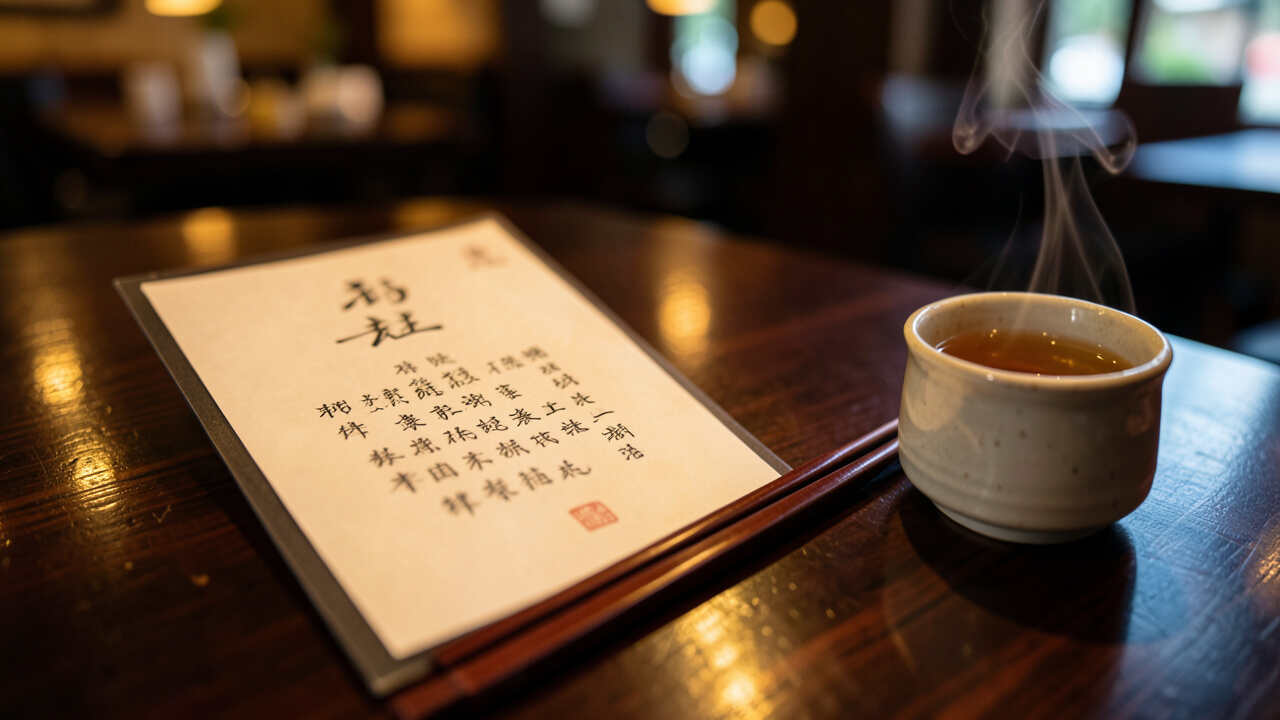
A Chinese menu can look intimidating at first glance, but it’s often logically organized. Understanding the categories is the secret to finding what you want quickly. Most menus separate dishes into clear sections based on the main ingredient or cooking method.
Look for these common headers to guide you. The characters may vary slightly, but the patterns are consistent. You can often use these headers to ask the server for help in that specific category.
- Rè cài (热菜): Hot dishes. This is the main section with stir-fries, braises, and fried items.
- Lěng cài (冷菜): Cold dishes. Appetizers like marinated tofu, cucumber, and shredded chicken.
- Tāng (汤): Soup. Clear broths, creamy soups, and hot pot bases.
- Zhǔshí (主食): Staple foods. Rice (mǐfàn), noodles (miàntiáo), and breads (miànbāo).
- Chǎo fàn / Chǎo miàn (炒饭 / 炒面): Fried rice / Fried noodles. Popular standalone dishes.
- Yǐnliào (饮料): Beverages. Teas, juices, sodas, and alcoholic drinks.
Many menus include photos, which is a huge help. Don’t be afraid to point at a picture and say, “Wǒ yào zhège” (I want this). This is perfectly acceptable and efficient.
Menus in tourist areas often have English translations, but they can be creative. “Sour and Spicy Tofu” might be listed as “Lovers’ Tofu.”
| Menu Category | What to Expect | Example Phrases |
|---|---|---|
| Gōngbǎo Jīdīng (宫保鸡丁) | Kung Pao Chicken – a classic, slightly spicy stir-fry with peanuts. | “Yào yīgè gōngbǎo jīdīng.” |
| Má Pó Dòufu (麻婆豆腐) | Mapo Tofu – spicy, numbing tofu in a red sauce. | “Zhège má bu má?” (Is this numbing?) |
| Jiǎozi (饺子) | Dumplings – steamed or boiled, filled with pork, chicken, or vegetables. | “Shuǐ jiǎo hái shì zhēng jiǎo?” (Boiled or steamed?) |
Asking “What’s your most popular dish?” in Mandarin (“Nǐmen zuì shòu huānyíng de cài shì shénme?”) is another excellent strategy. It lets the kitchen’s strengths shine and gives you an authentic taste.

How to Ask About Dietary Restrictions and Preferences?
Communicating dietary needs is crucial for a safe and enjoyable meal. Key allergens and preferences like vegetarianism, spice level, and common ingredients can be clearly stated using specific phrases. Being direct and polite ensures your needs are understood.
It’s helpful to combine a request with the name of the ingredient. For example, saying “I’m vegetarian” is good, but “I’m vegetarian, no meat” is even clearer. Staff will appreciate the specific instruction.
- Vegetarian: “Wǒ chī sù.” (我吃素。) – I eat vegetarian. Add “Bú yào ròu” (不要肉) for “no meat.”
- No Pork: “Bú yào zhūròu.” (不要猪肉。) – Don’t want pork.
- No Seafood: “Bú yào hǎixiān.” (不要海鲜。) – Don’t want seafood.
- Mild Spice: “Wēi là, qǐng.” (微辣,请。) – Mildly spicy, please.
- No Spice: “Bú yào là.” (不要辣。) – Don’t want spicy.
- Gluten-Free Awareness: This is harder. Say “Bú yào mài” (不要麦 – no wheat) and point to items like rice dishes. Gluten is not a common concept in traditional Chinese cooking.
Warning: Many Chinese sauces (like oyster sauce and soy sauce) contain wheat. Fried foods may use a wheat-based batter. Always double-check by asking “Zhège yǒu mài ma?” (Does this have wheat?) if you have a serious allergy.
If you have a severe allergy, consider showing a pre-written card in Mandarin that explains your condition. This removes any risk of miscommunication. A simple phrase like “I am allergic to , it is very dangerous.
I cannot eat it.” can be lifesaving.
What is the Correct Process for Paying the Bill?
Concluding your meal smoothly involves knowing how to request and settle the bill. Unlike in some Western restaurants, the check doesn’t always come automatically. You need to explicitly ask for it.
The process is usually straightforward and quick.
The universal phrase is “Mǎidān” (买单), which simply means “bill” or “to pay the bill.” Say this to your server when you are ready to pay. They will bring the total to your table, often on a small tray.
- Request the Bill: Make eye contact with your server and say “Mǎidān” clearly. Or use the full sentence: “Qǐng gěi wǒ mǎidān.” (Please give me the bill.)
- Review the Total: The bill will be a small paper slip. Check that the items match what you ordered. The total will be in Chinese Yuan (元, Yuán).
- Choose Payment Method: Cash is universally accepted. Mobile payment via WeChat Pay (Wēixìn Zhīfù) or Alipay (Zhīfùbǎo) is dominant in mainland China. Credit cards are less common at smaller establishments.
- Handle the Transaction: Hand the cash or let the server scan your payment QR code. They will give you change or confirm the transaction.
- Tipping: Tipping is not customary or expected in most of mainland China. The service charge is included in the bill or not expected. Do not leave money on the table. Simply say “Xièxie” (thank you) and leave.
| Payment Step | Mandarin Phrase | What to Do |
|---|---|---|
| Asking for Bill | Mǎidān. | Say this when ready to leave. |
| Paying | Zhè shì wǒ de Wēixìn/Ālīfùbǎo. | This is my WeChat/Alipay (as they scan). |
| Getting Change | Búyòng zhǎo le. | No need to give change. (Use for small amounts). |
The payment process is efficient. Once you’ve paid, you’re free to go. A final “Zàijiàn” (goodbye) to the staff is a nice parting gesture.
What Are the Most Common Mistakes and How to Avoid Them?
Navigating a new language always comes with a learning curve. Being aware of common pitfalls can save you from confusion or awkward moments. Most mistakes are minor and easily corrected with a smile and a little patience.
The biggest error is not trying at all. Using even a few key phrases in Mandarin will be met with warmth and encouragement. Locals are generally forgiving of mistakes and appreciate the effort you’re making to engage with their culture.
- Mistake: Assuming Universal English. While younger staff in major cities may speak some English, it’s unreliable. Always be prepared with your Mandarin phrases.
- Mistake: Saying “Xièxie” (Thank You) as the Bill Arrives. This might cause the server to think you are finished and about to leave before paying. Say “Mǎidān” first, then “Xièxie” after the transaction is complete.
- Mistake: Pointing with One Finger. In China and many Asian countries, pointing with the index finger can be considered rude. Use an open hand, palm up, to gesture toward menu items or locations.
- Mistake: Not Understanding “Yes” and “No.” “Shì” (是) means yes, but “Duì” (对) is more common for confirmation. “Bú shì” (不是) means no. A simple head shake is also universally understood for negation.
- Mistake: Trying to Pay by Leaving Cash on the Table. This can be confusing for staff. Always wait for them to bring the bill, state the total, and hand the payment directly to them or complete the mobile scan.
Pro Tip: Download a translation app with an offline Chinese dictionary or use a photo translation feature. Snap a picture of the menu to get a rough idea before engaging with the server.
Remember, your primary goal is to order a meal, not to deliver a perfect speech. Focus on clear communication of your basic needs, and everything else will fall into place.
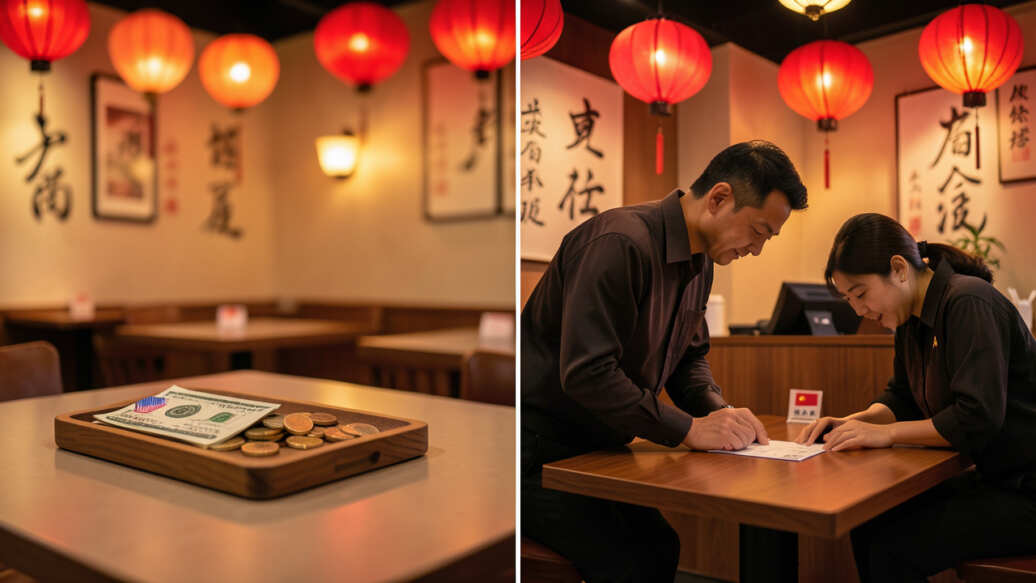
Why Does Tipping Culture Differ and How to Handle It?
Understanding the local tipping etiquette is a key part of cultural respect. In the United States, tipping is often expected and can be a significant part of a server’s income. In China, this is not the case, and the norms are fundamentally different.
Tipping is generally not customary in mainland China. The service charge is often included in the total at higher-end restaurants. At casual eateries, it is simply not expected.
Leaving extra money can sometimes cause confusion or even be politely refused.
The reasons are rooted in cultural and economic structures. Service industry wages are set differently, and excellent service is considered part of the job, not an extra that requires a bonus. Your “tip” should be expressed through polite words like “Xièxie” and “Fēicháng hǎochī” (Very delicious).
This verbal appreciation is highly valued.
- In Mainland China: No tipping. Pay the exact bill amount.
- In Taiwan: Tipping is also not customary. Some upscale hotels or restaurants may add a service fee.
- In Chinese Restaurants Abroad: Follow the tipping customs of the country you are in. In the U.S., standard tipping rates apply.
- How to Say “No Tip” if Insisted: If a bill tries to include a “service charge” you don’t understand, ask “Zhège shì shénme?” (What is this?).
Knowing this simple rule prevents an embarrassing moment at the end of your meal. It allows you to focus on the delicious food and the successful Mandarin conversation you just had.
Frequently Asked Questions
What is the most important phrase for ordering food?
The most important phrase is “Qǐng gěi wǒ.” (请给我.), which means “Please give me.”. This is a polite and direct way to request any menu item. You can use it alone or add the item name for clarity, such as “Qǐng gěi wǒ yīgè gōngbǎo jīdīng.” (Please give me one Kung Pao Chicken.)
How do I ask for the bill in a Chinese restaurant?
To ask for the bill, simply say “Mǎidān” (买单) to your server. This single word means “bill” and is universally understood across Mandarin-speaking regions. You can also use the slightly more formal “Qǐng gěi wǒ mǎidān” (请给我买单), which means “Please give me the bill.”
Is it necessary to speak Mandarin to order in a Chinese restaurant?
It is not strictly necessary, as many restaurants in tourist areas have picture menus or staff with basic English. However, using even a few basic Mandarin phrases like “Nǐ hǎo” (hello) and “Xièxie” (thank you) greatly enhances your experience, ensures accurate orders, and is deeply appreciated by the staff.
How do I handle dietary restrictions like being vegetarian?
Communicate your restriction clearly by saying “Wǒ chī sù” (我吃素), which means “I am vegetarian.” For extra clarity, add “Bú yào ròu” (不要肉 – no meat) and “Bú yào yú” (不要鱼 – no fish). Pointing at dishes while asking “Zhège yǒu ròu ma?” (Does this have meat?) is also an effective strategy.
Do I need to tip at a Chinese restaurant?
If you are dining in mainland China, no, you do not need to tip. Tipping is not a cultural norm and is not expected. The service is included in the cost of the food.
If you are at a Chinese restaurant in another country, follow the tipping customs of that country, such as the standard 15-20% in the United States.
Final Thoughts
Ordering food in Mandarin is a skill that transforms a simple meal into a rich cultural experience. By mastering the core script of greeting, requesting, and paying, you gain confidence to explore any menu. Remember to use polite phrases, point with an open hand, and never be afraid to ask for help.
Embrace the process and the small triumphs of successful communication. Every correct phrase and understood dish builds your connection to the language and its people. Go ahead, use your new skills, and enjoy the delicious rewards.