
Essential Mandarin Phrases for Travel Emergencies
Mandarin phrases for emergencies while traveling are non-negotiable for any trip to a Chinese-speaking region. You hope you will never need them, but knowing these key sentences can turn a potential crisis into a manageable situation. This guide provides the exact words you need for medical, safety, and logistical emergencies.
Simply put, memorizing a handful of Mandarin phrases for emergencies like “I need a doctor” or “My passport is lost” is your most critical travel preparation. These phrases empower you to communicate effectively with locals and authorities during high-stress situations.
Key Takeaways
- Knowing basic Mandarin for tourists in emergencies is a safety net that language apps alone cannot replace when you have no internet.
- Focus on learning phrases for medical crises, getting lost, legal issues, and transportation problems – the most common travel emergencies.
- Your phrase list should be short, phonetically written, and practiced aloud; panic causes memory blanks.
- Combine verbal phrases with universal gestures and showing your phone to a local for help.
- Carry a physical card with your hotel address and a written copy of your most urgent phrase for backup.
What Is a Travel Emergency Phrase?
A travel emergency phrase is a pre-memorized, specific sentence in a foreign language designed to immediately signal distress and communicate a critical need. It is not about conversational fluency. It is about survival communication.
These phrases act as verbal alarm buttons. When you say “Help!” or “I need a doctor,” you bypass small talk and get straight to the point. For Mandarin, clarity and simplicity are everything.
A good emergency phrase has three core traits:
- Concise: It should be under 10 words when translated to your native language.
- Universal: It should convey a need that any listener will understand immediately, like pain, danger, or loss.
- Phonetically Sound: You need a pronunciation guide you can say correctly under stress, not just characters you can’t read.
How to Practice Mandarin Phrases Before Your Trip
Passive learning won’t save you. You must build muscle memory for these phrases. Set aside 15 minutes daily for a week before departure to drill these sentences.
Say them out loud, not just in your head.
Use this effective practice routine:
- Record Yourself: Use your phone’s voice recorder to say each phrase. Listen back and compare it to a native speaker’s audio from a language site.
- Flashcard Method: Write the English phrase on one side of a card and the Pinyin (Romanized pronunciation) on the other. Test yourself randomly.
- Scenario Drills: Imagine a scenario (e.g., losing your wallet). Close your eyes and practice saying the exact phrase you would use.
- Emergency Phrase Card: Create a physical card with your top 5 phrases written in Pinyin. Keep it in your wallet separate from your phone.
| Pinyin (Pronunciation) | Meaning | When to Use It |
|---|---|---|
| Jiùmìng a! | Help! / Save life! | Extreme danger, severe injury. |
| Wǒ xūyào yīshēng. | I need a doctor. | Medical issues, accidents. |
| Qǐng bāng wǒ. | Please help me. | General distress, getting lost. |
| Wǒ de hùzhào diū le. | I lost my passport. | At police station, embassy. |
| Wǒ de qiánbāo bèi tōu le. | My wallet was stolen. | Reporting theft, requesting police. |
| Zhè lǐ yǒu yīgè shìgù. | There is an accident here. | Witnessing or involved in an accident. |
| Wǒ bù shūfu. | I am not feeling well. | Sudden illness, nausea. |
This table provides the absolute essentials. Print it or take a screenshot. The Pinyin column is your pronunciation guide.
What Do You Say in a Medical Emergency?
Your health is the top priority. These Mandarin phrases for health emergencies should be your first practice targets. Pointing to your body while saying these is even more effective.
- “Wǒ xūyào kàn bìng.” – I need to see a doctor.
- “Wǒ tóu téng / dùzi téng.” – I have a headache / stomachache.
- “Wǒ yǒu guòmǐn.” – I have an allergy.
- “Qǐng jiào chē.” – Please call a car (ambulance).
- “Zhè shì wǒ de yīliáo bǎoxiǎn.” – This is my medical insurance.
| Scenario | Key Phrase (Pinyin) | Supporting Action |
|---|---|---|
| Severe Pain | Téng! Hěn téng! | Grimace, press the painful area. |
| Difficulty Breathing | Hūxī kùnnán. | Fan your chest, show gasping expression. |
| Allergic Reaction | Wǒ duì. guòmǐn. | Show a picture of the allergen on your phone. |
| Need Pharmacy | Yàodiàn zài nǎlǐ? | Mimic taking a pill or drinking water. |
Always follow up “Wǒ xūyào yīshēng” with the specific issue. Pointing to your stomach while saying “dùzi téng” leaves no room for misunderstanding.
How to Communicate You Are Lost or Need Help
Getting separated from your group or lost in a neighborhood is disorienting. These phrases help you reconnect or find safety. The goal is to get clear directions or assistance to a known location.
Warning: Avoid flashing large amounts of cash or expensive items while asking for help. Use your phone discreetly to show your hotel’s address card or a map location.
Start any interaction with a polite opener. “Nín hǎo” (formal hello) or “Qǐng wèn” (Excuse me) gets attention respectfully. Then deliver your emergency phrase.
- “Wǒ mílù le.” – I am lost.
- “Qǐng gěi wǒ kàn zhège地址.” – Please show me this address. (Have it written down!)
- “Wǒ yào huífàn diàn.” – I need to return to my hotel.
- “Qǐng jiào chūzūchē.” – Please call a taxi for me.
- “Yǒu méiyǒu rén huì shuō Yīngyǔ?” – Does anyone speak English? (Use this sparingly as a last resort).
What Are Phrases for Theft or Loss Incidents?
Discovering your wallet is gone or your bag was stolen is a sinking feeling. Acting quickly is key. You need to report the incident to get a police report for insurance and cancel cards.
Go directly to a police station. Find someone in uniform or a shopkeeper and say:
“Qǐng bāng wǒ zhǎo jǐngchá.” – Please help me find the police.
Once at the station, use these structured sentences:
- “Wǒ de bèi tōu le.” – My was stolen. (e.g., qiánbāo = wallet, bāo = bag).
- “Shìfā shíjiān shì .” – The incident happened at . (Learn numbers 1-12 for o’clock).
- “Zhè shì wǒ de hùzhào.” – This is my passport.
- “Wǒ xūyào yī fèn bàogào.” – I need a report.
| Lost Item | Mandarin Phrase | Crucial Follow-Up |
|---|---|---|
| Passport | Hùzhào diū le. | Contact your embassy immediately after police report. |
| Phone | Shǒujī diū le. | Use Find My Device service; request police help to block SIM. |
| Wallet | Qiánbāo bèi tōu le. | Cancel credit cards. The police report is essential for refunds. |
| Luggage | Xínglǐ bù jiàn le. | Report to airline or hotel immediately. Have your claim ticket. |
How Do You Handle Transportation Emergencies?
Missing your last train, having a dispute with a taxi driver, or dealing with a breakdown causes immediate stress. Your approach should be calm and assertive.
For a missed train or flight:
“Wǒ cuòguòle lièchē.” – I missed my train.
“Qǐng wèn, hái yǒu qítā bànfa ma?” – Excuse me, is there any other way? (This asks for rebooking or alternatives).
If you are in a taxi and need to stop urgently:
“Qǐng tíng chē!” – Please stop the car!
“Wǒ yào xià chē.” – I want to get off. (This is less confrontational than accusing the driver).
For a vehicle breakdown if you are renting:
- “Chē huài le.” – The car is broken.
- “Qǐng jiào jiùyuán.” – Please call for roadside assistance.
- “Zhè lǐ shì .” – Here is the location. (Use your phone’s map to show).
What Phrases Help in Legal or Police Encounters?
If you witness an accident or are involved in an incident, staying calm is paramount. Your first goal is to establish that you are a foreigner who may need assistance.
Important: The Chinese police value a calm and orderly demeanor. Do not raise your voice. State facts simply and provide documentation if asked.
Start with:
“Wǒ shì lǚkè.” – I am a tourist.
“Wǒ kàn dào le yīgè shìgù.” – I saw an accident. (If you are a witness).
If you are detained or questioned, these phrases are vital:
- “Wǒ xūyào yī gè lǜshī.” – I need a lawyer.
- “Wǒ shuō Yīngyǔ.” – I speak English.
- “Qǐng liánxì wǒ de dǐngshǐ guǎn.” – Please contact my embassy. (This is a strong, last-resort phrase).
- “Wǒ bù dǒng.” – I don’t understand.
Why Should You Combine Phrases with Non-Verbal Cues?
In a high-stress situation, your words might fail. Your body language, facial expressions, and props become your primary communication tools. This combination increases your chances of being understood exponentially.
The most effective non-verbal tactics are:
- The Pain Gesture: Clinch your fist and hold it to your chest or stomach while saying “Téng.”
- The Lost Tourist: Hold up your phone showing your hotel card, shrug, and look around with a concerned expression while saying “Wǒ mílù le.”
- The Theft Report: Make a “grab and run” motion with your hands while saying “bèi tōu le.”
- The Language Barrier: Point to your ear and shake your head slightly after saying a phrase, then show a translation app on your phone.
- Universal Pointing: Point emphatically at your mouth when asking for food, or at a map when lost.
How to Build a Personal Emergency Phrase Sheet
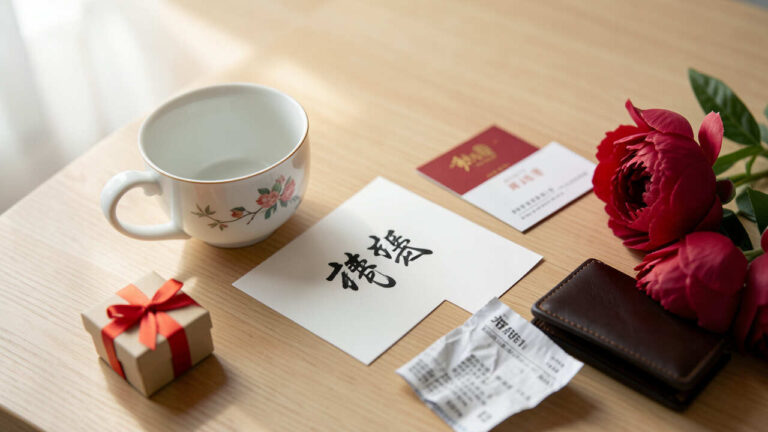
Your phone can die, and cloud storage can be inaccessible. A physical backup is non-negotiable. Create a waterproof, tear-proof card using this template.
Front of Card (Mandarin):
- Help! – Jiùmìng a!
- I need a doctor. – Wǒ xūyào yīshēng.
- I lost my passport. – Wǒ de hùzhào diū le.
- Please help me. – Qǐng bāng wǒ.
- I am lost. – Wǒ mílù le.
Back of Card (Info):
- My Name:
- Nationality:
- Hotel: (write address in English & Chinese)
- Emergency Contact:
- Police: 110 | Ambulance: 120 | Fire: 119
Keep this card in a ziplock bag in your pocket, not with your wallet or phone. This ensures you have it even if those items are lost or stolen.
Frequently Asked Questions
Is it better to use a translation app or learn phrases?
Apps are excellent for planning and non-emergency conversations. However, for true emergencies, you need to speak a phrase instantly without fumbling with your phone. A dead battery or lack of internet makes apps useless.
Learning the core phrases gives you immediate capability.
What is the single most important phrase to memorize?
“Wǒ xūyào yīshēng” (I need a doctor) is arguably the most critical. Medical emergencies are time-sensitive. This phrase cuts through confusion and directs people to get you professional help.
How do I ask for the police in Mandarin?
The most direct phrase is “Qǐng jiào jǐngchá” (Please call the police). You can also simply say “Jǐngchá” while looking around for someone in uniform. In many cities, the police are helpful to tourists once communication is established.
What if my Mandarin pronunciation is terrible?
Imperfect pronunciation is fine. Your tone, urgency, and gestures will convey the message. Locals are usually very accommodating to foreigners making an effort.
Focus on clear, loud enunciation rather than perfect tones.
Should I learn Mandarin characters for emergencies?
Generally, no. Learning to read and write characters takes years. Instead, focus entirely on the Pinyin pronunciation guide.
If you need to show something, have the Chinese characters for your hotel or key phrases printed out on your emergency card.
Final Thoughts
Preparing a short list of Mandarin phrases for emergencies is a small task with an enormous impact on your travel safety. Focus on the phrases for medical help, reporting theft, and navigating transportation issues. Practice them daily before your trip, combine them with clear gestures, and keep a physical backup card. This preparation ensures you can handle the unexpected with more confidence and less panic.