
How Chinese Dialects Shape Regional Identity and Culture
Dialects in regional Chinese identity are more than just different ways of speaking; they are living repositories of history, culture, and community. For millions of people across China, a local dialect is the primary marker of their regional roots and plays a vital role in preserving unique traditions. This post explores how these linguistic variations shape and sustain the diverse cultural landscape of China.
Simply put, Chinese dialects are living embodiments of regional history, serving as a primary marker of local identity, preserving unique cultural traditions, and fostering community cohesion across diverse geographic areas.
Key Takeaways
- Dialects in regional Chinese identity function as powerful cultural repositories, encoding centuries of local history, folklore, and social norms.
- Proficiency in a local dialect often determines social acceptance and trust within a community, reinforcing regional bonds.
- Major dialect groups like Wu, Min, and Cantonese are not mutually intelligible, creating distinct linguistic and cultural zones.
- While Mandarin is the official language, the daily use of dialects remains strong for personal and cultural expression.
- The preservation of these regional linguistic diversities is a growing concern due to urbanization and digital standardization.
What Are Chinese Dialects and Why Do They Matter?
The term “Chinese dialects” can be misleading. Linguistically, major groups like Mandarin, Wu, and Cantonese are as distinct as separate languages like Spanish and Italian. They often lack mutual intelligibility.
This profound linguistic divergence exists because China’s vast geography historically isolated communities for centuries.
These dialects matter because they are the core of local identity. When people speak their native tongue, they connect directly to their ancestors and homeland. A Shanghainese speaker uses Wu dialect not just to communicate but to perform a cultural identity that is distinctly Shanghainese, separate from Beijing or Guangzhou.
- Cultural Encoding: Dialects contain unique idioms, proverbs, and humor that have no direct equivalent in Standard Mandarin.
- Social Cohesion: Using a dialect instantly signals in-group status and builds trust in local communities and markets.
- Historical Record: They preserve phonetic and lexical layers from older stages of the Chinese language.
- Culinary & Artistic Ties: Traditional opera, folk songs, and local cuisine are often intrinsically linked to specific dialect pronunciations.
Tip: When visiting a new region in China, learning a few greetings or phrases in the local dialect can deeply endear you to locals and enrich your travel experience.
How Do Dialects Shape and Reflect Regional Character?
The relationship between a dialect and regional character is cyclical. The geography and history of a place shape the dialect, and the dialect in turn influences the perceived character of its speakers. Coastal regions with a history of trade, like Guangdong and Fujian, often have dialects with complex sound systems developed through contact with other languages.
Stereotypes often link dialects to regional personalities. Cantonese is sometimes associated with pragmatism and entrepreneurship, reflecting Guangdong’s commercial history. The Sichuan dialect, with its lively and humorous intonations, mirrors the region’s reputation for a fun-loving and bold spirit.
These associations are powerful but are stereotypes rooted in historical economic and cultural contexts.
| Dialect Region | Core Geographic Area | Commonly Perceived Regional Traits |
|---|---|---|
| Cantonese (Yue) | Guangdong, Hong Kong, Macau | Entrepreneurial, outgoing, culturally traditional |
| Shanghainese (Wu) | Shanghai, southern Jiangsu | Cosmopolitan, detail-oriented, refined |
| Sichuanese (Southwestern Mandarin) | Sichuan, Chongqing | Lively, humorous, resilient |
| Hokkien (Min Nan) | Southern Fujian, Taiwan | Adventurous, mercantile, strong family ties |
These perceived traits, whether accurate or not, become part of the regional narrative. Speaking the dialect is a way to perform and affirm that identity.
Major Chinese Dialect Groups and Their Cultural Footprints
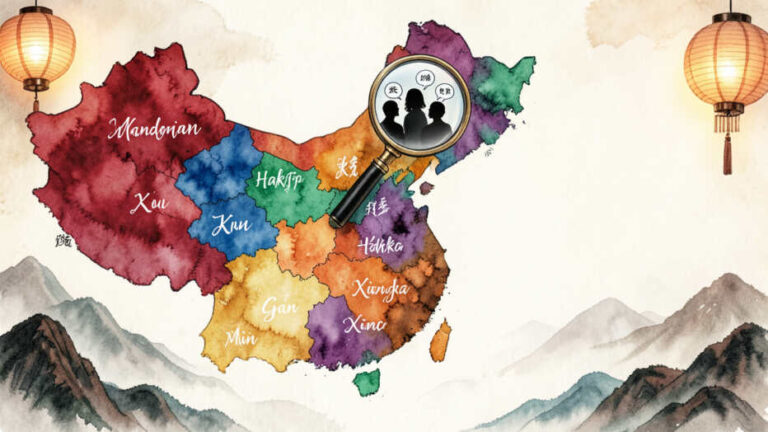
China’s linguistic map is complex, but scholars generally classify the main dialects into seven to ten major groups. Each group anchors a vast cultural sphere with its own literature, media, and traditions. Understanding these groups is key to understanding the country’s internal diversity.
- Mandarin (Guanhua): The most widespread group and basis for Standard Putonghua. It covers northern, central, and southwestern China. Its cultural footprint is dominant in national media and education.
- Wu: Centered in Shanghai, southern Jiangsu, and Zhejiang. Famous for its soft sounds and complex tone system. It is the language of Kunqu opera and Suzhou pingtan storytelling.
- Cantonese (Yue): Spoken in Guangdong, Hong Kong, and Macau. It has a massive global diaspora and is the language of Hong Kong cinema, Cantopop, and dim sum culture.
- Min: Includes Hokkien, Teochew, and Fuzhou dialects. Spoken in Fujian, Taiwan, and Southeast Asia. Known for its ancient roots and multiple tonal variations.
- Hakka: A group spread across southeastern China with a unique history of migration. Hakka cuisine, fortified roundhouses (tulou), and a strong sense of clan identity are its hallmarks.
- Gan & Xiang: Found in Jiangxi and Hunan respectively, these dialects bridge regional cultures and have produced rich traditions of local opera and poetry.
Important: The classification itself is political and academic. For daily life, people identify with their specific city or county dialect first, and the broader group label second.
How Does Dialect Preservation Work Against Cultural Erosion?
Urbanization, migration, and the dominance of Standard Mandarin in education and media create immense pressure on local dialects. Young people often become passive speakers who understand but do not fluently speak their ancestral tongue. This shift risks severing the direct link to regional cultural heritage.
Preservation is an active, multi-front effort. It happens at the family level, through grassroots community initiatives, and increasingly with technological support. The goal is not to stop Mandarin but to maintain dialects as a living part of daily life and cultural practice.
- Family Transmission: The most critical front. Grandparents and parents consciously choosing to speak the dialect with children at home.
- Media & Entertainment: Local TV stations, radio programs, and music in dialect (like Cantopop) keep it relevant and cool for younger generations.
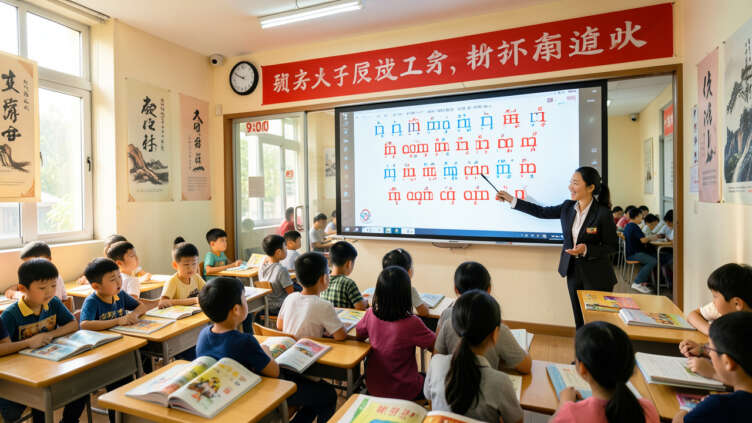
- Education Initiatives: Some schools in Guangdong and Fujian have introduced optional dialect classes or “dialect corners” during breaks.
- Community Events: Dialect storytelling competitions, local opera performances, and neighborhood cultural festivals.
- Digital Advocacy: Social media creators producing humorous or informative content in dialect, and apps offering dialect learning tools.
Warning: Language loss is irreversible. Once a generation stops speaking a dialect fluently, the rich, nuanced layers of local culture encoded within it begin to vanish forever.
Who Uses These Dialects Today and in What Contexts?
The use of dialects in modern China follows a clear pattern of diglossia—a situation where two languages are used under different conditions within a community. Mandarin dominates formal, public, and written domains, while dialects rule informal, private, and oral spheres.
In major cities like Shanghai or Guangzhou, the street, the wet market, and the family dinner table are the strongholds of the local dialect. It is the language of gossip, emotional expression, humor, and asserting local identity. In contrast, the office, classroom, and government office are Mandarin zones.
| Context / Domain | Primary Language Used | Reason & Social Function |
|---|---|---|
| Family Home | Local Dialect | Intimacy, tradition, emotional connection |
| Friends’ Gathering | Local Dialect | Solidarity, humor, local camaraderie |
| Local Market / Shop | Local Dialect | Building trust, faster transaction |
| National News Broadcast | Standard Mandarin | Formality, national unity, clear communication |
| University Lecture | Standard Mandarin | Academic standard, clarity for all students |
This code-switching is a skilled performance. Choosing to use Mandarin in a local context might signal formality or distance, while switching to dialect can express solidarity or local pride.
What Challenges Threaten the Future of Dialects?
Despite their cultural importance, Chinese dialects face significant and accelerating threats. The challenges are systemic, touching education, technology, and demography. Addressing them requires conscious policy and social change.
- Education System Dominance: All formal education is conducted in Mandarin. School is the primary domain for language acquisition, making it difficult for dialects to gain prestige or fluency among youth.
- Media Consolidation: National broadcasters and streaming platforms operate in Mandarin. Dialect content is often limited to local channels with smaller budgets and reach.
- Urban Migration & Integration: Young people move to megacities for work, where Mandarin is the lingua franca. In mixed households, they often raise children speaking only Mandarin.
- Technological Lag: Input methods and voice recognition for major dialects are less developed than for Mandarin, creating a digital disadvantage.
- Perceived Utility: A widespread belief persists that mastering dialects hinders the perfect pronunciation of Mandarin, which is seen as essential for national success.
Important: The core issue is not Mandarin’s growth, which is natural for a unified nation, but the potential neglect and stigmatization of regional languages that carry irreplaceable cultural value.
How Does This Linguistic Landscape Affect Business and Social Interaction?
The dialect environment directly impacts business strategy and social etiquette across China. In regional commerce, especially in traditional sectors, dialect ability can be a decisive advantage. It builds instant trust and facilitates negotiations that rely on nuance and relationship-building.
In social settings, dialect serves as a powerful filter. It helps quickly identify who is a local “insider.” For migrants returning to their hometown or for outsiders trying to integrate, learning the local dialect is often seen as a critical step toward genuine acceptance. Speaking Mandarin with a strong local accent is another common middle ground.
- Market Research: Understanding local dialect marketing requires grasping region-specific humor and idioms.
- Customer Relations: In local shops and services, a greeting in dialect can immediately elevate the customer experience.
- Hiring & Leadership: In some local enterprises, fluency in the regional dialect may informally influence perceptions of leadership and cultural fit.
- Negotiation Tactics: Key terms and agreements may be verbally discussed in dialect to ensure absolute clarity and cultural understanding.
The Future of Dialects in a Modernizing China
The future of Chinese dialects is not predetermined. It depends on a balance between national integration and regional cultural vitality. Many scholars and cultural advocates argue for a “bilingual” model where citizens are fluent in both Mandarin and their local dialect, each serving its proper domain.
Technology, once a threat, can also be a savior. The development of dialect speech recognition, subtitles for dialect films, and online dialect dictionaries helps modernize their use. Cultural movements that frame dialects as a marker of unique identity, rather than backwardness, are crucial for changing perceptions among the young.
The vibrant cultural production in dialects—from Hong Kong films to Shanghainese podcasts and Sichuanese comedy—proves their ongoing appeal and relevance. They are not relics of the past but living, adaptable components of a modern, multifaceted Chinese identity.
Frequently Asked Questions
What is the most widely spoken Chinese dialect?
While Standard Mandarin is based on the Beijing dialect and is spoken by the vast majority as a second language, the largest native dialect group by number of speakers is also Mandarin dialects (including Southwestern Mandarin). However, the most internationally recognized non-Mandarin dialect is Cantonese, due to the global diaspora and Hong Kong’s cultural influence.
Can speakers of different Chinese dialects understand each other?
Generally, no. Major dialect groups are not mutually intelligible. A Mandarin speaker from Beijing cannot understand a conversation in Cantonese or Hokkien without prior study.
However, due to Mandarin’s prevalence, most dialect speakers can also speak and understand Standard Mandarin, allowing communication in that common language.
Are dialects taught in schools in China?
Formal education in mainland China is conducted entirely in Standard Mandarin (Putonghua). However, some regions, like Guangdong and Fujian, have started incorporating optional dialect appreciation classes or local cultural activities in dialect to promote preservation. It is not part of the national mandatory curriculum.
How do dialects affect Chinese opera and performing arts?
Dialects are fundamental. Traditional opera forms are performed in their specific regional dialect. Kunqu opera uses a Wu dialect base, Cantonese opera uses Cantonese, and Sichuan opera uses Sichuanese.
The pronunciation, rhythm, and tone of the dialect are integral to the art form’s authenticity and performance.
Will Mandarin eventually replace all dialects?
This is a concern for many linguists. While Mandarin will continue to grow as the language of education and national communication, total replacement is unlikely due to deep cultural attachments. More probable is a continued shift toward diglossia, where Mandarin dominates public life and dialects recede to more private, familial, and cultural spheres.
Final Thoughts
The role of dialects in regional Chinese identity is profound, serving as a core pillar of cultural memory and local belonging. They differentiate communities and enrich the national tapestry with distinct traditions, humor, and social bonds. Preserving this diversity is essential for maintaining a complete and vibrant picture of Chinese civilization.