How China Promotes Standard Mandarin Nationwide: Key Policies
How China promotes standard Mandarin nationwide is a deliberate, multi-faceted strategy aimed at unifying a linguistically diverse nation. The government’s push for Putonghua, or “common speech,” serves as a powerful tool for social cohesion, economic mobility, and national identity. Understanding the mechanisms behind this language standardization reveals much about contemporary Chinese governance and society.
Simply put, China promotes standard Mandarin through a top-down national policy that integrates language education from preschool to adulthood, mandates its use in media and government, and creates financial incentives for proficiency. The core goal is to break down dialect barriers and foster a unified national communication system.
Key Takeaways
- China promotes standard Mandarin as a foundational element of national unity and modernization, embedding it in the education system and public life.
- The Promotion of Putonghua Act provides the legal framework, making Mandarin the official language for government, education, and broadcast media.
- Proficiency in standard Mandarin is directly linked to economic opportunities and social mobility, driving voluntary adoption among citizens.
- The policy coexists with an official stance on protecting minority languages and dialects, though in practice, Putonghua dominance is rapidly increasing.
What is Standard Mandarin and Why Does China Promote It?
Standard Mandarin, known as Putonghua, is the official standardized form of Chinese. It is based on the phonetic system of the Beijing dialect but is distinct from any single regional dialect. Its promotion is a cornerstone of national policy, rooted in historical needs for cohesion and modern ambitions for development.
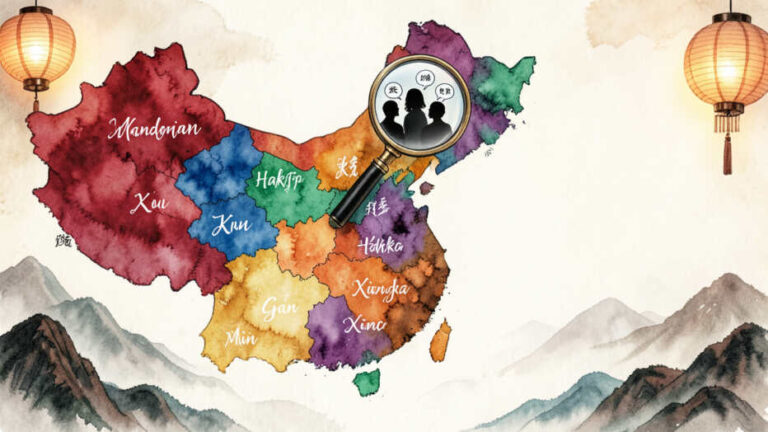
The primary driver is unification. China has over 100 distinct dialect groups, many of which are mutually unintelligible. For centuries, a common written language served as a bridge, but spoken communication remained fragmented.
Promoting a single spoken standard facilitates smoother administration, commerce, and travel across the vast country.
- National Unity: Creates a shared verbal identity that transcends regional differences, strengthening the concept of a single Chinese nation.
- Economic Integration: A common language removes barriers for the national labor market, allowing people to work and do business across provinces.
- Educational Equity: A standardized language ensures all students learn from the same instructional medium, regardless of their local dialect.
- Modernization: Aligns with goals of building a modern, efficient society where clear communication is essential for technology, governance, and infrastructure.
- Cultural Consolidation: Reinforces a unified national culture and facilitates the dissemination of state-sanctioned information and values.
The promotion of Putonghua is not merely about linguistics; it is a strategic state project. According to the Ministry of Education, the national proficiency rate for Putonghua reached over 80% by 2021, a testament to the scale and success of these efforts.
How Does China Promote Standard Mandarin Through Education Policy?
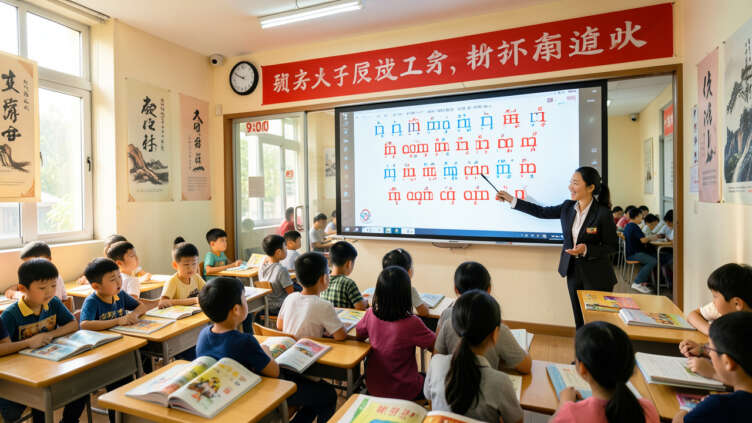
The education system is the primary engine for spreading Mandarin proficiency. Policy mandates that Putonghua is the language of instruction, with a strong emphasis on oral and written proficiency from the earliest grades. This creates a standardized linguistic foundation for every new generation.
The enforcement begins at the institutional level. Teacher certification requires passing the Putonghua Proficiency Test (PSC), with different minimum scores for different professions. School inspections include assessments of the school’s language environment, penalizing institutions where local dialects are overused.
| Educational Stage | Mandarin Promotion Policy |
|---|---|
| Preschool & Primary | Strict immersion environment. Oral proficiency activities are core curriculum. Teachers must use Putonghua for all instruction. |
| Secondary School | Formal testing of Mandarin proficiency (PSC) becomes a graduation requirement in many regions. Used as medium for all subjects. |
| Higher Education | PSC proficiency is mandatory for teacher training and broadcast/media majors. Strongly encouraged for all other degrees. |
| Teacher Training | Minimum PSC score required for certification. Scores are categorized: Level A (97+), Level B (92-96.9), Level C (60-91.9). |
Beyond classroom teaching, the state organizes annual “Promotion of Putonghua Week” campaigns. These events feature speech contests, recitation competitions, and public awareness activities, embedding the language into school culture and community life.
| Educational Initiative | Description & Impact |
|---|---|
| “Vertical Evaluation” System | Regional education authorities are graded on their Mandarin promotion targets, creating bureaucratic incentives for enforcement. |
| National Mandarin Database | A digital platform tracking proficiency rates and training resources, allowing for data-driven policy adjustments. |
| Targeted Rural Programs | Special teacher postings, remote learning resources, and incentives to address the urban-rural proficiency gap. |
What Role Do Government and Media Play in Standard Mandarin Promotion?
Beyond schools, the state ensures Putonghua is the default language of public life. Government meetings, official documents, public signage, and service sectors are mandated to use standard Mandarin. This creates an immersive environment that reinforces classroom learning.
Media regulation is a powerful tool. China’s media regulators, including the National Radio and Television Administration, enforce strict language standards. Television programs, films, and radio broadcasts must use standard Mandarin.
State broadcaster CCTV is a key model for “exemplary” pronunciation and is widely used as a listening and speaking reference.
- Mandatory Broadcasting: All provincial and national TV channels broadcast in Putonghua. Local dialect programming is severely restricted in most regions.
- Content Requirements: Films and TV shows submitted for production permits must meet language standards. Dubbing into standard Mandarin is often required for foreign content.
- Public Signage: Law mandates that public signs and notices are in standard Mandarin, often with ethnic minority language and English translations.
- Civil Service Exams: Proficiency in standard Mandarin is a de facto requirement for entering the civil service, ensuring administrators across the country share a common linguistic tool.
- Digital Governance: Government apps, websites, and hotlines operate in standard Mandarin, making it the language of access to state services.
The digital landscape further accelerates this trend. Major social media platforms like Weibo and WeChat, and the short-video giants Douyin (TikTok’s Chinese version), operate predominantly in standard Mandarin. Algorithm-driven content delivery overwhelmingly favors Mandarin content, shaping online linguistic norms.
Tip: To understand the real-world impact, visit any major Chinese city. You’ll hear standard Mandarin as the lingua franca between locals, between vendors and customers, and on all public transport, regardless of the local dialect.
How Are Incentives and Economic Pressures Used to Drive Adoption?
The promotion of Putonghua is not just a matter of policy but also of powerful economic incentives. Proficiency in standard Mandarin is strongly correlated with higher income and better job opportunities, creating a market-driven demand for learning.
In the service industry, from hotels and restaurants to retail and customer support, Mandarin proficiency is a baseline requirement. For many rural migrants seeking work in cities, fluency is the essential first step to integration and accessing higher-paying jobs beyond manual labor.
The linkage is explicit in many high-paying sectors. The technology, finance, and national media industries require excellent Putonghua skills for client-facing roles, presentations, and content creation. This creates a clear career pathway where language investment pays direct financial dividends.
- Wage Premium: Multiple studies indicate workers fluent in standard Mandarin earn a significant premium over monolingual dialect speakers, especially in the formal economy.
- Career Advancement: Promotion to managerial positions often requires the ability to communicate effectively with superiors and partners across the country.
- Access to Education: High-stakes exams like the Gaokao (college entrance exam) are conducted in standard Mandarin. Proficiency is essential for academic success.
- Social Capital: Speaking standard Mandarin is often associated with higher education levels and urban upbringing, influencing social perception and networks.
| Economic Pressure Point | Practical Consequence |
|---|---|
| Job Market Filter | Many job listings explicitly state “Mandarin proficiency required,” immediately excluding non-speakers. |
| Skill Certification | Obtaining official vocational certifications often requires passing Mandarin proficiency components. |
| Social Mobility | Fluency is seen as a key credential for moving from blue-collar to white-collar employment. |
| Market Access | Small business owners must use Mandarin to attract customers from other regions or serve tourists. |
What is the Policy Toward Dialects and Minority Languages?
The official Chinese government position is one of “harmonious coexistence.” The state constitution and laws guarantee the freedom to use and develop spoken and written languages of ethnic minorities. Policy frames Putonghua promotion not as dialect suppression, but as the addition of a common, national language layer.
In practice, this translates into a hierarchy. Mandarin receives overwhelming priority in education, media, and public spheres. Minority languages are supported primarily in their respective autonomous regions, through bilingual education programs and local media.
However, their domain of use is limited and shrinking.
Dialects like Cantonese, Shanghainese, and Hokkien exist in a more ambiguous space. They are not officially suppressed, but they are excluded from formal public use. There are periodic concerns about dialect erosion, especially among youth who receive all their education in Mandarin and consume Mandarin-dominated media.
Important: The term used in policy is “bilingual education,” which refers to instruction using both the local minority language and standard Mandarin. The goal is additive bilingualism, but in practice, Mandarin often displaces minority languages over time.
The state’s approach is pragmatic. It seeks the unifying benefits of a common language while managing cultural and political sensitivities. The protection of minority languages serves a legitimacy function, demonstrating the state’s care for ethnic cultures, even as the overarching trend points toward increased Mandarinization.
How Has Technology Influenced the Spread of Standard Mandarin?
The digital revolution has been a potent accelerator for Putonghua. The internet, smartphones, and social media have created new, immersive environments where standard Mandarin is the default language of communication and content.
Input methods on phones and computers are optimized for Mandarin Pinyin (the romanization system). Voice recognition software and virtual assistants are trained on standard Mandarin. This technology ecosystem seamlessly integrates and reinforces daily use of the language.
Online content creation further solidifies its dominance. The vast majority of short videos, livestreams, podcasts, and written articles on Chinese platforms are in standard Mandarin. Algorithmic promotion favors content with the broadest potential audience, which is Mandarin-language content.
- Social Media: Platforms like Weibo and WeChat are public squares conducted almost entirely in written and spoken standard Mandarin.
- E-Commerce: Livestream selling, a massive industry, requires hosts to use clear, standard Mandarin to reach the national audience.
- Online Education: A boom in language-learning apps and MOOCs provides accessible, scalable tools for Mandarin practice, supplementing formal schooling.
- AI & Automation: From customer service chatbots to automated announcements, technology interfaces are built for standard Mandarin first.
This technological push creates a self-reinforcing cycle. As more content and interactions occur online in Mandarin, there is greater incentive for individuals to become proficient. This, in turn, generates even more Mandarin content, further marginalizing other languages in digital spaces.
What Challenges and Criticisms Does This Language Policy Face?
Despite its success in boosting proficiency rates, China’s language policy faces significant challenges and criticisms. The primary concern is the erosion of linguistic diversity and the cultural heritage tied to dialects and minority languages.
Critics argue that the policy, while promoting unity, can lead to cultural homogenization. The intergenerational transmission of dialects is slowing dramatically in urban areas. Many young people in major cities like Shanghai and Guangzhou now primarily speak Mandarin, raising fears of losing rich linguistic traditions.
The situation for some ethnic minority groups is more complex. While bilingual education exists, critics contend it often functions as a pathway to assimilation, with Mandarin becoming the dominant language of economic and social advancement. The vitality of minority languages varies greatly, with some facing serious endangerment.
| Key Challenge | Description & Tension |
|---|---|
| Linguistic Diversity Loss | Pressure from Mandarin use in education and media leads to reduced fluency and prestige for local dialects, especially among youth. |
| Cultural Heritage Erosion | Dialects carry unique folklore, opera, and local identity. Their decline represents a loss of intangible cultural heritage. |
| Minority Language Vitality | Despite official support, economic forces drive Mandarin use, making some minority languages functional only in very specific, limited domains. |
| Education Equity Gap | Students from dialect-speaking or minority-language homes may face initial disadvantages in a Mandarin-immersion education system. |
The government is aware of these tensions. There are periodic calls to better balance promotion with protection, and some regional efforts to preserve dialects through local media or cultural programs. However, the overarching national priority of integration and development means the momentum behind Mandarin promotion remains strong.
Frequently Asked Questions
What is the Putonghua Proficiency Test (PSC)?
The PSC is a national standardized test assessing Mandarin proficiency. It scores speakers on phonetics, vocabulary, grammar, and fluency. Scores range from 60 to 100, divided into three levels (A, B, C).
Passing at a certain level is mandatory for teacher certification, broadcasting, and many civil service positions.
Is it illegal to speak a dialect in China?
No, it is not illegal. The constitution protects the freedom to use spoken languages. However, there are regulations restricting the use of dialects in official public contexts like government meetings, school instruction, and broadcast media.
In daily life, dialect use is common, though its public presence is diminishing.
How does China’s policy differ from past dynasties’ language standardization?
Historically, a common written language (classical Chinese) was the unifier, while spoken languages varied widely. Modern promotion is unprecedented in targeting spoken language on a national scale, using mass education and technology. Past efforts lacked the technological and bureaucratic reach to enforce a spoken standard so pervasively.
What is the relationship between Mandarin and the Chinese writing system?
Standard Mandarin uses the simplified Chinese script. Learning to read and write is taught through the pronunciation and vocabulary of Putonghua. The writing system is logographic, so pronunciation can vary, but education standardizes both the script and the spoken form simultaneously.
How effective has the promotion been among older generations?
Effectiveness varies greatly. Older generations, especially in rural areas and southern regions, often remain dominant dialect speakers. While many have acquired some Mandarin for work or travel, achieving high proficiency is less common than among younger, educated cohorts who grew up in the immersive education system.
Final Thoughts
China’s campaign to promote standard Mandarin nationwide is a profound example of state-driven social engineering, achieving remarkable proficiency rates in a generation. This success is built on the systematic integration of language policy into education, media, technology, and economic incentives. The primary goal of creating a unified communication system for a diverse nation has largely been met, facilitating internal mobility and cohesion.
The ongoing challenge lies in balancing this integration with the preservation of the country’s rich linguistic tapestry. As Putonghua becomes the undisputed language of opportunity, the future vitality of China’s many dialects and minority languages will depend on conscious preservation efforts beyond mere official policy. The story of Mandarin’s spread is ultimately a story about modern China’s priorities and its vision for national unity.