
Endangered Chinese Dialects and Preservation Efforts
Endangered Chinese dialects represent a critical and often overlooked aspect of global linguistic diversity, facing extinction at an alarming rate. This post explores the current state of these unique languages, the forces driving their decline, and the dedicated efforts to preserve them for future generations. Understanding the value of these dialects is key to appreciating the rich tapestry of Chinese culture and identity.
Simply put, many Chinese dialects are disappearing as younger generations shift to Standard Mandarin for social and economic reasons. Preservation efforts, including digital documentation and community education, are crucial to saving this intangible cultural heritage before it is lost forever.
Key Takeaways
- The term “dialect” in China often refers to distinct languages mutually unintelligible with Mandarin, such as Hokkien or Hakka.
- Over 100 of China’s estimated 300 language varieties are considered endangered, with some having fewer than 1,000 speakers.
- Forced homogenization, urban migration, and educational policies prioritizing Standard Mandarin are primary drivers of language shift.
- Preservation is not about resisting Mandarin but about maintaining linguistic diversity as a cultural and cognitive resource.
- Successful initiatives combine academic documentation with grassroots community activism and modern technology.

What Are Endangered Chinese Dialects?
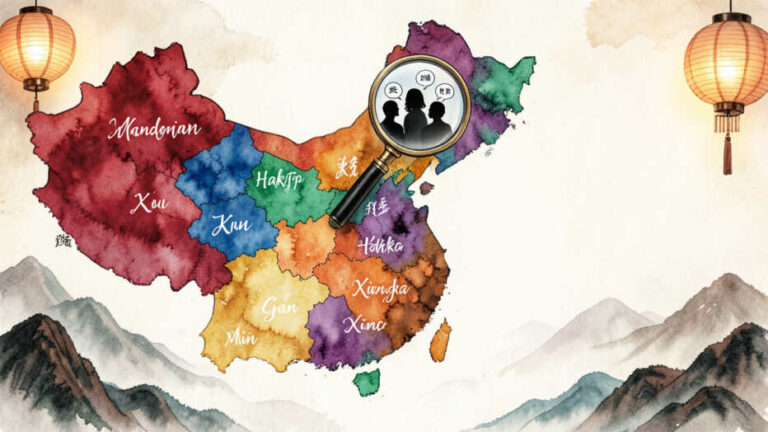
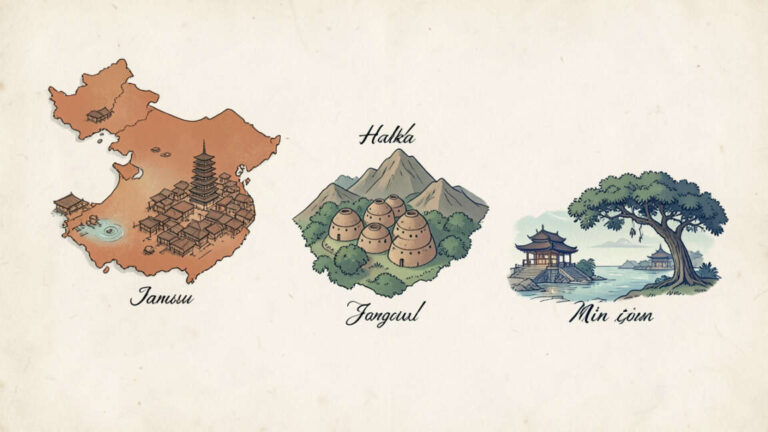
When we talk about Chinese “dialects,” we are often referring to distinct Sinitic languages that developed independently over millennia. Linguists classify these into major groups, including Mandarin, Wu, Min, Yue, Hakka, Gan, and Xiang. Many of these groups contain varieties that are as different from each other as Spanish is from French.
The endangerment crisis applies to countless smaller varieties within these groups. According to UNESCO’s Atlas of the World’s Languages in Danger, dozens of Chinese languages face varying threat levels, from “vulnerable” to “critically endangered.” For example, the Southern Amis language in Taiwan has fewer than 20 fluent speakers left, all of whom are over 70 years old.
Defining Language Endangerment
A language is considered endangered when its speakers stop teaching it to the next generation, leading to a steady decline in fluent speakers. The process often follows a predictable pattern:
- Language Shift: Community members voluntarily adopt a more dominant language for social or economic advancement.
- Language Dominance: The dominant language permeates media, education, and public life, marginalizing the minority tongue.
- Language Loss: The language is no longer spoken in any domain, and the last generation of speakers passes away.
In China, this shift is happening rapidly. A child born in Shanghai today is far more likely to grow up speaking Mandarin than the local Shanghainese dialect. This is a direct result of decades of national language policy.
Major Endangered Language Groups
While Mandarin has over 900 million native speakers, many other groups are struggling. The threat level varies significantly across regions. Here is a simplified overview:
| Language Group | Example Varieties | General Status |
|---|---|---|
| Min Nan (Hokkien) | Amoy, Taiwanese | Vibrant but under pressure |
| Hakka | Meixian, Hong Kong | Many local varieties endangered |
| Wu | Shanghainese, Wenzhou | Urban varieties declining sharply |
| Yue | Cantonese, Taishanese | Cantonese stable; sub-dialects vulnerable |
This table illustrates that even within major groups, the health of specific dialects varies. A dialect spoken by millions in a major city like Hong Kong may be thriving, while a closely related variety in a rural province could be on the brink of extinction.

Why Are Chinese Dialects Endangered?
The decline of Chinese dialects is not a natural phenomenon but the result of powerful social, political, and economic forces. The primary driver is the nationwide promotion of Standard Mandarin (Putonghua) as the unifying national language. This policy, while successful in fostering communication across a vast country, has come at a significant cost to linguistic diversity.
The state-mandated education system is the most critical transmission mechanism. From primary school onward, Mandarin is the language of instruction, textbooks, and examinations. Children who speak a dialect at home quickly learn that their home language has little value in the formal education system.
A 2019 study found that less than 30% of primary school students in major cities were fluent in their local dialect.
The Role of Education and Media
Education is the frontline of language shift. The immersion in Mandarin from an early age restructures a child’s linguistic landscape. Media and popular culture further reinforce this.
National television, films, and music are overwhelmingly in Mandarin. Local dialect television and radio stations, once common, have been reduced or eliminated in many regions.
This creates a self-reinforcing cycle where the dominant language is associated with modernity, success, and the wider world, while dialects become linked to rural life, the older generation, and “old-fashioned” ways of speaking. The perceived social utility of a language directly impacts its vitality.
Warning: Assuming dialects are merely “slang” or “incorrect Mandarin” is a dangerous misconception. These are fully developed languages with their own grammar, vocabulary, and literary traditions. Losing them means losing irreplaceable knowledge.
Economic and Social Pressures
Urban migration is a massive catalyst. Young people leave their hometowns for work in major cities like Shanghai, Beijing, or Shenzhen, where Mandarin is the lingua franca. They raise their children in Mandarin-speaking environments, breaking the chain of intergenerational transmission.
The economic incentive to speak Mandarin is overwhelming.
Social attitudes also play a key role. Many parents, even those who speak a dialect fluently, choose not to teach it to their children, believing it will hinder their academic and career prospects. They make a pragmatic, if painful, choice for their children’s future.
This internalized linguistic hierarchy is perhaps the most difficult barrier to overcome.

What Preservation Efforts Are Underway?
Despite the grim trends, a robust and growing movement is working to document, revitalize, and promote endangered Chinese dialects. These efforts span academic research, community activism, government policy, and innovative technology. The goal is not to replace Mandarin but to ensure it exists alongside a rich ecosystem of other languages.
Prominent linguists and organizations like the Chinese Academy of Social Sciences have been instrumental in raising awareness. Projects to create comprehensive dialect archives, dictionaries, and grammar guides are ongoing. However, the most vital work is often happening at the local level, driven by passionate individuals and communities.
Grassroots and Community Initiatives
Community-led efforts are the heart of sustainable preservation. These initiatives focus on creating domains where the dialect is used and valued. They include:
- Dialect Classes for Children: Weekend schools or after-school programs where kids learn songs, stories, and conversation in the local dialect.
- Cultural Events and Festivals: Organizing theater performances, poetry readings, and storytelling contests conducted entirely in the dialect.
- Social Media and Podcasts: Young activists creating TikTok (Douyin) videos, podcasts, and YouTube channels that feature dialect content in a modern, engaging format.
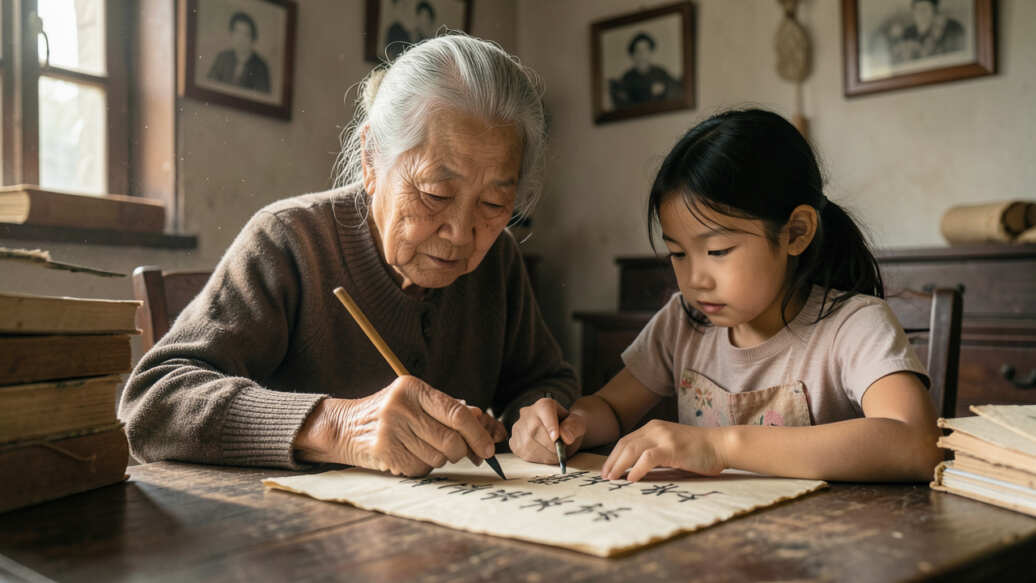
- Family Transmission Campaigns: Programs encouraging grandparents to speak to grandchildren in the dialect, often providing guides and materials.
These grassroots efforts are crucial because they rebuild the social prestige and utility of the language from the ground up. They make the dialect relevant to daily life again.
Academic Documentation and Digital Archives
Universities and research institutions are racing against time to record the last fluent speakers. Linguists use advanced audio and video recording equipment to capture pronunciation, conversation, and oral histories. This data serves multiple purposes: it creates a permanent record, provides material for language learning tools, and contributes to our understanding of human language diversity.
Digital technology is transforming documentation. Projects are now creating searchable online dictionaries, mobile apps for learning pronunciation, and interactive maps of dialect regions. The “Digital Taiwan” initiative, for example, has created extensive audio archives of indigenous and minority languages, serving as a model for dialect preservation work in mainland China.
Tip: If you want to support preservation, look for local cultural associations in your area of interest. They often accept donations or need volunteers for recording and transcription projects. Even learning a few phrases in a local dialect shows respect and helps keep it alive.
How Does Digital Technology Aid Preservation?
Technology has become an indispensable tool in the fight to save endangered languages. It addresses several key challenges: access to learning materials, creating modern usage contexts, and archiving vast amounts of linguistic data. Digital platforms allow dialects to reach young people where they already spend their time.
Mobile apps for language learning are a prime example. While major apps focus on global languages, developers are creating niche tools for dialects like Hokkien or Cantonese. These apps often use gamification, audio from native speakers, and speech recognition to make learning engaging.
They lower the barrier to entry for new learners.
Social Media: A Double-Edged Sword
Social media platforms present both a threat and an opportunity. On one hand, they accelerate the spread of Mandarin-centric content. On the other, they provide a powerful stage for dialect promotion.
On platforms like Douyin, Bilibili, and Xiaohongshu, creators produce comedy sketches, songs, and vlogs in dialect, often racking up millions of views.
This content performs several vital functions:
- Normalizing Dialect Use: It shows dialects in a cool, contemporary context, appealing to youth.
- Building Digital Communities: It connects speakers who may be geographically isolated.
- Capturing Contemporary Usage: It provides a living record of how the language is actually evolving in modern life.
A single viral video featuring a dialect song can do more for awareness than a formal academic paper. It shifts perception from “old folks’ talk” to “a vibrant part of our digital culture.”
The Importance of Speech Technology
Advances in speech recognition and synthesis (AI voice) are creating new possibilities. The goal is to build speech-to-text and text-to-speech systems for major endangered dialects. This technology would allow for voice-based interfaces, virtual assistants, and accessibility tools in the dialect.
However, developing these systems requires massive amounts of clean, transcribed audio data—the very data that documentation projects are working to collect. The collaboration between field linguists and tech developers is critical. As of now, only a handful of Chinese dialects have any significant digital language resources.

What Are the Major Challenges Facing Preservationists?
The road to language preservation is filled with significant obstacles. These challenges are not just logistical but also deeply ideological and financial. Understanding these hurdles is necessary to appreciate the dedication of those working on this issue and to design more effective strategies.
The most fundamental challenge is the deeply ingrained societal attitude that equates progress with linguistic uniformity. Decades of successful Mandarin promotion have framed dialects as backward obstacles to national unity and economic development. Changing this mindset is a monumental task.
Lack of Funding and Institutional Support
Preservation work is expensive and time-consuming. Fieldwork, recording equipment, software development, and community programming all require sustained funding. While some academic grants exist, they are competitive and often short-term.
Community groups struggle the most, relying on volunteers and small donations.
Government support is inconsistent. While there is official recognition of the need to protect “intangible cultural heritage,” concrete financial support for dialect preservation is limited. Policies that actively promote Mandarin in education and media often directly undermine preservation goals, creating a policy contradiction.
The Intergenerational Gap
The last generation of truly fluent, monolingual speakers is aging rapidly. Every year, millions of dialect words, phrases, and cultural references pass away with them. There is an immense urgency to record their knowledge.
At the same time, the youngest potential learners—children—face environments that offer little incentive or opportunity to learn.
Bridging this gap requires more than just recording elders. It requires creating compelling reasons for children and teenagers to engage. This is where modern, tech-savvy, and culturally relevant initiatives are so important.
They must create a bridge between the fluent elders and the Mandarin-dominant youth.
Measuring Success and Defining Goals
What does successful preservation look like? Is it creating a comprehensive digital archive for future scholars? Is it increasing the number of conversational speakers by 10% in a decade?
Or is it ensuring the language is used in local government meetings and on street signs? Defining clear, achievable goals is challenging.
The ultimate goal for many activists is not to create a museum piece but a living language. Success means children are proud to speak it, it is heard in the marketplace, and it evolves with new vocabulary for modern life. This requires a holistic approach that addresses education, media, and social status simultaneously.
Why Should We Care About Preserving Dialects?
The loss of an endangered Chinese dialect is not just the disappearance of a communication tool. It represents the erasure of a unique worldview, a repository of local history, and an irreplaceable form of human cultural expression. Each language encodes centuries of accumulated knowledge about the environment, social relationships, and philosophy.
Linguistic diversity is also a vital cognitive resource. Different languages structure thought in different ways. Research in cognitive linguistics shows that language can influence perception, memory, and problem-solving.
The loss of a language means the loss of a unique perspective on reality.
Cultural and Historical Significance
Dialects are the keepers of local history. They contain words for flora, fauna, traditional crafts, and social customs that have no equivalent in Standard Mandarin. The Hokkien word for a specific type of fishing net or the Hakka term for a ancestral ritual preserves practical knowledge and cultural context that would otherwise vanish.
Oral literature—folktales, proverbs, opera, and songs—is often tied to the sounds and rhythms of a specific dialect. Translating them into Mandarin can lose their poetic force and deeper meaning. Preserving the language preserves the art form in its authentic state.
Economic and Tourism Value
Preserved linguistic heritage can have tangible economic benefits. Cultural tourism thrives on authenticity. Visitors to places like Guangdong or Fujian seek immersive experiences, including local food, architecture, and language.
A vibrant dialect scene adds to the unique character and appeal of a region.
Furthermore, the skills involved in language preservation—linguistics, digital archiving, community organizing—are valuable in the modern job market. The field creates opportunities for researchers, educators, and technologists. Investing in preservation is investing in human capital.

How Can Individuals Contribute to Preservation?
Everyone, whether part of a dialect community or not, can play a role in supporting language preservation. The effort does not require being a linguist. Even small, consistent actions can make a difference when multiplied across a community.
The key is raising awareness and creating value for the language.
For members of a dialect-speaking community, the most powerful action is to use the language. Speak it with your children, grandparents, and friends. Incorporate it into your daily life.
Your choice to use it sends a powerful message about its worth. Support local cultural groups and businesses that promote the dialect.
Supporting Through Learning and Promotion
Non-speakers can help by expressing interest and respect. Learn a few phrases or songs in the local dialect when you visit a region. This simple act shows appreciation and encourages speakers.
Share content in dialects on social media. Follow creators who produce videos or music in these languages to boost their visibility.
Support the digital tools and archives that are being created. Use the apps, contribute to crowdsourced dictionary projects if you are a fluent speaker, and advocate for their development. Financial support, even small donations to community groups, can fund vital recording equipment or workshop supplies.
Advocacy and Education
Educate yourself and others about the importance of linguistic diversity. Share articles, documentaries, and stories about this issue. Challenge the misconception that dialects are “bad” or “useless.” Advocate for policies that support bilingual education or local language media.
Academics and educators can mentor students interested in the field, develop curriculum materials, and ensure that preservation work is conducted ethically and collaboratively with communities. The principles of linguistic human rights—that all people have the right to use their native language—should be championed in all spheres.
Frequently Asked Questions
What is the difference between a Chinese dialect and a language?
The distinction is primarily political and social rather than linguistic. Linguistically, if two varieties are mutually unintelligible, they are often considered separate languages. For example, Cantonese and Mandarin are not mutually intelligible.
However, due to shared writing systems and political unity, they are often called “dialects.” The term “dialect” can be misleading; these are fully distinct languages.
How many Chinese dialects are there?
Estimates vary, but there are approximately 300 distinct Sinitic languages or major dialect groups. These are often categorized into 7-10 major groups (like Mandarin, Wu, Min, Yue, Hakka). Within these groups, there are hundreds of smaller, localized varieties, many of which are endangered.
Is speaking a dialect allowed in schools in China?
Policies vary by region. While the national policy strongly promotes Mandarin as the medium of instruction, some regions have experimented with optional local dialect classes or the use of dialect in specific cultural activities. However, the use of dialect in formal classroom instruction is generally discouraged to ensure proficiency in Mandarin.
What is the most endangered Chinese dialect?
It is difficult to name a single one, as endangerment is widespread in small, isolated varieties. Languages like the Southern Amis of Taiwan, various branches of the Tujia language (sometimes considered Sinitic), and many rural sub-dialects within the Min and Hakka groups have critically few elderly speakers and are on the verge of extinction.
Does preserving dialects hinder national unity?
Proponents of preservation argue it does not. They advocate for a model of “plurilingualism” where Mandarin serves as the national lingua franca for official and inter-regional communication, while local languages thrive in homes, communities, and cultural life. This approach enriches national culture without compromising unity, much like in countries like Switzerland or Singapore.
Final Thoughts
The struggle to preserve endangered Chinese dialects is a race against time, driven by the urgent need to safeguard a vital part of human heritage. It requires a multifaceted approach, blending the dedication of academics, the passion of communities, and the power of modern technology. The efforts underway demonstrate that these languages are not relics of the past but living entities with potential futures.
Ultimately, the survival of these dialects will depend on the choices made by individuals and policymakers today. Supporting these preservation initiatives is an investment in cultural diversity, cognitive wealth, and a more pluralistic world. Each dialect saved is a unique voice preserved in the chorus of humanity.