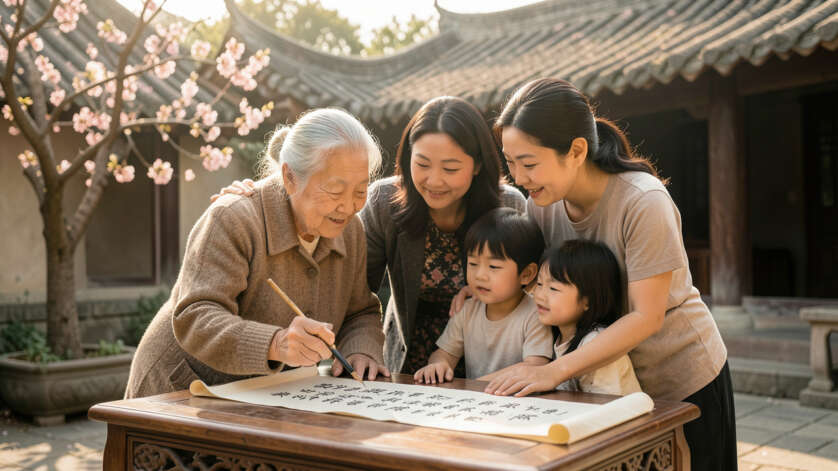
Chinese Family Proverbs for Stronger Relationships
Chinese proverbs about family and relationships offer timeless wisdom for navigating the complexities of human bonds. These ancient sayings, distilled from centuries of cultural observation, provide practical guidance for modern life. They remind us of the core values that sustain healthy, loving connections.
You’ll discover how these proverbs apply to marriage, parent-child dynamics, and sibling ties. Understanding their deeper meaning can transform how you interact with your loved ones. Let’s explore the enduring lessons they hold.
Simply put, Chinese proverbs about family are concise, metaphorical statements that teach principles like filial piety, harmony, and mutual support. They use natural and familial imagery to explain that strong relationships require consistent effort, respect, and understanding to thrive.
Key Takeaways
- Chinese family proverbs emphasize that harmony is the foundation of a strong family unit.
- Proverbs highlight the importance of respect, responsibility, and gratitude in relationships.
- Many sayings use nature metaphors to illustrate that family bonds require nurturing over time.
- Applying this wisdom can improve communication and resolve conflicts with loved ones.
- These proverbs are not just ancient relics; they offer relevant advice for modern relationships.
What Do Chinese Proverbs Say About Family Harmony?
Family harmony is a central theme in Chinese culture. The goal is not a lack of disagreement, but a state of balance and mutual support. Proverbs teach that harmony comes from each person understanding their role and acting with consideration.
Conflict is seen as a disruption to this balance. The wise approach is to resolve issues with patience and communication. The following proverbs illustrate this focus on creating a peaceful home environment.
- 家和万事兴 (jiā hé wàn shì xīng) – “A harmonious family leads to success in all things.” This is perhaps the most famous proverb about family, stating that prosperity in every aspect of life grows from a united household.
- 和气生财 (hé qì shēng cá) – “Harmony brings wealth.” Often used in business, it also applies to families, suggesting that cooperation yields greater benefits than constant strife.
- 一个巴掌拍不响 (yī gè bā zhang pāi bù xiǎng) – “One hand alone cannot clap.” This implies that a quarrel involves two parties, encouraging individuals to reflect on their own part in a conflict rather than placing all blame elsewhere.
- 有话好好说 (yǒu huà hǎo hǎo shuō) – “Speak nicely when you have something to say.” This direct advice promotes polite and calm communication to prevent conflicts from escalating.
- 忍一时风平浪静,退一步海阔天空 (rěn yī shí fēng píng làng jìng, tuì yī bù hǎi kuò tiān kōng) – “Endure a moment, and the wind will be calm and the waves still; take a step back, and the sky is wide and the ocean vast.” It champions tolerance and the wisdom of compromise for long-term peace.
| Proverb | Literal Meaning | Core Lesson |
|---|---|---|
| A harmonious family leads to success in all things. | Family harmony, ten thousand matters prosper. | Family unity is the prerequisite for external success. |
| One hand alone cannot clap. | One palm cannot make a clapping sound. | Conflicts typically involve shared responsibility. |
| Endure a moment. take a step back. | Bears a time wind flat waves quiet, retreat a step sea wide sky. | Patience and compromise lead to greater perspective and peace. |
These sayings reinforce that maintaining harmony is an active, ongoing process. It requires conscious choices to speak kindly, listen generously, and sometimes choose peace over being right.
How Do Chinese Proverbs Describe Parental Love and Duty?
The bond between parents and children is considered sacred. Proverbs about this relationship highlight both the selfless love of parents and the profound duty of children to repay that love with respect and care. This concept is known as filial piety (孝, xiào).
Tip: When studying these proverbs, focus on the verb of action. Notice the repeated themes of caring, teaching, and enduring—actions that define the parental role in Chinese thought.
Parents are seen as guides whose primary role is to instill good values. The proverbs below show that parental duty extends beyond mere provision to active moral instruction.
- 养不教,父之过 (yǎng bù jiào, fù zhī guò) – “To feed without teaching is the father’s fault.” This places a heavy responsibility on fathers to educate, not just nurture. It implies that a child’s moral failings stem from parental neglect.
- 严师出高徒 (yán shī chū gāo tú) – “Strict teachers produce outstanding students.” While not exclusively about parents, it reflects the educational philosophy that discipline and high standards, often from a parent acting as a teacher, lead to excellence.
- 儿行千里母担忧 (ér xíng qiān lǐ mǔ dān yōu) – “When a child travels a thousand miles, the mother worries.” This beautifully captures the enduring, protective nature of maternal love that transcends distance.
- 慈母多败儿 (cí mǔ duō bài ér) – “A too-indulgent mother will raise a spoiled child.” This serves as a warning against spoiling, suggesting that excessive leniency without proper discipline is detrimental.
- 虎毒不食子 (hǔ dú bù shí zǐ) – “Even a fierce tiger does not eat its young.” This proverb uses a powerful animal metaphor to affirm that parental love and protection are instinctive and absolute.
What Proverbs Emphasize Filial Piety and Respect for Elders?
Filial piety is the bedrock of social morality in traditional Chinese culture. It dictates that children must honor, obey, and care for their parents and ancestors. This duty doesn’t end when parents age; it often intensifies.
Respecting elders extends beyond one’s own parents to all senior community members. The following proverbs detail the obligations and mindset of the dutiful child.
- 百善孝为先 (bǎi shàn xiào wèi xiān) – “Of all virtues, filial piety is the first.” This establishes respect for parents as the most fundamental moral act, from which all other virtues grow.
- 滴水之恩,当涌泉相报 (dī shuǐ zhī ēn, dāng yǒng quán xiāng bào) – “A drop of grace should be repaid with a gushing spring.” Often applied to parents, it teaches that even small acts of parental kindness deserve immense gratitude and reciprocation.
- 父母之恩,水不能溺,火不能灭 (fù mǔ zhī ēn, shuǐ bù néng nì, huǒ bù néng miè) – “The grace of parents cannot be drowned in water or extinguished by fire.” This hyperbole emphasizes that parental love is indestructible and repayable only through lifetime devotion.
- 在家敬父母,何必远烧香 (zài jiā jìng fù mǔ, hé bì yuǎn shāo xiāng) – “Respect your parents at home; why burn incense from afar?” It suggests that true devotion and good fortune begin with honoring those closest to you, not with distant or public rituals.
- 不听老人言,吃亏在眼前 (bù tīng lǎo rén yán, chī kuī zài yǎn qián) – “If you don’t listen to the elders’ words, you’ll suffer immediate loss.” This underscores the value of life experience and wisdom held by older generations.
| Concept | Related Proverb | Modern Application |
|---|---|---|
| Primacy of Duty | Of all virtues, filial piety is the first. | Prioritizing family commitments and visiting parents regularly. |
| Gratitude | A drop of grace should be repaid with a gushing spring. | Showing deep appreciation for parental sacrifices, both big and small. |
| Valuing Wisdom | If you don’t listen to the elders’ words, you’ll suffer. | Seeking advice from older, experienced family members before major decisions. |
What Wisdom Do Proverbs Offer About Marriage and Spousal Bonds?
Marriage is viewed as a union not just of two individuals, but of two families. Proverbs on marriage stress partnership, mutual support, and the gravity of the commitment. The ideal is a lifelong companion through all of life’s seasons.
Warning: Several proverbs use gendered language reflecting historical contexts. It’s important to interpret their core message about partnership and duty rather than the literal historical roles.
The strength of the marital bond is seen as crucial for the stability of the entire family. Effective teamwork between spouses is a recurring theme.
- 夫妻同心,其利断金 (fū qī tóng xīn, qí lì duàn jīn) – “When husband and wife are of one heart, their sharpness can cut through metal.” This powerful metaphor states that a united couple can overcome any obstacle.
- 男主外,女主内 (nán zhǔ wài, nǚ zhǔ nèi) – “The man manages outside affairs, the woman manages inside.” While reflecting a traditional division of labor, the underlying principle is about complementary roles and shared responsibility for the family’s success.
- 夫妻没有隔夜仇 (fū qī méi yǒu gé yè chóu) – “Husband and wife have no overnight grudges.” This encourages resolving conflicts quickly and not letting anger fester, emphasizing the priority of the relationship over being right.
- 床头吵架床尾和 (chuáng tóu吵架 chuáng wěi hé) – “Quarrel at the head of the bed, make peace at the foot of the bed.” A colorful way of saying couples should reconcile quickly, as intimacy and shared life make prolonged conflict impractical.
- 嫁鸡随鸡,嫁狗随狗 (jià jī suí jī, jià gǒu suí gǒu) – “Marry a chicken, follow the chicken; marry a dog, follow the dog.” Historically, it emphasized the permanence of commitment. A modern take might stress accepting one’s partner fully and adapting to life together.
How Are Sibling and Extended Family Ties Portrayed?
Beyond the parent-child relationship, Chinese proverbs address the bonds between siblings and the wider family network. The extended family is a vital support system, and these relationships require active maintenance.
Brothers and sisters are seen as first allies who should support each other. The wisdom below highlights cooperation and the value of family unity.
- 打虎亲兄弟,上阵父子兵 (dǎ hǔ qīn xiōng dì, shàng zhèn fù zǐ bīng) – “To fight a tiger, you need your own brothers; to go to battle, you need a father-son army.” This stresses that in times of great danger, only your closest kin can be fully trusted.
- 兄弟同心,其利断金 (xiōng dì tóng xīn, qí lì duàn jīn) – “When brothers are of one heart, their sharpness can cut through metal.” Similar to the marital proverb, this applies the power of unity to the sibling bond.
- 远亲不如近邻 (yuǎn qīn bù rú jìn lín) – “A distant relative is not as good as a close neighbor.” This pragmatic saying values the practical help of nearby community over the theoretical support of faraway family.
- 在家靠父母,出门靠朋友 (zài jiā kào fù mǔ, chū mén kào péng yǒu) – “At home, rely on your parents; when out, rely on friends.” It acknowledges that one’s support network shifts with context, but the family remains the core foundation.
- 血浓于水 (xuè nóng yú shuǐ) – “Blood is thicker than water.” A universal concept stating that family ties are inherently stronger than other relationships.
Why Is Gratitude and Repayment a Central Theme?
The concept of repaying kindness (报恩, bào ēn) is fundamental. It is especially pronounced in family relationships, where the “debt” to parents is considered unpayable in a literal sense but must be honored through lifelong respect and care.
This creates a cycle of moral obligation and care across generations. The proverbs below articulate this powerful sense of reciprocity.
- 谁言寸草心,报得三春晖 (shuí yán cùn cǎo xīn, bào dé sān chūn huī) – “Who says the heart of an inch-long grass can repay the sunshine of three springs?” A poetic expression from a famous poem, it compares parental love (the sunshine) to a child’s gratitude (the grass), saying the latter can never fully match the former.
- 饮水思源 (yǐn shuǐ sī yuán) – “When drinking water, think of its source.” A direct metaphor for remembering one’s origins and being grateful to those who provided for you.
- 养儿防老,积谷防饥 (yǎng ér fáng lǎo, jī gǔ fáng jī) – “Raise a son to guard against old age; store grain to guard against hunger.” This reflects the historical expectation that children would care for elderly parents, framing it as a natural and essential form of social security.
- 鸦有反哺之义,羊有跪乳之恩 (yā yǒu fǎn bǔ zhī yì, yáng yǒu guì rǔ zhī ēn) – “Crows have the righteousness of feeding their parents in return; lambs have the grace of kneeling to suck milk.” Uses animal behavior to teach that caring for one’s parents is a natural law.
- 知恩图报 (zhī ēn tú bào) – “Recognize kindness and plan to repay it.” A concise idiom that encapsulates the entire philosophy of gratitude and reciprocal duty.
Important: The “repayment” here is not transactional. It is a moral imperative to honor care with care, creating a chain of affection and duty that spans generations.
How Can You Apply This Wisdom in Modern Life?
These ancient proverbs are not dusty relics. Their core messages about communication, gratitude, and commitment are profoundly relevant to modern relationship challenges. Applying them requires translating their essence into today’s context.
- For Conflict with Parents: Use the lesson of “one hand cannot clap” to shift from blame to shared problem-solving. Approach conversations with the goal of harmony, not victory.
- For Supporting Aging Parents: Embody “filial piety” through regular visits, patience with their challenges, and integrating their wisdom into your life, even if you live far away.
- For Strengthening Your Marriage: Adopt the “husband and wife as one heart” mentality. Present a united front, support each other’s goals, and resolve quarrels before they become overnight grudges.
- For Family Gatherings: Remember that “a harmonious family leads to success in all things.” Focus on shared joy and positive connection rather than contentious topics.
- For Cultivating Gratitude: Practice “thinking of the source” by regularly acknowledging your family’s support and finding ways to show appreciation, both in words and actions.
The power of these proverbs lies in their simplicity. They offer clear, actionable principles. By reflecting on their meaning, you can make more intentional choices in your family interactions.
Frequently Asked Questions
What is the most famous Chinese proverb about family?
The most widely recognized is likely 家和万事兴 (jiā hé wàn shì xīng), meaning “A harmonious family leads to success in all things.” It succinctly captures the foundational Chinese belief that family harmony is the source of all prosperity and well-being.
How do these proverbs view family conflict?
Conflict is generally viewed as a disruption to harmony that must be resolved. Proverbs emphasize quick reconciliation (“no overnight grudges”), shared responsibility (“one hand cannot clap”), and the use of patience and compromise over confrontation.
Do these proverbs apply only to Chinese families?
While rooted in Chinese culture, their core themes—gratitude, respect for elders, marital unity, and family harmony—are universal human values. Anyone can apply the wisdom about communication, empathy, and commitment to their own relationships.
How has the concept of filial piety changed today?
Its expression has evolved. Modern filial piety focuses more on emotional support, companionship, and honoring parents’ wishes in a context of greater individual freedom. The core duty of care and respect remains, but the methods are adapted to contemporary life.
Can you use these proverbs to teach children about values?
Absolutely. Proverbs are excellent teaching tools. Their memorable, metaphorical nature makes them easy for children to recall.
Discussing proverbs like “blood is thicker than water” or animal tales like the grateful lambs can instill values of loyalty and gratitude in an engaging way.
Final Thoughts
Chinese proverbs about family distill complex relationships into powerful, actionable wisdom. They teach that harmony, gratitude, and duty are the pillars of strong bonds. By reflecting on their messages, you can cultivate deeper, more resilient connections with your loved ones.
Ultimately, these timeless sayings remind us that the effort we invest in our families yields the most profound and lasting rewards. They are a guide for nurturing the most important relationships in our lives.