The Xia Dynasty: China’s First Legendary Dynasty Explained
The Xia Dynasty stands as the foundational chapter of Chinese civilization, a period that bridges the gap between myth and documented history. This legendary era is where the story of China’s continuous cultural and political lineage traditionally begins, setting the stage for all subsequent empires. Exploring its key figures, archaeological evidence, and lasting myths reveals how this formative period shaped the very concept of a Chinese dynasty.
Simply put, the Xia Dynasty is China’s traditionally recognized first ruling dynasty, described in ancient texts like the Records of the Grand Historian as reigning from approximately 2070 to 1600 BCE. While its historical existence is debated, the dynasty serves as a crucial cultural touchstone, symbolizing the transition from prehistoric tribal societies to hereditary monarchical rule.
Key Takeaways
- The Xia Dynasty is regarded as the first hereditary dynasty in Chinese history, according to traditional historiography.
- The dynasty’s legendary founder, Yu the Great, is famed for his flood-control efforts that established his merit-based rule.
- Archaeological sites like Erlitou provide tangible evidence of a complex Bronze Age society that aligns with the Xia timeframe.
- The historical debate surrounding the Xia centers on matching literary descriptions with concrete archaeological findings.
- Understanding the Xia Dynasty is essential for grasping the origins of Chinese statecraft and cultural identity.
What Is the Xia Dynasty and Its Place in Chinese History?
The Xia Dynasty represents the initial step in China’s long sequence of imperial rule. Ancient historians, most notably Sima Qian in his Records of the Grand Historian, placed it before the well-documented Shang Dynasty. This narrative establishes a chronological foundation for Chinese civilization, linking its origins directly to legendary heroes and moral rulers rather than anonymous tribal chieftains.
Its significance lies in its symbolic role. The Xia story introduced concepts that would define Chinese political philosophy for millennia. These include the Mandate of Heaven, where a ruler’s right to govern is granted by divine approval and withdrawn for immoral conduct, and the ideal of a sage-king who rules through virtue and competence.
The dynasty is often depicted as a period of great innovation and social organization. It is credited with the early development of flood control systems, advanced bronze metallurgy, and the establishment of a centralized governmental structure. These achievements, as described in texts, mark the perceived beginning of settled, large-scale Chinese society.
The Mythical Lineage from Emperor Shun to Yu
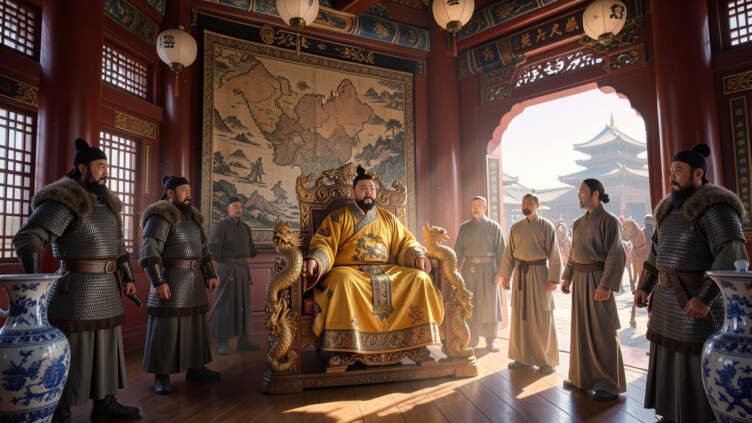
Traditional accounts state that the Xia Dynasty was founded by Yu the Great after he succeeded the legendary Emperor Shun. This transition is critical. It marks the shift from the “abdication system,” where leadership was passed to the most capable candidate, to a hereditary system where power was passed within a family line.
- Emperor Shun: A sage-ruler known for his filial piety and just governance.
- Yu the Great: Appointed by Shun to combat catastrophic floods, he succeeded him after proving his immense capability and dedication.
- The Founding Act: Yu’s successful flood management earned him the mandate to rule, establishing the Xia clan as the new royal lineage.
How Did the Xia Dynasty Transition from Myth to Archaeological Theory?
The journey to understand the Xia Dynasty involves a careful comparison of ancient literary sources with modern archaeological discoveries. For centuries, the Xia was considered purely mythical, a collection of heroic tales. The 20th-century development of Chinese archaeology changed this perspective, providing a possible physical context for the legendary dynasty.
The primary textual sources are the Records of the Grand Historian and the earlier, more fragmentary Bamboo Annals. These texts provide king lists, approximate dates, and key events. Archaeologists use these descriptions as a guide to search for material remains that match the timeline and cultural details from the Xia period.
The discovery of the Erlitou culture in the 1950s and onward presented a compelling candidate. Dated from roughly 1900 to 1500 BCE, this late Bronze Age culture in the Yellow River valley exhibits signs of a complex, stratified society with palatial architecture, advanced bronze casting, and urban planning—features consistent with the description of a ruling dynasty.
| Literary Description of the Xia | Archaeological Evidence from Erlitou |
|---|---|
| A centralized state with a capital city. | Extensive palatial foundations and walled urban areas. |
| Advanced bronze ritual vessels. | Large-scale foundries producing complex bronze ding cauldrons. |
| A ruling class with distinct burial practices. | Elaborate tombs with jade and bronze grave goods. |
| Significant public works and hydraulic engineering. | Evidence of large-scale water management systems. |
This correlation has led many scholars to propose that the Erlitou culture represents the historical core of the Xia Dynasty, though the debate continues. The absence of contemporary written records from Erlitou itself means the link remains a scholarly interpretation rather than a proven fact.
Who Were the Key Rulers and Figures of the Xia Dynasty?
Traditional texts list seventeen rulers of the Xia Dynasty, but only a few figures stand out in the historical and cultural memory. Their stories are less about individual biographies and more about illustrating principles of good and bad governance that became foundational to Chinese political thought.
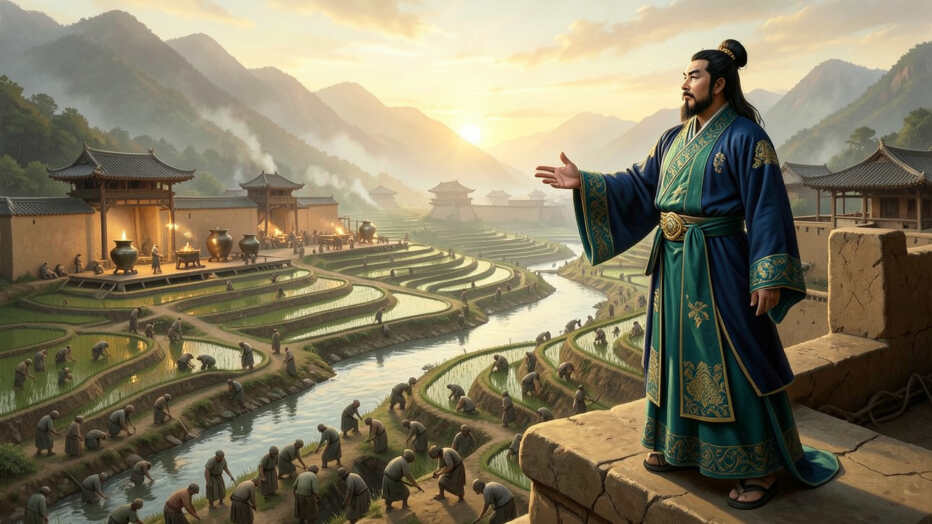
Yu the Great is the most celebrated. His decade-long battle against the Great Flood, reportedly achieved through dredging and channeling rather than simple dam-building, showcases immense perseverance and engineering skill. His success is the origin story of the dynasty and a metaphor for the ruler’s duty to care for the people’s welfare.
Conversely, the dynasty’s final ruler, King Jie, is the archetype of a tyrant. Described as extravagant, cruel, and neglectful of his duties, his misrule led to widespread suffering. His reign ended when he was overthrown by the leader of the Shang tribe, Tang, establishing the precedent that a corrupt ruler forfeits the right to rule.
The Rise and Fall: A Cycle of Virtue and Corruption
The Xia ruler list demonstrates a clear narrative arc. Early kings like Yu and his son Qi are portrayed as capable administrators. Later kings, however, grew increasingly decadent and inept.
This pattern served a clear purpose for later historians: it provided a historical example of the cyclical nature of dynastic rule.
Important: The story of King Jie’s downfall became a core lesson in Confucian political philosophy. It was used to advise future emperors that heaven’s mandate is conditional upon their moral conduct and attention to the people’s needs.
The key figures are thus symbols. Yu represents the diligent founder, while King Jie represents the corrupt end. Between them were various kings whose reigns are less detailed, serving mainly to bridge the dynastic timeline and reinforce the theme of gradual moral decay.
Why Is the Erlitou Culture Considered the Leading Candidate for the Xia?
The identification of Erlitou with the Xia Dynasty is based on a compelling alignment of dates, location, and cultural advancement. First, its radiocarbon dating places its peak activity squarely within the traditional timeframe of the Xia Dynasty. Second, it is located in the heartland of the Yellow River valley, the region described in texts as the center of Xia power.
Most importantly, Erlitou exhibits clear markers of a complex, state-level society. The scale of its palatial structures is unlike any preceding Neolithic settlement in China. This suggests a powerful, centralized authority capable of mobilizing labor and resources on a grand scale—a prerequisite for a ruling dynasty.
Warning: While compelling, the Erlitou=Hsia identification is not universally accepted. Some archaeologists argue it represents an early Shang regional culture or a powerful, but non-dynastic, polity. The debate underscores the challenge of linking archaeology to legend.
The material culture found at Erlitou—particularly its distinctive pottery, jade artifacts, and especially its bronze ritual vessels—forms a unique archaeological horizon. This culture appears to have been influential, spreading its stylistic and technological traits across a wide area, much like the legendary reach of the Xia Dynasty.
Key Features of Erlitou That Support the Xia Theory
- Palatial Architecture: Foundations of large rammed-earth buildings that likely served as royal palaces and administrative centers.
- Bronze Industry: Specialized workshops producing ritual bronze vessels and weapons, indicating elite control and a complex economy.
- Urban Layout: Evidence of a planned city with distinct zones for living, crafting, and ceremonial use.
- Luxury Goods: Abundant finds of turquoise and jade, symbols of high status and far-reaching trade connections.
- Regional Influence: The Erlitou cultural style is found in sites across northern China, suggesting political or cultural dominance.
What Were the Major Achievements Attributed to the Xia Period?
Beyond its political structure, the Xia Dynasty is credited with foundational technological and cultural developments. These achievements, recorded in later texts, are seen as the building blocks of Chinese civilization. They reflect a society moving beyond subsistence agriculture toward organized, specialized labor and technological innovation.
The most celebrated achievement is, of course, the control of floods. The legendary engineering projects associated with Yu the Great imply an advanced understanding of hydrology and the ability to coordinate massive public works. This established the precedent for large-scale state infrastructure projects.
In the realm of technology, the Xia period is linked to early advancements in bronze casting. The production of ritual bronze vessels required sophisticated piece-mold casting techniques, advanced furnace technology, and access to raw materials like copper and tin through trade networks.
- Hydraulic Engineering: The construction of dikes, canals, and waterways to control floods and support agriculture.
- Bronze Metallurgy: The development of complex casting methods to create ritual vessels and weapons.
- Calendar Development: Texts mention the creation of calendars to guide agricultural activities, essential for a settled society.
- Legal and Administrative Codes: Early forms of laws and bureaucratic procedures are traditionally attributed to this era.
- Writing and Record-Keeping: While no confirmed Xia writing exists, the dynasty is placed at the dawn of Chinese script development.
How Does the Xia Dynasty Comparison with the Subsequent Shang Dynasty?
The Xia and Shang dynasties are consecutive periods in traditional Chinese history, but they are distinguished by the nature of the evidence we have for them. The Shang Dynasty is confirmed by direct archaeological evidence, including oracle bones with decipherable inscriptions. The Xia, by contrast, remains largely in the realm of textual tradition and suggestive archaeology.
The Shang represents a clear advancement in state technology. It had a fully developed writing system used for divination and record-keeping, a more complex bureaucracy, and a larger, more integrated territorial control. The Xia, in the traditional view, was the formative predecessor that laid the groundwork for these Shang innovations.
Culturally, both dynasties shared a Bronze Age context with a focus on ancestor worship and ritual sacrifice. The transition from Xia to Shang, as recorded, involved the overthrow of a tyrannical ruler by a virtuous rebel—a story that set the pattern for all future dynastic changes in China.
| Characteristic | Xia Dynasty (Traditional View) | Shang Dynasty (Confirmed) |
|---|---|---|
| Historical Evidence | Later texts and archaeological correlates (Erlitou). | Contemporary oracle bone inscriptions and extensive archaeological remains. |
| Writing System | None confirmed; possibly proto-writing. | Mature Chinese script for divination and records. |
| Core Legacy | The concept of dynastic succession and the Mandate of Heaven. | Foundations of Chinese writing, advanced bronze work, and state bureaucracy. |
| Historical Status | Legendary/formative dynasty. | First historically verified dynasty of China. |
This comparison highlights the Xia’s unique position. It is not a historically verified state like the Shang, but its foundational narrative is indispensable for understanding how later Chinese civilizations viewed their own origins and the principles of legitimate rule.
Why Does the Debate Over the Xia Dynasty’s Historicity Matter?
The scholarly debate is not merely an academic exercise; it touches on the very construction of national history and identity. For China, the Xia Dynasty represents an indigenous origin story of statehood that predates other major world civilizations. Its potential verification through archaeology would be a monumental confirmation of this ancient narrative.
Conversely, some Western scholars have historically expressed skepticism, arguing that the Xia is a later mythological construction designed to give the Shang Dynasty a prestigious predecessor. This view often sets a high bar for evidence, demanding the same level of proof for the Xia as exists for the Shang, such as contemporaneous written records.
The debate influences archaeological research priorities. Significant resources are invested in excavating sites like Erlitou and others in the region to find definitive evidence. It also fuels important discussions about methodology: how much weight should be given to textual tradition when archaeological evidence is suggestive but not conclusive?
Tip: When reading about the Xia, look for distinctions between “traditional accounts,” “archaeological correlates,” and “historically verified facts.” This will help you navigate the complex landscape of ancient Chinese history with clarity.
Ultimately, the Xia Dynasty, whether purely literary or partially historical, is a crucial concept. It shaped the historical consciousness of East Asia and provided a powerful template for understanding the rise and fall of power. The ongoing quest to uncover its truth is a journey into the dawn of one of the world’s oldest continuous civilizations.
Frequently Asked Questions
Is the Xia Dynasty considered a real historical period?
The Xia Dynasty is traditionally presented as a real historical period in Chinese texts, but its historicity is debated. Mainstream Chinese scholarship accepts it as the first dynasty, while some international scholars view it as a legendary age preceding the historically verified Shang Dynasty. Archaeological evidence from sites like Erlitou provides a plausible historical context that aligns with the traditional timeframe.
What is the main evidence that the Xia Dynasty existed?
The primary evidence comes from two sources: ancient Chinese historical texts that describe its rulers and events, and archaeological discoveries like the Erlitou culture. Erlitou shows a complex, stratified Bronze Age society with advanced metallurgy and palatial architecture, matching the descriptions of a ruling dynasty found in the literary records.
Why was Yu the Great so important to the Xia Dynasty?
Yu the Great is the legendary founder of the Xia Dynasty, celebrated for his successful control of catastrophic floods through engineering projects. His story marks the transition from the era of sage-kings to hereditary monarchy. His diligence and success established the moral and political foundation for the dynasty and became a model of virtuous leadership.
What replaced the Xia Dynasty?
The Xia Dynasty was overthrown by the Shang Dynasty. According to tradition, the last Xia ruler, King Jie, was a tyrant, which led the Shang leader, Tang, to rebel against him. This event established the precedent of dynastic revolution, where a corrupt dynasty loses the Mandate of Heaven and is replaced by a more virtuous one.
Can you visit any Xia Dynasty sites today?
Yes, the most significant site is the Erlitou Site Museum in Yanshi, Henan Province, China. While the original structures are not standing, the museum preserves the archaeological foundations, artifacts, and explains the cultural context of the Erlitou culture, which is the leading candidate for the historical Xia Dynasty.
Final Thoughts
The Xia Dynasty remains a fascinating blend of legend and emerging historical reality, representing China’s foundational leap into organized statehood. Whether viewed as pure mythology or a dimly remembered historical epoch, its narratives of virtuous rule and catastrophic floods have profoundly shaped Chinese culture and political philosophy for centuries. The ongoing archaeological detective work at sites like Erlitou continues to bring this ancient dynasty closer to the light of confirmed history.