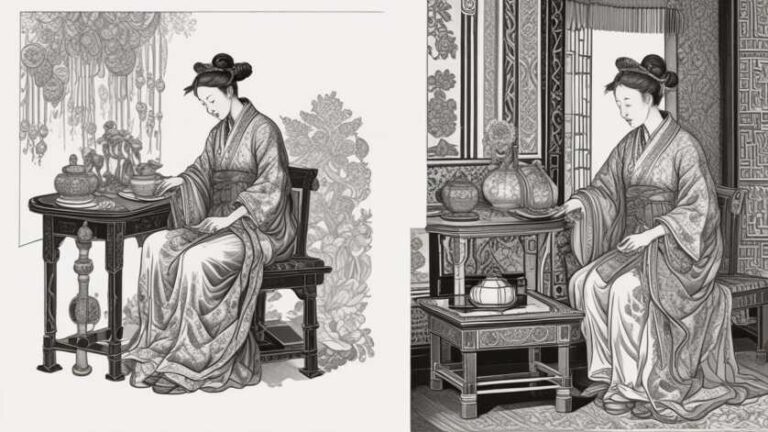

The Evolution of the Chinese Imperial Harem System
The Chinese Imperial Harem System was a complex political and social structure that shaped dynastic succession and court life for over two millennia. Understanding this system reveals how power, family alliances, and ritual were intricately woven into the fabric of the Chinese empire. This deep dive explores its origins, rules, and profound impact on history.
Simply put, the Chinese Imperial Harem was the secluded residential complex for the emperor’s consorts, concubines, and female attendants. It functioned as a highly stratified society focused on producing heirs, serving the emperor, and serving as a key arena for political influence and intrigue.
Key Takeaways
- The Chinese Imperial Harem was a sophisticated institution with strict hierarchy, not just a collection of wives.
- Its primary purpose was to ensure the imperial lineage through the production of male heirs.
- The system served as a crucial tool for political alliances and strengthening the emperor’s rule.
- Daily life was governed by rigid etiquette, extreme seclusion, and constant competition.
- Its influence extended beyond the palace walls, impacting national policy and court politics.
What Is the Historical Context of the Chinese Imperial Harem?
The imperial harem, known as the “Inner Court” or “Palace of Accumulated Purity” (Hou Gong), was foundational to the concept of the “Son of Heaven.” Its roots trace back to the early Zhou Dynasty, where ritual texts prescribed the number of women an emperor should have. This structure was formalized and expanded throughout the imperial era, reaching its zenith during the Tang, Ming, and Qing dynasties.
Confucian ideals heavily influenced the harem’s design. The system emphasized order, hierarchy, and the clear delineation of roles to maintain cosmic and social harmony. The emperor’s ability to manage his harem was seen as a reflection of his fitness to rule the nation.
A well-ordered inner court symbolized a stable empire.
Several factors made the harem indispensable to imperial rule. First, it was a biological necessity for dynastic survival, creating a pool of potential heirs. Second, it was a political instrument, allowing emperors to reward loyalty and forge alliances with powerful families by elevating their daughters.
Third, it concentrated hundreds of people in one location, creating a self-contained world that was easier for the emperor and his eunuch staff to control.
| Dynasty | Notable Harem Development |
|---|---|
| Zhou Dynasty | Establishment of formal ranks (Empress, concubines, etc.) based on ritual texts. |
| Han Dynasty | Expansion of ranks; increased political marriage alliances. |
| Tang Dynasty | Height of splendor and size; some consorts held official court titles. |
| Ming & Qing Dynasties | Most rigidly codified systems with extensive regulations and massive palace complexes like the Forbidden City. |
This table illustrates how the harem system evolved from a ritual concept into a highly regulated political institution that grew in complexity alongside the imperial state itself.
How Did the Hierarchical Ranks Within the Harem Function?
The inner court was a vertical society with a meticulously defined pecking order. At the apex was the Empress (Huang Hou), the emperor’s official primary wife. She was the mother of the realm, responsible for managing the inner palace and setting an example of virtue and decorum.
Her position was hereditary or earned through exceptional merit, and she held significant formal power over all other women in the harem.
Beneath the Empress were the Concubines (Pin), a broad category with numerous sub-ranks. A typical system could include titles like “Noble Consort,” “Imperial Consort,” “Consort,” and “Concubine,” each with specific quotas and privileges. These ranks determined their living quarters, allowances, the quality of their food and clothing, and the number of personal attendants they could have.
Advancement or demotion was a constant source of anxiety and competition.
The vast majority of the harem population consisted of Low-Ranking Concubines and Palace Maids. These women often entered the palace as young girls, sometimes selected through triennial inspections of women from across the empire. Their lives were difficult, with little chance of gaining the emperor’s favor.
They performed daily chores, served higher-ranking consorts, and lived in the most crowded and basic quarters within the palace walls.
- Key Roles in the Hierarchy:
- Empress: Chief wife, manager of the Inner Court.
- Noble/Imperial Consort (e.g., Huang Guifei): Highest-ranking concubines, often mothers of princes.
- Consort (Pin): A group of ranks with guaranteed monthly audiences.
- Concubine (Fei): Lower-ranking consorts, often selected from palace maids.
- Cairen, Bao Lin, etc.: Ranks for beauties and attendants with minimal direct contact with the emperor.
- Palace Maids (Gong Nü): Unranked female servants, the base of the pyramid.
Warning: The hierarchy was merciless. A woman’s entire existence—her food, shelter, and social standing—depended on her rank. Falling from favor could mean a dramatic loss of status and comfort, a fate feared by many.
What Were the Daily Lives and Duties of Harem Women Like?
Life in the harem was a blend of extreme luxury and extreme confinement. For higher-ranking consorts, the day began early with rituals of grooming and dressing, followed by formal morning greetings to the Empress. The remainder of the day was often spent in embroidery, music, calligraphy, or poetry—accomplishments expected of a refined lady of the court.
They also had to maintain constant vigilance, carefully cultivating relationships with eunuchs and other consorts to navigate the treacherous palace politics.
For the lower ranks, daily life revolved around labor. They cleaned palaces, embroidered robes, prepared food, or served as personal attendants. Leisure was minimal, and their exposure to the emperor was rare, if it happened at all.
The emotional toll was immense; many women spent their entire lives in the palace, growing old without ever having a family of their own.
The paramount duty for all consorts, regardless of rank, was to produce an heir, particularly a son. An emperor’s favor might be short-lived, but bearing a prince could secure a woman’s future and elevate her family’s status for generations. This biological imperative created intense pressure and competition, sometimes leading to unhealthy rivalries and, in extreme cases, treachery.
- Core Daily Responsibilities:
- Morning and evening rituals of paying respects to the Empress or Dowager Empress.
- Attending the emperor when summoned, which could involve conversation, entertainment, or intimacy.
- Engaging in approved feminine arts like needlework, painting, and poetry.
- Managing personal quarters and overseeing their small staff of maids.
- Participating in seasonal ceremonies and festivals within the palace.
- Studying texts on virtue and deportment to cultivate a proper demeanor.
- Navigating social alliances and rivalries to protect and advance one’s position.
| Rank Level | Typical Daily Activities | Primary Focus |
|---|---|---|
| Empress & High Consorts | Ceremonies, managing households, receiving guests, cultural pursuits. | Status, influence, producing heirs. |
| Middle-Ranking Consorts | Embroidery, music practice, attending higher consorts. | Gaining favor, avoiding demotion. |
| Low-Ranking Consorts & Maids | Physical labor, serving others, basic chores. | Survival, fulfilling basic duties. |
The stark contrast in daily experience between the top and bottom of the harem hierarchy highlights the system’s deeply stratified nature.
Why Was Seclusion and Eunuch Control So Fundamental?
Seclusion was a foundational principle. The harem was a walled city within a city, strictly forbidden to all men except the emperor and a select group of palace eunuchs. This absolute separation served multiple critical purposes.
It protected the purity of the imperial bloodline, preventing any question about the paternity of heirs. It also insulated the emperor from outside political influence and allowed him to maintain exclusive control over his family life.
Eunuchs were the only males allowed within the inner court, and their role was indispensable. Having been castrated, they were considered a “safe” intermediary. They managed the harem’s daily logistics—delivering meals, relaying messages, and executing the emperor’s commands.
Powerful head eunuchs often became influential advisors, sometimes wielding as much power as ministers in the outer court. Their control over access to the emperor made them figures whom every consort needed to cultivate or fear.
The system of seclusion, however, created its own problems. It bred paranoia and stifled communication. Misunderstandings could fester, and rumors became powerful weapons.
The isolation also fostered a deep sense of loneliness and powerlessness among many consorts, leading to psychological distress. The entire structure was a delicate balance, maintained through strict rules, constant surveillance by eunuchs, and the implicit threat of punishment.
Important: The “Secret Tablet” system during the Qing Dynasty exemplified eunuch control. When an emperor chose a consort for the night, a eunuch would carry a tablet to her chamber. This ritualized process prevented favoritism and allowed eunuchs to monitor the emperor’s activities closely.
How Did the Harem System Influence Imperial Politics and Succession?
The harem was a potent political battlefield. Marrying a daughter to the emperor was a supreme honor for a noble family, bringing immense prestige and proximity to power. Once inside, a consort’s success directly elevated her entire clan.
This led to fierce competition not just among the women, but between their families in the outer court. Factions often formed around powerful consorts, pulling ministers and officials into their orbits.
The most critical political function was succession. The “Right of Primogeniture” (the eldest son inherits) was the ideal, but the emperor’s personal favor often overrode it. An emperor might promote the son of his favorite consort over the eldest son.
This created frequent succession crises and power struggles between princes and their maternal families, sometimes erupting into open conflict or court purges.
Empresses Dowager—the mothers of the reigning emperor—exerted the most direct political power from within the harem. When an emperor was young or incompetent, the Dowager could effectively rule as regent, wielding authority that rivaled the emperor’s. Figures like Empress Dowager Cixi of the Qing Dynasty are legendary for their decades of de facto rule, demonstrating the immense political potential held within the inner court’s walls.
- Key Political Impacts:
- Alliance Building: Empires used marriages to secure loyalty from powerful military or bureaucratic families.
- Factionalism: Consorts and their families formed competing alliances, influencing policy and appointments.
- Succession Disputes: The harem was the origin point of most inheritance conflicts, which could destabilize the dynasty.
- Regency Power: Empresses Dowager could seize control, steering the state during transitions or crises.
- Intelligence Network: Eunuchs and maids passed information between the inner and outer courts, creating a complex web of influence.
What Happened to Harem Women After an Emperor’s Death?
The fate of a consort after the emperor’s death depended entirely on her rank and whether she had children. The most honored position was to become an Empress Dowager (Tai Hou) if she was the mother of the new, succeeding emperor. In this role, she could gain significant political influence, overseeing the harem and sometimes advising on state matters from behind a screen, a practice known as “curtain politics.”
Consorts who were mothers of princes but did not become the Dowager often lived out their days in a designated palace or temple with respect and an adequate allowance. Their status as a “mother of a prince” afforded them protection and a degree of comfort. They continued to participate in court ceremonies and were honored figures.
The most tragic fate awaited childless consorts, particularly those in the lower ranks. According to strict protocol, they were expected to remain chaste and withdraw from public life. Many were sent to remote Buddhist or Taoist nunneries within the palace grounds to live out their days in quiet contemplation.
In earlier dynasties, the practice of forced殉葬 (殉葬, xùnzàng), where consorts were buried alive with the emperor, occurred, though it was abolished and reinstated at various points before being permanently banned.
Tip: Studying the fates of individual consorts after an emperor’s death reveals much about the dynasty’s culture. The shift from burial sacrifice to monastic retirement shows evolving attitudes toward human life and Confucian filial piety.
How Did Foreign Influences and Dynastic Changes Shape the System?
The harem was not static; it absorbed and adapted to cultural influences. During the Tang Dynasty, which had extensive contact with Central Asia and Persia, the harem saw greater ethnic diversity. Consorts of Sogdian, Turkic, or other foreign descent were present, and some court customs reflected these influences, adding new forms of entertainment and fashion.
Conquests by non-Han dynasties, such as the Mongol-led Yuan Dynasty and the Manchu-led Qing Dynasty, brought their own customs into the harem. The Qing system, for instance, was a unique blend. It maintained the traditional Chinese hierarchy but integrated Manchu practices, such as requiring consorts to be of the “Plain Yellow,” “Bordered Yellow,” or “Bordered White” Manchu Banners.
This ensured political control remained within the ruling ethnic group and created a distinct “Manchu-Han” hybrid system.
The introduction of foreign religions and philosophies also left subtle marks. Buddhism and Daoism provided an alternative spiritual outlet for consorts, offering a path for those who chose (or were forced into) monastic life. Confucian ideals of female virtue provided the moral framework for the system’s rules, but in practice, the harem was also influenced by Daoist concepts of yin-yang balance and Buddhist notions of karma and impermanence.
- Examples of Cross-Cultural Exchange:
- Tang Dynasty: Inclusion of non-Han consorts; adoption of foreign music and dance forms in court entertainment.
- Yuan Dynasty: Introduction of Mongol-style feasts and customs within the palace.
- Qing Dynasty: Mandate for Manchu consorts; integration of Manchu language and protocols into harem life.
- Artistic Influence: Persian ceramic styles and Central Asian motifs appeared in palace décor and luxury items.
- Culinary Fusion: New ingredients and cooking techniques from the Silk Road enriched the imperial menu.
Who Were the Most Famous and Influential Figures in Harem History?
History is filled with consorts who transcended their roles to leave an indelible mark. Empress Wu Zetian of the Tang Dynasty is the most famous, having risen from concubine to become China’s only female emperor in her own right. Her reign was marked by political savvy, brutality, and the promotion of Buddhism, completely reshaping the empire’s power structure.
In the Qing Dynasty, Empress Dowager Cixi dominated the court for nearly half a century as regent. Though never an empress regnant, she was the de facto ruler, guiding the dynasty through tumultuous times and modernizing certain aspects of the empire while maintaining conservative control. Her story illustrates the maximum political potential within the traditional harem framework.
Other notable figures include Consort Yang Guifei of the Tang, whose legendary beauty and romance with Emperor Xuanzong became the subject of countless poems and plays, symbolizing both the splendor and the peril of harem love. Empress Longyu of the Qing, the last empress dowager, made the historic decision to sign the abdication edict, ending the imperial system altogether.
| Figure | Dynasty | Key Achievement/Impact |
|---|---|---|
| Wu Zetian | Tang | Became the only female emperor, reformed bureaucracy and promoted Buddhism. |
| Empress Dowager Cixi | Qing | Ruled as regent for decades; navigated foreign powers and internal rebellions. |
| Yang Guifei | Tang | Subject of famous legends; her relationship with the emperor influenced politics. |
| Empress Longyu | Qing | Signed the abdication decree, formally ending imperial rule in China. |
These women demonstrate the diverse ways consorts could shape history, from assuming direct power to becoming enduring cultural symbols.
What Was the Physical Layout and Scale of the Harem?
The most iconic representation of the harem’s scale is the Forbidden City in Beijing. The Inner Court occupied the entire rear section of this 180-acre palace complex, a city in itself designed for hundreds of women. It contained dozens of palaces, gardens, pavilions, and residences, each designated for specific ranks.
The layout was not random; it followed strict cosmological and hierarchical principles.
The Empress lived in the central and most prestigious Palace of Earthly Tranquility (Kunning Gong). High-ranking consorts occupied the Six Eastern and Six Western Palaces, which were symmetrical residences arranged on either side of the central axis. Lower-ranked consorts and maids lived in more densely packed barracks-style buildings in less desirable areas of the Inner Court.
The entire space was a labyrinth of courtyards, passages, and gardens, all connected by high walls and guarded gates.
The scale was monumental. Historical records from the Qing Dynasty indicate there could be over 3,000 women living within the Inner Court at one time, including consorts, maids, and female officials. Supporting this population required an equally vast staff of eunuchs, estimated to be over 10,000 in number during the dynasty’s peak.
The daily logistics of supplying food, clothing, and materials to this enclosed community was a colossal administrative undertaking.
Warning: The sheer scale meant most consorts lived in anonymity and isolation. For every consort in a named palace, there were dozens in cramped quarters, their lives entirely forgotten by history.
Frequently Asked Questions
How were women selected for the imperial harem?
Selection occurred through triennial inspections mandated by the emperor. Local officials would compile lists of unmarried women from noble families within their jurisdiction. A selection committee would then assess candidates based on beauty, health, demeanor, and family background.
Those chosen were brought to the palace, where they would undergo further evaluation before being assigned a rank.
What was the role of eunuchs in the harem?
Eunuchs served as the essential male presence within the secluded inner court. Their duties included managing logistics, delivering messages and supplies, guarding the entrances, and serving the consorts and emperor directly. Powerful head eunuchs could become influential intermediaries, controlling access to the emperor and accumulating significant wealth and influence.
Could a consort ever leave the palace or remarry?
Generally, no. Once entered, a consort was expected to remain in the palace for life. After an emperor’s death, childless lower-ranking consorts were often sent to palace nunneries.
Mothers of princes could live in semi-retirement but were still confined to palace grounds. The concept of a consort leaving to live a normal life was virtually unheard of; it would be considered a breach of imperial propriety.
What was the “Night Lantern” system?
The “Night Lantern” or “Touching Night Lamp” system was a method used by emperors to discreetly indicate their choice of consort for the night. At dinner, the emperor would place a particular food item or utensil in front of a consort’s place setting. Eunuchs would then note this and prepare her chamber, avoiding a direct and public selection that could cause jealousy or embarrassment.
How many consorts did an emperor typically have?
The number was theoretically regulated by rank and dynasty. The ideal set by Confucian texts might specify an Empress, three consorts, nine concubines, and 27 lower-ranked women, totaling 40. In practice, the numbers varied wildly.
Some emperors had hundreds of women in their harem, while others were more modest. The Qing Dynasty system was relatively regulated, with a set number of slots for each rank.
Final Thoughts
The Chinese Imperial Harem System was far more than a domestic arrangement; it was a core institution of state power that intertwined family, politics, and ritual for centuries. Its rigid hierarchy and seclusion shaped the lives of countless women and directly influenced imperial succession and stability. Understanding this intricate system provides a unique lens into the values, conflicts, and mechanisms that governed one of history’s longest-lasting empires.