The Difference Between Chinese Zodiac and Western Zodiac
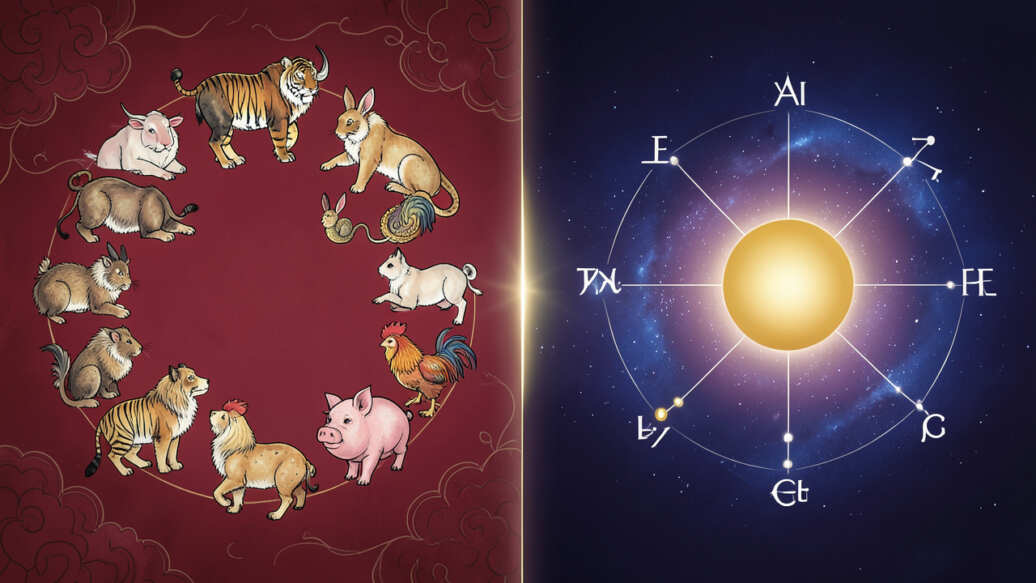
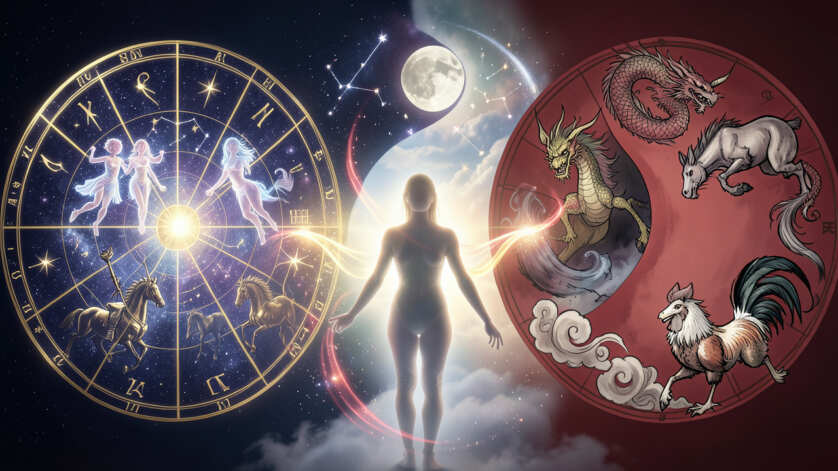
The Chinese Zodiac assigns one of twelve animal signs based on the lunar calendar birth year, whereas the Western Zodiac assigns a sign based on the solar calendar birth month and constellation positions. Chinese zodiac signs operate on a 12-year cycle emphasizing broad social archetypes, while Western zodiac signs follow a 12-month cycle offering nuanced personality profiles derived from planetary and elemental modalities. Understanding this distinction clarifies why compatibility calculations and trait interpretations differ fundamentally between the two systems, with the Chinese approach rooted in yearly cycles and Chinese philosophy and the Western approach in monthly cycles and Greco-Roman astrology.
Many people check their horoscope daily but may not realize there are two major zodiac systems. This guide explains how Chinese and Western zodiacs differ in origin, calculation, and meaning.
Quick Verdict: Simply put, the Chinese Zodiac assigns an animal to each year based on the lunar calendar, while the Western Zodiac assigns a sign based on your birth month using the solar calendar. The Chinese system focuses on yearly cycles and social traits, while the Western system emphasizes monthly cycles and personality psychology.
Key Takeaways
- The Chinese Zodiac uses a 12-year cycle with animal signs assigned by birth year, while the Western Zodiac uses a 12-month cycle with constellation-based signs assigned by birth date.
- Chinese zodiac signs are rooted in lunar calendar and Chinese philosophy, whereas Western zodiac signs come from Babylonian and Greek astronomy and astrology.
- Personality traits in the Chinese system are broad and tied to animal archetypes, while the Western system offers more nuanced personality profiles based on planetary positions.
- Compatibility is calculated differently in each system, with the Chinese Zodiac using a triadic harmony model and the Western Zodiac using element and modality matches.
- A 2018 study by the Pew Research Center found that 29% of American adults believe in astrology, yet most do not distinguish between these two distinct systems.
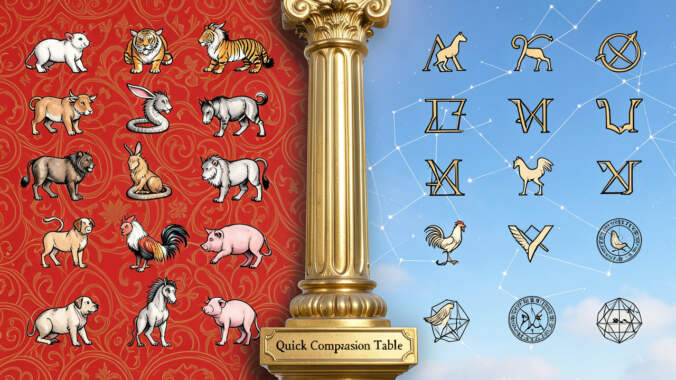
Quick Comparison Table
| Feature | Chinese Zodiac | Western Zodiac |
|---|---|---|
| Origin | Ancient China, Han Dynasty period (over 2,000 years ago) | Babylonian astronomy and Greek astrology (circa 2,000 BCE) |
| Calendar System | Lunar calendar (based on moon phases) | Solar calendar (based on Earth’s orbit around the sun) |
| Cycle Length | 12 years (each year has one animal sign) | 12 months (each month has one sign) |
| Number of Signs | 12 animal signs (Rat, Ox, Tiger, Rabbit, Dragon, Snake, Horse, Goat, Monkey, Rooster, Dog, Pig) | 12 constellation signs (Aries, Taurus, Gemini, Cancer, Leo, Virgo, Libra, Scorpio, Sagittarius, Capricorn, Aquarius, Pisces) |
| Elements | Five elements (Wood, Fire, Earth, Metal, Water) in 60-year cycle | Four elements (Fire, Earth, Air, Water) |
| Personality Focus | Social behavior, relationships, destiny | Individual personality, emotions, life path |
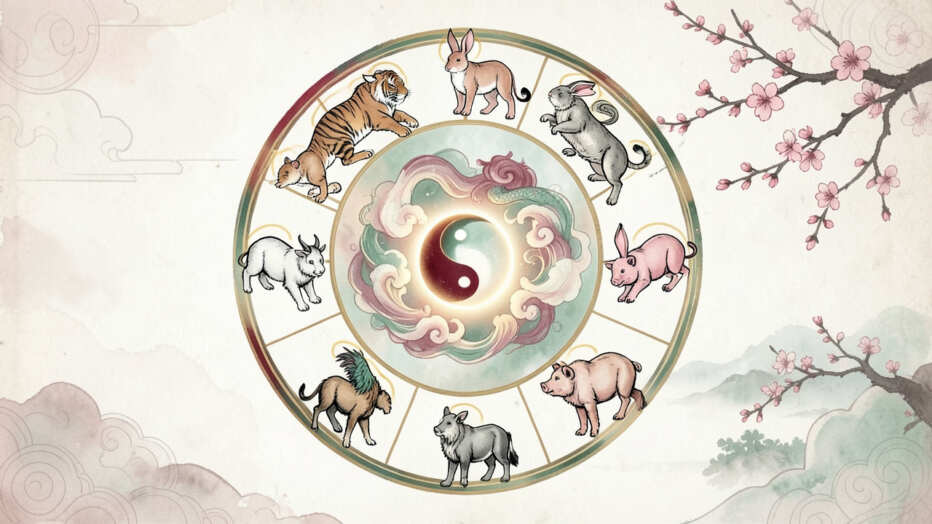
Chinese Zodiac Overview
The Chinese Zodiac, known as Sheng Xiao, is a 12-year cycle where each year is linked to an animal. According to historical records, this system emerged during the Han Dynasty and became deeply embedded in Chinese culture.
How the Chinese Zodiac Works
Your Chinese zodiac sign depends on your birth year. The cycle follows the lunar calendar, which means the new year starts between late January and mid-February. If you are born in January, you may belong to the previous year’s sign.
The 12 animals in order are: Rat, Ox, Tiger, Rabbit, Dragon, Snake, Horse, Goat, Monkey, Rooster, Dog, and Pig. Each animal represents specific personality traits and life tendencies.
- Rat – Quick-witted, resourceful, and adaptable
- Ox – Diligent, dependable, and methodical
- Tiger – Brave, competitive, and confident
- Rabbit – Gentle, elegant, and compassionate
- Dragon – Ambitious, charismatic, and energetic
- Snake – Wise, enigmatic, and intuitive
- Horse – Active, energetic, and free-spirited
- Goat – Creative, calm, and artistic
- Monkey – Clever, curious, and playful
- Rooster – Observant, hardworking, and punctual
- Dog – Loyal, honest, and protective
- Pig – Generous, kind, and optimistic
The Five Elements in the Chinese System
The Chinese Zodiac also includes a five-element cycle. Each element combines with an animal sign to create a more specific personality profile. The elements are Wood, Fire, Earth, Metal, and Water. This creates a 60-year grand cycle where each animal appears five times with different element combinations.
Tip: Your Chinese zodiac element is just as important as your animal sign. For example, a Wood Tiger is different from a Fire Tiger. Many online tools can calculate your full Chinese zodiac profile, including both animal and element.
Compatibility in the Chinese Zodiac
Chinese zodiac compatibility follows specific pairings. Animals in the same triad group tend to get along well. The four triads are:
- Rat, Dragon, Monkey – Intellectual and ambitious
- Ox, Snake, Rooster – Reliable and hardworking
- Tiger, Horse, Dog – Adventurous and loyal
- Rabbit, Goat, Pig – Gentle and creative
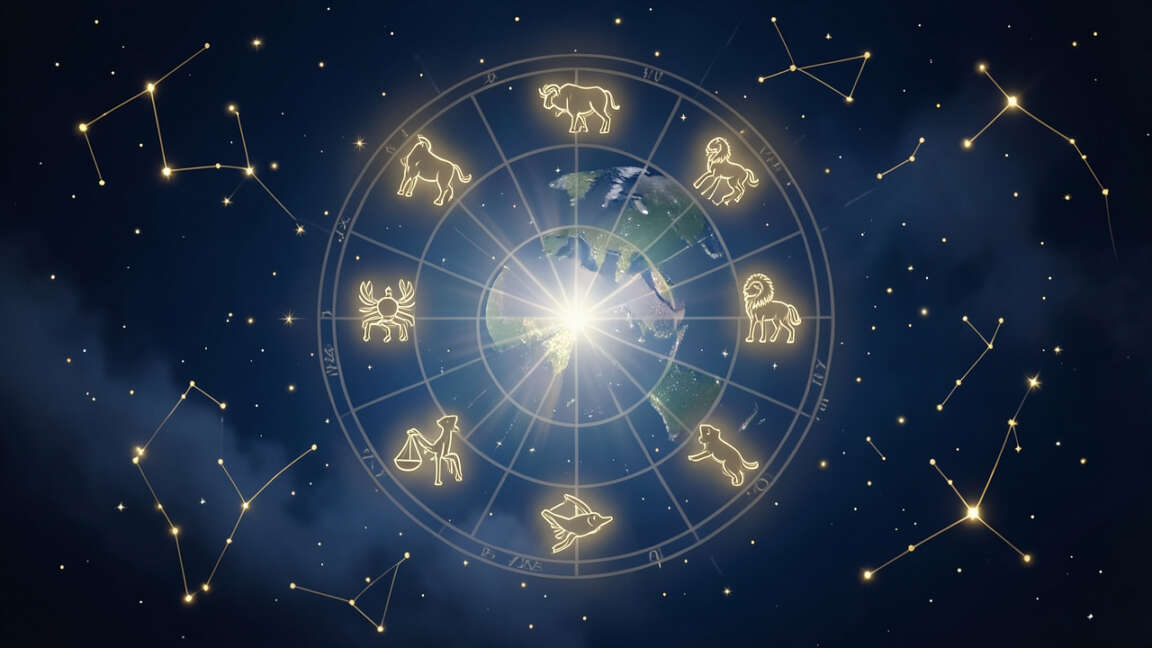
Western Zodiac Overview
The Western Zodiac divides the sky into 12 equal sections, each named after a constellation. According to the National Science Foundation, Hellenistic astrology from around 200 BCE heavily shaped the modern Western system. Ptolemy’s Tetrabiblos remains a foundational text.
How the Western Zodiac Works
Your Western zodiac sign is based on your birth date. The sun passes through each constellation at a specific time each year. Your sun sign is the constellation the sun was in on the day you were born.
The 12 signs in order are: Aries, Taurus, Gemini, Cancer, Leo, Virgo, Libra, Scorpio, Sagittarius, Capricorn, Aquarius, and Pisces. Each sign spans about 30 days.
- Aries – March 21 to April 19. Bold, energetic, and pioneering
- Taurus – April 20 to May 20. Stable, patient, and practical
- Gemini – May 21 to June 20. Curious, adaptable, and expressive
- Cancer – June 21 to July 22. Nurturing, emotional, and protective
- Leo – July 23 to August 22. Confident, generous, and dramatic
- Virgo – August 23 to September 22. Analytical, organized, and helpful
- Libra – September 23 to October 22. Diplomatic, fair, and social
- Scorpio – October 23 to November 21. Intense, passionate, and mysterious
- Sagittarius – November 22 to December 21. Optimistic, adventurous, and honest
- Capricorn – December 22 to January 19. Disciplined, responsible, and ambitious
- Aquarius – January 20 to February 18. Innovative, independent, and humanitarian
- Pisces – February 19 to March 20. Compassionate, artistic, and intuitive
Elements and Modalities in the Western System
The Western Zodiac uses four elements and three modalities. Each sign belongs to one element and one modality, creating a detailed personality framework.
| Element | Signs | Traits |
|---|---|---|
| Fire | Aries, Leo, Sagittarius | Passion, energy, action |
| Earth | Taurus, Virgo, Capricorn | Stability, practicality, discipline |
| Air | Gemini, Libra, Aquarius | Intellect, communication, social |
| Water | Cancer, Scorpio, Pisces | Emotion, intuition, depth |
Modalities in Western Astrology
The three modalities describe how each sign approaches life:
- Cardinal – Aries, Cancer, Libra, Capricorn. These signs initiate change and take action.
- Fixed – Taurus, Leo, Scorpio, Aquarius. These signs are stable and persistent.
- Mutable – Gemini, Virgo, Sagittarius, Pisces. These signs adapt and flow with change.
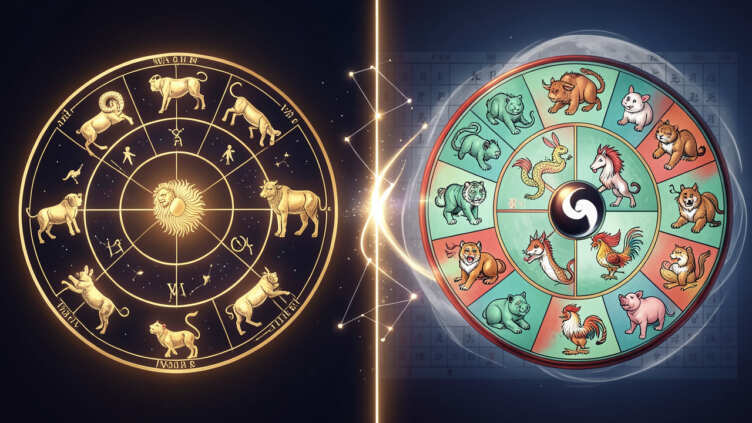
Head-to-Head: Key Differences
Origin and Cultural Roots
The differences between Chinese and Western zodiacs start with their origins. The Chinese Zodiac grew from Chinese philosophy and agricultural cycles. It is tied to the lunar calendar and Confucian social values. The Western Zodiac came from Babylonian astronomy and Greek mythology. It uses the solar calendar and connects to Greco-Roman stories.
How Your Sign Is Calculated
In the Chinese system, you look at your birth year. In the Western system, you look at your birth month and day. This creates a fundamental difference in how people identify with their signs.
Warning: Many people assume their Chinese zodiac sign based on their birth year in the Western calendar. But because the Chinese New Year shifts, you may actually belong to the previous year’s animal if you were born in January or early February. Always check the exact lunar new year date for your birth year.
Personality and Life Focus
The Chinese system describes your character through the lens of social roles and relationships. A Rat person is seen as clever and resourceful in social situations. The Western system focuses more on individual psychology and emotional patterns. An Aries is described through personal drive and temperament.
Compatibility Systems
Chinese zodiac compatibility uses triads and opposition pairings. Western zodiac compatibility uses element matches and modality balance. Both systems have detailed matching charts, but the logic behind them is different.
Which Zodiac System Resonates With You?
Both systems offer valuable insights, but they serve different purposes. The Chinese Zodiac works well for understanding social dynamics and long-term life cycles. The Western Zodiac gives a more detailed look at personality and emotional growth.
Here is how to choose which system to explore:
- If you want a broad overview of your life’s phases and social roles, start with the Chinese Zodiac
- If you want to understand your personality, emotions, and relationships, explore the Western Zodiac
- If you enjoy cultural history and philosophy, both systems offer deep traditions worth learning
- Many people use both systems together for a fuller picture of themselves
Common Myths vs Facts About Chinese and Western Zodiacs
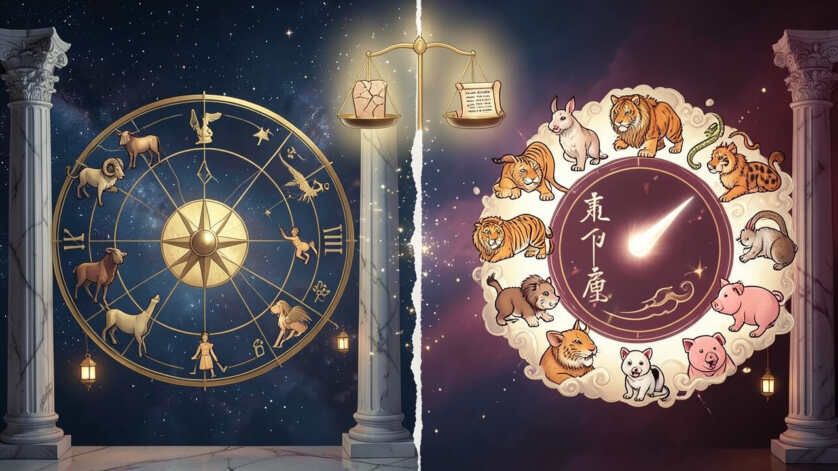
Myth 1: Both zodiacs use the same calendar
Fact: The Chinese Zodiac uses the lunar calendar, which is 10 to 12 days shorter than the solar calendar. This means Chinese New Year falls on a different date each year. The Western Zodiac follows the solar calendar, with fixed date ranges for each sign.
Myth 2: Your Chinese zodiac sign is the same as your Western sign
Fact: These are completely separate systems. Your Chinese sign comes from your birth year, while your Western sign comes from your birth month. You can be a Rat in the Chinese system and a Leo in the Western system at the same time. The Chinese zodiac system assigns an animal based on birth year, unlike the Western zodiac.
Myth 3: Zodiac signs determine your destiny
Fact: Most modern astrologers see zodiac signs as personality frameworks, not fixed destiny. According to a Gallup poll, about 25% of Americans read their horoscope regularly, but only a small fraction treat it as a predictor of future events. Western astrology uses monthly constellation signs, contrasting with the Chinese system.
Frequently Asked Questions
Can I use both the Chinese and Western zodiacs at the same time?
Yes, you can use both systems together. Many people find that combining the yearly animal from the Chinese system with the monthly sign from the Western system gives a richer understanding of their personality. They are not mutually exclusive.
Do Chinese people use the Western Zodiac?
Some younger Chinese people and urban populations do follow Western zodiac signs for entertainment. However, the Chinese Zodiac remains more culturally significant for holidays, matchmaking, and life decisions in China and other East Asian countries.
Are the Chinese zodiac animals based on real constellations?
No, the Chinese Zodiac animals are not tied to constellations. They come from Chinese folklore and the lunar year cycle. The Western Zodiac is directly linked to 12 constellations that lie along the ecliptic path of the sun.
How accurate are zodiac personality descriptions?
Zodiac personality descriptions are general and archetypal. A study by the National Science Foundation found that people often accept vague descriptions as accurate about themselves, a phenomenon called the Barnum effect. Treat zodiac profiles as fun insights, not scientific facts.
What is the rarest Chinese zodiac sign?
No animal sign is inherently rarer than others in the 12-year cycle. However, the Dragon is considered the most auspicious and sought-after sign in Chinese culture. Many couples plan their pregnancies to have a Dragon baby, which can lead to birth spikes in Dragon years.
Final Thoughts
The Chinese Zodiac and Western Zodiac offer two distinct ways to understand personality and life patterns. One uses yearly animal cycles and the lunar calendar while the other uses monthly constellation signs and the solar calendar. Both systems have rich histories and continue to interest people around the world. Exploring both can give you a broader perspective on astrology and its cultural roots.
The Library of Congress offers a reliable overview of zodiac systems and their cultural significance.