Why Mandarin Chinese Is a Tonal Language Explained
Mandarin Chinese is a tonal language because the pitch or contour of a syllable changes its fundamental meaning. This linguistic feature means that the same sequence of sounds can represent entirely different words depending on the tone used. Understanding this concept is crucial for anyone learning Mandarin, as ignoring tones leads to significant miscommunication.
This guide breaks down the mechanics of Mandarin tones, explains their historical development, and explores their profound impact on communication and learning. You will discover how four distinct tones and a neutral tone function in daily speech.
Simply put, Mandarin is a tonal language because the pitch of your voice when saying a syllable directly determines its meaning. Unlike English, where pitch conveys emotion or question, in Mandarin, it defines the word itself. Mastering these tonal distinctions is non-negotiable for fluent and accurate communication.
Key Takeaways
- Mandarin tones are not optional inflections; they are integral components of word identity, much like consonants and vowels.
- There are four main tones and one neutral tone in standard Mandarin, each with a specific pitch pattern that learners must replicate accurately.
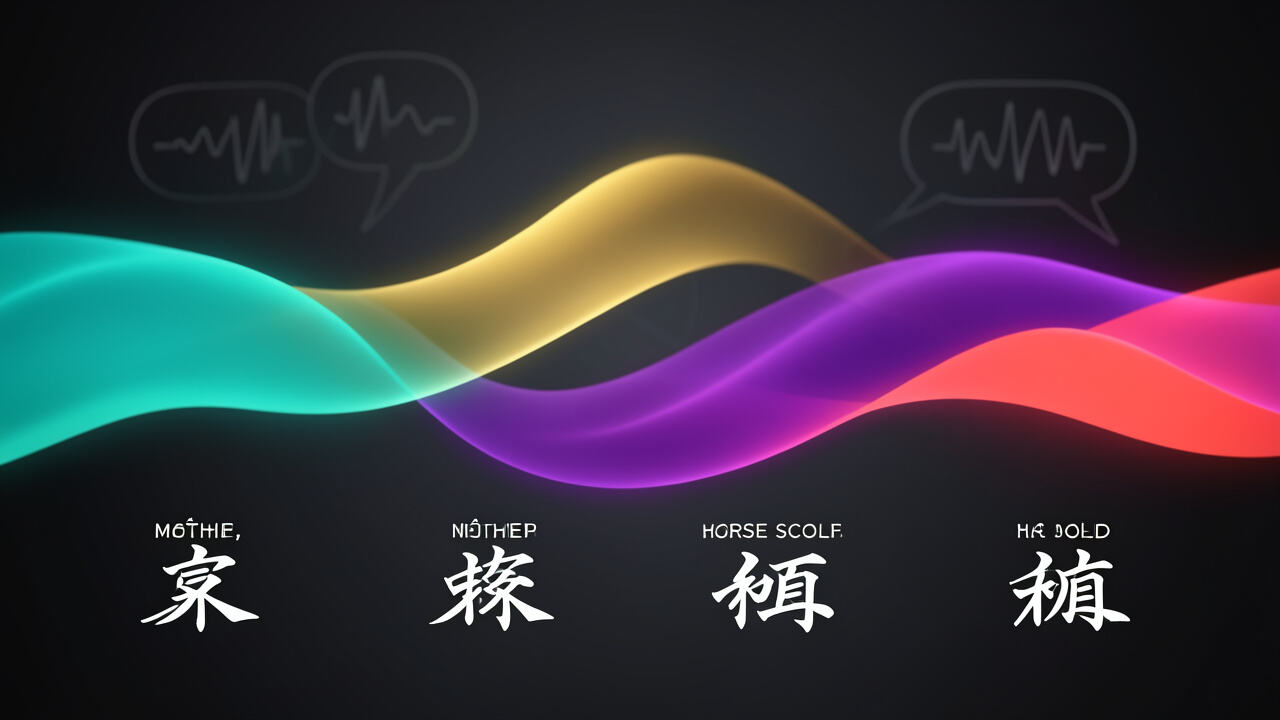
- The importance of tonal pronunciation is demonstrated by how a single syllable like “ma” can mean “mother,” “hemp,” “horse,” or “to scold” depending on the tone.
- Historical sound changes in Chinese led to a reduction of syllable complexity, making tones a necessary grammatical and lexical tool to preserve meaning.
- For language learners, early and rigorous focus on identifying and producing tones is more critical than simply memorizing vocabulary characters.
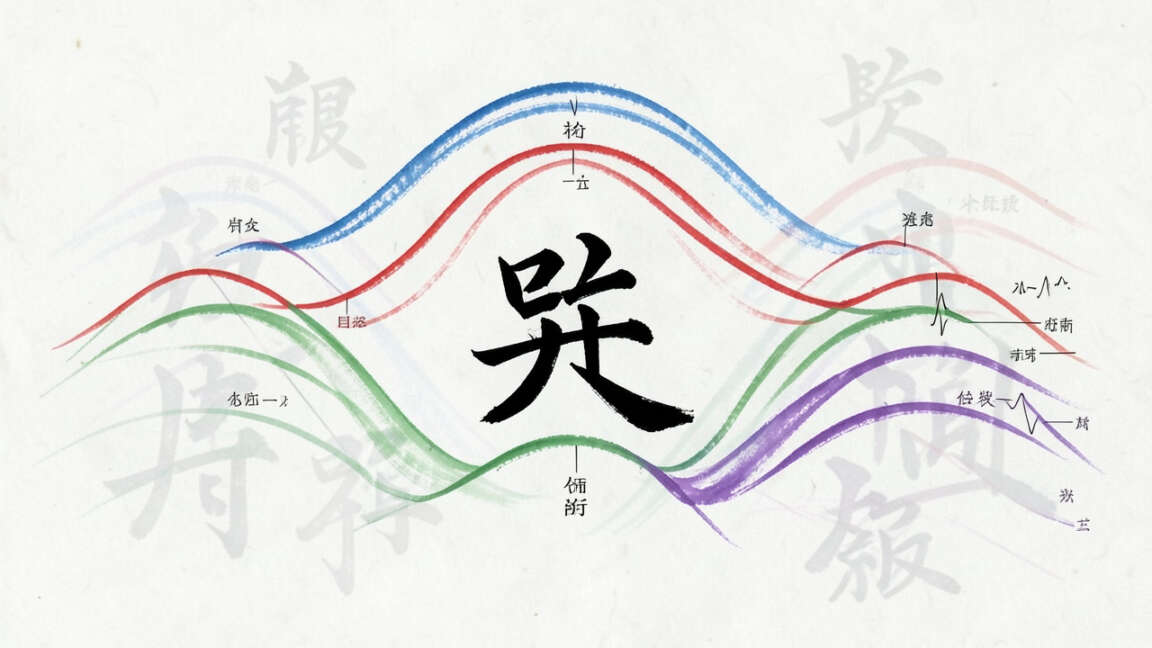
A diagram illustrating the four tones of Mandarin with pitch contour lines. |alt: Chart showing Mandarin tone patterns |title: Mandarin Tone Contour Diagram
What Is a Tonal Language?
A tonal language is one where the relative pitch of a syllable is a phonemic element. This means that pitch variation is used to distinguish between different words that are otherwise identical in their consonant and vowel sounds. The concept is fundamentally different from intonation in non-tonal languages like English, where pitch changes typically indicate a question, surprise, or sentence structure rather than word identity.
In Mandarin, each syllable has a specific tonal assignment. This tone is not flexible; it is a fixed characteristic of the word. Failing to use the correct tone results in saying a completely different, often unrelated, word.
This makes tonal accuracy a core part of pronunciation from the very first lesson.
Linguists classify languages along a spectrum of tonality. Mandarin Chinese is considered a “contour tone” language, where pitch can rise, fall, or dip within a single syllable. This contrasts with some African or other Asian languages that might have simpler high/low tone distinctions.
The primary function of tones in Mandarin is lexical—they differentiate lexical items (words).
- Lexical Tone: The tone changes the word’s meaning (e.g., mā vs. mǎ).
- Intonation: Pitch patterns over a phrase or sentence that convey grammatical meaning or emotion (e.g., a rising tone at the end of a yes/no question in English).
- Tonal Language: Languages where lexical tone is a fundamental part of the sound system.
- Pitch-Accent Language: A related but distinct category where some syllables have a mandatory pitch prominence (e.g., Japanese, Swedish).
How Do the Four Tones of Mandarin Work?
Standard Mandarin has four main tones and a fifth, neutral tone. Each tone has a distinct and consistent pitch pattern. Mastering these patterns is the first and most critical step in pronunciation.
Below is a breakdown of each tone’s contour and its practical application.
The first tone is high and level, maintained steadily throughout the syllable. Think of it as holding a sustained musical note. The second tone is a rising tone, starting mid-range and rising to a high pitch, similar to the intonation of a surprised “What?” in English.
The third tone is a low dipping tone; it starts mid-low, falls to a low pitch, and then may rise slightly if followed by another syllable. In isolation, it has a distinct fall-rise quality.
The fourth tone is a sharp, falling tone, starting high and dropping decisively to the bottom of your vocal range. It sounds like a firm command such as “Stop!” in English. The neutral tone, or fifth tone, is unstressed and short.
Its pitch is determined by the tone of the preceding syllable, and it carries little emphasis.
| Tone | Name | Pitch Contour | Example (Pinyin) | Meaning |
|---|---|---|---|---|
| 1st | High-Level | 55 (high and flat) | mā | Mother |
| 2nd | Rising | 35 (rises from mid to high) | má | Hemp |
| 3rd | Dipping (Low) | 214 (fall then rise) | mǎ | Horse |
| 4th | Falling | 51 (falls sharply from high to low) | mà | To scold |
| Neutral | Neutral (Light) | Pitch varies | ma | Question particle |
Tip: Use visualization to master tones. Draw the pitch contour in the air with your finger as you say the syllable. For the 3rd tone, exaggerate the low dip. Consistent physical association helps embed the pattern.
A close-up of a linguist’s notebook with handwritten tone marks and pinyin examples. |alt: Handwritten Mandarin tone practice notes |title: Tone Practice Notes

Why Did Mandarin Become a Tonal Language?
The tonal nature of Mandarin is the result of centuries of phonological evolution. Ancient Chinese, as reconstructed by historical linguists, was not tonal in the modern sense. It featured complex consonant clusters at the ends of syllables, similar to languages like modern Thai or Tibetan.
Over time, during the transition from Old Chinese to Middle Chinese, these final consonants were gradually lost or reduced.
As the syllable structure simplified, many words that were once distinguished by different consonant endings began to sound identical. To preserve semantic clarity and prevent widespread confusion, the pitch patterns that had naturally been part of the syllables were grammaticalized. What was once a minor phonetic variation became a primary means of distinguishing words.
This process is known as the “tonogenesis” of Chinese.
According to research published in the Journal of Chinese Linguistics, this simplification was a driving force behind the development of the tonal system. By the time of Middle Chinese, a robust system of four tones was well established. The modern standard Mandarin tones are direct descendants of this system, though with some further modification.
The historical necessity for tones underscores their functional importance.
Important: This tonal evolution explains why written Chinese characters often provide clues to pronunciation but not to tone. Characters represent morphemes (meaning units) whose spoken pronunciation, including tone, must be learned separately.
What Happens If You Ignore the Tones?
Ignoring tones when speaking Mandarin leads to immediate and often humorous or awkward misunderstandings. Because tones are part of a word’s identity, using the wrong tone doesn’t just sound foreign—it effectively changes the word you are saying. This is the core reason why the language is tonal; tones are not optional melodic decoration.
Consider the syllable “shì.” With the fourth tone, it means “to be” (是). With the first tone, “shī,” it means “teacher” (师). A simple mispronunciation can turn “I am a student” (wǒ shì xuéshēng) into “I am a teacher” (wǒ shī xuéshēng).
Such errors compound quickly in conversation, forcing the listener to use context clues to decipher intent, which is mentally taxing and inefficient.
- Vocabulary Confusion: Asking for “sugar” (táng, 2nd tone) with a 4th tone could sound like “soup” (tāng, 1st tone).
- Social Faux Pas: Addressing a “Mr. Wáng” (王, 2nd tone) with a 1st tone might sound like “Wāng” (a different surname) or other, less polite words.
- Comprehension Breakdown: In noisy environments or over phone lines, tonal accuracy becomes the primary channel for distinguishing similar-sounding words.
- Loss of Fluency: Native speakers may need to constantly ask for repetition, disrupting the flow of conversation and hindering relationship building.
For learners, this reality demands a specific pedagogical approach. Rote memorization of vocabulary without its associated tone is fundamentally flawed. Each new word must be learned as a complete package: the character(s), the pinyin spelling, and its definitive tone.

How Are Mandarin Tones Taught to Learners?
Effective pedagogy for Mandarin tones begins immediately, often before students even learn grammar or vocabulary. The approach is multisensory, combining listening, speaking, physical movement, and visual aids. The goal is to train the learner’s ear to perceive the pitch contours and their vocal cords to produce them accurately.
Common techniques include tone pair drills, where students practice the full set of tones on a single syllable (e.g., mā, má, mǎ, mà, ma) until the distinction becomes automatic. Visual tools like tone number notation (1, 2, 3, 4) and tone diacritics over vowels in pinyin (ā, á, ǎ, à) provide essential visual reinforcement. The use of contour diagrams, like the one in this guide, helps map the abstract pitch movement.
Modern language apps and textbooks employ spaced repetition systems specifically for tones. Some utilize spectrogram software, allowing learners to visually compare their pitch contour against a native speaker’s model. According to the Chinese Standard Proficiency Test (HSK) guidelines, tonal accuracy is assessed at every level, from beginner to advanced, confirming its lifelong importance in the language.
- Isolation First: Master the production of each tone on individual syllables in isolation.
- Tone Pairs: Practice all 16 combinations of two tones to build muscle memory for transitions (e.g., 1st-2nd, 3rd-4th).
- Syllable Blocks: Apply tones to common two-syllable words and set phrases.
- Full Sentences: Integrate tonal practice into sentence drills, paying attention to tone sandhi (natural tone changes).
- Contextual Listening: Listen to native speech at natural speed to train ear discrimination in flow.
A student practicing Mandarin with a tutor, with tone marks visible on a whiteboard. |alt: Mandarin language lesson with tone practice |title: Mandarin Tone Tutoring Session
How Does Tone Sandhi Affect Pronunciation?
Tone sandhi refers to the natural changes in tone that occur when syllables are spoken in succession. It is a phonological rule that makes the flow of speech smoother and more natural. For learners, understanding these rules is essential to sounding authentic and being understood clearly, as they modify the base tones you first learn.
The most important and frequent sandhi rule in Mandarin involves the third tone. When two third-tone syllables appear consecutively, the first one changes to a second tone in pronunciation. For example, the word for “good” (hǎo) is third tone, and “friend” (yǒu) is third tone.
Together, “good friend” (hǎoyǒu) is pronounced as “háo yǒu,” with the first syllable taking on a rising second tone. This rule prevents the awkwardness of producing two low dipping tones in a row.
Another key rule is for the particle “不” (bù, meaning “not”). It is normally fourth tone, but when followed by another fourth-tone syllable, it changes to second tone (bú). For instance, “not like” (bù xǐhuàn) becomes “bú xǐhuàn.” These changes are not optional; they are inherent to native speech patterns.
Failing to apply sandhi rules results in speech that sounds robotic and difficult for native speakers to process.
| Sandhi Rule | Condition | Change | Example |
|---|---|---|---|
| 3rd + 3rd | Two third tones in a row | 1st syllable becomes 2nd tone | nǐ hǎo (你好) → ní hǎo |
| 不 (bù) | Before a 4th tone syllable | Changes to 2nd tone (bú) | bù shì (不是) → bú shì |

Who Needs to Understand Tonal Phonology?
A deep understanding of tonal phonology is not just for academic linguists; it is a practical necessity for several groups of people. Primarily, language learners and teachers of Mandarin must have a firm grasp of these concepts. However, the relevance extends to professionals in communication-heavy fields.
For Mandarin language learners, this knowledge is the bedrock of pronunciation. It transforms a mysterious “feel” into a systematic, learnable skill. Teachers of Chinese as a Second Language rely on this understanding to diagnose student errors and design effective corrective exercises.
A teacher can explain, “You are using a rising tone (2nd) where a dipping tone (3rd) is needed,” which is far more helpful than a generic “your pronunciation is off.”
Professionals like diplomats, international business negotiators, and interpreters also benefit immensely. In high-stakes settings, tonal miscommunication can lead to significant misunderstandings, potentially affecting relationships or deals. Even actors and voice artists dubbing Chinese content must master tones to deliver authentic performances.
Furthermore, linguists studying language typology and phonological change use Chinese as a primary case study in tonogenesis.
Warning: Do not assume that exposure alone will teach you tones. Research indicates that without explicit instruction and focused practice, adult learners may consistently fail to produce or perceive tones accurately, even after years of immersion.
Frequently Asked Questions
Is Mandarin the only tonal language?
No, Mandarin is not the only tonal language. Many languages in Asia and Africa are tonal. Examples include Cantonese (which has six to nine tones), Vietnamese (six tones), Thai (five tones), Yoruba (three tones), and Punjabi (has tonal distinctions).
However, Mandarin is the most widely spoken tonal language globally.
Can you learn Mandarin without focusing on tones?
While you might learn to read and write characters without immediate focus on tones, spoken communication will be severely hampered. Ignoring tones in speech leads to constant misunderstandings and makes it difficult for native speakers to comprehend you. It is strongly advised to learn pronunciation and tones from the very beginning.
Do all Chinese dialects use the same tones?
No, different Chinese dialects (or languages, as some linguists classify them) have different tonal systems. Cantonese, for instance, has a more complex system with more tones than Mandarin. The Shanghainese dialect has a different tonal pattern as well.
Mandarin’s four-tone system is specific to Standard Mandarin, based on the Beijing dialect.
How can I practice tones if I don’t have a tutor?
You can use a combination of digital tools and self-recording. Language learning apps like Duolingo or HelloChinese have tone exercises. Use pinyin with tone marks as a visual guide.
Record yourself speaking and compare your pitch to native audio samples. Using a spectrogram app can provide visual feedback on your pitch contour.
Are tones in Mandarin always consistent?
Yes, the base tones for individual words are consistent. However, tone sandhi rules (like the 3rd tone becoming a 2nd tone before another 3rd tone) apply in continuous speech. These rules are themselves consistent and predictable.
The core tonal identity of a word in isolation does not change.
Final Thoughts
The reason Mandarin Chinese is a tonal language lies in its historical evolution, where pitch became essential for distinguishing word meanings as syllable sounds simplified. The four main tones and the neutral tone are not optional embellishments but fundamental building blocks of every spoken word. Ignoring them guarantees miscommunication, while mastering them unlocks true fluency. For any serious learner, investing time in understanding and practicing tones from day one is the single most important step toward effective and authentic Mandarin communication.