
Polite Mandarin Phrases for Business Meetings
Using polite Mandarin phrases is essential for building trust and respect in professional settings across China, Taiwan, and other Mandarin-speaking regions. This guide provides you with the exact expressions you need to navigate introductions, negotiations, and social interactions with confidence. You will learn not just what to say, but the cultural context behind the words.
Simply put, using a handful of key polite Mandarin phrases can transform a stiff business interaction into a warm, respectful partnership. Mastering greetings, titles, and expressions of gratitude shows cultural awareness and immediately elevates your professional image.
Key Takeaways
- Polite Mandarin phrases are non-negotiable for showing respect and establishing rapport in business meetings.
- Always address colleagues and partners by their title and last name (e.g., “Wang Zong”) to show proper deference.
- Expressions of gratitude like “谢谢” (xièxie) and modesty phrases like “不敢当” (bù gǎn dāng) are cultural cornerstones.
- Understanding the concept of “face” (miànzi) will guide your choice of words and actions.
- Non-verbal cues, such as a slight nod and proper card exchange, are just as important as spoken phrases.

What Is Polite Mandarin and Why Does It Matter in Business?
Polite Mandarin refers to the formal, respectful language and set phrases used in professional and formal social interactions. It is distinct from casual, everyday speech. In a business context, this is the language of professionalism and respect.
Using this formal register shows you understand and value the other person’s status and the seriousness of the meeting. A failure to use it can be perceived as rude, unprofessional, or a sign of poor preparation. This is especially critical in first meetings where first impressions are cemented.
| Casual Phrase | Polite Business Phrase | Translation & Context |
|---|---|---|
| 你好 (Nǐ hǎo) | 您好 (Nín hǎo) | “Hello.” Use “Nín” for superiors or new clients. |
| 谢谢 (Xièxie) | 非常感谢 (Fēicháng gǎnxiè) | “Thank you” vs. “Thank you very much.” Adds emphasis. |
| 对不起 (Duìbuqǐ) | 很抱歉 (Hěn bàoqiàn) | “Sorry” vs. “I sincerely apologize.” More formal. |
| 再见 (Zàijiàn) | 再见,您慢走 (Zàijiàn, nín màn zǒu) | “Goodbye” vs. “Goodbye, please take care.” Warm farewell. |
Switching to the polite column in this table demonstrates a clear elevation in respect. According to the China Cultural Centre, proper use of honorifics and formal titles is a fundamental aspect of Chinese business etiquette that facilitates smoother communication.
How to Greet Your Colleagues and Clients Properly
A greeting sets the tone for the entire meeting. A strong, polite opening shows you are prepared and respectful. Do not underestimate its importance.
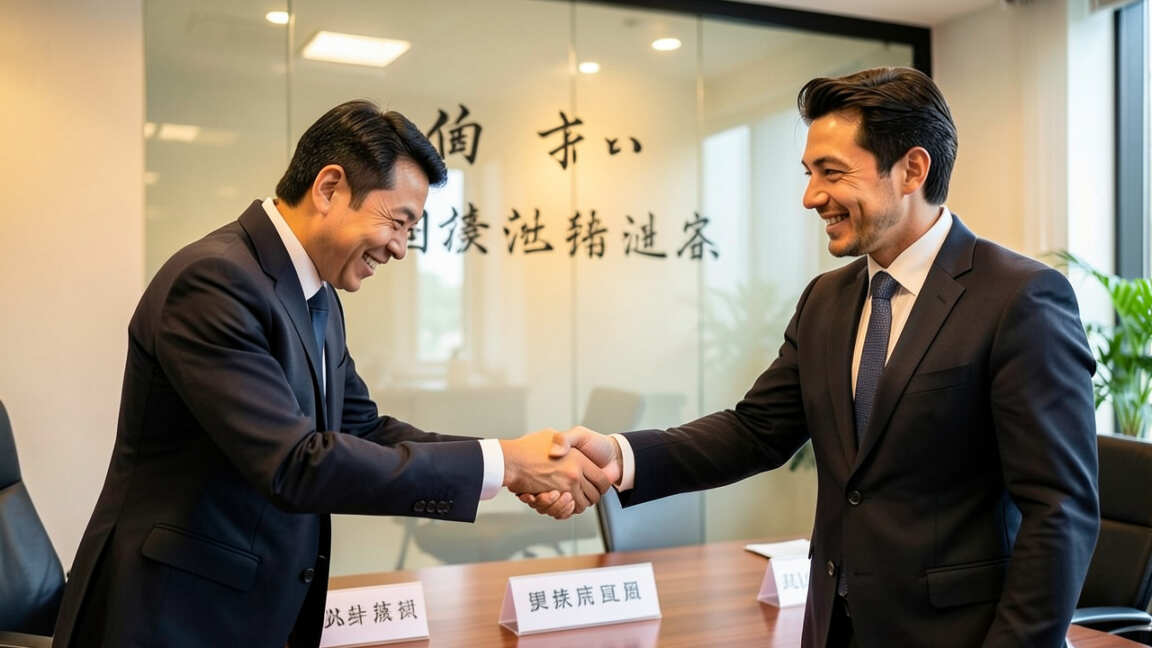
The most common and safe business greeting is “您好” (Nín hǎo). Always follow this with a handshake. In more formal settings, or when greeting someone of higher status, a slight nod while shaking hands is appropriate.
- 您好 (Nín hǎo) – “Hello” (formal). The universal polite opener.
- 早上好 (Zǎoshang hǎo) – “Good morning.” Use before noon.
- 下午好 (Xiàwǔ hǎo) – “Good afternoon.” Use after noon.
- 初次见面,很荣幸 (Chūcì jiànmiàn, hěn róngxìng) – “It’s an honor to meet for the first time.” A powerful, humble opening.
- 很高兴认识您 (Hěn gāoxìng rènshì nín) – “Very pleased to meet you.” Slightly less formal than “róngxìng” but still excellent.
Tip: When in doubt, err on the side of formality by using “您” (nín) instead of “你” (nǐ). You can always shift to a less formal tone if your counterpart does, but starting too casually is harder to recover from.

How to Address People Using Correct Titles and Honorifics
Using the correct title is the most important element of polite business address. In China, Taiwan, and many Chinese communities, titles are used directly with the family name. Never use first names unless explicitly invited to.
The general format is + . For example, if the family name is Li (李) and the person is a director, they would be “李总” (Lǐ zǒng). “总” (zǒng) is a common shorthand for General Manager or a high-ranking executive.
- Identify the Highest-Ranking Person: Observe the meeting dynamics. The highest-ranking person is often greeted first and receives the most deference.
- Use the Correct Title: Common titles include:
- 先生 (Xiānsheng) – Mr.
- 女士 (Nǚshì) – Ms./Mrs.
- 王总 (Wáng zǒng) – Director/Manager Wang
- 李经理 (Lǐ jīnglǐ) – Manager Li
- 张博士 (Zhāng bóshì) – Dr. Zhang
- When in Doubt, Ask: A polite way to ask is “请问您怎么称呼?” (Qǐngwèn nín zěnme chēnghu?) – “May I ask how to address you?”
| Title/Suffix | Pinyin | Usage Example |
|---|---|---|
| 总 (zǒng) | zǒng | 陈总 (Chén zǒng) – President/CEO Chen |
| 经理 (jīnglǐ) | jīnglǐ | 孙经理 (Sūn jīnglǐ) – Manager Sun |
| 博士 (bóshì) | bóshì | 黄博士 (Huáng bóshì) – Dr. Huang |
| 老师 (lǎoshī) | lǎoshī | 吴老师 (Wú lǎoshī) – Teacher/Expert Wu (used for experienced professionals) |
Using the wrong title or using a first name can cause “face loss” (丢面子, diū miànzi) for your counterpart. This is a serious misstep in a relationship-based business culture.
What Are Essential Phrases for Making Requests and Offers?
Making requests in Mandarin requires softening language to be polite. Demanding something directly, even if phrased as a question in English, can sound rude. Always frame requests as inquiries or suggestions.
The phrase “请问” (qǐngwèn), which means “May I ask,” is a perfect preface to any request. It immediately softens the tone and shows consideration for the other person’s time and authority.
- 可以吗? (Kěyǐ ma?) – “Is that possible?” / “May I?” Use this to gently propose an action. “我发邮件给您,可以吗?” (Wǒ fā yóujiàn gěi nín, kěyǐ ma?) – “I will send you an email, may I?”
- 麻烦您. (Máfan nín.) – “Trouble you to.” A very polite way to ask for something. “麻烦您确认一下。” (Máfan nín quèrèn yīxià.) – “Please trouble yourself to confirm.”
- 能不能请您. (Néng bù néng qǐng nín.) – “Could I please ask you to.” Highly deferential. Used for important requests.
- 如果方便的话 (Rúguǒ fāngbiàn dehuà) – “If it is convenient.” Essential for requests that involve the other person’s time or effort.
Warning: Avoid using imperative sentences or starting with “我需要” (Wǒ xūyào – “I need”). This directness is often perceived as pushy and impolite. Always soften the request with the phrases above.
How to Express Gratitude and Modesty Correctly
Gratitude and humility are core values expressed through language in Chinese culture. Saying “thank you” is common, but the context dictates the level of formality. Similarly, downplaying your own achievements is a sign of good character.
A simple “谢谢” (xièxie) is often sufficient for small courtesies. However, in business, you should frequently use the more formal “非常感谢” (fēicháng gǎnxiè – “Thank you very much”) or “太感谢了” (tài gǎnxiè le – “Thank you so much”) to show deeper appreciation.
When receiving a compliment, direct acceptance like “谢谢” can be seen as arrogant. A modest deflection is the culturally appropriate response.
- 不敢当 (Bù gǎn dāng) – “I don’t deserve this honor.” The classic, humble response to praise.
- 您过奖了 (Nín guòjiǎng le) – “You flatter me.” A polite way to acknowledge a compliment.
- 哪里哪里 (Nǎlǐ nǎlǐ) – “Where, where?” An idiom meaning “I’m not that great.” Very humble.
- 谢谢夸奖 (Xièxie kuājiǎng) – “Thanks for the compliment.” A safer, neutral option if you are unsure.

Why Is “Face” (Miànzi) So Important in Communication?
The concept of “face” (面子, miànzi) represents a person’s reputation, dignity, and prestige in social interactions. “Giving face” (给面子, gěi miànzi) means to show respect and enhance someone’s reputation. “Losing face” (丢面子, diū miànzi) means to embarrass or diminish someone publicly.
Your choice of words directly impacts face. Public criticism, blunt refusals, or making someone look incompetent in front of their peers causes severe face loss and can damage a relationship permanently.
Here is how to manage face with your language:
- Always Praise Publicly, Criticize Privately: Save any negative feedback or corrections for a one-on-one conversation. Never do it in a group meeting.
- Use Indirect Language for Disagreement: Instead of “That’s wrong” (那是错的), say “This is one perspective, perhaps we can also consider.” (这是一个角度,或许我们也可以考虑.).
- Share Credit: When discussing a success, emphasize the team’s effort (“我们团队.” – “Our team.”) rather than your own.
- Be Generous with Compliments and Acknowledgments: Publicly thank individuals for their specific contributions. This gives them significant face.

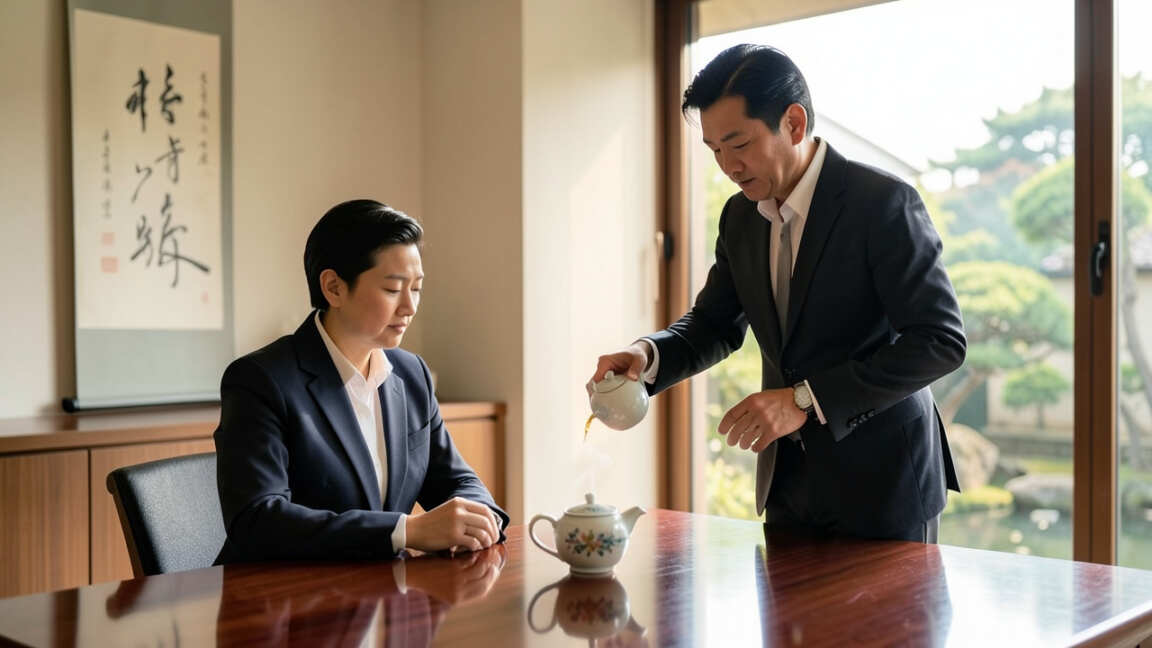
Business in Mandarin-speaking cultures often extends into social settings. The meal or tea after the meeting is where real relationships are built. Polite phrases here are crucial for bonding.
When toasting with tea or alcohol, a common phrase is “干杯” (gānbēi – “Cheers”). If you are not drinking alcohol, it is perfectly acceptable to simply raise your glass of tea or water. You can also say “以茶代酒” (yǐ chá dài jiǔ) – “Using tea in place of alcohol.”
Key phrases for social bonding:
- 请 (Qǐng) – “Please.” Use constantly. “Please eat” (请吃, qǐng chī), “Please have some tea” (请喝茶, qǐng hē chá).
- 慢走 (Màn zǒu) – Literally “walk slowly.” It is the standard, polite farewell to a guest, meaning “Please take care on your way out.”
- 路上小心 (Lùshang xiǎoxīn) – “Be careful on the road.” A caring farewell.
- 我送您 (Wǒ sòng nín) – “I will see you out.” Offering to walk a guest to the door or elevator is a sign of respect.
Important: Business card exchange is a ritual. Always present and receive a card with both hands. Take a moment to look at the card you receive before putting it away carefully. Never write on it or shove it in your pocket immediately.
Frequently Asked Questions
Should I learn Mandarin for business if I’ll have a translator?
Even basic greetings and polite phrases in Mandarin show immense respect and effort. It builds immediate rapport and demonstrates your commitment to the relationship, which is highly valued. Your translator will also appreciate your understanding of the cultural context.
What’s the most important polite phrase to remember?
“请您” (Qǐng nín) – “Please (formal/polite you)” is incredibly versatile. Adding this before any request or action transforms it into a polite inquiry. Combined with the correct title, it forms the foundation of polite address.
How do I politely decline a request or invitation?
Direct refusals are harsh. Use softening phrases like “可能有点困难” (Kěnéng yǒudiǎn kùnnán – “It might be a bit difficult”) or “让我们再研究一下” (Ràng wǒmen zài yánjiū yīxià – “Let us research it a bit more”). This gives the other person “face” by not outright rejecting them.
Is it okay to be silent during a meeting?
Silence can be a sign of thoughtful consideration. Do not feel compelled to fill every pause. However, active listening cues like nodding and brief affirmative phrases like “明白” (míngbai – “Understood”) or “是的” (shì de – “Yes”) show you are engaged without interrupting.
How do I handle a situation where I don’t understand what was said?
Politely ask for clarification. A standard phrase is “对不起,我没听清楚,您能再说一遍吗?” (Duìbuqǐ, wǒ méi tīng qīngchu, nín néng zài shuō yībiàn ma?) – “Sorry, I didn’t hear clearly, could you say it again?” This is respectful and shows you want to understand them fully.
Final Thoughts
Mastering polite Mandarin phrases is about more than vocabulary; it is about embracing a communication style built on respect, humility, and consideration for others’ social standing. Start by focusing on correct greetings, titles, and expressions of gratitude. Remember that in business, how you say something is often as important as what you say.
With these phrases in your toolkit, you are prepared to conduct meetings with cultural confidence and build stronger, more respectful professional relationships.