
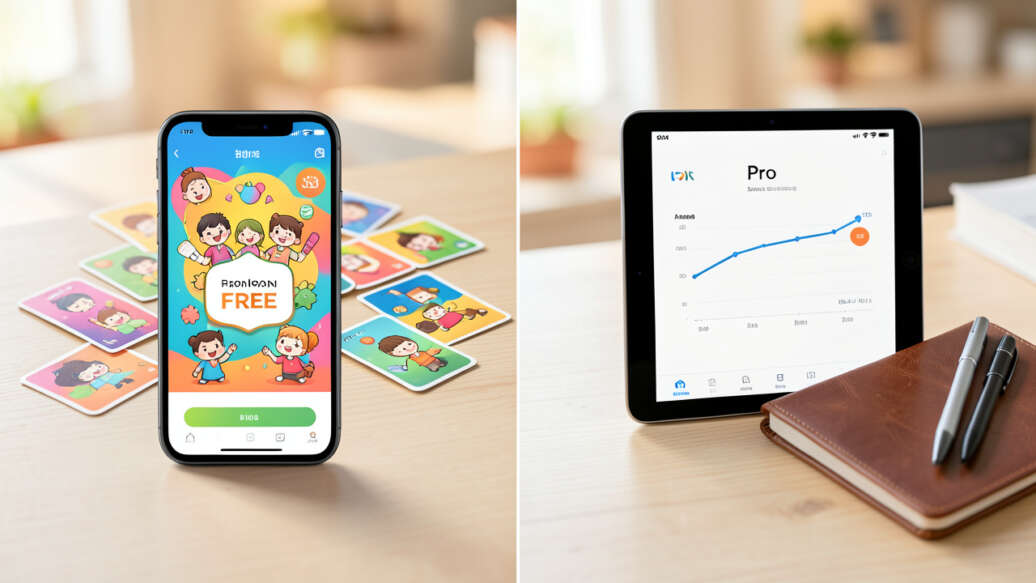
Free vs Paid Apps for Learning Mandarin Compared
Choosing between free and paid apps for learning Mandarin can feel like a major decision for any aspiring learner. Your choice directly impacts your access to quality lessons, practice tools, and long-term progress. This comparison breaks down the real-world differences to help you invest your time and money wisely.
Simply put, free Mandarin apps are excellent for building basic vocabulary and testing your interest, but they often lack depth, structured curriculum, and advanced features. Paid apps provide comprehensive courses, professional teachers, personalized feedback, and ad-free experiences that seriously accelerate fluency.
Key Takeaways
- Free Mandarin apps are best for absolute beginners, casual learners, or those on a strict budget, offering a low-risk way to start.
- Paid Mandarin apps justify their cost with structured learning paths, extensive content libraries, speech recognition, and human feedback.
- The “best” choice depends entirely on your learning goals, budget, and required level of depth and accountability.
- Many successful learners use a hybrid approach, combining a free app for basics with a paid platform for structured study.
- Consider using a paid app’s free trial period to evaluate if its teaching style matches your learning preferences.
What Free Mandarin Learning Apps Typically Offer
Free applications form the entry point for millions of Mandarin learners worldwide. They operate on a freemium model, providing core functionality at no cost while reserving premium features for subscribers. This model allows you to explore the language without a financial commitment.
The core offerings usually focus on gamified learning. You’ll find vocabulary drills, basic phrase matching, and simple sentence construction exercises. These apps excel at creating bite-sized, engaging lessons that feel less like studying and more like playing a game.
- Gamified Vocabulary Building: Flashcard systems with spaced repetition algorithms to help you remember characters and words.
- Basic Phrase Drills: Lessons covering greetings, numbers, ordering food, and other essential travel phrases.
- Pronunciation Guides: Audio examples from native speakers for tone practice, often with basic speech recognition.
- Cultural Notes: Short, fun facts about Chinese customs, festivals, and social etiquette.
- Progress Tracking: Streaks, points, and leaderboards to maintain motivation and consistency.
| Feature | What Free Apps Provide |
|---|---|
| Curriculum | Fragmented lessons, not a complete course |
| Vocabulary Size | Limited to 500-1500 words for free content |
| Grammar | Implicit or very basic explanations |
| Speaking Practice | Often limited or uses basic speech recognition |
| Cost | $0, but supported by ads |
As shown in the table, free apps provide a solid foundation in basic vocabulary and phrases but lack the structure needed for comprehensive language acquisition.
What Paid Mandarin Learning Apps Typically Offer
Paid platforms transform language learning from a casual hobby into a serious educational endeavor. The subscription fee unlocks a complete ecosystem designed for systematic progress. You’re paying for depth, quality, and a guided learning journey.
The most significant upgrade is the structured curriculum. These apps present a clear path from beginner to advanced levels, mirroring the progression of a university course. Lessons build upon each other logically, ensuring you master foundational concepts before moving forward.
- Structured Learning Paths: Coordinated courses from HSK 1 to HSK 6 and beyond, with clear objectives.
- Advanced Speech Recognition: AI-powered tools that analyze your pronunciation of tones and syllables in detail.
- Video & Audio Lessons with Teachers: Professional instructors explain grammar points, culture, and usage.
- Interactive Dialogues & Stories: Contextual learning that teaches vocabulary and grammar within real conversations.
- Writing & Character Practice: Stroke order animation, handwriting recognition, and character quizzes.
- Personalized Feedback: Some platforms offer corrections on written or spoken exercises.
Important: The value of a paid app often lies in its detailed feedback. Advanced speech recognition that pinpoints your tone errors is something most free apps cannot replicate effectively.
| Feature | What Paid Apps Provide |
|---|---|
| Curriculum | Comprehensive, level-based course structure |
| Vocabulary Size | Thousands of words, often tied to HSK lists |
| Grammar | Detailed explanations with examples and practice |
| Speaking Practice | Advanced AI speech analysis and tone feedback |
| Cost | Monthly or annual subscription fee |
Paid apps deliver a holistic learning environment, moving beyond simple memorization to foster genuine communication skills.
How Free Apps Limit Your Mandarin Progress
The limitations of free apps become increasingly apparent as you advance. What works for learning “nǐ hǎo” (hello) and “xiè xie” (thank you) quickly falls short when you want to discuss your hobbies or understand a Chinese news headline.
The primary constraint is content depth. Free versions typically stop at a beginner level. You might learn the basics of pinyin and simple characters, but you’ll hit a paywall before tackling complex grammar structures or advanced vocabulary.
This creates a frustrating learning plateau.
Additionally, the lack of a coherent curriculum means you’re often jumping between unrelated topics. One day you learn food vocabulary, the next you learn about professions. This fragmented approach hinders your ability to form sentences and hold real conversations.
Warning: Free apps can create a false sense of progress. High scores and long streaks in gamified exercises don’t necessarily translate to real-world conversation ability. Don’t mistake app performance for language proficiency.
How Paid Apps Accelerate Your Fluency
Paid platforms are engineered to optimize the learning process. They employ proven pedagogical methods and leverage technology to provide targeted feedback, which is crucial for mastering a tonal language like Mandarin.
The structured path eliminates guesswork. You always know what to study next, and each lesson is a building block for the next. This systematic approach builds a strong foundation that free apps cannot match.
According to a report from the Education Technology Association, users of structured language learning platforms are 40% more likely to achieve intermediate proficiency within a year compared to those using only fragmented resources.
Advanced speech recognition technology provides immediate, objective feedback on your pronunciation. It can detect subtle tone errors that a human tutor might miss in a group setting. This instant correction loop is vital for developing accurate speech habits early.
- Targeted Feedback: AI identifies specific sounds or tones you struggle with for focused practice.
- Contextual Learning: Grammar is taught through dialogues and stories, making it easier to understand and remember.
- HSK Preparation: Many paid apps include dedicated courses and mock tests for the Chinese proficiency exam.
- Offline Access: Download lessons to study without an internet connection.
- Ad-Free Environment: A distraction-free interface that allows for deeper focus.
Comparing Top Free and Paid Mandarin Apps: A Direct Look
Let’s compare popular options across both categories to see where they shine and where they fall short. This side-by-side analysis highlights their core differences in teaching approach, content, and cost.
| App Name | Type | Best For | Key Drawback |
|---|---|---|---|
| Duolingo | Free / Freemium | Absolute beginners, gamification | Repetitive, limited depth |
| HelloChinese | Freemium | Beginners, strong pronunciation focus | Free version is very limited |
| Pleco | Free Base / Paid Add-ons | Dictionary, self-directed learners | Not a structured course |
| ChineseSkill | Free | Beginners on a budget | Older interface, less content |
| Yoyo Chinese | Paid (Subscription) | Visual learners, video-based study | Higher cost, no free tier |
| ChinesePod | Paid (Subscription) | Intermediate to advanced learners | Overwhelming for beginners |
This comparison shows that the “best” app is not universal. Your ideal choice depends on where you are in your learning journey and what specific skills you need to develop.
Who Should Choose Free Mandarin Apps?
Free apps are a perfect starting point under specific circumstances. If you are completely new to Mandarin and unsure about committing, a free app provides a risk-free introduction. You can test the waters, see if you enjoy the process, and learn the absolute basics without spending a penny.
Casual learners who only need a few phrases for an upcoming trip also benefit from free options. There’s no need to pay for a full course if your goal is to master ordering food, asking for directions, and basic greetings.
Budget-conscious students can use free apps as a primary tool, supplementing with other free resources like YouTube channels, podcasts, and language exchange websites. This requires more self-discipline and curriculum planning but is entirely possible.
- The Curious Beginner: You want to see if Mandarin is for you before investing money.
- The Traveler: You need only essential phrases for a short visit to China.
- The Self-Directed Learner: You are motivated to create your own study plan using multiple free sources.
- The Budget Learner: You cannot afford a subscription but are determined to learn.
- The Supplementer: You already use a paid method but want extra practice games.
Who Should Invest in Paid Mandarin Apps?
Paid apps become a worthwhile investment when your goals extend beyond basic phrases. If you aim for conversational fluency, professional proficiency, or passing the HSK exam, the structured curriculum and advanced tools of a paid platform are almost essential.
Learners who struggle with accountability and self-study benefit greatly from the guided paths and progress tracking of paid apps. The sunk cost of a subscription can also provide a motivational push to study regularly.
For those learning Mandarin for career advancement, business negotiations, or academic purposes, the depth and accuracy provided by paid platforms are non-negotiable. The comprehensive grammar explanations, extensive vocabulary lists, and professional content justify the expense.
Tip: Many paid apps offer a 7 to 14-day free trial. Always use this trial period to test the app’s teaching style and ensure it matches your learning preferences before subscribing.
The Hybrid Approach: Combining Free and Paid Tools
Many successful Mandarin learners don’t strictly choose one camp. They adopt a hybrid approach, leveraging the strengths of both free and paid resources. This strategy often yields the best results by optimizing cost and learning efficiency.
For example, you might use a paid app like HelloChinese for its structured curriculum and speech recognition. Then, supplement it with free resources like the Pleco dictionary for character lookups, ChinesePod podcasts for listening practice, and WeChat for language exchange with native speakers.
- Core Curriculum: Use a paid app for your main, structured study path.
- Vocabulary Expansion: Use free flashcard apps like Anki with shared Mandarin decks.
- Listening Practice: Consume free content like Chinese movies, TV shows with subtitles, and music.
- Speaking Practice: Use free apps like HelloTalk or Tandem to find language exchange partners.
- Reading Practice: Read graded readers or children’s books available in many libraries or for free online.
What Is the True Cost of a Free Mandarin App?
The financial cost is zero, but the real cost is often measured in time and missed progress. The fragmented content can lead to inefficient study sessions. You might spend months on a free app and still feel unable to hold a basic conversation because you never learned the underlying grammar.
The time spent hitting a beginner plateau or unlearning poor habits from inadequate feedback could have been avoided with a more comprehensive resource. While you save money, you may pay with slower progress and potential frustration.
Furthermore, the ad-supported model of many free apps can be distracting. Constant advertisements break your concentration and can make the learning experience feel disjointed and less professional.
Frequently Asked Questions
Can I become fluent in Mandarin using only free apps?
It is extremely difficult. While free apps can help you reach a high-beginner or low-intermediate level, they generally lack the depth, advanced content, and structured curriculum required to achieve true fluency. You would need to heavily supplement with other free resources and create your own study plan.
What is the best paid app for learning Mandarin as a beginner?
For beginners, HelloChinese and ChineseSkill (premium version) are often recommended. They offer clear, step-by-step lessons with a strong emphasis on pronunciation and character writing from the very start.
Do free apps teach proper Mandarin grammar?
Most free apps teach grammar implicitly through examples rather than explicit explanations. You might learn a sentence pattern through repetition but not understand why it’s constructed that way. This can hinder your ability to create your own sentences.
Are paid Mandarin apps worth the money?
If your goal is serious, intermediate-to-advanced proficiency, the answer is generally yes. The structured content, advanced speech recognition, and comprehensive grammar explanations provide a significant return on investment by making your study time more efficient and effective.
How do I choose between free and paid Mandarin learning apps?
Start by defining your specific goals and budget. If you’re curious or learning basic travel phrases, begin with a well-reviewed free app. If you’re committed to reaching conversational fluency or need to learn for professional reasons, invest in a paid platform with a free trial to test it first.
Final Thoughts
The decision between free and paid apps for learning Mandarin ultimately comes down to your personal goals, commitment level, and budget. Free apps provide an accessible, no-cost entry point to explore the language. Paid apps offer the depth, structure, and advanced tools necessary for serious learners aiming for fluency. Carefully assess your needs and consider a hybrid approach to create the most effective and sustainable learning path for you.