Why Jade Is Considered a Sacred Stone in China
Jade is considered a sacred stone in China because it represents virtue, nobility, and spiritual power. This gemstone has been central to Chinese culture for over 7,000 years. Its importance goes far beyond its beauty, weaving into religion, governance, and identity.
This post explores the deep reasons for jade’s sacred status. We will look at its historical roles, spiritual meanings, and cultural impact. You will learn why this stone was valued more than gold or precious gems in ancient China.
Simply put, jade is sacred in China because ancient philosophers linked it to the core virtues of a perfect person. It was seen as a bridge between heaven, earth, and humanity, used in rituals for centuries. Its unbreakable nature and soft luster made it the ultimate symbol of moral integrity and immortality.
Key Takeaways
- Jade symbolism in China is rooted in the Confucian ideals of benevolence, wisdom, and integrity.
- The stone was believed to protect the soul and ensure immortality, often placed in royal tombs.
- Both nephrite and jadeite are revered, with nephrite having the longest historical significance.
- Jade artifacts were essential in religious ceremonies and as markers of social rank.
- Modern China continues to cherish jade as a national treasure and cultural identifier.

What is the Spiritual Significance of Jade in Chinese Culture?
For the ancient Chinese, jade was not just a mineral. It was a living substance with a spirit. They believed it held the essence of heaven and earth.
This belief made it the most important material for communicating with gods and ancestors.
The stone’s perceived properties—its warmth, durability, and smooth texture—were seen as physical manifestations of positive energies. It was thought to absorb the life force (qi) from its wearer. This connection made jade a powerful amulet for protection and health.
- Heaven-Earth Bridge: Jade was used in ritual disks (bi) to represent heaven and in square tubes (cong) to represent earth.
- Soul Protector: It was often placed in the mouth of the deceased during burials to guide and protect the soul in the afterlife.
- Purifier: Jade was believed to purify the body and mind, warding off evil spirits and negative energy.
- Immortality Symbol: The famous Jade Burial Suits of the Han Dynasty, made of thousands of jade plaques, aimed to preserve the body for eternal life.
Tip: When examining antique jade, its spiritual value often surpasses its material worth. A simple jade pendant passed down through generations carries immense symbolic weight.
How Did Confucianism Shape Jade’s Sacred Role?
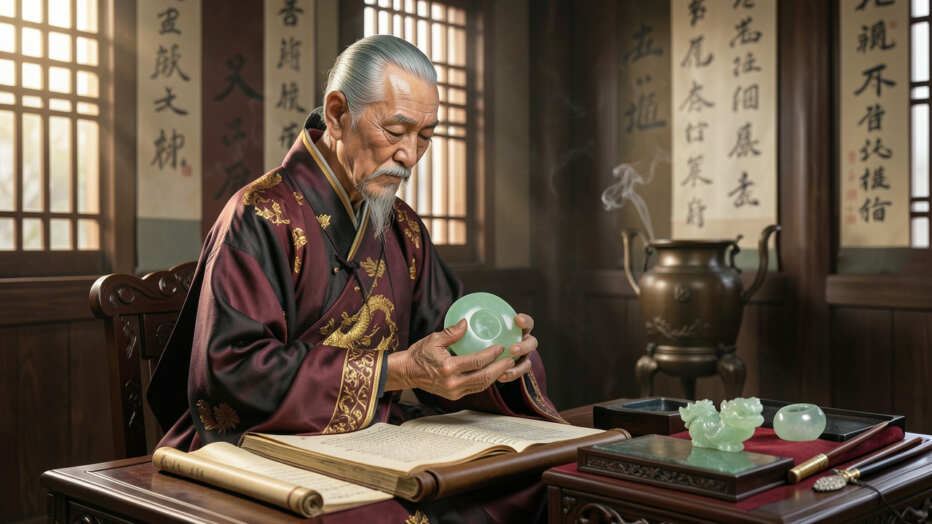
The philosopher Confucius (551-479 BC) is credited with elevating jade to its highest moral status. He drew a direct parallel between the qualities of jade and the ideal virtues of a gentleman. This philosophy cemented jade’s sacred place in the social and ethical fabric of China.
According to the “Book of Rites,” Confucius said the luster of polished jade represents benevolence. Its transparency and flawlessness symbolize wisdom. This metaphor made possessing and wearing jade a declaration of one’s character and moral standing.
| Confucian Virtue | Jade Quality Symbolizing It |
|---|---|
| Benevolence (Ren) | Its warm, soft luster and gentle glow. |
| Wisdom (Zhi) | Its clear, pure transparency and internal structure. |
| Justice (Yi) | Its sharp edges that break rather than bend, symbolizing moral rectitude. |
| Courage (Yong) | Its hardness and unbreakable nature. |
| Ceremonial Propriety (Li) | The harmonious sound it makes when struck, considered melodious. |
This association meant that only the virtuous and noble were worthy of fine jade. It became a strict code of conduct for the elite. To wear jade without moral character was considered shameful.
What are the Main Types of Jade Used in China?
While the term “jade” covers two distinct minerals, the Chinese historically revered both. Understanding these types is key to knowing why certain pieces are more prized. The choice of jade type often relates to its symbolic application.
The two primary types are nephrite and jadeite. Nephrite was the original jade of China, used for millennia before jadeite from Burma became popular during the Qing Dynasty. Both are valued, but their characteristics lead to different uses.
- Nephrite (Hetian Jade): Softer, with a warm, greasy luster. Colors range from creamy white (“mutton fat” jade) to deep green. It is favored for its historical and symbolic purity.
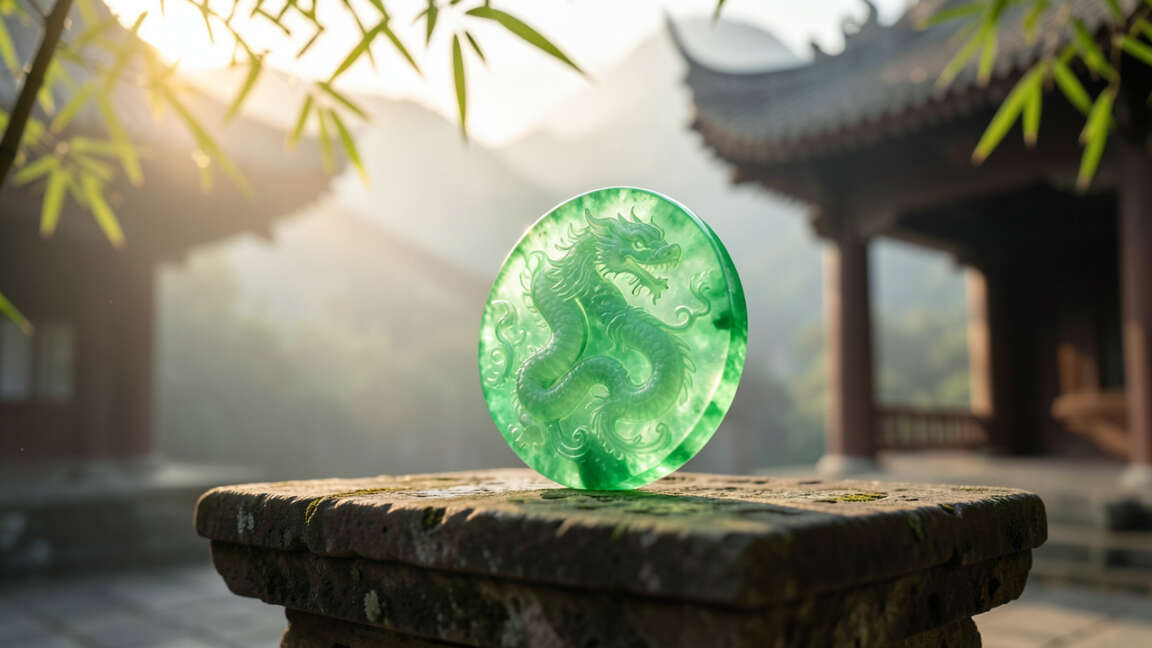
- Jadeite: Harder, with a glassy luster and a broader color spectrum. The most prized is “imperial green” jadeite, a vibrant emerald green. It became a status symbol for emperors and the wealthy.
Important: The term “mutton fat” jade describes a pure, white nephrite with a slightly oily luster. It was considered the most spiritually potent and was used for important ritual objects.
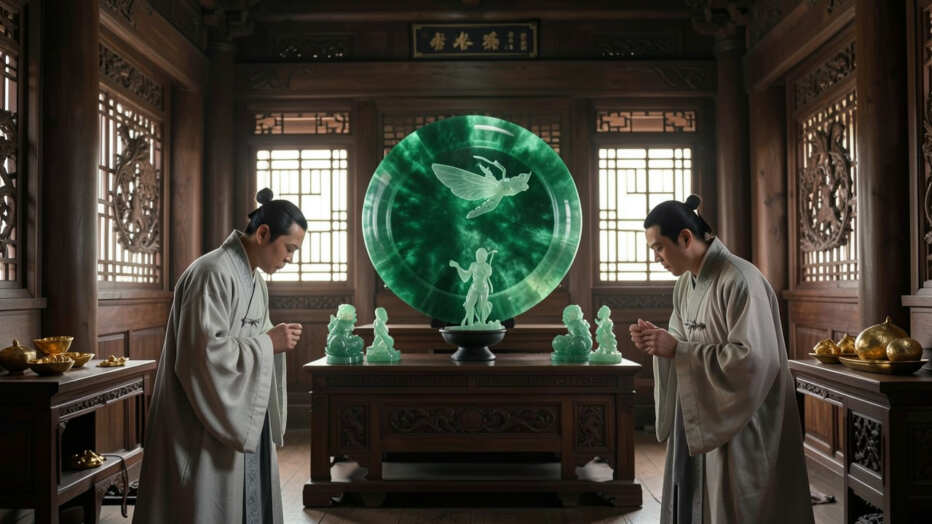
Why Was Jade Preferred Over Gold in Ancient China?
In many cultures, gold signifies ultimate wealth. In ancient China, however, jade held a higher status. This preference reveals core cultural values where spiritual and moral worth outweighed material riches.
Gold was associated with the sun, material wealth, and worldly power. Jade, in contrast, was connected to the moon, purity, and the spiritual realm. The scholar-official class, which governed for centuries, valued the virtues jade represented far more than the flashy allure of gold.
- Moral vs. Monetary Value: Gold could be weighed and traded. Jade’s value was immeasurable, based on virtue and beauty.
- Eternal vs. Earthly: Gold was seen as lasting, but jade was believed to be truly immortal, making it fit for gods and ancestors.
- Subtlety vs. Show: The subtle beauty of nephrite aligned with Confucian ideals of modesty and inner refinement, unlike gold’s obvious shine.
- Ritual Purpose: Gold was for treasury. Jade was essential for key state and religious ceremonies, such as the worship of Heaven.
Historical records show that while emperors collected gold, their most treasured possessions were jade seals, discs, and personal ornaments. The “Heirloom Seal of the Realm,” carved from jade, was the ultimate symbol of the Mandate of Heaven and legitimate imperial power.

How is Jade Used in Modern Chinese Culture?
The sacred legacy of jade remains strong in contemporary China. It is a thriving industry and a popular gift with deep cultural meaning. Modern uses often reinterpret ancient symbolism for today’s world.
Today, jade is a common gift for milestones. A jade bangle is a traditional gift for a newborn, believed to protect the child. Jade pendants in the shape of a Buddha or a leaf are worn for peace and health.
The commercial market for jade jewelry and collectibles is enormous.
| Modern Occasion | Traditional Jade Gift/Symbol | Meaning |
|---|---|---|
| Birth of a Child | Jade Bangle or Pendant (Pixiu, Fu Dog) | Protection, health, and good fortune. |
| Marriage | Jade Dragon & Phoenix Pendants | Harmony, balance, and eternal love. |
| Career Achievement | Jade Seal or Ruyi Scepter | Authority, success, and authority. |
| Elder’s Birthday | Jade Cicada or Peach Pendant | Rebirth, longevity, and immortality. |
Warning: The market is flooded with imitations. Fake jade made of resin or other stones is common. Always buy from reputable sellers and understand basic testing methods if purchasing valuable pieces.
What are the Most Famous Jade Artifacts from China?
History preserves jade’s sacred role through its most spectacular artifacts. These pieces are not just art; they are archaeological and cultural touchstones. They provide direct evidence of jade’s use in ritual and governance.
The two most iconic artifacts are the Jade Bi Disk from the Liangzhu Culture and the Jade Burial Suit of Prince Liu Sheng from the Han Dynasty. Each represents a different peak of jade’s symbolic use—one for connecting with the cosmos, the other for achieving immortality.
- The Jade Bi Disk (Neolithic Period): A flat, circular disk with a hole in the center. Over 2,500 have been found, showing its widespread ritual importance. They were offerings to heaven, placed on altars or in tombs.
- The Jade Burial Suit (Western Han Dynasty):
- The Jade Heirloom Seal (Qing Dynasty): Carved from a single piece of flawless jadeite, it was the official seal of the Qing emperor. It was used to authenticate edicts, making it a tool of governance sanctified by jade.
- The Hetian Jade “Cup of the Emperor’s Comfort” (Han Dynasty): A legend says this cup could neutralize poisons. It shows how jade was believed to have protective, almost magical, properties.
Seeing these artifacts in museums today, their reverence is palpable. They are displayed as national treasures, not just relics. Their craftsmanship and symbolism continue to inspire awe and reinforce jade’s sacred narrative.
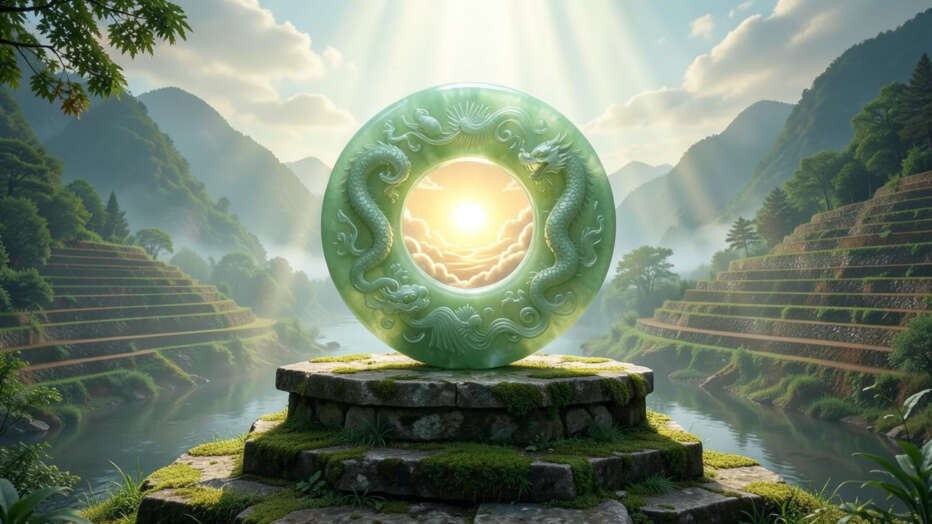
How Does Jade Symbolize Heaven and Earth?
Ancient Chinese cosmology viewed the universe as an ordered system. Jade artifacts were crafted to mirror this order. The two primary shapes, the bi and the cong, physically represent the cosmos and were central to rituals maintaining its balance.
The round bi disk represented the flat, circular heavens. The square cong tube, often carved with faces, represented the square earth. Placing them together during rituals symbolized the harmonious union of heaven and earth, a duty of the ruler.
- Bi Disk Ritual: Used in ceremonies to worship heaven, ensure good harvests, and honor ancestors. Its circular shape signified endless cycles and celestial perfection.
- Cong Tube Ritual: Used in earth-worshipping rituals. Its square corners and vertical form symbolized the stability and structure of the terrestrial world.
- Combined Power: When a ruler possessed both, it signified his Mandate of Heaven—his right to rule by maintaining cosmic harmony.
- Material Significance: Using jade, the most precious substance, for these objects underscored their supreme importance to the state and people.
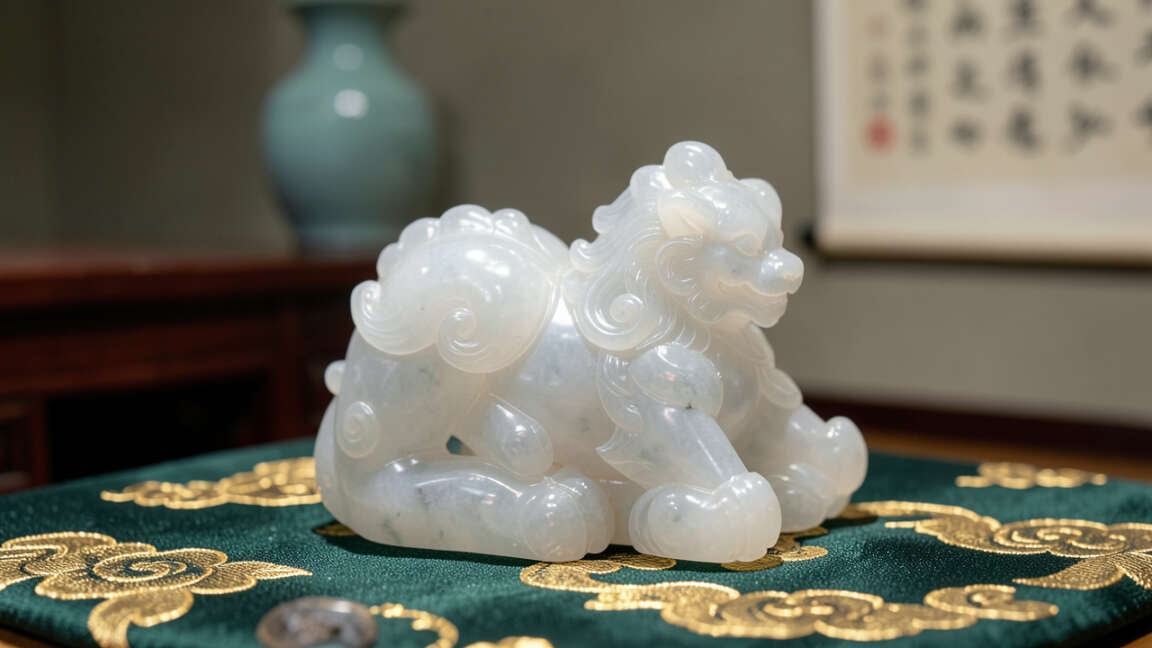
Why is White Jade Especially Prized?
While green jade is famous globally, within China’s own history, white nephrite jade often held the highest honor. This preference ties directly to its symbolic associations with purity, virtue, and the elite class.
The finest white nephrite, known as “mutton fat” jade from the Hetian region, was reserved for the imperial court. Its creamy, warm tone was seen as the embodiment of inner beauty and refined character. It was the stone of scholars, poets, and rulers.
In short, white jade’s sacredness comes from its link to Confucian purity. It was the ultimate material for expressing moral integrity and celestial connection, making it more valued than even the rarest green varieties in many historical periods.
Its color was associated with the moon, femininity, and yang energy. Important imperial seals and ritual vessels were often carved from white jade. Owning a piece of true mutton fat jade was a clear and potent sign of high status and noble intentions.
Frequently Asked Questions
What makes jade different from other gemstones in China?
Jade’s uniqueness in China stems from its deep integration into philosophy and governance. Unlike other gems valued for rarity or sparkle, jade was prized for symbolic virtues like morality and wisdom. It was also used in crucial state rituals, giving it a political and spiritual role unmatched by any other stone.
Is jadeite or nephrite more valuable today?
In the modern market, top-quality imperial green jadeite often commands the highest prices, sometimes selling for millions at auction. However, the finest white “mutton fat” nephrite is also extraordinarily valuable and historically significant. Both types are highly prized, with value depending on color, clarity, craftsmanship, and provenance.
How can you tell if jade is real?
Basic tests include the temperature test—real jade feels cool to the touch for a moment. The sound test produces a clear, resonant ring when two pieces are gently tapped together. Professional certification from a gemological laboratory is the most reliable method for valuable pieces.
What is the most famous Chinese jade artifact?
The most famous is arguably the Jade Heirloom Seal carved for the First Emperor of the Qin Dynasty. Although it is lost, its legend is immense. Among surviving artifacts, the Jade Burial Suits of the Han Dynasty and the ritual jades of the Liangzhu Culture are among the most celebrated and studied.
Can foreigners buy jade in China?
Absolutely. The jade market in China is open to all. Major cities like Beijing, Shanghai, and Kunming have dedicated jewelry districts.
It is wise to buy from reputable stores, learn basic quality markers, and consider getting a certificate of authenticity for expensive purchases.
Final Thoughts
Jade’s sacred status in China is a timeless blend of material beauty and profound symbolism. It represents the highest human virtues and the cosmic order. From ancient rituals to modern gifts, it remains a powerful symbol of cultural identity.
The reverence for jade teaches us about a culture’s values. It shows how a simple stone can become a vessel for philosophy, art, and history. Its legacy endures because it speaks to a universal desire for virtue and connection.