What is the Meaning of the Yin Yang Symbol Explained
Understanding the meaning of the Yin Yang symbol unlocks a profound concept from ancient Chinese philosophy that remains relevant today. This elegant black and white circle represents far more than just a simple design. It is a powerful metaphor for balance, duality, and the interconnected nature of the universe, offering a lens through which to view everything from personal wellness to cosmic forces.
This guide will break down the core principles behind the Yin Yang, explore its rich historical context, and show you how its wisdom can be applied to modern life. You will learn what each component represents, how the symbol illustrates dynamic harmony, and the enduring lessons it teaches about navigating a world of constant change.
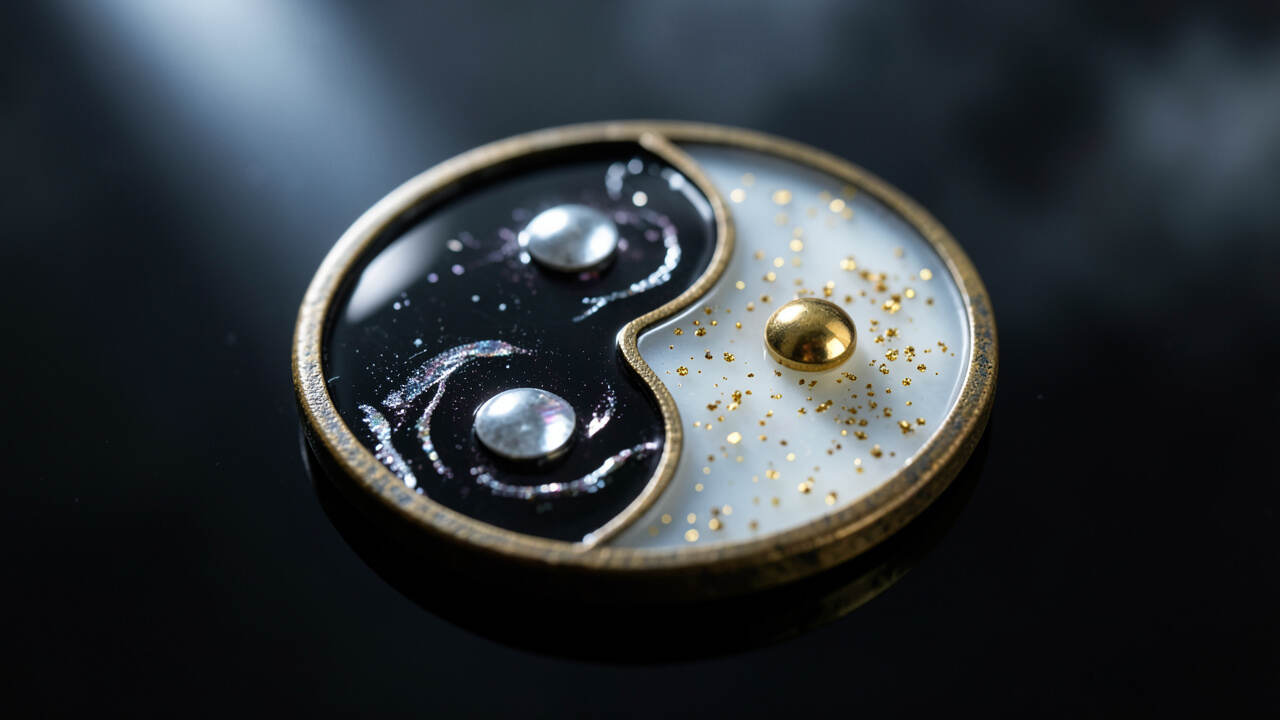
Simply put, the Yin Yang symbol visually represents the Taoist principle that all things are composed of two opposing yet complementary forces. Yin (the black half) embodies dark, passive, feminine energy, while Yang (the white half) represents light, active, masculine energy. Crucially, neither exists without the other, and they are in constant, flowing motion, giving rise to all phenomena in the universe.
Key Takeaways
- The Yin Yang meaning is centered on dualism, illustrating how seemingly opposite forces are interconnected and interdependent in the natural world.
- Yin represents qualities like darkness, passivity, and femininity, while Yang signifies light, activity, and masculinity. The balance between them is essential for harmony.
- The symbol’s core message is that balance is not static but dynamic. Yin and Yang continuously transform into one another, maintaining a perpetual state of flux.
- This ancient Chinese concept from Taoism extends to modern applications in health, relationships, and personal growth, promoting holistic thinking and moderation.
What is the Yin Yang Symbol and Its Core Philosophy?
The Yin Yang symbol, also known as the Taijitu, is the most recognizable icon of Taoism (or Daoism). At its heart, it is a diagram of the “Tai Chi” or “Supreme Ultimate,” which is the source of all existence in Taoist cosmology. The philosophy posits that the universe is governed by a natural order, the Tao, and all things arise from the interaction of Yin and Yang.
Unlike Western dualism, which often frames opposites as conflicting (good vs. evil), the Chinese model of Yin and Yang is about complementary partnership. One cannot exist without the other.
Day does not just contrast with night; it emerges from and transforms into night. This fundamental concept teaches that opposition is actually a form of synergy.
- Yin (The Black Half): Associated with the earth, shade, valleys, cold, wetness, stillness, and inward motion. It is receptive, nurturing, and represents the night, winter, and the feminine principle.
- Yang (The White Half): Associated with the sky, sun, mountains, heat, dryness, activity, and outward motion. It is creative, energetic, and represents the day, summer, and the masculine principle.
- The Curved Line (S-Curve): The wave that divides the two halves signifies that the boundary between them is not fixed. It is fluid and permeable, allowing for constant exchange and transformation.
- The Dots (Fish Eyes): Each half contains a small dot of the opposing color. This is a crucial detail. It signifies that within extreme Yin, the seed of Yang is always present, and vice versa. Nothing is pure.
| Yin Characteristics | Yang Characteristics |
|---|---|
| Passive, Receptive | Active, Creative |
| Dark, Cool | Light, Warm |
| Downward, Inward | Upward, Outward |
| Earth, Water, Night | Sky, Fire, Day |
| Winter, Autumn | Summer, Spring |
| Nurturing, Quiet | Assertive, Loud |
How Does the Yin Yang Symbol Illustrate Dynamic Balance?
The most profound aspect of the Yin Yang symbol is its depiction of dynamic, not static, balance. Imagine a circle that is constantly rotating. The curve represents this motion.
Yin is always growing to its peak, at which point Yang begins to emerge within it (the dot). As Yang strengthens and reaches its zenith, the cycle reverses, and Yin starts to reassert itself. This is the eternal rhythm of the cosmos.
Think of the seasons. Winter (Yin) reaches its coldest, darkest point—the solstice. At that very moment, the days begin to lengthen, signifying the return of light and warmth (Yang).
The peak of summer (Yang) is the turning point where days start to shorten again. There is no abrupt change; it is a smooth, continuous flow. The symbol captures this perpetual transition perfectly.
- Cyclical Transformation: Every extreme state contains the germ of its opposite. Extreme cold gives way to warmth; total darkness is pierced by the first light.
- Mutual Arising: Yin and Yang define each other. You cannot have “up” without “down,” “fast” without “slow,” or “soft” without “hard.” Their meanings are co-dependent.
- Proportional Balance: A healthy system has a proper ratio. Too much Yin leads to stagnation, depression, and coldness. Too much Yang leads to excess, inflammation, and burnout. The symbol is a circle, implying ideal equilibrium.
- Non-Conflictual Opposition: The opposition is not hostile but complementary. Like two dancers, they move in relation to one another, creating a performance greater than either could alone.
Tip: A practical way to apply this is to observe any situation where you feel “stuck.” Ask yourself: “What is the dominant energy here (Yin or Yang)?” Then, consider how a small infusion of the opposite quality could restore movement and balance. For example, if a project is stalled (too much planning/Yin), initiate one small, active task (Yang).
What is the Historical Origin and Cultural Significance of Yin Yang?
The concept of Yin and Yang predates the familiar symbol itself. The roots are found in ancient Chinese observations of nature, likely first documented in the I Ching (Book of Changes) around the 9th century BC. The terms described shaded and sunny sides of a hill, a simple yet powerful metaphor for cosmic duality.
Philosophers of the Warring States period, particularly from the Taoist and Confucian schools, elaborated this into a comprehensive cosmological theory.
The circular Taijitu symbol we know today was not perfected until the Song Dynasty (12th-13th centuries AD). Scholar Zhou Dunyi is credited with describing its form in his treatise “Explanation of the Diagram of the Supreme Ultimate.” The symbol then became deeply embedded in Chinese culture, influencing everything from medicine and martial arts to Feng Shui and art. It represents the unity of all things and the natural order of the universe.
- In Traditional Chinese Medicine (TCM): Health is defined as a harmonious balance of Yin and Yang within the body. An acupuncturist diagnoses illness by determining if a meridian is deficient in Yin or suffering from excess Yang, and treatment aims to restore equilibrium.
- In Martial Arts (e.g., Tai Chi): Movements embody the principle. Yielding to an opponent’s force (Yin) creates the opportunity to redirect it with your own (Yang). The art is a physical meditation on balance and flow.
- In Feng Shui: The arrangement of spaces is designed to allow the harmonious flow of Qi (vital energy), which is itself the product of balanced Yin and Yang forces. A room with too much Yang energy might feel chaotic and be tempered with soft (Yin) furnishings.
How Are Yin and Yang Applied in Everyday Life?
The wisdom of the Yin Yang symbol is not confined to philosophy; it is a practical guide for navigating daily life. Recognizing the interplay of these forces in your environment, relationships, and personal habits can lead to greater well-being and effective decision-making. It encourages a perspective of moderation and cyclical understanding rather than rigid, linear thinking.
For instance, your daily routine is a dance of Yin and Yang. The active, productive work day (Yang) must be balanced with rest, sleep, and quiet reflection (Yin). A society that glorifies constant hustle and productivity is an imbalanced, excessively Yang culture that eventually leads to widespread burnout, anxiety, and health issues.
The remedy is a conscious reintroduction of Yin activities: mindfulness, leisure, and genuine rest.
Important: The goal is not to achieve a perfect 50/50 split at all times, but to recognize when the balance has tilted too far in one direction and take conscious steps to counteract it. Awareness is the first step.
| Life Area | Excess of Yang (Imbalance) | Excess of Yin (Imbalance) | Balanced State |
|---|---|---|---|
| Work | Burnout, aggression, no sleep | Procrastination, lack of ambition | Focused effort with deliberate rest |
| Diet | Excessive stimulants (coffee, sugar) | Too much cold, raw, heavy food | Warm, cooked meals with cooling elements |
| Emotions | Anger, mania, impatience | Depression, apathy, excessive fear | Calm, clarity, and resilience |
| Social | Over-socializing, no alone time | Isolation, withdrawal | Meaningful connection and quiet solitude |
Why is the Yin Yang Symbol Important in Holistic Health?
In holistic health paradigms like Traditional Chinese Medicine and Ayurveda, the principle of balance is paramount. Illness is seen as a symptom of disharmony between internal and external forces. The Yin Yang model provides a diagnostic framework to understand this disharmony.
A practitioner doesn’t just treat a symptom; they seek to identify and correct the underlying imbalance.
From a Yin Yang perspective, modern lifestyles are profoundly Yang-dominant. We are surrounded by artificial light (Yang), stimulate our minds constantly with devices (Yang), eat overly processed and heating foods (Yang), and prioritize activity over rest (Yang). This chronic overstimulation depletes our Yin reserves—our deep rest, our adrenal energy, our body’s inherent cooling and moisturizing functions.
The result is a epidemic of “Yang excess” conditions: insomnia, anxiety, inflammation, and autoimmune disorders.
- Restoring Yin: This involves incorporating practices that are cooling, nourishing, and still. Examples include meditation, walking in nature (especially in the shade), eating cooling foods like cucumber, watermelon, and mung beans, and ensuring adequate, high-quality sleep.
- Tempering Yang: This isn’t about eliminating activity, but about ensuring it is purposeful and followed by recovery. Structured exercise is good Yang, but must be balanced with stretching (Yin). A passionate debate is Yang, but needs to be followed by quiet reflection (Yin).
- The TCM Diagnosis: A TCM doctor might diagnose someone with “Kidney Yin Deficiency” leading to night sweats and anxiety, or “Liver Yang Rising” causing headaches and irritability. Treatment (herbs, acupuncture, lifestyle) is tailored to restore that specific balance.
What Common Misconceptions Exist About Yin and Yang?
Several Western misunderstandings dilute the power of the Yin Yang concept. The most pervasive is equating Yin with “bad” and Yang with “good,” a direct import of the Manichaean or Judeo-Christian struggle between good and evil. Taoism teaches that both are equally necessary and valuable.
A world of only light would be as bleached and lifeless as one of only darkness.
Another misconception is that Yin is exclusively feminine and Yang masculine. While the symbols correlate with these principles, they are not limited to gender. Every human being, regardless of gender, contains and expresses both Yin and Yang energies.
The “feminine” and “masculine” labels refer to archetypal qualities (receptive vs. assertive) that exist within all people.
Warning: Avoid using Yin and Yang to justify stereotypes or inequality. The principle is about internal balance and universal complementarity, not about prescribing social roles or deeming one quality superior to another.
- Myth: Yin is weakness. Fact: Yin is the strength of water, which is soft yet can wear away rock. It is the strength of a seed germinating in darkness, or a mother nurturing a child.
- Myth: Yang is always better for success. Fact: Extreme Yang without Yin leads to reckless burnout. Lasting success requires the Yin qualities of planning, patience, and internalization.
- Myth: The goal is to eliminate one side. Fact: The goal is to manage the dynamic flow. Trying to be “all Yang” is like trying to have day without night—it is impossible and destructive.
Who Can Benefit from Studying the Yin Yang Meaning?
Anyone seeking greater self-awareness, balance, and effectiveness in their personal or professional life can benefit from this philosophy. It is particularly valuable for those in high-stress, demanding fields where burnout is a risk. Leaders, entrepreneurs, artists, and caregivers all operate in intense Yang environments and need to consciously cultivate Yin to sustain their creativity and compassion.
Individuals experiencing health challenges, especially chronic conditions related to stress, inflammation, or fatigue, may find the Yin Yang framework helpful for understanding their body’s signals. It shifts the perspective from “what is wrong with me?” to “where is the imbalance, and what nourishing (Yin) or activating (Yang) action can restore harmony?”
- For the Stressed Professional: Learning to recognize the signs of Yang excess (anxiety, insomnia, irritability) allows for proactive incorporation of Yin practices (digital detox, nature time, herbal tea) before reaching a crisis point.
- For the Creative: Understanding that inspiration (Yang flash) requires periods of quiet incubation (Yin) can relieve the pressure of constant productivity and lead to more sustainable creative output.
- For the Seeker of Meaning: The philosophy offers a comforting and elegant model for making sense of life’s contrasts—joy and sorrow, gain and loss—not as random events, but as parts of a larger, meaningful pattern of transformation.
| Personality or Situation | Common Yin Yang Imbalance | Suggested Balancing Focus |
|---|---|---|
| The “Type A” Overachiever | Excessive Yang: Agitation, poor sleep | Cultivate Yin: Meditation, warm baths, slow hobbies |
| The Chronic Overthinker | Excessive Yin (mental): Stagnation, indecision | Introduce Yang: Physical movement, clear small tasks |
| Someone Recovering from Illness | Depleted Yin: Weakness, need for deep rest | Focus on Yin: Nutritious food, sleep, gentle care |
| A Team in Conflict | Imbalance: All confrontation (Yang) or all avoidance (Yin) | Seek Middle Way: Facilitate dialogue (balanced Yin-Yang) |
How Can You Incorporate Yin Yang Principles Daily?
Incorporating these principles doesn’t require dramatic life changes. It begins with mindful observation. Start by simply noticing the flows of energy in your day.
Where do you feel tension, heat, and activity (Yang)? Where do you feel calm, coolness, and stillness (Yin)? The goal is not to judge but to become aware of the natural rhythm and your relationship to it.
Small, consistent adjustments can have a significant impact. You might structure your workday with focused “Yang” work blocks followed by “Yin” breaks for walking or stretching. You might balance a stimulating, spicy (Yang) meal with a cooling mint tea (Yin).
In a conversation, you can practice balancing speaking (Yang) with deep, active listening (Yin). These micro-practices train your mind to think in terms of dynamic balance.
- Morning Audit: Upon waking, ask: “What is my dominant energy today? Am I feeling scattered (Yang) or sluggish (Yin)?” Let this inform your first choice—meditation if scattered, a brisk walk if sluggish.
- Task Pairing: Follow a demanding, analytical task (Yang) with an intuitive, creative one (Yin). Follow a long meeting with a short solo walk.
- Nature Connection: Spend time observing natural cycles. The transition from day to night, the growth and decay of plants—these are perfect, visual lessons in Yin-Yang flow.
- Review Your Environment: Look at your living or work space. Is it all hard surfaces, bright light, and clutter (Yang)? Add a plant, a soft blanket, or dimmer lighting (Yin) to create balance.
Frequently Asked Questions
What is the origin of the Yin Yang symbol?
The concept of Yin and Yang originates from ancient Chinese philosophy, likely first appearing in texts like the I Ching (Book of Changes) around the 9th century BC. It evolved from simple observations of shaded and sunny sides of a hill. The circular Taijitu symbol we know today was formalized much later, during the Song Dynasty in the 12th century.
Does the Yin Yang symbol have any religious meaning?
While deeply associated with Taoism (Daoism), which is a philosophical and religious tradition, the Yin Yang principle itself is a cosmological concept about the nature of reality. It has been absorbed into other Chinese belief systems like Buddhism and Confucianism and is widely viewed as a cultural and philosophical symbol rather than a strictly religious one.
Can the colors of Yin and Yang be reversed?
Historically, the standard form is black (Yin) and white (Yang). However, variants exist, and some older or alternative depictions use different colors or patterns. The essential meaning lies in the complementary duality and motion, not strictly in the specific colors, though the black/white version is the most iconic and widely recognized today.
How does the Yin Yang symbol relate to the concept of Qi?
Qi (or Chi) is often translated as “vital life force” or “energy flow” in Chinese thought. It is the animating energy that flows through all things. The interplay of Yin and Yang is what moves and balances Qi.
Stagnation of Qi (excess Yin) or hyperactivity of Qi (excess Yang) is believed to lead to physical and emotional illness. Practices like acupuncture and Tai Chi aim to regulate Qi by harmonizing Yin and Yang.
Is the Yin Yang symbol a political symbol?
While the South Korean flag incorporates a variant of the Taijitu symbol (called the Taegeuk) as a national emblem representing cosmic balance, the Yin Yang symbol itself is not inherently political. Its meaning is philosophical and metaphysical. Any political use is a specific cultural adaptation rather than an indication of its core purpose.
Final Thoughts
The profound meaning of the Yin Yang symbol extends far beyond its simple, elegant design. It teaches us that harmony is found not in the elimination of opposites, but in their respectful and dynamic interplay. This ancient wisdom challenges us to seek balance in our modern, often one-sided lives.
By applying this perspective, we can cultivate greater resilience, understanding, and peace. Whether in our health, our relationships, or our inner world, the timeless dance of Yin and Yang offers a map for navigating complexity with grace and finding unity within duality.