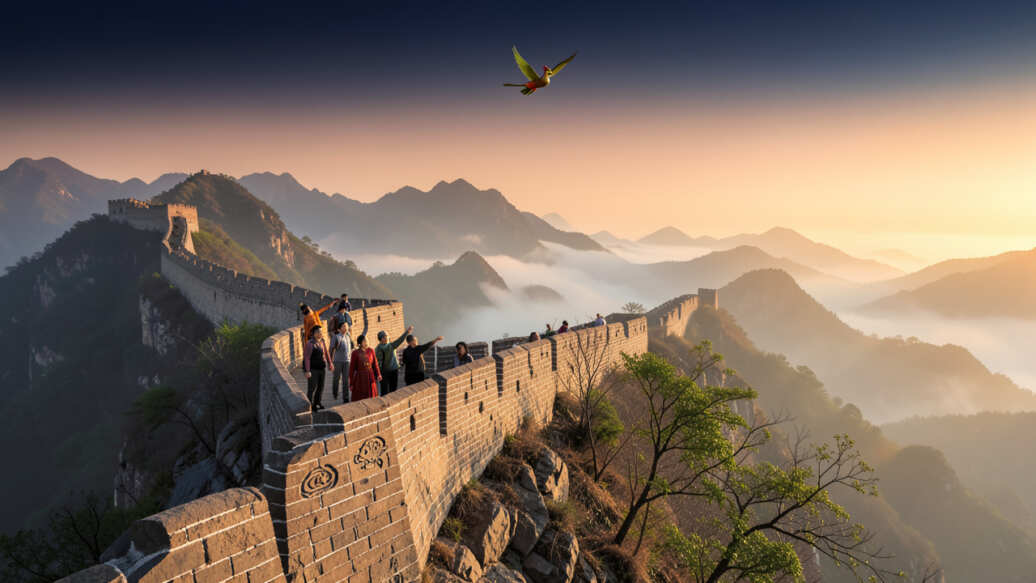
Great Wall Symbolism: Beyond Defense to Cultural Icon
The symbolism of the Great Wall beyond defense reveals one of humanity’s most profound architectural achievements. While everyone knows it as a military fortification, its true significance runs far deeper into the fabric of Chinese culture and identity. This post explores the layered meanings and enduring legacy of the Great Wall that transcend its original defensive purpose.
Understanding these symbolic dimensions helps appreciate why the Wall remains a powerful icon today. It represents more than stones and mortar; it embodies concepts of unity, perseverance, and cultural continuity that resonate globally.
Simply put, the Great Wall is a profound symbol of Chinese civilization’s strength, unity, and enduring spirit. Beyond its defensive walls, it represents the cohesive force that bound diverse peoples and dynasties together into a single cultural identity, serving as a testament to human ambition and perseverance across millennia.
Key Takeaways
- The Great Wall symbolism encompasses national unity, cultural identity, and human perseverance far beyond military defense.
- It functioned as an “imagined border” that defined and protected Chinese civilization from outside influences.
- The Wall served as a physical manifestation of the philosophical concept of “Central Kingdom” (Zhongguo).
- Modern symbolic interpretations include peace, resilience, and the bridge between China’s past and present.
- The symbolism of the Great Wall beyond defense continues to inspire art, literature, and national pride today.
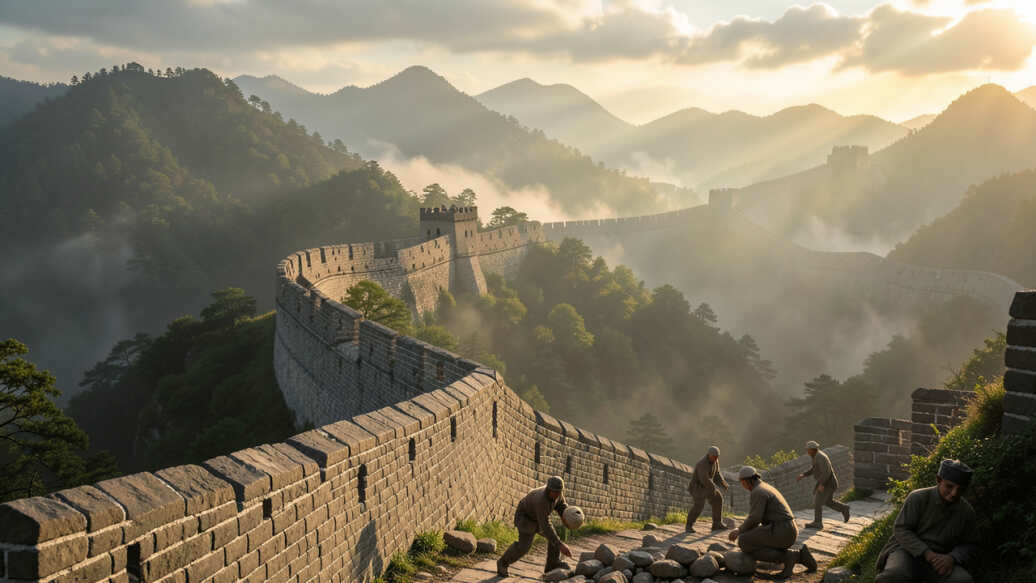
What Is the Great Wall’s Core Symbolic Meaning?
At its heart, the Great Wall symbolizes the unification of a vast territory under a single cultural and political identity. It wasn’t just about keeping armies out; it was about defining what was “inside.” This internal demarcation created a powerful sense of collective belonging for the diverse peoples living within its sphere.
The Wall acted as a giant, physical “we” statement. It communicated to the world, and to the people within, that this was a distinct civilization with defined boundaries. Archaeological studies of the Wall’s watchtowers and beacon systems show they were as much about internal communication and control as external warning.
- Defining Civilization: It marked the limit of the agrarian, bureaucratic Chinese state against the nomadic steppe cultures.
- Administrative Control: Gates and passes functioned as customs checkpoints, regulating movement, trade, and taxation.
- Cultural Cohesion: The project required mobilizing resources from across the empire, reinforcing central authority.
- Moral Boundary: It was seen as separating the civilized world from the “barbarian” beyond, a common ancient worldview.
- Spiritual Protection: Some sections were aligned with geomantic (feng shui) principles to protect the empire’s spiritual energy.
Tip: When discussing the Wall’s symbolism, remember it had multiple purposes simultaneously. Its meaning wasn’t singular but evolved with each dynasty that rebuilt and extended it.
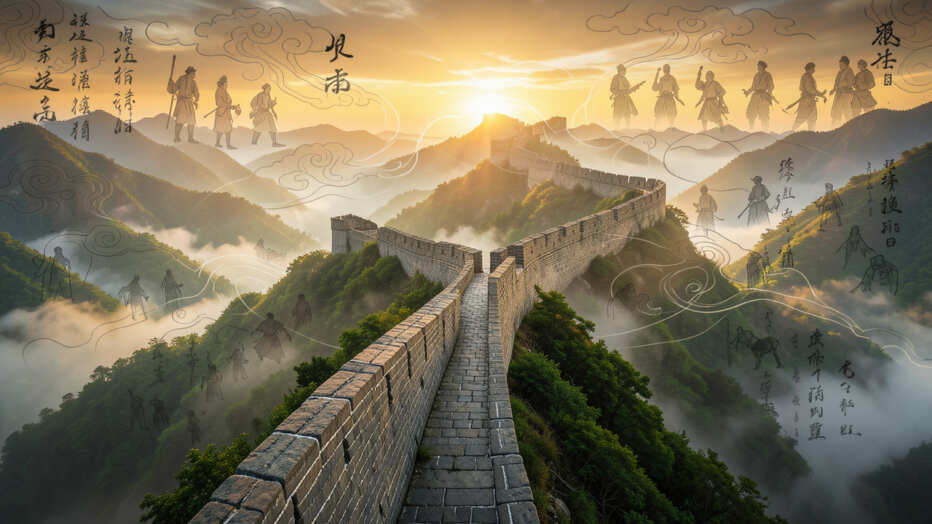
How Did the Wall Function as an Imagined Border?
Beyond the physical stones, the Great Wall created what historians call an “imagined border.” This concept explains how a structure that was frequently breached still served a powerful psychological and political function. The border existed in the minds of the people as much as it did on the landscape.
Emperors used the Wall as a tool to solidify their rule and justify their authority. The ability to construct and maintain such a monumental project was proof of the mandate of heaven. It showed that the ruler had the power to command nature and humanity for the greater good of the civilization.
| Aspect of the “Imagined Border” | How the Wall Achieved It |
|---|---|
| Political Unity | The project itself was a massive state-building exercise, requiring coordinated labor from across provinces. |
| Economic Control | Gates like Shanhaiguan and Jiayuguan regulated the Silk Road trade, making the empire wealthy. |
| Cultural Identity | It visually and conceptually separated the Han Chinese heartland from northern nomadic cultures. |
| Psychological Security | Even when breached, its presence offered a sense of ordered protection and state capability. |
This imagined border was crucial for maintaining the concept of China as a coherent entity, especially during periods of division. The Wall provided a tangible link to a glorious, unified past that rulers sought to emulate.
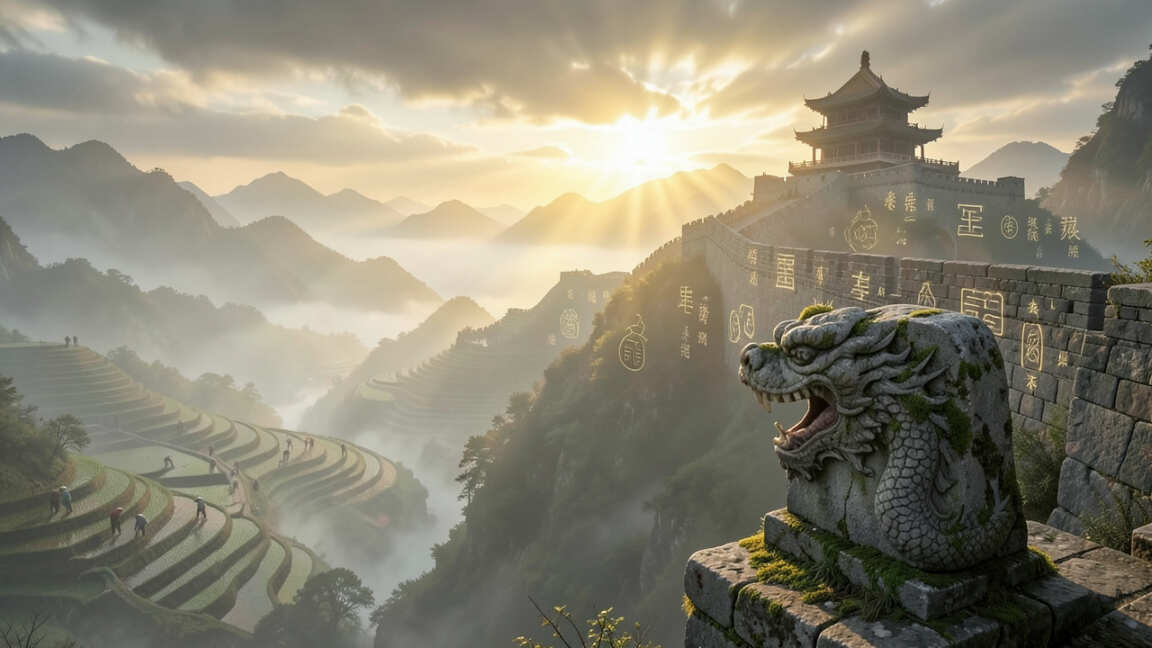
Why Does the Wall Represent the “Central Kingdom” Concept?
The Great Wall is the ultimate architectural expression of the “Central Kingdom” (Zhongguo) philosophy. This ancient idea held that China was the cultural and political center of the world, surrounded by lesser states. The Wall was the physical boundary that reinforced this worldview.
It created a clear dichotomy: inside was order, culture, and civilization; outside was chaos and barbarism. This wasn’t just arrogance; it was a foundational part of the political and social structure. The Wall legitimized the emperor’s role as the Son of Heaven, responsible for maintaining harmony within the civilized world.
- Mandate of Heaven: Emperors used the Wall’s construction to demonstrate their divine right to rule by bringing order to the landscape.
- Tribute System: The Wall reinforced the idea that foreign states should approach China as tributaries, not equals.
- Cultural Preservation: It was seen as protecting Chinese innovations—like paper, printing, and governance—from corrupting outside influences.
- Agricultural Protection: The Wall safeguarded the fertile farming lands that were the economic engine of the empire.
- Historical Continuity: Connecting the works of different dynasties, it showed an unbroken line of Chinese civilization.
Important: The “Central Kingdom” concept is key to understanding the Wall’s deeper symbolism. It wasn’t a wall of fear, but a wall of confidence in one’s own civilization.
What Are the Modern Symbolic Interpretations of the Wall?
In contemporary times, the symbolism of the Great Wall has been actively reshaped. The Chinese state and global perception have infused it with new meanings that serve present-day narratives. It is no longer primarily a symbol of division, but of strength and national pride.
The Wall is now a universal symbol of Chinese endurance and history. It represents the ability of the Chinese people to undertake impossible tasks through collective will. This modern symbolism is powerfully promoted through education, media, and tourism.
- National Unity and Strength: It stands for the unbroken spirit of the Chinese nation through centuries of trials.
- Peace and Defense: Phrased as a “defensive” structure, it’s presented as a symbol of protection rather than aggression.
- Human Achievement: As one of the New Seven Wonders of the World, it symbolizes the pinnacle of ancient engineering.
- Tourism and Economy: It’s a symbol of China’s open welcome to the world, driving a massive tourism industry.
- Environmental Symbol: The Wall’s path follows mountain ridges, making it a symbol of harmony between human creation and nature.
According to China’s National Cultural Heritage Administration, the Great Wall receives over 10 million visitors annually, each engaging with these modern symbolic layers. The site is carefully managed to promote messages of peace and shared human heritage.

How Has Art and Literature Shaped the Wall’s Symbolism?
The Great Wall’s symbolic power has been massively amplified through centuries of artistic representation. Poets, painters, and filmmakers have each interpreted its meaning, often focusing on its human cost and romantic grandeur. This cultural reinforcement is crucial to its enduring iconic status.
In classical Chinese poetry, the Wall often symbolizes separation, longing, and the harsh reality of military service. It was a place of exile for soldiers and a barrier for lovers. These emotional associations added a deeply personal layer to the monumental structure.
| Artistic Medium | Common Symbolic Themes |
|---|---|
| Classical Poetry | Sorrow, separation, the burden of empire, the solitude of soldiers. |
| Traditional Painting | Harmony with nature, majestic scale, the passage of time and history. |
| Modern Film & Media | Epic struggle, national resilience, a backdrop for historical dramas. |
| Global Popular Culture | A metaphor for any massive, seemingly insurmountable challenge or barrier. |
This rich cultural tapestry means that when people see the Wall, they aren’t just seeing stones. They are tapping into a deep well of shared stories and emotions that have been crafted over generations.
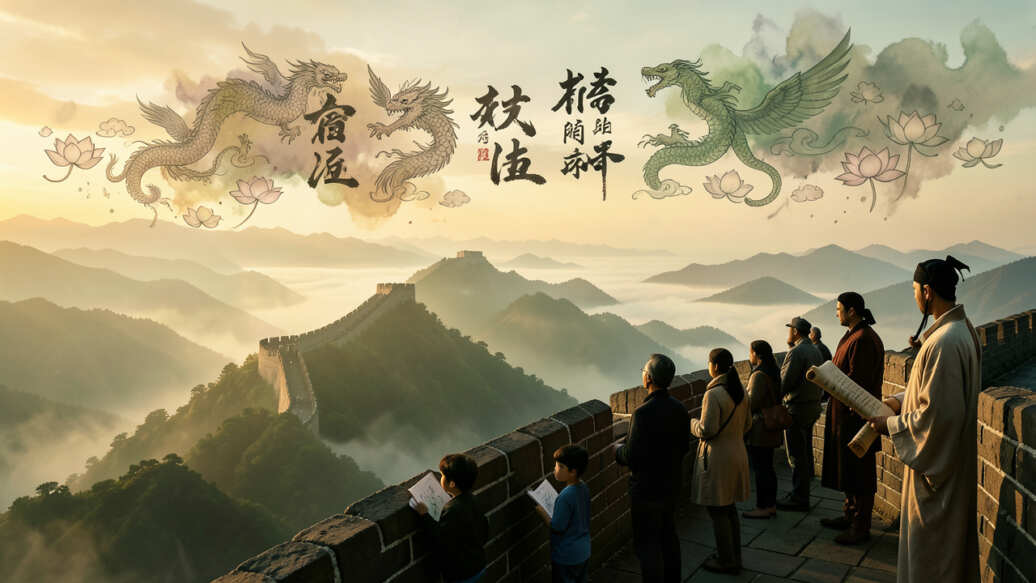
Who Needs to Understand the Wall’s Deeper Symbolism?
Understanding the symbolism beyond defense is crucial for several groups. For historians and students, it provides a more accurate lens for analyzing Chinese statecraft and society. For travelers, it transforms a sightseeing trip into a meaningful cultural dialogue.
Businesspeople and diplomats benefit from this knowledge when engaging with Chinese counterparts, as the Wall is a touchstone of national pride. Even architects and urban planners can draw lessons from its integration of function, symbolism, and landscape.
- Students of History & International Relations: Essential for understanding Chinese perspectives on sovereignty and borders.
- Cultural Travelers: Enriches the experience by connecting the physical site to its philosophical roots.
- Professionals Working with China: Shows respect and deeper knowledge in business and diplomatic settings.
- Writers and Artists: Provides a powerful, multi-layered symbol for creative work.
- Anyone Curious About Civilization: It’s a case study in how humans create meaning through monumental architecture.
Warning: Reducing the Great Wall to just a defensive structure misses its most important historical and cultural functions. Always consider its symbolic dimensions.

What Role Does the Wall Play in China’s Global Image?
Internationally, the Great Wall symbolism is carefully curated to project specific messages. It is China’s most recognizable icon, used to convey ancient wisdom, stability, and the grandeur of its civilization. This soft power tool helps shape global perceptions.
The Wall is often the first thing people associate with China, making it a powerful branding asset. Its image appears in everything from airline logos to Olympic ceremonies, consistently linking the nation with endurance and majesty.
- Brand of Ancient Civilization: It immediately establishes China as a country with a deep, continuous history.
- Symbol of Ambition: The scale of the project speaks to a capacity for large-scale planning and execution.
- Metaphor for Economic Growth: Modern commentators often compare China’s economic rise to the construction of the Wall—a monumental, transformative project.
- Unifying It represents the unified Chinese state, a key message in global political discourse.
- Ecotourism and Preservation: Its protection efforts showcase China’s commitment to environmental heritage.
A study by the University of International Business and Economics noted that the Great Wall is mentioned in over 85% of introductory materials about China for foreign students and tourists, underscoring its role as the primary cultural ambassador.
Frequently Asked Questions
Was the Great Wall only about defense?
No, while defense was a primary practical function, the Wall’s roles in defining cultural boundaries, facilitating trade control, projecting state power, and symbolizing national unity were equally important throughout its history.
How did the Wall influence Chinese identity?
The Wall helped forge a shared identity by physically marking the homeland of the Han people. It created a clear “us versus them” mentality that strengthened internal cohesion and loyalty to the imperial state over centuries.
Why is the Wall considered a symbol of peace today?
Modern reinterpretation frames it as a defensive, protective structure rather than an aggressive one. This shift aligns with contemporary narratives of China as a peaceful nation proud of its non-expansionist history, using the Wall as proof.
What are the most important symbolic gates on the Wall?
Shanhaiguan (“Where the Mountains Meet the Sea”) symbolizes the unity of China’s diverse geography. Jiayuguan represents the western end of the civilization and the gateway to the Silk Road, highlighting trade and cultural exchange.
How can visitors appreciate the Wall’s symbolism?
Visit restored sections like Mutianyu to see architectural details. Read classical poetry about the Wall before your trip. Consider hiring a guide who can explain the historical and cultural context at each viewpoint for a deeper experience.
Final Thoughts
The symbolism of the Great Wall beyond defense is a testament to its profound impact on Chinese and world culture. It was a physical and psychological boundary that helped define a civilization. Its stones hold stories of unity, ambition, and cultural identity that still resonate powerfully.
Recognizing these deeper layers transforms the Wall from a mere tourist attraction into a living symbol of human endeavor. It reminds us that the greatest monuments are always built as much from ideas as they are from stone.