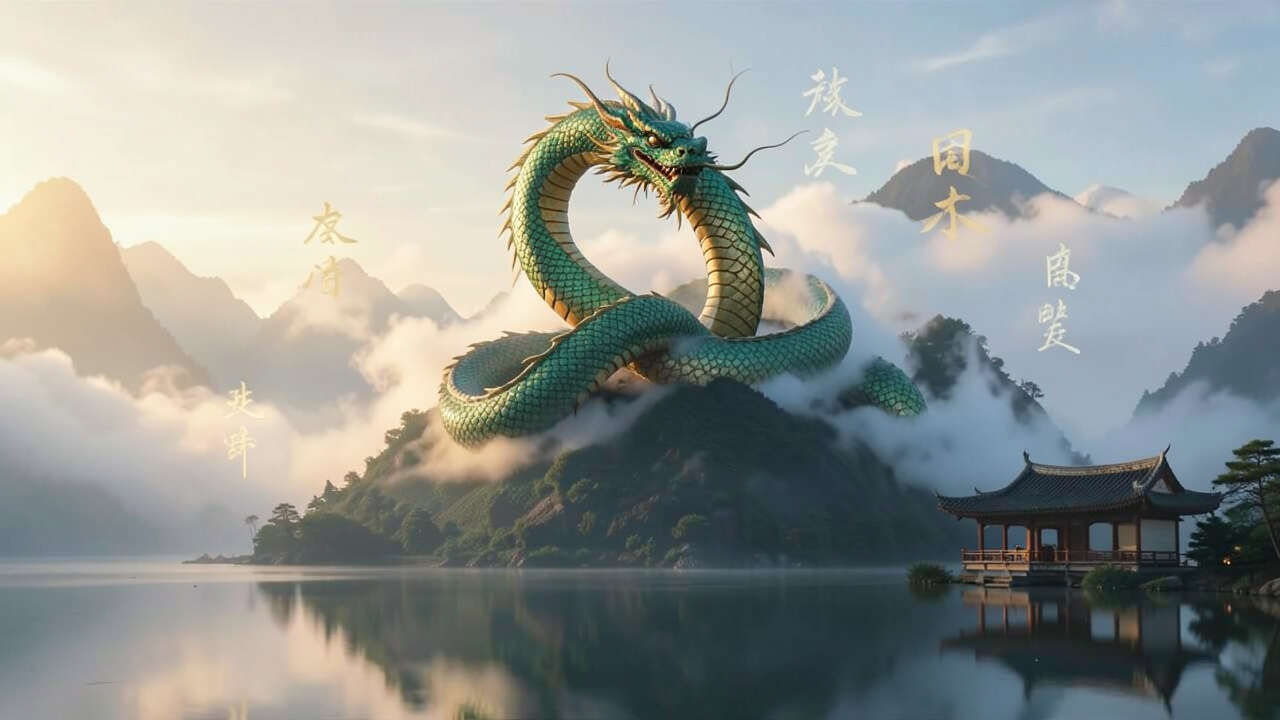
What Does the Chinese Dragon Symbolize? Meaning Explained
The Chinese dragon is a powerful and benevolent symbol that has defined cultural identity for millennia. Unlike Western counterparts, it represents auspicious power, wisdom, and good fortune. Understanding its deep meaning unlocks a key to Chinese philosophy, art, and tradition.
This post explores the core symbolism, historical roots, and modern relevance of the Chinese dragon. You’ll learn what it truly represents beyond the myths and how this ancient symbol thrives in contemporary culture.
Simply put, the Chinese dragon is a sacred, imperial symbol of power, strength, and good luck. It embodies the harmonious balance of yin and yang and is seen as a bringer of rainfall and prosperity, fundamentally representing positive, cosmic energy.
Key Takeaways
- The Chinese dragon meaning is fundamentally positive, symbolizing power, nobility, and auspiciousness.
- It is a composite creature, combining features of nine animals, which represents its ability to control natural elements.
- The dragon is intrinsically linked to the Emperor and imperial authority, serving as a celestial guardian.
- In modern contexts, it symbolizes Chinese cultural identity, strength, and success.
- Its symbolism differs greatly from the malevolent, treasure-hoarding dragons of Western mythology.
What is the Historical Origin of the Chinese Dragon Symbol?
The origins of the Chinese dragon trace back over 7,000 years to Neolithic cultures. Archaeological finds, like jade dragon artifacts from the Hongshan culture, prove its ancient roots. Early representations were likely totems combining powerful animal traits.
These proto-dragons evolved into the familiar serpentine form during the Han Dynasty. The creature became codified in texts like the Shan Hai Jing (Classic of Mountains and Seas), which described its auspicious nature and physical characteristics.
- Neolithic Roots: Totemic amalgams of tribal animals for protection and power.
- Shang & Zhou Dynasties: Dragon motifs appear on bronze ritual vessels, connecting it to communication with heavens.
- Han Dynasty Codification: Literary descriptions establish the “nine resemblances” and its role as a rain deity.
- Tang & Song Refinement: The dragon becomes a central motif in art, poetry, and imperial symbolism.
- Ming & Qing Apex: Five-clawed dragons become exclusively reserved for the Emperor, cementing its imperial status.
This long history demonstrates the dragon’s transition from a tribal protector to a nationwide symbol of cosmic order and imperial legitimacy.
How Does the Chinese Dragon Differ from the Western Dragon?
The contrast is stark and fundamental. While both are mythical reptilian creatures, their cultural cores are opposites. The Western dragon is typically a winged, fire-breathing beast representing chaos, greed, and a force to be conquered by heroes.
The Chinese dragon is wingless, serpentine, and a creature of water and weather. It is revered, not fought. It represents orderly power and is a benevolent force that humans pray to for rain and fortune.
| Aspect | Chinese Dragon (Lóng) | Western Dragon |
|---|---|---|
| Moral Alignment | Benevolent, auspicious | Malevolent, greedy |
| Primary Domain | Water, weather, heavens | Fire, caves, earth |
| Physical Form | Serpentine, wingless, antlered | Winged, heavily armored |
| Relationship to Humans | Protector, symbol of authority | Adversary, obstacle |
This table highlights the core philosophical divergence. The Chinese dragon is a symbol of harmony and heavenly mandate, while the Western dragon often embodies sinful nature or untamed wilderness.
What Are the Core Symbolic Meanings of the Chinese Dragon?
The dragon symbolism in Chinese culture is layered and multifaceted. Its primary associations stem from its perceived control over the natural world and its connection to imperial authority. These meanings are deeply embedded in language, festivals, and daily life.
- Power and Strength: The dragon represents dynamic, active energy (Yang). It is the ultimate symbol of potent, masculine force.
- Nobility and Auspiciousness: Seeing a dragon was considered a sign of great good luck. It is the first of the Four Celestial Animals in Chinese astrology.
- Imperial Authority: The Emperor was known as the “Son of Heaven,” and the dragon was his exclusive emblem. The five-clawed dragon represented supreme power.
- Wisdom and Longevity: Dragons were believed to be ancient, wise creatures capable of living for thousands of years, embodying immortality.
- Fertility and Rain: As water deities, dragons controlled rainfall. Farmers prayed to dragon kings during droughts, linking the creature to agricultural abundance.
The pearl or flaming pearl often seen in its claws symbolizes wisdom, spiritual energy, and prosperity. Chasing the pearl represents the relentless pursuit of knowledge and enlightenment.
How is the Dragon Symbol Used in Modern Chinese Culture?
Far from being a relic, the Chinese dragon meaning is vibrantly alive in contemporary society. It has evolved from an imperial symbol to one of cultural pride and commercial power. You’ll find it in celebrations, business, and global branding.
During Lunar New Year, dragon dances are performed to scare away evil spirits and bring luck. The dragon remains a central motif in architecture, from temples to modern skyscrapers designed with feng shui principles.
- Cultural Identity: People of Chinese descent often refer to themselves as “Descendants of the Dragon,” a powerful expression of heritage.
- Business & Success: Companies use dragon imagery to convey strength, trustworthiness, and ambition. It’s a popular symbol for financial institutions.
- Global Pop Culture: From movies to video games, the Chinese dragon is a recognizable icon, though often needing contextual explanation.
- Sports & Competition: National teams, like the Hong Kong rugby team nicknamed “Dragon,” use it to embody fighting spirit.
Tip: When gifting dragon imagery, consider the context. A dragon facing inward on a building draws energy in, while one facing outward projects power. This subtle distinction matters in feng shui.
Why is the Dragon Associated with the Chinese Emperor?
The link between the dragon and the Emperor is one of power and divine mandate. This association was deliberately cultivated to legitimize imperial rule. The dragon’s celestial nature mirrored the Emperor’s claimed role as the intermediary between Heaven and Earth.
Imperial robes were adorned with dragon embroidery. The number of claws was strictly regulated – only the Emperor could use five-clawed dragons. Princes and high officials were permitted four or three claws.
Violation was a capital offense.
This use of symbolism was a form of visual propaganda. It communicated an unquestionable cosmic order where the Emperor sat at the apex, protected and empowered by celestial forces.
| Imperial Dragon Usage | Description |
|---|---|
| Dragon Robe (Lóng Páo) | Formal court attire featuring twelve embroidered symbols, with the five-clawed dragon as the centerpiece. |
| Throne & Architecture | The Forbidden City is filled with dragon motifs on walls, bridges, and the Emperor’s throne, signifying sacred space. |
| Imperial Titles | The Emperor’s face was called the “Dragon Face,” and his anger was a “Dragon’s Fury.” |
This institutional use made the dragon synonymous with state power for centuries. Even today, its imperial connotations lend an air of authority and prestige.
What Are the Different Types of Chinese Dragons?
The Chinese dragon is not a single entity but a complex taxonomy of celestial beings. Classical texts describe various types, each with distinct roles and domains. This hierarchy reflects the structured Chinese view of the cosmos.
- Tianlong (Celestial Dragon): Guards the heavens and pulls the celestial chariots. It is the most revered type.
- Shenlong (Spirit Dragon): Controls wind, rainfall, and clouds. Prayers were directed to this dragon for good harvests.
- Fucanglong (Dragon of Hidden Treasures): A guardian of buried jewels and precious minerals. Its appearance signals volcanic activity.
- Dilong (Earth Dragon): Rules rivers, streams, and lakes. It is often associated with water control and irrigation.
- Yinglong (Winged Dragon): One of the oldest forms, said to have helped the mythical Yellow Emperor in battle.
- Jiaolong (Horned Dragon): A powerful river dragon that has already ascended to a higher level of power.
- Panlong (Coiled Dragon): An imperial dragon that has not yet ascended to heaven, often associated with calming waters.
- Huanglong (Yellow Dragon): A benevolent, one-horned dragon associated with the Emperor and a symbol of the earth.
- Dragon King (Lóng Wáng): Ruler of a sea quadrant. Each of the four Dragon Kings (Ao) controls a part of the ocean.
This diversity shows the dragon’s role as an elemental force, governing everything from weather to geology and spiritual guardianship.
What Does It Mean to Be a “Descendant of the Dragon”?
This phrase is a profound statement of cultural identity and collective pride. It transcends ethnicity, referring to all people of Chinese heritage worldwide. The saying implies a shared lineage, strength, and destiny.
The concept gained modern popularity through a 1978 pop song of the same name. It solidified the dragon as a unifying symbol for the global Chinese diaspora. The song speaks of resilience and overcoming hardship.
Being a “Descendant of the Dragon” means carrying the virtues of the dragon: perseverance, wisdom, and dignity. It’s a call to honor one’s ancestors and contribute positively to the world.
Important: This identity is about cultural connection, not genetics. It is an inclusive term that has become a core part of modern Chinese cultural discourse and global recognition.
How is the Dragon Celebrated in Festivals and Art?
The dragon is the star of many Chinese festivals and traditional arts. These celebrations are dynamic expressions of the symbol’s enduring power. The two most prominent are the Dragon Boat Festival and the Lunar New Year dragon dance.
The Dragon Boat Festival commemorates the poet Qu Yuan. Teams race long, ornate boats carved as dragons, paddling to the beat of drums. The dragon head prow is believed to ward off evil spirits from the water.
In art, the dragon appears in every medium:
- Sculpture: Stone carvings on bridges, temples, and imperial tombs.
- Painting: Ink wash paintings showing dragons chasing pearls through clouds.
- Textiles: Intricate embroidery on robes, screens, and thangka paintings.
- Ceramics: Blue-and-white porcelain vases and plates featuring dragon motifs.
- Literature & Film: Central figures in myths, legends, and modern fantasy genres.
These artistic representations constantly reinterpret the dragon’s meaning, keeping the symbol fresh and relevant for new generations.
What Are Common Misconceptions About the Chinese Dragon?
Several misconceptions about the Chinese dragon arise from a lack of cultural context. The most common is projecting Western interpretations onto it. Clearing these up is essential for true understanding.
Warning: A frequent error is associating the Chinese dragon with evil or danger. This is incorrect. The dragon is overwhelmingly positive. A “fierce” dragon represents powerful energy, not malice.
Here are key corrections:
- Myth: Dragons are evil. Fact: They are divine, benevolent creatures and symbols of good fortune.
- Myth: All Chinese dragons breathe fire. Fact: Most are associated with water and weather. Fire-breathing is a Western trait.
- Myth: Dragons are reptiles. Fact: They are mythical composite beings, a “spiritual” or “celestial” animal class.
- Myth: The dragon symbol is outdated. Fact: It is actively used in modern culture, business, and national identity.
Acknowledging these facts allows for a respectful and accurate appreciation of this magnificent cultural symbol.
Frequently Asked Questions
What is the most important symbol of the Chinese dragon?
The most important symbol is likely the pearl or flaming pearl it often chases. This pearl represents wisdom, spiritual energy, prosperity, and the essence of the moon. The dragon’s pursuit of it symbolizes the relentless quest for enlightenment and perfection.
Is the Chinese dragon yin or yang?
The Chinese dragon is a strong representation of Yang energy. It is associated with the sun, sky, activity, and masculine force. However, its connection to water and weather also links it to the nurturing, receptive aspects of nature, showing a harmonious balance.
How many claws does a Chinese dragon have?
The number of claws indicates rank and importance. The highest-class, Imperial Dragon has five claws. Princes and nobility typically used four-clawed dragons, while lower officials and commoners used three-clawed versions.
This hierarchy was strictly enforced.
Can women be associated with the Chinese dragon?
Yes. While the dragon is strongly Yang and masculine, the Chinese Empress was often symbolized by the phoenix (Fenghuang), which represents the Yin principle. Together, the dragon and phoenix symbolize marital harmony and cosmic balance.
What does seeing a dragon in your dream mean in Chinese culture?
Traditionally, dreaming of a Chinese dragon is an extremely auspicious sign. It can signal upcoming success, promotion, the birth of a son, or a period of great luck and power. It is considered a positive omen from the heavens.
Final Thoughts
The Chinese dragon is a profound symbol of cosmic power, cultural unity, and benevolent strength. Its meaning has evolved from ancient totems to imperial emblems and now to a global badge of identity. Understanding its symbolism provides deep insight into Chinese values of harmony, ambition, and wisdom.
As a living symbol, the dragon continues to inspire art, celebrate heritage, and signify good fortune. It remains a timeless icon of the enduring spirit and aspirations of Chinese culture.