Meaning of the Chinese Fan in Tradition and Culture
The meaning of the Chinese fan in tradition extends far beyond its simple function as a cooling tool, embodying centuries of artistry, social status, and symbolic communication. From the imperial courts of ancient dynasties to the hands of modern practitioners, these delicate objects have been essential accessories for artists, scholars, and royalty. Understanding their role provides a window into Chinese culture, etiquette, and aesthetic values.
This guide explores the deep cultural significance of the traditional Chinese fan, covering its historical evolution, the symbolism of its designs, and the various types used in different contexts. You will learn how a fan could convey a secret message, indicate social rank, or serve as a canvas for a masterpiece.
Simply put, the Chinese fan is a profound cultural artifact that represents etiquette, artistic expression, and philosophical ideals. Its meaning changes based on its shape, material, and decoration, serving as a non-verbal language in social interactions and a symbol of refinement in art.
Key Takeaways
- The Chinese fan is a symbol of social status, scholarly refinement, and artistic accomplishment, not just a practical object.
- Specific designs and motifs on fans carry deep meanings, often relating to wishes for longevity, prosperity, love, or moral virtues.
- Historical types like the rigid folding fan and the circular court fan were used in specific social and ceremonial contexts.
- Traditional performing arts, including Peking Opera and classical dance, rely on the fan as a critical prop to convey emotion and character.
- The art of fan making is a recognized Intangible Cultural Heritage, preserving techniques that blend painting, calligraphy, and craftsmanship.
What is the Historical Origin of the Chinese Fan?
The history of the Chinese fan spans over 3,000 years, beginning with simple leaf and feather designs used for ritual purposes. Early fans were not for personal cooling but were carried by attendants to shield nobles from the sun or dust. These ceremonial fans were often large, made of bamboo or feathers, and symbolized the owner’s authority and rank within the imperial hierarchy.
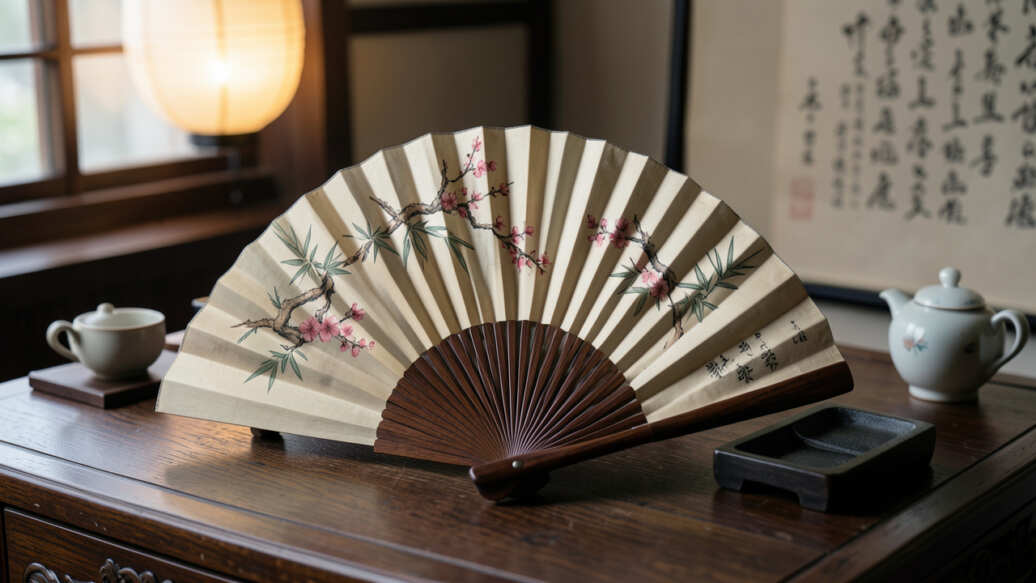
The folding fan, which became the most iconic form, is believed to have been introduced from Japan or Korea during the Song Dynasty (960-1279 AD). Its collapsible design made it portable and discreet, quickly becoming a favorite among scholars, poets, and the literati class. They used it to display their calligraphy and painting skills, turning a practical item into a personal statement.
During the Ming (1368-1644) and Qing (1644-1911) Dynasties, fan culture reached its peak. Fans became essential accessories for both men and women of the upper classes. The fan itself evolved into a multi-piece craft, involving specialists in bamboo frame carving, paper or silk painting, and precious material inlay.
Its presence in art, literature, and opera solidified its place as a core element of traditional culture.
- Song Dynasty: Adoption and popularization of the folding fan among the educated elite.
- Ming Dynasty: The fan becomes a major art form, with famous painters creating works specifically for fans.
- Qing Dynasty: Elaborate fans with intricate carvings and precious materials like ivory, jade, and sandalwood become symbols of extreme wealth.
What Are the Most Common Types of Traditional Chinese Fans?
Traditional Chinese fans are categorized by their shape and structure, each with distinct uses and symbolic meanings. The two primary forms are the rigid circular fan and the folding fan. Other specialized fans exist for specific ceremonial or artistic functions.
| Fan Type | Structure & Material | Primary Cultural Use |
|---|---|---|
| Tuan Shan (Circular Fan) | Round, non-folding frame covered in silk or fine paper, with a bamboo handle. | Used by court ladies; symbol of feminine grace and unity (perfect roundness). |
| Zhe Shan (Folding Fan) | Collapsible, with bamboo ribs and paper or silk leaf. | Scholar’s accessory for painting and calligraphy; symbol of literacy and refinement. |
| Xing Shan (Oval Fan) | Oval or rectangular, often made of cattail leaves or gauze. | Common among common folk for practical cooling; associated with simplicity. |
| Ying Wu Shan (Feather Fan) | Made from peacock or crane feathers, sometimes with a jade handle. | Taoist ritual item; associated with immortals and strategic advisors like Zhuge Liang. |
Each type reflects a different aspect of society. The scholarly folding fan allowed for personal expression, while the court fan was a marker of status. The feather fan held mystical associations, and the common oval fan was a staple of everyday life.
What Symbolism Do Chinese Fan Designs Hold?
The imagery painted or embroidered on a Chinese fan is a deliberate language of symbols. These motifs were chosen to convey specific blessings, virtues, or narratives, making the fan a carrier of cultural values. A fan was often a gift, and its design communicated the giver’s wishes to the recipient.
Common motifs and their meanings include:
- Peony: Represents wealth, honor, and feminine beauty. Often called the “king of flowers.”
- Lotus: Symbolizes purity, enlightenment, and rebirth, as it rises unsullied from muddy water.
- Bamboo: Stands for resilience, integrity, and the scholar’s upright character.
- Pine Tree: Represents endurance, longevity, and steadfastness through harsh winters.
- Crane: A symbol of longevity, immortality, and wisdom. Often paired with a pine tree.
- Dragon and Phoenix: Together they symbolize marital harmony, yin-yang balance, and imperial power.
- Landscape Scenes: Depicting mountains and water (shanshui), they represent Taoist ideals of harmony with nature and the scholar’s reclusive spirit.
Important: The placement of characters and seals on a fan follows strict rules. A signature and poem from a famous calligrapher could dramatically increase a fan’s value and significance, turning it into a treasured art piece.
How Was the Fan Used as a Social Etiquette Tool?
In traditional society, the fan was an extension of the body and a tool for managing social interaction. How one held, moved, or displayed a fan communicated respect, interest, or dismissal without a word being spoken. This non-verbal language was especially crucial in formal settings and between genders.
Specific gestures had defined meanings. For example, holding the fan in front of the face with both hands was a sign of modesty and greeting. Fanning oneself rapidly indicated annoyance or impatience.
A woman dropping her fan and allowing a gentleman to retrieve it could be a coy invitation. The way a scholar held his fan while walking signaled his confidence and education.
- Greeting: Holding the fan vertically in front of the chest with both hands showed respect to a superior or elder.
- Conversation: Using the fan to point or gesture was considered rude; instead, a slight fan movement toward an object indicated it.
- Secret Messages: A closed fan tapped against the palm could mean “yes,” while opening it slowly might signify “no.”
- Dismissal: Placing the fan firmly on a table was a clear signal that the meeting was over.
What Role Do Fans Play in Chinese Performing Arts?
The fan is an indispensable prop in many traditional Chinese performing arts, where it transcends its physical form to become a dynamic element of storytelling. In dance, opera, and martial arts, the fan extends the performer’s movements and amplifies the expression of character and emotion.
- Peking Opera: A folding fan is a universal prop. It can represent a letter, a weapon, a wine cup, or a door. The way an actor snaps it open or closed conveys decisive action, anger, or surprise.
- Classical Chinese Dance: Fan dances are a genre of their own. Performers use large, colorful fans to create flowing, water-like motions or to mimic the flapping of bird wings, symbolizing joy and freedom.
- Kung Fu: Certain martial arts styles, like Tai Chi, incorporate fan forms. The fan is used as a weapon for striking and blocking, while its opening and closing create distracting sounds and movements.
- Tai Chi Fan: This practice combines meditative movement with the fan’s fluid motions. The “whoosh” sound produced by a snap of the fan is believed to help focus energy (qi).
Why is Fan Folding an Important Art?
The craftsmanship involved in creating a folding fan is a revered art in itself, recognized as part of China’s Intangible Cultural Heritage. The process involves multiple specialized artisans, from the bamboo splitter to the paper maker and the painter. A high-quality fan is a seamless integration of these skills.
The bamboo frame requires careful selection and treatment. The ribs must be perfectly straight and flexible enough to fold neatly without cracking. The paper or silk leaf must be strong yet thin enough to be translucent.
The artistic side involves composition that fits within the fan’s unique, triangular shape, often featuring poetry that complements the imagery.
Warning: Collectors should be aware of forgeries. Authentic antique fans have a natural patina on the bamboo and organic aging on the paper. Modern reproductions often use chemicals to simulate aging, which can be detected by a trained eye or through material analysis.
The preservation of this art is crucial. Master fan makers in cities like Hangzhou and Suzhou pass down techniques through apprenticeships, ensuring that the cultural knowledge embedded in each fan remains alive.
How Has the Meaning of the Fan Evolved in Modern Times?
While the daily use of fans has waned with modern technology, their cultural symbolism remains potent. The fan has transitioned from a common accessory to a concentrated symbol of heritage and artistic expression. Today, its meaning is often invoked in contexts of cultural pride and artistic performance.
In contemporary China, fans are cherished as collectibles, gifts, and decorative items. A beautifully crafted fan is a popular present for significant life events, echoing traditional wishes for prosperity and good fortune. Modern designers also incorporate fan motifs into jewelry, fashion, and home decor, blending ancient symbolism with contemporary style.
The fan’s role in tourism and cultural diplomacy is significant. Traditional fan dances and Tai Chi fan demonstrations are highlights of cultural festivals worldwide, serving as elegant ambassadors of Chinese culture. For practitioners, learning the fan arts is a way to connect with history and discipline the mind and body.
- Cultural Souvenir: Fans are among the most iconic souvenirs from China, representing a tangible piece of its artistic legacy.
- Modern Art Form: Contemporary artists use the fan canvas to explore new themes, moving beyond traditional motifs.
- Corporate Gifting: High-end fans with company logos or custom art are used as prestigious gifts for business partners.
Frequently Asked Questions
What does a closed fan signify in Chinese culture?
A closed fan held in one hand is a neutral, ready position. However, tapping a closed fan against the palm can be a signal for agreement or emphasis, depending on the context. In some social etiquette scenarios, holding a closed fan tightly could indicate hidden tension or restrained emotion.
Why was the folding fan so popular among scholars?
The folding fan was the perfect medium for a scholar’s portable art studio. Its paper leaf was ideal for practicing calligraphy and painting, while its elegant form complemented the scholar’s attire. Carrying a personal fan also allowed them to display their taste and literary works, serving as a conversation piece and a mark of refinement.
Are Chinese fans used only for cooling?
No, cooling is its least significant function in traditional culture. The primary uses were as a social etiquette tool, a canvas for art and poetry, a prop in performances, a ceremonial object, and a symbol of status. Even today, its artistic and symbolic value far outweighs its practical use.
What materials are used to make a traditional Chinese fan?
Common materials include bamboo for the frame, paper or silk for the leaf of folding fans, and silk or gauze for circular fans. Luxury fans might incorporate sandalwood, ivory, jade, pearls, or kingfisher feathers. The handle can be made of wood, lacquer, porcelain, or precious metals.
Can I use a fan as a home decoration?
Absolutely. Displaying a traditional Chinese fan on a wall or in a case is a popular way to add a touch of Eastern elegance to a room. It serves as a conversation starter and a piece of art.
When choosing, consider the fan’s symbolism and choose a motif that resonates with the desired atmosphere of your space.
Final Thoughts
The Chinese fan is a multifaceted artifact that reveals the layers of tradition, art, and social philosophy in Chinese culture. From its role in ancient court etiquette to its vibrant presence in modern performances, it remains a powerful symbol of creativity and heritage. Whether as a gift, a collectible, or a performing prop, the fan continues to unfold stories of the past while fluttering gracefully into the future.