HSK Levels Explained: Your Guide From HSK 1 to HSK 6
Understanding the HSK levels is the first step for any serious student of the Chinese language. The HSK (Hanyu Shuiping Kaoshi) is the official standardized test for measuring Mandarin Chinese proficiency, and it’s recognized globally for academic, professional, and personal advancement. This guide breaks down each HSK level, from the absolute beginner to the advanced speaker, so you know exactly what skills you need to learn and how to progress.
We’ll cover the structure of each exam, the vocabulary and grammar required, and the practical reasons why you might aim for a specific level. Whether you’re planning to study in China, apply for a job, or simply track your learning journey, knowing the HSK framework provides a clear roadmap.
Simply put, the HSK exam is a six-level system that tests your Chinese listening, reading, and (for levels 4+) writing and speaking skills. Each level, from HSK 1 to HSK 6, corresponds to a specific ability, starting with basic phrases and culminating in the capacity to understand, express, and create complex ideas in Chinese with near-native fluency.
Key Takeaways
- The HSK levels range from 1 (beginner) to 6 (advanced), creating a clear progression path for Chinese language learners.
- Each HSK level has a defined number of required words and characters; HSK 1 starts with 150 words, while HSK 6 requires over 5,000.
- An HSK certificate is a valuable credential for university admissions in China, many job applications, and long-term residency permits.
- The exam format evolved with the “New HSK,” with Levels 1-3 focusing on listening and reading, and Levels 4-6 adding writing and speaking components.
- Preparing for the HSK test provides structured learning objectives, making your study plan more efficient and goal-oriented.
What is the HSK and Why Does It Matter?
The HSK, or Hanyu Shuiping Kaoshi, is China’s only standardized test of Chinese language proficiency for non-native speakers. Administered by the Chinese Ministry of Education, it’s the official benchmark for assessing Mandarin abilities. Think of it as the Chinese equivalent of the English TOEFL or the Spanish DELE exam.
Obtaining an HSK certificate is crucial for several practical reasons. It serves as objective proof of your language skills to universities, employers, and immigration authorities. The test’s structured levels also help you set measurable goals, turning vague ambitions like “learn Chinese” into concrete targets like “pass HSK 4.”
The HSK system provides a universal standard. A hiring manager in Shanghai and an admissions officer in London both understand exactly what an HSK 5 certificate represents. This clarity removes guesswork and provides a trusted metric for evaluating proficiency.
- Academic Advancement: Most Chinese universities require an HSK certificate for international student admission. HSK 4 is often the minimum for undergraduate programs, while graduate programs may require HSK 5 or 6.
- Career Opportunities: Many multinational companies operating in China use HSK levels as a screening tool. A high score can differentiate your resume and qualify you for bilingual roles.
- Visa and Residency: Some long-term residence permits or work visas in China require proof of language proficiency, often satisfied by an HSK certificate.
- Personal Benchmark: The levels give you a clear sense of your ability. Passing HSK 3 means you can handle daily conversations, while reaching HSK 6 means you can professionally navigate complex, abstract topics.
How is the HSK Exam Structured?
The structure of the HSK exam varies significantly between the lower levels (1-3) and the higher levels (4-6). The first three levels are simpler, focusing solely on receptive skills, while the advanced levels test comprehensive productive abilities.
All levels consist of multiple-choice questions, except for the writing sections in levels 4, 5, and 6. The time allotted increases with each level. It’s important to familiarize yourself with the specific format of your target level, as this affects your preparation strategy.
| HSK Level | Test Sections | Passing Score |
|---|---|---|
| HSK 1 | Listening, Reading | 120 out of 200 |
| HSK 2 | Listening, Reading | 120 out of 200 |
| HSK 3 | Listening, Reading | 180 out of 300 |
| HSK 4 | Listening, Reading, Writing | 180 out of 300 |
| HSK 5 | Listening, Reading, Writing | 180 out of 300 |
| HSK 6 | Listening, Reading, Writing | 180 out of 300 |
For HSK 4, 5, and 6, the writing section requires you to construct sentences or paragraphs from given words or write a response to a prompt. The speaking section, which was reintroduced for HSK 3-6, is often taken separately and involves reading sentences aloud and answering questions.
| Component | HSK 1-3 Focus | HSK 4-6 Focus |
|---|---|---|
| Listening | Understanding basic phrases and simple sentences spoken clearly. | Comprehending detailed information, news broadcasts, and native-speed conversations. |
| Reading | Reading short, simple sentences with common characters. | Reading articles, stories, and professional documents; understanding nuance. |
| Writing | Not tested. | Composing clear, coherent texts on a range of topics. |
What is Each HSK Level and What Vocabulary is Required?
Each HSK level corresponds to a specific vocabulary threshold and functional ability. The progression is designed to be logical, with each level building upon the knowledge of the previous one. Here’s a detailed breakdown of what each level entails.
HSK 1: The Absolute Beginner
HSK 1 is your entry point. At this stage, you can understand and use very basic phrases. You’re focused on survival language – greetings, numbers, and simple questions.
Passing this level proves you can manage in a simple, direct exchange.
- Vocabulary: Requires knowledge of 150 basic words and 176 characters.
- Skills: Can understand and use familiar everyday expressions and very basic phrases. Can introduce yourself and others.
- Example Sentences: “Nǐ hǎo” (Hello), “Wǒ jiào.” (My name is.), “Xièxie” (Thank you).
- Study Focus: Pinyin mastery, basic stroke order, and memorizing high-frequency nouns and verbs.
HSK 2: Building Basic Conversation
HSK 2 moves from isolated phrases to simple interactions. You can communicate in routine tasks requiring a direct exchange of information. You’ll start to handle very short conversations on familiar topics.
- Vocabulary: Requires knowledge of 300 words and 349 characters (building on HSK 1).
- Skills: Can understand sentences and frequently used expressions related to areas of immediate relevance (e.g., personal information, shopping, local geography).
- Example Sentences: “Nǐ chī fàn le ma?” (Have you eaten?), “Tā zài nǎlǐ?” (Where is he/she?).
- Study Focus: Common question patterns (ma, ne), basic measure words (个, 本), and time expressions.
HSK 3: The Social Bridge
Reaching HSK 3 is a major milestone. It means you’ve moved beyond tourist phrases and can handle most social and travel-related situations. You can express opinions on familiar topics in a simple way.
- Vocabulary: Requires knowledge of 600 words and 617 characters.
- Skills: Can deal with most situations likely to arise while traveling in China. Can describe experiences, events, and briefly give reasons and explanations.
- Grammar: Introduction of more complex structures like “ba” (把) sentences and “de” (的) for descriptions.
- Practical Use: You can navigate a restaurant, take a taxi, and have a basic chat with a colleague about your weekend.
Tip: HSK 3 is often considered the “functional fluency” threshold. Achieving it means you can become an independent, self-sufficient traveler or resident in a Chinese-speaking environment.
HSK 4: Professional and Academic Foundation
HSK 4 is a significant jump. It marks the transition from social to professional and academic competency. At this level, you can discuss a wide range of topics with fluency and spontaneity.
Many universities and companies set this as their minimum standard.
- Vocabulary: Requires knowledge of 1,200 words and 1,200 characters.
- Skills: Can interact with a degree of fluency and spontaneity that makes regular interaction with native speakers possible without strain. Can write simple connected text on familiar topics.
- New Component: This is the first level with a formal writing section, requiring you to arrange words into sentences and write short passages.
- Grammar: Covers a broad range of structures, including many common idioms and complements.
| Aspect | HSK 3 Level | HSK 4 Level |
|---|---|---|
| Vocabulary | 600 words | 1,200 words |
| Conversation | Handle routine social tasks. | Discuss abstract topics spontaneously. |
| Media | Understand very slow, clear speech. | Follow standard news broadcasts. |
| Writing | Not tested. | Write short paragraphs on familiar topics. |
HSK 5: Advanced Professional Proficiency
HSK 5 indicates an advanced level. You can read Chinese newspapers and magazines, watch Chinese films, and write and speak in Chinese fluently. This level is often required for professional roles that demand high-level communication.
- Vocabulary: Requires knowledge of 2,500 words and 2,663 characters.
- Skills: Can understand the main ideas of complex text on both concrete and abstract topics. Can interact with native speakers with fluency and spontaneity.
- Writing: The writing section requires constructing longer, well-organized passages, such as essays or reports.
- Exam Challenge: The listening and reading sections use faster, more complex materials, including excerpts from lectures and editorials.
HSK 6: Near-Native Mastery
HSK 6 is the highest level and represents near-native or bilingual proficiency. You can effortlessly understand virtually everything heard or read. You can summarize information from different spoken and written sources, reconstruct arguments in a coherent presentation.
- Vocabulary: Requires knowledge of over 5,000 words and 5,636 characters.
- Skills: Can express yourself spontaneously, very fluently and precisely, differentiating finer shades of meaning even in the most complex situations.
- Real-World Application: This level qualifies you for jobs requiring sophisticated translation, interpretation, or professional writing in Chinese.
- Test Difficulty: The materials are drawn from authentic sources like novels, academic papers, and political speeches, testing deep comprehension.
Warning: Don’t underestimate the leap from HSK 4 to HSK 5. The vocabulary requirement doubles, and the complexity of texts increases dramatically. Consistent, intensive reading and listening practice is essential at this stage.
How to Prepare for Your Target HSK Level
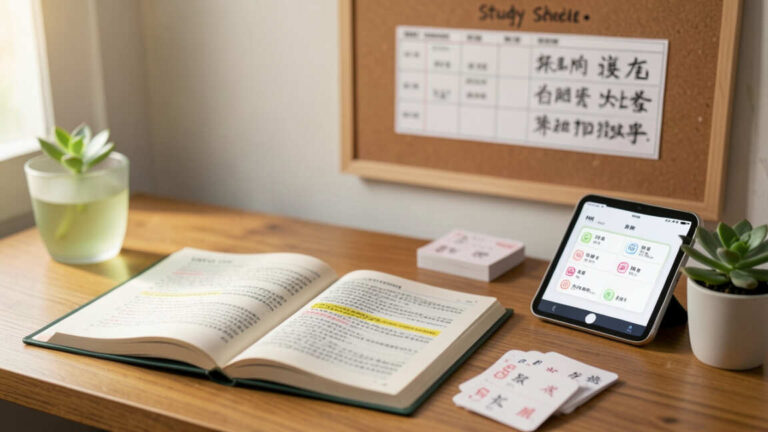
Effective preparation requires a clear plan tailored to your target level. Generic study isn’t enough; you need to focus on the specific skills and knowledge tested at each stage. Here is a step-by-step approach to building your study plan.
- Diagnose Your Current Level: Take a free practice test online for the level you think is your target. If you find it extremely difficult, start one level lower. Aim for a level where you understand about 60% already.
- Gather Official Materials: Obtain the official HSK textbooks and vocabulary lists for your level. The “Standard Course” series by Beijing Language and Culture University Press is highly recommended.
- Focus on Core Components: Dedicate daily time to each skill tested: listening, reading, and (for HSK 4+) writing. Use flashcard apps for vocabulary with spaced repetition systems (SRS).
- Simulate Test Conditions: Regularly take full-length timed practice tests. This builds stamina, improves time management, and reveals weak areas you need to strengthen.
- Seek Immersion: Supplement textbook study with graded readers, podcasts, and TV shows appropriate for your level. Active listening and reading are crucial for internalizing language patterns.
| HSK Level | Recommended Study Time | Key Preparation Focus |
|---|---|---|
| HSK 1 | 1-2 months | Pinyin, basic greetings, and numbers. |
| HSK 2 | 2-4 months | Common question patterns and simple conversations. |
| HSK 3 | 4-6 months | Building sentence complexity and descriptive ability. |
| HSK 4 | 6-12 months | Extensive vocabulary and writing practice. |
| HSK 5 | 1-2 years | Comprehending authentic media and complex grammar. |
| HSK 6 | 2+ years | Mastery of nuance, idiom, and academic/professional texts. |
Who Needs an HSK Certificate and How is it Used?
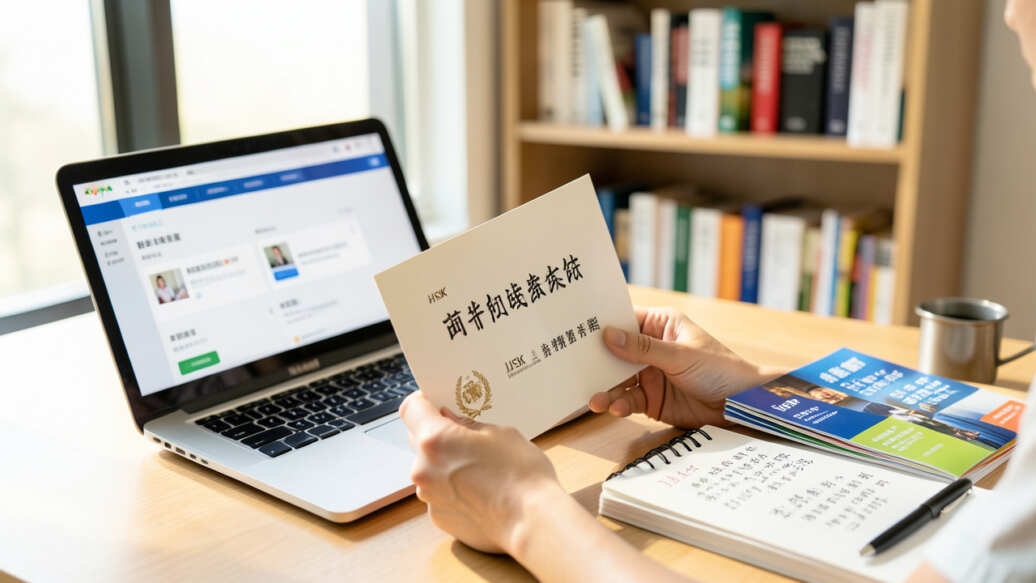
The demand for an HSK certificate comes from a variety of institutional and personal contexts. Understanding who uses it and why can help you decide which level is worth your investment of time and effort.
For international students, the HSK is often a non-negotiable requirement. Chinese universities use it to ensure students can handle coursework taught in Mandarin. The specific level required depends on the degree program.
- Undergraduate Programs: Typically require HSK 4 with a score of 210 or above.
- Graduate Programs (Masters/PhD): Often require HSK 5 or HSK 6, depending on the university and subject.
- Chinese Language Studies: Some language schools in China use HSK placement to group students appropriately.
In the professional world, the HSK certificate is increasingly valued. Global companies with operations in China use it to assess the language competency of potential hires, both for roles in China and for positions that interface with Chinese partners or clients. It provides an objective, third-party verification of skill level.
Important: Always check the specific HSK requirements of your target university or employer. Requirements can vary not just between institutions, but sometimes between different departments within the same university.
For personal learners, the HSK serves as a powerful motivator and a progress tracker. The clear milestones help maintain study discipline. Many learners also use it for immigration applications, as some residency or visa processes in China may require proof of language proficiency, with HSK 3 or HSK 4 often being sufficient.
Common Mistakes to Avoid When Taking the HSK
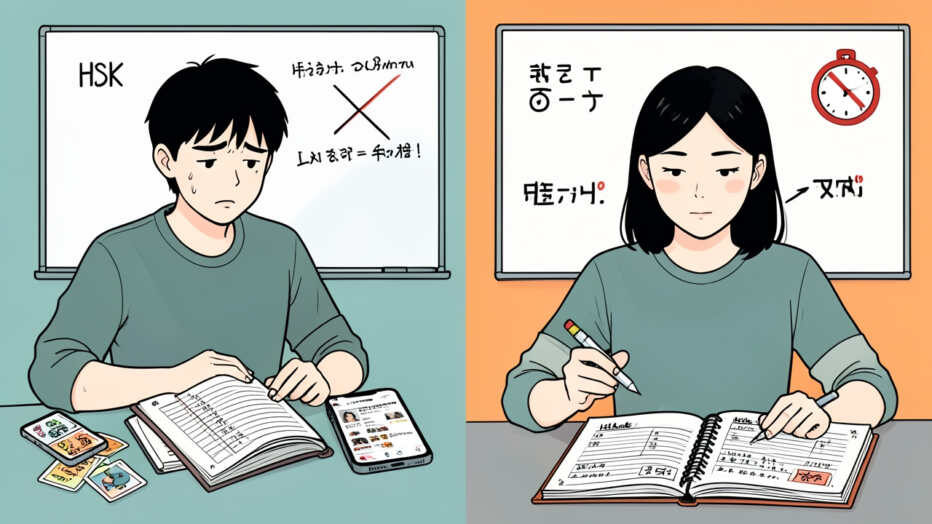
Many test-takers, even well-prepared ones, make avoidable errors that hurt their scores. Being aware of these common pitfalls can give you a strategic advantage on exam day.
- Ignoring the Exam Format: Not practicing with the official test format and timing is a critical error. Familiarity with the question types and the pace of the listening section is essential.
- Neglecting Weaker Sections: Test-takers often over-prepare their favorite section (like reading) while under-preparing for others (like listening). A balanced study plan targets all tested skills.
- Cramming Vocabulary: Trying to memorize the entire word list weeks before the exam leads to poor retention and inability to use words in context. Spaced repetition over months is more effective.
- Overlooking Writing Practice: For HSK 4 and above, the writing section requires active practice. You must learn to construct sentences under time pressure, not just recognize characters passively.
- Panicking During the Listening Section: The audio plays only once. If you miss a question, you must let it go and focus on the next one. Dwelling on a missed answer can cause you to miss several more.
What Resources Help with HSK Preparation?
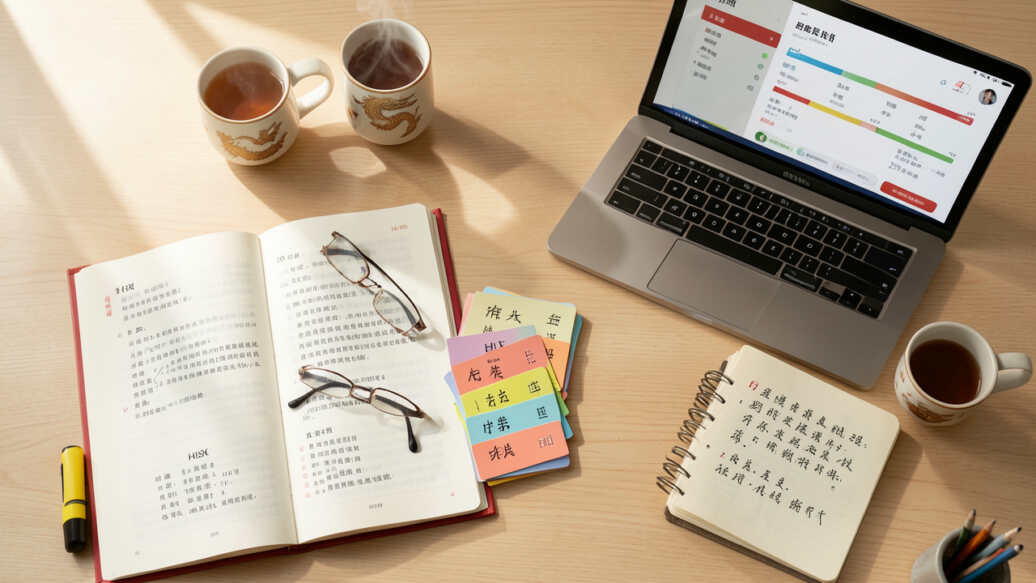
Having the right materials can streamline your study process and ensure you’re learning exactly what’s on the test. Here are the most reliable and effective resources for each stage of your journey.
- Official HSK Standard Course Textbooks: These are aligned directly with the vocabulary and grammar points for each level. They include practice exercises and often come with workbooks.
- HSK Online Practice Tests: Websites like the official HSK Online platform and other educational sites offer full-length practice exams. These are indispensable for simulating test conditions.
- Flashcard Apps with SRS: Apps like Anki or Pleco allow you to create digital flashcard decks for HSK vocabulary. The spaced repetition algorithm ensures you review words at optimal intervals.
- Graded Readers: Books and apps that provide stories written specifically for a certain HSK level help build reading fluency and confidence in context.
- Podcasts and YouTube Channels: Content creators like “ChinesePod” or “Slow Chinese” produce lessons and stories tailored to different proficiency levels, perfect for training your ear.
- Language Exchange Partners: Using apps like HelloTalk or Tandem to speak with native speakers provides real-world practice, which is especially valuable for preparing for the speaking component.
Frequently Asked Questions
How long does it take to prepare for each HSK level?
Preparation time varies based on your study intensity and prior experience. Generally, expect to spend 1-2 months for HSK 1, 2-4 months for HSK 2, 4-6 months for HSK 3, and 6-12 months for HSK 4. The higher levels, HSK 5 and 6, typically require 1-2 years of dedicated study each due to the large jump in vocabulary and complexity.
Is the HSK 2021 update different from the old HSK?
Yes, the “New HSK” (also called HSK 2.0) implemented around 2010 restructured the levels and increased the vocabulary requirements significantly. The 2021 update was primarily an adjustment to the speaking test format for HSK 3-6. Most current preparation materials are aligned with the New HSK standards, which are more challenging than the old system.
Can I take the HSK exam online from home?
Yes, the HSK online (home edition) test is widely available for most levels. You need a stable internet connection, a webcam, and a quiet environment. The format is similar to the in-person test, but the speaking component is recorded via your device.
It’s a convenient option for those who don’t live near a test center.
What is a good score to aim for on the HSK?
The minimum passing score is 120/200 for HSK 1-2 and 180/300 for HSK 3-6. However, a “good” score is often higher. Many universities and competitive jobs look for scores of 210 or above, or sometimes even 240+, especially for higher levels.
A higher score makes your application more competitive.
Do HSK certificates expire?
No, HSK certificates do not have an official expiration date and are valid indefinitely. However, some institutions or employers may prefer a certificate earned within the last few years, as they believe language skills can degrade over time without practice. It’s wise to check with the specific organization for their policy.
Final Thoughts
The HSK levels provide a comprehensive and universally understood framework for measuring your Chinese language progress. From the foundational skills of HSK 1 to the professional mastery of HSK 6, each stage offers a clear set of goals and rewards. Understanding this structure is key to creating an effective study plan and achieving your linguistic ambitions.
Whether your goal is to study at a top Chinese university, secure a competitive international job, or simply gain a deep appreciation for one of the world’s oldest cultures, aligning your efforts with the appropriate HSK level will guide your journey efficiently. Choose your target, gather your resources, and begin your path to Chinese proficiency.