Oldest Chinese Characters Still Used in Modern Chinese
The oldest Chinese characters still used today represent a direct, living link to the Bronze Age. These ancient logograms have evolved for thousands of years but remain core to the written Chinese language you see everywhere from street signs to smartphones. Understanding them unlocks the deep history and logic behind modern Chinese writing.
This guide explores which specific characters have survived since antiquity, why they endured, and how they function in contemporary Mandarin. We will look at their origins in early scripts, trace their visual evolution, and see how they are taught and used now.
Simply put, characters like 日 (sun), 月 (moon), 山 (mountain), and 人 (person) have been used continuously for over 3,000 years. Their forms are streamlined from ancient pictures, but their core meanings and usage are direct inheritances from the earliest Chinese writing systems.
Key Takeaways
- The oldest Chinese characters still in use originate from oracle bone script, dating to the Shang Dynasty around 1200 BCE.
- Core pictographs for natural elements like 日 (sun), 月 (moon), 山 (mountain), and 水 (water) have demonstrated remarkable stability.
- Their survival is due to their foundational role in forming more complex characters and their intuitive visual connection to meaning.
- While their written forms have evolved through bronze and seal scripts, their modern kaishu (regular script) versions are direct descendants.
- Studying these ancient characters provides powerful insights into Chinese culture, philosophy, and the logic of its writing system.
What Is Oracle Bone Script? The Origin of the Oldest Characters
Oracle bone script is the earliest form of Chinese writing. It consists of inscriptions carved on animal bones and turtle shells. These date primarily to the late Shang Dynasty, circa 1200-1050 BCE.
The characters were created for divination purposes, posing questions to ancestors and spirits about war, harvests, and royal health.
The script contains over 4,000 distinct characters, of which about 1,500 have been deciphered. It is considered the ancestor of all later Chinese scripts, including modern characters. The direct lineage is what makes certain modern characters so ancient.
- Discovery: Oracle bones were first discovered in 1899 by scholar Wang Yirong near Anyang, Henan province.
- Purpose: Used exclusively for royal divination. The bones were heated to create cracks, which were interpreted as answers from spirits.
- Composition: Characters are largely pictographic (a drawing of an object) and ideographic (representing an abstract idea).
- Legacy: Established the basic principles of Chinese writing: logographic, monosyllabic, and capable of conveying both concrete and abstract concepts.
| Feature | Oracle Bone Script (c. 1200 BCE) | Modern Standard Chinese |
|---|---|---|
| Medium | Carved bone/shell | Digital screens, paper, ink |
| Character Count | ~4,000 (1,500 deciphered) | Over 50,000 in Kangxi Dictionary; ~3,500 for daily use |
| Primary Form | Pictographic & ideographic | Pictographic, ideographic, & phono-semantic compounds |
| Usage | Royal divination only | Universal communication |
The connection between oracle bone script and modern characters is proven through archaeological and paleographic study. Many modern characters are simplified but recognizable descendants of these ancient carvings.
How Did These Ancient Characters Evolve Through History?
The journey from oracle bone script to the characters you see today involved several major script transformations. Each change was driven by practical needs – easier writing, new materials, or imperial standardization. This evolution shows a clear trend toward abstraction and simplification.
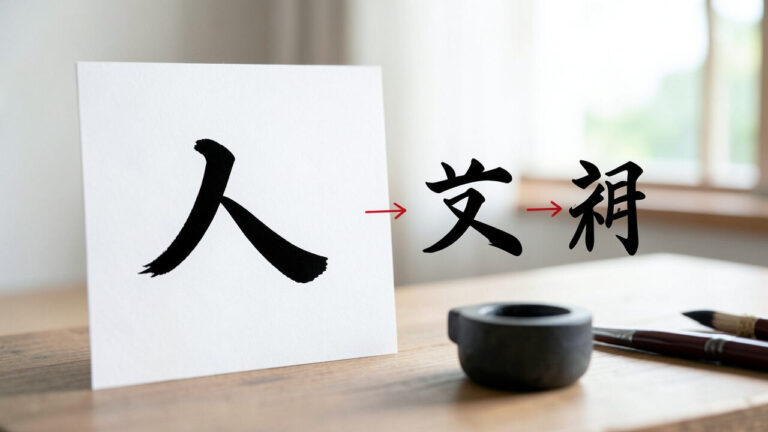
The main stages are: Oracle Bone Script -> Bronze Script -> Seal Script -> Clerical Script -> Regular Script (kaishu). Regular Script, standardized during the Han Dynasty, is the direct basis for modern traditional and simplified Chinese characters.
- Bronze Script (jinwen, c. 1100-700 BCE): Cast into bronze ritual vessels. Strokes became more uniform and rounded.
- Seal Script (zhuanshu, c. 700-200 BCE): Standardized by the Qin Dynasty. Used for official seals and inscriptions. Highly stylized and symmetrical.
- Clerical Script (lishu, c. 200 BCE – 200 CE): Developed for efficient record-keeping. Introduced the characteristic “silkworm head and wild goose tail” stroke shape. Greatly simplified forms.
- Regular Script (kaishu, c. 200 CE – present): The mature, standard script. Clear, angular, and easy to read/write. The foundation for modern print and handwriting.
Tip: When learning Chinese characters, recognizing the pictographic origin can be a powerful mnemonic. For example, the character for “tree” (木) looks like a simple drawing of a tree with branches and roots.
Which Specific Characters Are Among the Oldest Still in Use?
While thousands of oracle bone characters are known, only a core set has survived continuously into modern Chinese. These are typically simple pictographs or ideographs representing fundamental concepts. Their resilience is tied to their essential role in forming other, more complex characters.
The most stable characters are those depicting basic natural elements, body parts, and numbers. They form the radical (building block) system of Chinese characters. Here are some prime examples that have been used for over three millennia.
- 日 (rì – sun): A circle with a dot inside, drawn on oracle bones. Modern form is a square with a horizontal line. Meaning unchanged.
- 月 (yuè – moon): A crescent shape. Modern form is still a clear crescent. Used in characters like 明 (bright: sun+moon).
- 山 (shān – mountain): A drawing of three peaks. Modern form is virtually identical. A common radical in terrain-related characters.
- 水 (shuǐ – water): A flowing stream with eddies. Modern form is a vertical stroke with dots. Appears as a radical (氵) in hundreds of water-related words.
- 人 (rén – person): A side profile of a walking human. Modern form is two simple strokes. One of the most frequent characters.
- 木 (mù – tree/wood): A tree with branches above and roots below. A key radical in characters for wood, forest, table, and bed.
- 火 (huǒ – fire): A flame shape. Simplified but recognizable. Essential for characters related to cooking, heat, and light.
- 牛 (niú – ox/cow): A head with horns. Central to agricultural and zodiac terminology.
Other ancient survivors include the numbers 一 (one), 二 (two), 三 (three), and characters for big (大), small (小), and mouth (口). Their simplicity and foundational meaning ensured their survival through every script reform.
Why Have Some Characters Survived While Others Became Obsolete?
The survival of certain characters is not random. It follows a clear logic based on utility, frequency of use, and structural importance. The oldest characters still in use today share key characteristics that made them indispensable throughout Chinese history.
First, they represent universal, timeless concepts. The sun, moon, mountains, and people are constants in human experience. There was never a need to create a new word for them.
Second, many are crucial components (radicals) used to build more complex characters. Disappearing would cause a catastrophic collapse of the writing system.
A 2018 analysis published in the Journal of Chinese Linguistics tracked the usage frequency of oracle bone characters. It found that the top 50 most frequent characters from the Shang Dynasty still account for over 20% of all characters used in modern Mandarin texts. This remarkable continuity underscores their fundamental importance.
Warning: Do not assume an ancient form is always simpler. Some oracle bone characters were quite complex. The modern “simple” forms are the result of millennia of streamlining for brush and pen.
How Are the Oldest Characters Taught and Learned Today?
In modern Chinese education, the oldest characters are usually the first ones taught. This pedagogical approach mirrors their historical and logical primacy. Children begin with basic pictographs before moving to more complex phono-semantic compounds.
The teaching method often emphasizes character evolution. Textbooks might show the oracle bone, bronze, and seal script forms alongside the modern character. This connects the abstract strokes to a concrete origin story, aiding memory and comprehension.
- Radical-First Learning: Students first learn the basic radicals, many of which are the ancient pictographs themselves (日, 月, 山, etc.).
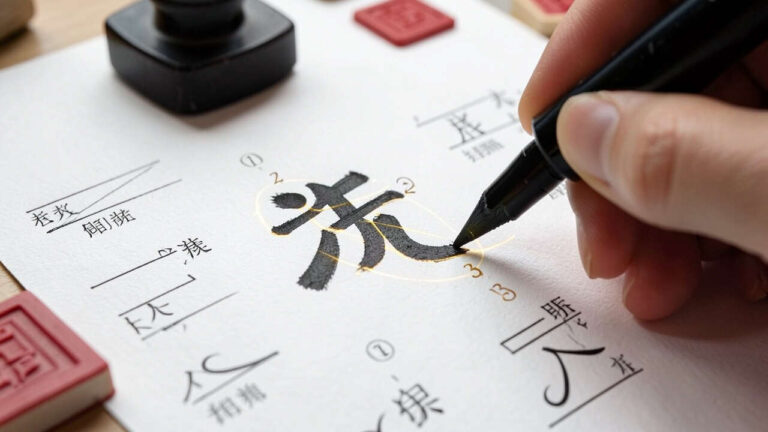
- Stroke Order: Learning the correct stroke order for these simple characters builds a foundation for writing all characters correctly.
- Component Analysis: Teachers show how ancient characters combine to form new ones. For example, 木 (tree) + 木 (tree) = 林 (woods). 木 + 木 + 木 = 森 (forest).
- Digital Tools: Apps like Pleco and Skritter include animated stroke order and etymological information, making ancient origins accessible to learners worldwide.
This structured learning reinforces the historical continuity and logical structure of the Chinese writing system from the very beginning.
What Role Do Ancient Characters Play in Modern Chinese Culture?
Beyond daily communication, the oldest characters hold significant cultural and aesthetic value. They appear in contexts that celebrate Chinese heritage and art. Their use connects modern Chinese society to its deep historical roots in a visible, symbolic way.
You will find these ancient forms prominently in traditional calligraphy, seal carving, temple inscriptions, and artistic logos. Major cultural institutions, like the National Museum of China, use stylized ancient characters in their branding. The 2008 Beijing Olympics emblem, “Dancing Beijing,” was a stylized version of the ancient character for “jing” (京, capital).
- Calligraphy Art: Practitioners often start with “seal script” versions of ancient characters, appreciating their balanced, pictographic beauty.
- Seal Carving: Personal and official seals (chops) traditionally use ancient seal script forms for their elegance and formality.
- New Year Decorations: The character 福 (fú, fortune/blessing) is often displayed upside down. Its origins as a pictograph of a full wine jar symbolizing abundance are well known.
- Brand Naming: Companies choose names with ancient characters that carry positive, elemental meanings (e.g., 龙 for dragon, 鑫 for gold prosperity).
How Does the Simplification of Characters Relate to Ancient Forms?
The process of character simplification in the 20th century (primarily in Mainland China) did not affect the oldest characters much. That is because they were already simple. The reforms mainly targeted complex, multi-stroke characters to improve literacy.
For the ancient pictographs, modern simplified Chinese often uses the same forms as traditional Chinese. For example, 日 (sun), 月 (moon), and 人 (person) are identical in both systems. The simplification process focused on reducing stroke counts in more complicated characters, not altering the basic building blocks.
| Character | Meaning | Traditional | Simplified | Simplification Reason |
|---|---|---|---|---|
| 龍 | Dragon | 16 strokes | 龙 (5 strokes) | Drastic stroke reduction for a complex pictograph. |
| 學 | To learn | 16 strokes | 学 (8 strokes) | Simplified component radicals for easier writing. |
| 日 | Sun | 4 strokes | 日 (4 strokes) | Already simple. No change. |
This table illustrates that simplification primarily addressed complexity, leaving the ancient, simple core characters unchanged.
What Can We Learn from the Longevity of Ancient Chinese Characters?
The incredible longevity of these ancient characters teaches us about the resilience of a well-designed writing system. It demonstrates that a script rooted in clear, logical principles can endure political, technological, and social upheaval for millennia.
The fact that a modern Chinese person can recognize the meaning of a 3,000-year-old carving on an oracle bone is a powerful testament to cultural continuity. It suggests that when a writing system successfully links form to meaning in an intuitive way, it gains extraordinary staying power.
Important: The study of ancient characters (palaeography) is crucial for interpreting historical texts, understanding cultural evolution, and preserving linguistic heritage. It is an active field of research at institutions like Peking University and the Chinese Academy of Social Sciences.
Frequently Asked Questions
What is the absolute oldest Chinese character still in use?
While difficult to pinpoint one, candidates include 日 (sun), 月 (moon), and 山 (mountain). Oracle bone inscriptions clearly show these characters in forms virtually identical to their modern versions, proving their use for over 3,200 years.
Are all Chinese characters over 3,000 years old?
No. While the writing system is that old, most individual characters in modern Chinese were created later. The ancient characters form the core radicals and building blocks.
New characters are combinations of these older components to represent new words and sounds.
How many oracle bone characters are still recognized today?
About 1,500 of the 4,000+ oracle bone characters have been deciphered. Of these, a few hundred are direct ancestors of commonly used modern characters. Many others are archaic terms no longer in everyday use but are known to scholars.
Did character simplification destroy the link to ancient forms?
No. Simplification mainly targeted complex characters. The basic, ancient pictographs were often left unchanged because they were already simple.
The etymological and visual link to ancient forms remains strong, especially for foundational characters.
Can learning ancient characters help me learn Chinese faster?
Yes, absolutely. Understanding the pictographic origin of basic characters provides powerful memory aids (mnemonics). It also reveals the logical structure of the entire writing system, making it easier to learn and remember more complex characters later.
Final Thoughts
The oldest Chinese characters still used today are far more than historical curiosities. They are the active, living foundations of a global language. From 日 (sun) to 人 (person), their 3,000-year journey showcases an unmatched continuity in human communication.
By studying these ancient pictographs, we gain insight into the logic of Chinese writing, the values of ancient civilizations, and the reasons for the language’s remarkable endurance. They are a bridge between the modern world and the distant past.