What Is Feng Shui and How Did It Start
Feng Shui is an ancient Chinese practice of arranging environments to harmonize individuals with their surroundings through the balanced flow of qi, or life energy, originating over 3,000 years ago from Taoist observations of nature and astronomy. Its foundational principles include yin and yang, the five elements (wu xing), and the bagua map, which together guide spatial arrangement to enhance well-being and prosperity. Modern research in environmental psychology supports many of its core concepts, affirming that intentional space design can influence mood, productivity, and overall harmony.
Have you ever walked into a room and felt instant calm, or maybe felt uneasy for no clear reason? This guide explains what Feng Shui is, how it started over 3,000 years ago, and how you can use its basic principles to create a more balanced home.
Quick Verdict: Feng Shui is an ancient Chinese practice of arranging your environment to create balance and invite positive energy, known as Qi. It originated over 3,000 years ago, rooted in Taoist observations of nature, astronomy, and landscape. This guide breaks down its history, core philosophies like the Five Elements, and how it remains relevant today for creating harmonious living and working spaces.
Key Takeaways
- Feng Shui is an ancient Chinese discipline that studies how the arrangement of objects and space influences the flow of energy, known as Qi.
- The practice originated over 3,000 years ago in ancient China, stemming from agricultural practices and astronomical observations of the natural world.
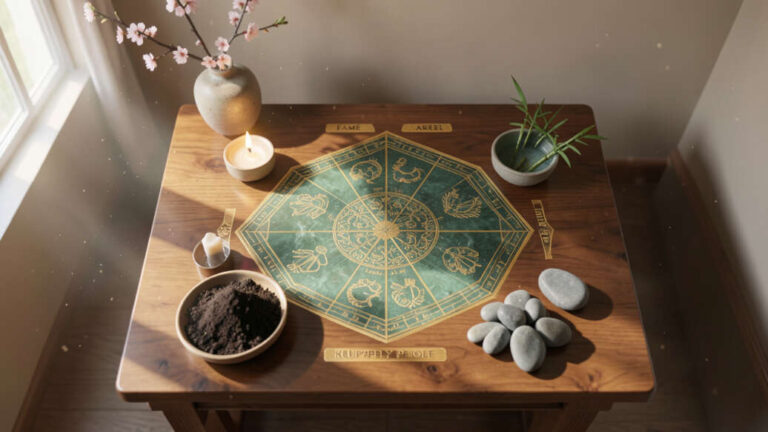
- A core tool in Feng Shui is the Bagua map, which divides a space into nine areas that correspond to different aspects of life such as wealth, health, and relationships.
- Modern environmental psychology confirms some Feng Shui principles, such as the relationship between visual clutter and increased mental stress.
- There are two main branches of Feng Shui: the Form School, which relies on the physical landscape, and the Compass School, which uses the Luo Pan compass for directional calculations.
What Are the Core Principles of Feng Shui?
Feng Shui relies on several key concepts that work together. Understanding these gives you the basic toolkit to analyze and improve any space you inhabit.
Qi: The Universal Life Force
Qi (also spelled Chi) is the central concept. Think of it as the invisible life force or energy that flows through everything in the universe. In Feng Shui, the goal is to help Qi flow smoothly and gently through your home. Sharp corners, clutter, and dark hallways can block or stagnate Qi.
Yin and Yang
These are the opposing but complementary forces found in all things. Yin is passive, dark, soft, and quiet. Yang is active, bright, hard, and loud. A harmonious room balances both. A bedroom should lean toward Yin (calm, dark). A home office should lean toward Yang (bright, active).
The Five Elements (Wu Xing)
According to, everything belongs to one of five elements. These elements interact in productive and destructive cycles. Using them in your decor creates energetic balance.
| Element | Color | Shape | Season | Direction |
|---|---|---|---|---|
| Wood | Green, Brown | Rectangular, Columnar | Spring | East, Southeast |
| Fire | Red, Orange, Purple | Triangular, Pointed | Summer | South |
| Earth | Yellow, Beige, Brown | Square, Flat | Late Summer | Center, Southwest, Northeast |
| Metal | White, Gray, Silver | Round, Circular, Arched | Autumn | West, Northwest |
| Water | Black, Dark Blue | Wavy, Flowing, Curvy | Winter | North |
The Bagua Map
The Bagua is an energy map. It is one of the most practical tools in Feng Shui. You lay this octagonal grid over the floor plan of your home, aligning the bottom edge with the wall where your front door is located. Each of the nine areas on the map corresponds to a specific life area, such as career, relationships, or family.
How Did Feng Shui Start?
The history of Feng Shui spans thousands of years. It did not appear suddenly but evolved through several distinct phases in Chinese culture. Understanding its origin helps you respect it as a serious study, not just a decorative trend.
Ancient Origins and Burial Practices
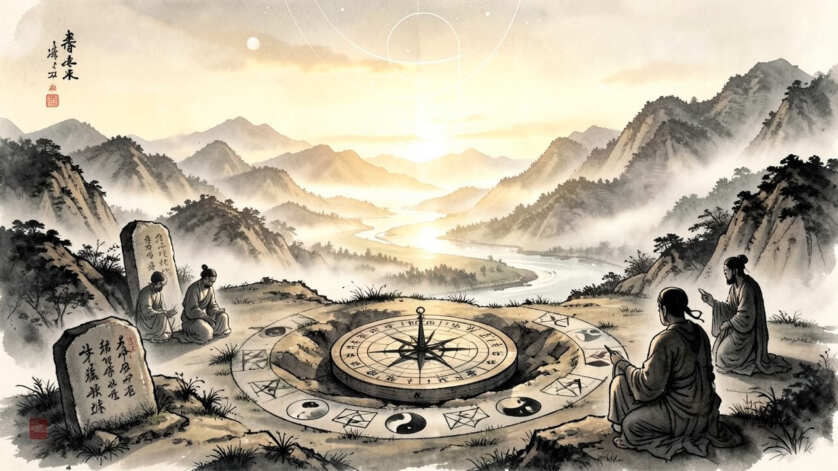
The earliest roots of Feng Shui trace back over 3,000 years to the Yangshao culture in ancient China. Archaeologists have found that these early people oriented their houses towards the south to capture the sun’s warmth. They also selected burial sites based on the surrounding landscape and water flow. According to the ancient text the Zang Shu (Book of Burial), written by Guo Pu in the 4th century, the goal was to position human dwellings in harmony with the cosmic breath of nature.
The Form School
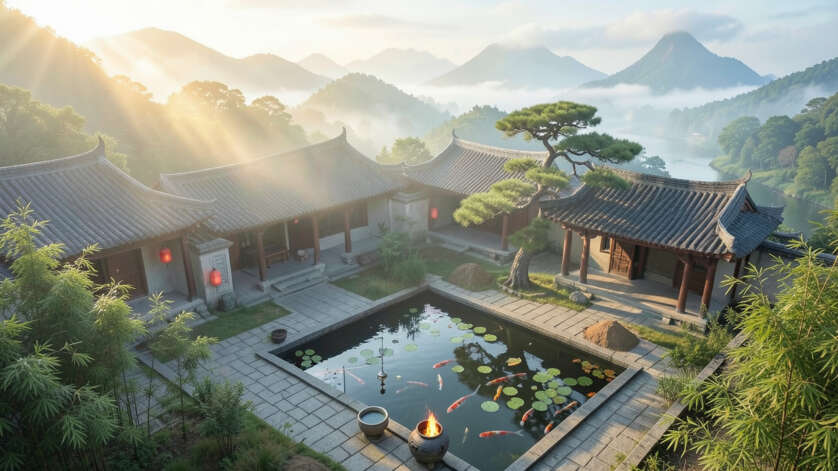
This is the original school of Feng Shui. It focuses entirely on the physical landscape. Practitioners would look at the shape of mountains, the direction of rivers, and the curves of the land to find a spot where Qi collected naturally. The classic image is a chair-shaped mountain formation, with a high mountain behind for protection and lower hills on either side, called the Azure Dragon and White Tiger.
The Compass School and the Luo Pan
During the Tang Dynasty (618-907 AD), Feng Shui grew more complex. Masters began using a specialized compass called the. This is not a simple magnetic compass. It has multiple rings of concentric circles that display the I Ching trigrams, the Five Elements, and various star patterns. The Compass School introduced time into the equation, calculating how the energy of a building changes over decades and generations.
Tip: The Form School is usually easier for beginners to grasp. You can apply its principles by observing the shapes outside your windows. A tall building behind you acts like a mountain protector. A gently curving road in front acts like flowing water bringing positive Qi to your door.

What Are the Different Schools of Feng Shui?
Most modern Feng Shui consultants blend methods from different schools. However, it helps to know the main branches.
| Feature | Form School | Compass School |
|---|---|---|
| Primary Focus | Landscape, terrain, and physical shapes | Direction, time, and astrological calculations |
| Main Tool | The human eye and observation of nature | The Luo Pan compass and Flying Star charts |
| Best For | Choosing land, understanding external environment | Analyzing specific rooms, predicting future trends |
| Difficulty Level | Beginner friendly | Advanced, requires study and calculation |
What Are Common Myths vs. Facts?
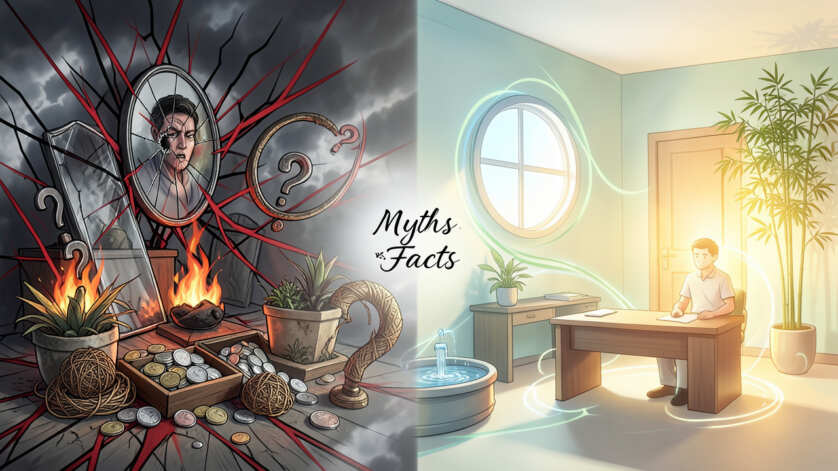
Many people dismiss Feng Shui as simple superstition or cultural folklore. However, a closer look reveals that many of its principles align with modern environmental psychology and design.
- Myth: Feng Shui is just furniture superstition. Fact: Many Feng Shui rules relate directly to human psychology. Placing a desk or bed in the “command position” (facing the door) reduces anxiety because you feel secure. Clutter makes the brain work harder to focus.
- Myth: You need to buy expensive crystals, coins, and statues to fix your home. Fact: The most powerful fixes are free or low cost. Decluttering your entryway and opening your windows to bring in fresh air are among the most effective Feng Shui adjustments.
- Myth: Feng Shui is a religion. Fact: Feng Shui is a system of environmental observation rooted in Taoist philosophy. It does not require worship, faith in a deity, or specific religious beliefs. It is used by people of all backgrounds.
Warning: Be cautious of “cure-all” Feng Shui products sold online. Authentic Feng Shui focuses on the energetic relationship between you and your space. It does not rely on mass-produced trinkets to work.
How to Get Started with Feng Shui
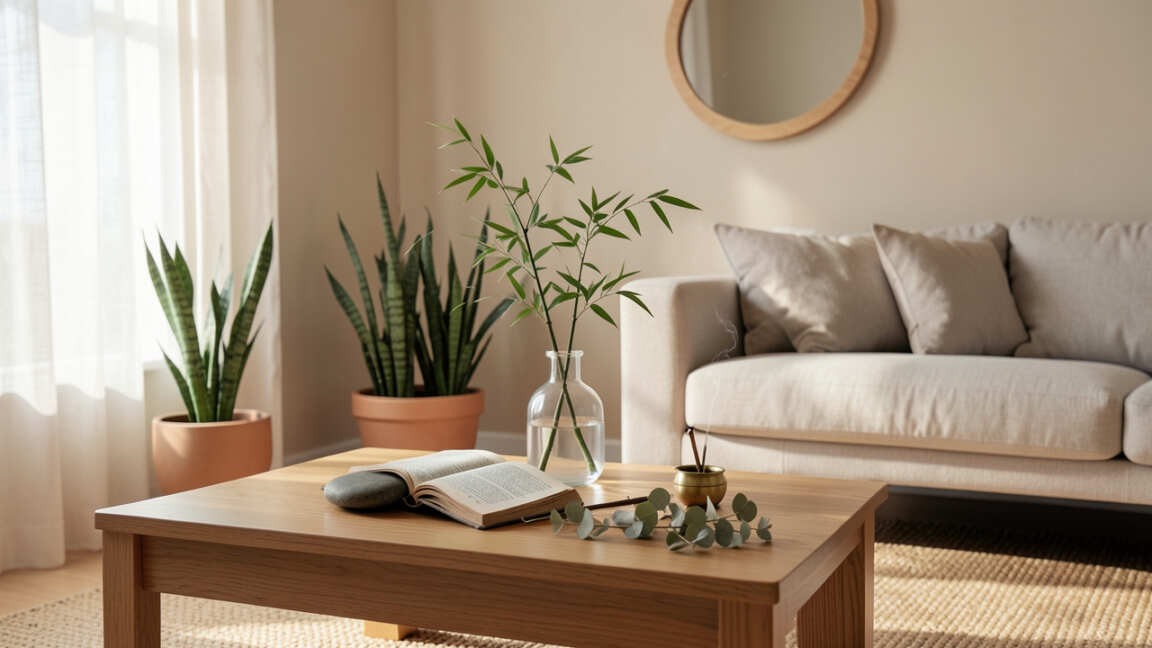
You do not need a professional consultant to begin improving your space. You can apply the basics of Feng Shui starting this afternoon. Focus on these three steps.
- Clear the Clutter: Clutter is the number one enemy of good Qi. Go to your front entrance. Is it filled with shoes, coats, and mail? Clear the path so Qi can enter your home freely. A clean entrance invites positive opportunities.
- Fix the Command Position: The command position is the spot in a room farthest from the door but with a direct line of sight to it. Place your bed, office desk, or stove in this position. You should not have your back to the door. This creates a sense of safety and control.
- Balance the Five Elements: Look at your living room using the table above. Do you see mostly one color or shape? If a room is too red (Fire), add some black (Water) or white (Metal) to calm it down. If a room feels cold and dark (Water), add some warm earth tones or wooden furniture.
Modern Feng Shui and Environmental Psychology
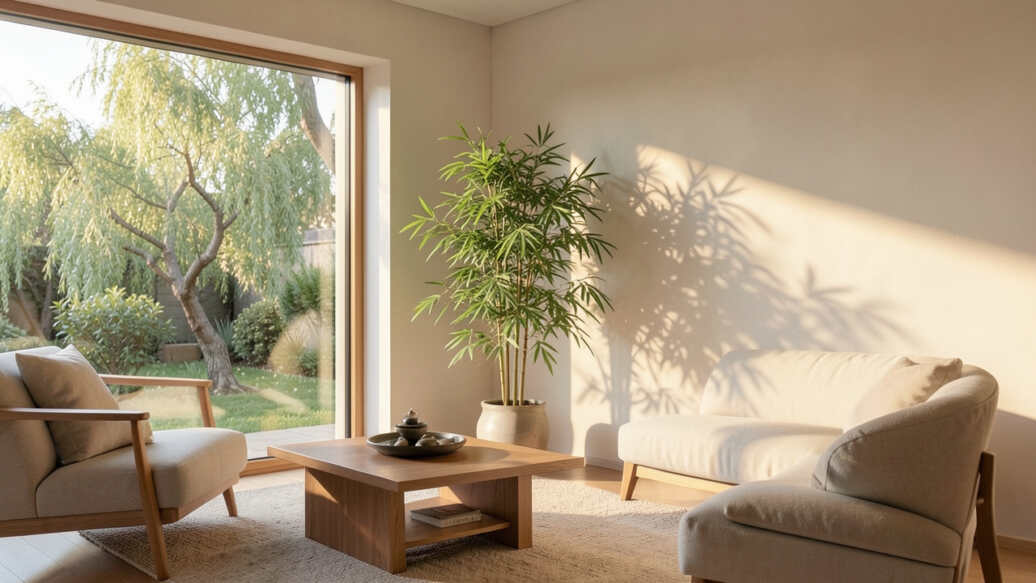
These days, academics and architects study the effects of spatial arrangement on the human brain. Research published in the Journal of Environmental Psychology supports the idea that natural light, clear sight lines, and reduced visual clutter lower stress. These findings directly mirror ancient Feng Shui tenets. The practice is gaining traction in corporate design. Companies now hire Feng Shui consultants to plan office layouts that boost employee productivity and collaboration. This shows that Feng Shui continues to evolve while staying true to its ancient principles of balance and harmony.
Resources and Tools
- The Bagua Map – A printable guide for mapping your home’s energy sectors.
- Luo Pan Tutorial – An introduction to the classical Feng Shui compass used by professionals.
- I Ching Reading – The ancient Chinese divination text that is foundational to Compass School Feng Shui.
Frequently Asked Questions
Does Feng Shui really work for attracting money and love?
Feng Shui creates an environment that supports your intentions. Placing a water feature in the wealth area (Southeast corner of the Bagua) can help you focus on financial goals. It is not magic, but it sets a psychological and energetic stage for opportunity to find you.
Can I do Feng Shui in an apartment that cannot be renovated?
Yes. You do not need to knock down walls. Use mirrors to expand tight spaces. Use rugs to define energy zones. Use curtains to soften sharp corners. Paintings and art can also activate specific Bagua areas without any structural changes.
What is the difference between Feng Shui and interior design?
Interior design focuses on aesthetics, function, and style. Feng Shui focuses on the flow of energy and the connection between the occupant’s life and their environment. The best results come from combining both approaches.
Why is the front door so important in Feng Shui?
The front door is known as the “mouth of Qi.” It is the primary entry point for energy, opportunities, and nourishment into your home. Feng Shui recommends keeping this area well-lit, uncluttered, and in good repair to invite positive energy into your life.
How does the Five Elements theory apply in daily life?
You apply it by creating balance. If you feel sluggish (too much Earth), add Metal or Wood colors and shapes to your outfit or workspace. If you feel angry or aggressive (too much Wood), add Fire colors to transform that energy into passion and joy.
Final Thoughts
Feng Shui gives you a practical framework for creating spaces that truly feel good. Start with the basics: clear the clutter and find your command position. The 3,000 year history of this practice proves that humans have always wanted to align their homes with their deepest goals. Applying even a few of these principles can change how you feel in your home every day.