Feng Shui Tips for Choosing a New Home
Feng shui for choosing a new home evaluates energy flow through lot shape, front door placement, and the commanding position of the bed and desk to support health, wealth, and happiness. Critical factors include the location of the kitchen and bathroom, the presence of external sha chi from power lines or sharp building edges, and balancing the five elements. A home with a clear commanding position for the master bedroom and front door promotes long-term stability, while irregular lot shapes or missing Bagua corners can create energy imbalances affecting specific life areas.
Most home buyers focus on square footage and countertops. But the energy of a home affects how you feel every single day. This guide shows you how to apply feng shui tips for choosing a new home so you can pick a space that supports your health, wealth, and happiness.
Quick Verdict: Feng shui helps you evaluate a home by looking at energy flow from the lot shape and front door placement to room layout and element balance. The most critical factors are the commanding position of the bed and desk, the location of the kitchen and bathroom, and the presence of external sha chi from power lines or sharp building edges. Always walk the property and check your intuition before signing.
Key Takeaways
- Choosing a home with a clear commanding position for the master bedroom and front door supports better health, career stability, and relationship harmony over the long term.
- Irregular lot shapes or missing corners in the Bagua map can create energy imbalances that affect specific life areas like wealth, relationships, or family health.
- The kitchen represents abundance in feng shui, and its position in the back of the home rather than near the main entrance is considered far more auspicious.
- Natural light and cross-ventilation are essential for good chi, making homes with large windows and airflow patterns highly desirable for positive energy.
- External threats like power lines, sharp roof edges, and dead-end streets create negative sha chi that affects a home regardless of its interior decor.
How Does Feng Shui Apply to Home Buying?
Feng shui translates to “wind and water” in Chinese. It is a practice over 3,000 years old. The core idea is that everything in your environment carries energy. You want this energy to flow smoothly and support you rather than drain you.
When you apply feng shui to home buying, you look at several layers. You examine the land. You examine the building shape. You examine room placement. You examine your personal connection to the space.
According to the, 86 percent of home buyers rank the overall condition and layout of a home as very important. Feng shui takes this a step further. It asks how that layout makes you feel and function.
According to a study from, your physical environment directly influences your mental health. A cluttered or poorly arranged home can raise cortisol levels. A well-arranged home can lower them.
The Commanding Position
The commanding position is the most important concept in feng shui. It applies to three main areas in any home. You want to see the door from your bed, from your stove, and from your desk. This gives you a sense of control and safety.
Master Bedroom Commanding Position
When you walk into the master bedroom, you should see the door from the bed. You should not be in direct line with the door. That creates what feng shui calls a “coffin position.” Place the bed diagonally across from the entrance.
Warning: Avoid any home where the master bedroom has the bed position forced against a wall with no view of the door. This creates anxiety during sleep and can lead to chronic stress over time.
Kitchen Commanding Position
The stove is the heart of the kitchen. When you cook, you should see the kitchen entrance. You should not have your back to the door. If the home has an island stove with no view of the door, this can be a problem.
Home Office Commanding Position
If you work from home, your desk should face the door. You should have a solid wall behind you for support. Windows behind you are acceptable as long as they do not create glare.
Bagua Map and Floor Plan Evaluation
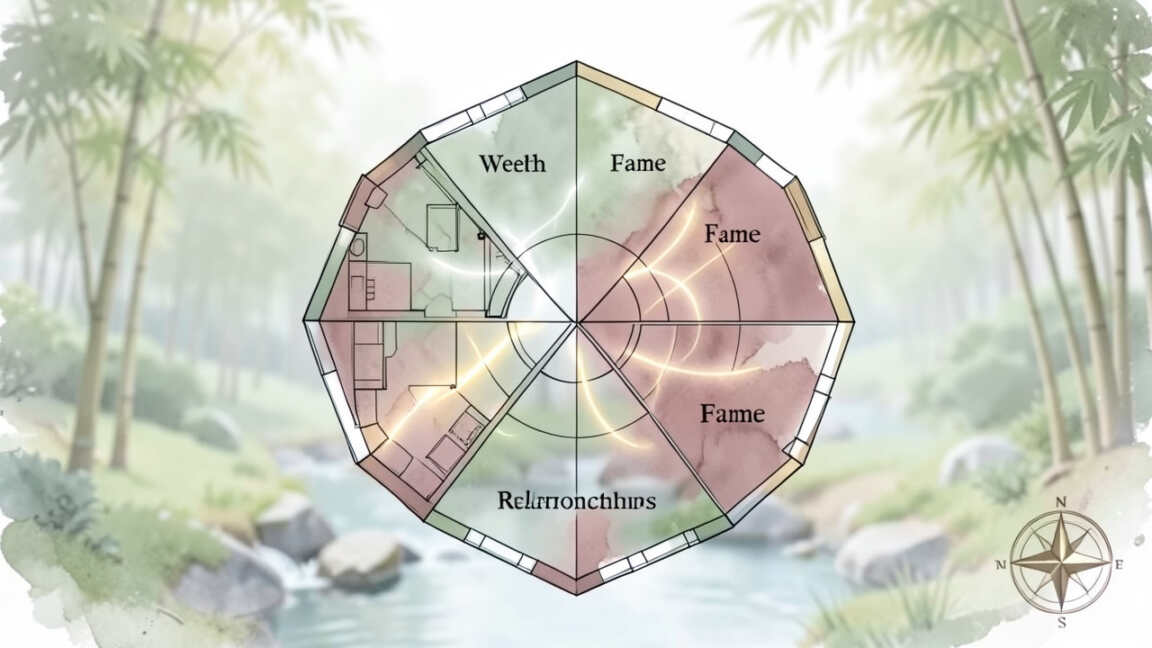
The Bagua is the feng shui energy map. Imagine it laid over your floor plan like a grid. Each section of the grid relates to a specific area of your life. The front door is the mouth of chi, so the Bagua orientation starts from your front door.
The Eight Areas of the Bagua
- Career – The front center area of the home, near the front door. Water element. Black colors.
- Knowledge – The front left area. Earth element. Blue or green colors.
- Family – The left middle area. Wood element. Green or brown colors.
- Wealth – The back left area. Wood element. Purple or green colors.
- Fame – The back center area. Fire element. Red colors.
- Relationships – The back right area. Earth element. Pink or red colors.
- Children – The right middle area. Metal element. White or pastel colors.
- Helpful People – The front right area. Metal element. Gray or white colors.
Missing Corners and Their Effects
A rectangular or square floor plan is ideal. If a corner is missing, that life area is weakened. For example, a missing back left corner can affect wealth and abundance. A missing back right corner can affect relationships.
Five Elements Balance in a Home
Every home has a mix of five elements. You want balance. Too much of one element creates problems. Too little of another creates weakness.
| Element | Shapes | Colors | Areas of Life | Warnings |
|---|---|---|---|---|
| Wood | Columns, tall shapes | Green, brown | Family, health | Too much wood creates rigidity |
| Fire | Triangles, pointed roofs | Red, orange, purple | Fame, recognition | Too much fire creates agitation |
| Earth | Square, flat, low | Yellow, brown, beige | Knowledge, relationships | Too much earth creates stagnation |
| Metal | Round, arched, domes | White, gray, silver | Children, helpful people | Too much metal creates coldness |
| Water | Curves, waves, freeform | Black, dark blue | Career | Too much water creates overwhelm |
Look at a home and see which elements dominate. If a house has too many red walls and pointed shapes, fire is too strong. You will feel restless. If a house has too much gray and metal, it may feel cold and distant. Balance is key.

External Environment and Location Factors
Feng shui starts outside the home. The land and surrounding structures create the first layer of energy. You cannot fix external problems with interior decor alone.
Sha Chi Threats to Avoid
- Power lines – High-voltage lines near the front door or bedroom create harmful electromagnetic energy. Avoid homes where lines run directly overhead.
- Dead-end streets – A home at the end of a T-junction receives constant energy arrows. This creates pressure and instability over time.
- Sharp building edges – If a neighbor’s roof line or building edge points directly at your front door, it sends cutting energy your way. This is called a poison arrow.
- Large trees blocking the front door – Trees in front of the entrance block chi from entering. You want a clear, open path to the door.
- Cemeteries and hospitals nearby – These places carry heavy yin energy. Living too close can drain your vitality over time.
Ideal External Features
- Gentle curves – A curved street in front of the home slows chi and allows it to gather. This is called the “winding path” effect.
- Water features – Natural water like a pond or stream in front of the home attracts wealth energy. The water should not be stagnant.
- Open space in front – A clear view from the front door allows chi to enter smoothly. The “bright hall” concept values open front yards.
- Backing onto hills or taller buildings – Support from behind gives stability. A home with a hill or taller structure behind it is considered protected.
Lot Shape and Its Impact on Energy
The shape of the land your home sits on matters greatly. Here are the most common lot shapes and their feng shui meanings.
| Lot Shape | Feng Shui Quality | Best For | Avoid If |
|---|---|---|---|
| Rectangle | Excellent – balanced energy | All life areas | Narrow or overly long rectangles |
| Square | Excellent – balanced energy | All life areas | None |
| Triangle | Poor – fire energy too strong | Artists, entrepreneurs | You need stability and calm |
| L-shaped | Fair – missing corner weakens area | Short-term living | Long-term family home |
| Wider in back | Good – accumulates energy | Wealth accumulation | Narrow front entrance |
Interior Room by Room Evaluation
Once the lot and exterior pass inspection, you move inside. Each room carries specific energy that affects your daily life.
Front Door and Entrance
The front door is called the “mouth of chi.” It is where all energy enters the home. The door should open fully without obstruction. It should not face a bathroom door or a staircase directly.
A front door that aligns with a back door creates a straight line. Chi rushes in and out too fast. You lose energy and opportunities. If you find a home like this, you can add a screen or furniture to break the line of sight.
Kitchen Placement
The kitchen represents wealth and nourishment. In traditional feng shui, the kitchen should be in the back of the home. It should not be the first room you see when you walk through the front door.
Tip: If you fall in love with a home that has a kitchen in the front or in direct view of the entrance, you can install a screen, hang a crystal, or place a plant to slow the energy down and redirect it.
The stove should not face the sink or refrigerator directly. Fire and water clash. This creates conflict in the household. If the layout forces this, keep a distance of at least three feet between them.
Master Bedroom Location
The master bedroom should be in the back of the home. It should be quiet and private. Avoid master bedrooms that share a wall with the kitchen or garage. The energy from appliances and vehicles can disturb sleep.
The bed should not be under a window directly. Windows represent external energy coming in. You want a solid wall behind the bed for support. If the bed is under a window, you lose stability.
Bathroom Placement
Bathrooms drain energy. Water flows away. You want bathrooms placed where they do not leak energy from important areas. Never put a bathroom in the wealth corner or at the end of a long hallway aligned with the front door.
Warning: A bathroom in the wealth area of the Bagua can drain financial opportunities over time. If the home has this layout, you will need to keep the toilet lid closed and the door shut at all times.
Staircase Position
Staircases should not face the front door directly. Energy rushes up or down the stairs and exits. If a staircase faces the entrance, chi flows away from the home. This can lead to missed opportunities and financial drain.
Step by Step Process for Evaluating a Home
Follow this process when you visit a potential home. It helps you stay objective and consider energy factors along with practical ones.
- Walk the exterior first. Note the lot shape, street layout, and neighboring structures. Check for power lines, dead-end streets, and sharp edges pointing at the home.
- Stand at the front door. Take a deep breath. Notice how you feel. Do you feel welcomed or uneasy? Trust that first feeling.
- Check the front door alignment. Does it face a back door, staircase, or bathroom? Make note of any direct lines that might cause chi to rush through.
- Locate the kitchen. Is it in the back of the home? Can you see the door from the stove? Is the stove facing a sink or refrigerator?
- Locate the master bedroom. Is it quiet and private? Does the bed have a commanding position? Is there a solid wall behind the bed?
- Check the Bagua map. Mentally overlay the floor plan. Are any corners missing? Are bathrooms or garages located in life areas that matter to you?
- Notice natural light and airflow. Open windows. Do they provide cross-ventilation? Is there enough natural light to keep chi flowing?
- Feel the energy in each room. Stand in the center of each room. Close your eyes for five seconds. Notice any heaviness or lightness in your body.
- Ask about history. If possible, ask about the previous owners. Did they thrive or struggle? Energy from past residents can linger.
- Visit at different times. Come back at night and during a weekday. Energy changes with the sun and the neighborhood activity.
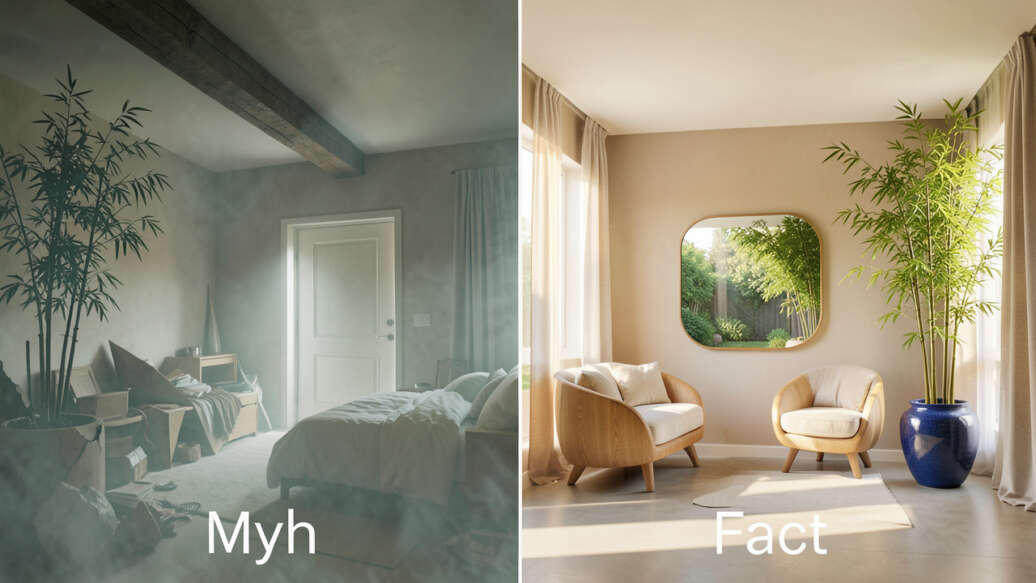
Common Myths vs Facts
Myth 1: Feng shui is just superstition or religion
Fact: Feng shui is a practical spatial science based on observation of how environments affect human behavior and psychology. It uses principles of orientation, proportion, and flow that appear in modern design psychology and environmental psychology research.
Myth 2: You need expensive cures like crystals and coins to fix a home
Fact: Most feng shui adjustments are simple and low cost. Moving furniture, adding plants, improving lighting, and decluttering produce the biggest energetic shifts. According to a study from, cluttered environments reduce focus and increase stress more than most people realize.
Myth 3: Only the interior layout matters for good feng shui
Fact: The external environment creates the first 50 percent of a home’s energy. The shape of the land, the street layout, and neighboring structures all influence chi before you even step inside. You cannot fully fix a bad external situation with interior changes alone.
Pro Tips for Home Buyers
- Bring a compass. Know the direction your front door faces. Different directions favor different life areas. South-facing homes support fame and reputation. North-facing homes support career.
- Use your intuition. If a home feels heavy or makes you feel anxious, respect that. Your body picks up energy your mind cannot analyze yet.
- Look for clutter in the current home. If the current owner has cluttered spaces, the energy is stuck. That energy can transfer to you. Clean slates are better.
- Consider the age of the home. Older homes have accumulated years of energy from previous residents. This energy is not always negative, but you should be aware of it.
- Negotiate with feng shui in mind. If you notice a problem like a missing corner or a bathroom in the wealth area, factor the cost of adjustments into your offer.
Resources and Tools
Bagua Map Template – A printable overlay for home floor plans.
Feng Shui Compass App – Digital Luo Pan for measuring door orientations.
American Feng Shui Institute – Educational resources and practitioner directory.
National Association of Realtors – Market data for home buying research.
International Feng Shui Association – Professional standards and certified consultants.
Frequently Asked Questions
Can you fix a home with bad feng shui after you buy it?
Yes, but external problems like power lines and T-junctions are much harder to fix than interior ones. You can use curtains, screens, plants, and mirrors to redirect energy inside. External issues may require physical barriers like fencing or trees. Always evaluate before you buy.
What is the best direction for a front door in feng shui?
There is no single best direction because it depends on your personal birth element and the flying star energy of the land. South-facing doors support fame energy. North-facing doors support career energy. East-facing doors support family health. Consult a professional for a personalized reading.
Does feng shui affect home resale value?
Not directly, but homes with good flow, natural light, and balanced layouts appeal to more buyers. According to the, homes with open floor plans and good natural lighting sell 10 to 15 percent faster than comparable homes without those features. Feng shui principles often align with what buyers naturally want.
How important is the land shape compared to the house shape?
Land shape comes first. An irregular lot creates unbalanced energy before you ever step inside. If you must choose between a perfectly shaped house on a bad lot and a flawed house on a good lot, pick the good lot every time. You can renovate a house. You cannot move the land.
Should I hire a feng shui consultant before buying a home?
It is highly recommended if you plan to stay in the home for more than five years. A consultant can evaluate the land orientation, Bagua map, flying star numbers, and your personal element compatibility. The cost is usually between 200 and 500 dollars for a consultation. This is a small investment compared to the price of a home.
Final Thoughts
Feng shui gives you a practical framework for choosing a home that will support your life goals rather than drain your energy. Focus first on the external environment and lot shape because those are the hardest to change. Then evaluate the interior layout with special attention to the commanding position of the bed and stove. Trust your intuition when you walk through a home – your body already knows what your mind has not yet analyzed.