Koi Fish Symbolism in Chinese Culture: Meaning & Facts
Koi fish symbolism in Chinese culture runs deep, representing fortune, perseverance, and harmony. These vibrant creatures are far more than decorative pond additions; they are powerful emblems woven into the nation’s folklore, art, and spiritual beliefs. Understanding their meaning offers a glimpse into core values that have shaped Chinese society for centuries.
This post explores the rich layers of meaning behind the koi, from ancient legends to modern celebrations. You’ll learn how different colors carry specific messages and how you can incorporate these timeless symbols into your own life for inspiration and positive energy.
Simply put, koi fish in Chinese culture symbolize good luck, perseverance, and harmony. They are revered in art, festivals, and feng shui for attracting positive energy and overcoming obstacles. A koi’s journey upstream is a direct metaphor for human struggle and achievement.
Key Takeaways
- Koi fish represent luck, perseverance, and harmony in Chinese culture.
- Their symbolism is deeply tied to legends, art, and feng shui practices.
- Different colors and contexts add layers of meaning, from career success to family unity.
- Celebrations like the Dragon Boat Festival prominently feature koi imagery.
- You can use koi motifs in decor, tattoos, or personal reminders to harness their symbolic energy.
What Is the Historical Significance of Koi Fish in China?
The historical significance of the koi fish in China dates back thousands of years. Initially kept for food, these carp were selectively bred for their striking colors, transforming them into objects of admiration. Their journey from sustenance to symbol marks a fascinating shift in cultural values.
Scholars believe the appreciation for koi began during the Tang Dynasty (618-907 AD). During this prosperous era, keeping ornamental fish in ponds became a popular pastime among the aristocracy. This practice laid the groundwork for the deep symbolic meanings that would follow.
- Initially cultivated for consumption in rice paddies.
- Selective breeding for color began around 200 BC.
- The practice of ornamental fishkeeping flourished during the Tang Dynasty.
- Koi were kept in private gardens to signify status and wealth.
- Their beauty made them a frequent subject for poets and painters.
Historical texts and artwork from various dynasties frequently depict koi. They appear in poems praising their resilience and in paintings symbolizing a harmonious society. This long-standing presence cemented their place as a cultural touchstone, not just a decorative fish.
Important: The Chinese character for koi (鲤, lǐ) is a homophone for the word for profit (利, lì). This linguistic connection further strengthened the fish’s association with financial success and good fortune.
How Did Koi Fish Symbolism Develop Through Legends?
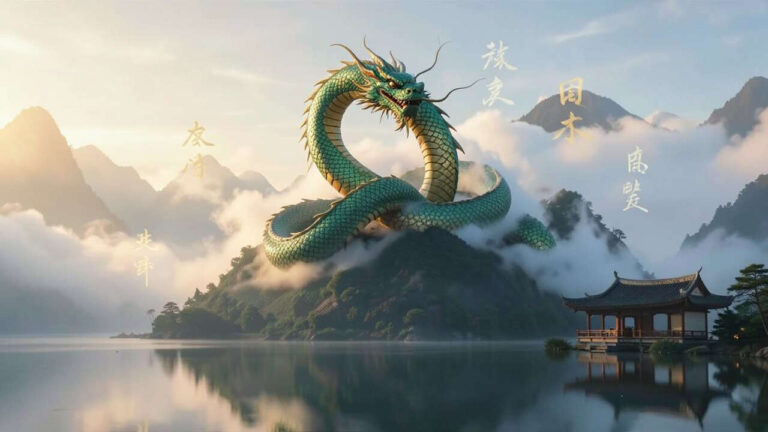
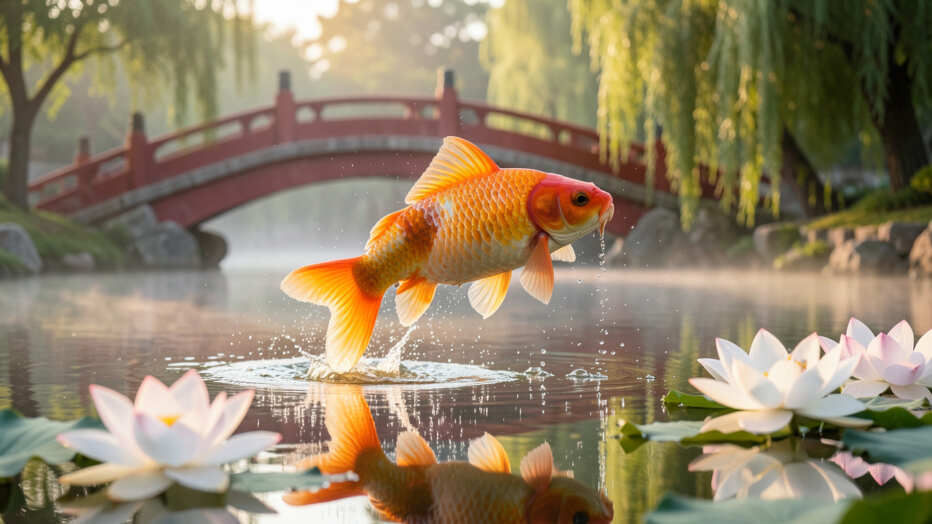
Central to the symbolism of koi fish is the famous Dragon Gate legend. This tale provides the mythological backbone for why koi represent perseverance and transformation. It tells of a determined koi that swam up the Yellow River and leaped over the mythical Dragon Gate waterfall.
According to the legend, the koi that successfully made the leap was rewarded by being transformed into a powerful dragon. This story resonated deeply, offering a powerful metaphor for human achievement. It taught that with enough determination, anyone could overcome immense obstacles to achieve greatness.
The story has been passed down through generations, influencing art, idioms, and personal aspirations. The phrase “鲤鱼跳龙门” (lǐyú tiào lóngmén), meaning “a carp leaping over the dragon gate,” is still used today to describe a significant promotion or successful endeavor.
- A young koi hears of the legendary Dragon Gate on the Yellow River.
- It journeys upstream, facing strong currents and predators.
- It tirelessly attempts to leap up the massive waterfall.
- After a final, courageous effort, it clears the gate.
- The heavens transform it into a majestic, celestial dragon.
This legend elevated the koi from a beautiful fish to a sacred symbol of drive. The transformation into a dragon added a layer of spiritual significance, linking earthly effort with heavenly reward.
| Element in Legend | Symbolic Meaning |
|---|---|
| Swimming Upstream | Facing life’s challenges with courage. |
| The Dragon Gate Waterfall | An insurmountable obstacle requiring ultimate effort. |
| The Leap | A pivotal moment of transformation and success. |
| Transformation into a Dragon | Achieving a higher state of being and power. |
What Are the Specific Meanings of Different Koi Colors?
Not all koi fish carry the same message. The color of the koi is critically important, with each hue representing a distinct virtue or blessing. This specificity allows people to choose koi imagery that aligns with their personal hopes or the message they wish to convey.
The most revered is the golden or yellow koi. This color is directly tied to wealth, prosperity, and the imperial family. In contrast, the powerful black koi is often used as a protective talisman, believed to absorb negative energy and ward off evil spirits before it can reach the family.
- Gold Koi: Symbolizes wealth, prosperity, and divine influence. Often associated with business success.
- Red Koi: Represents love, strong relationships, and passion. Commonly given in the context of marriage or romance.
- Black Koi: Signifies overcoming adversity and masculine energy. Used for protection and warding off negativity.
- White Koi with Red Markings (Kohaku): Symbolizes career success and life achievements. The red spot represents a person’s destiny.
- Blue Koi: Associated with reproduction, masculinity, and the birth of a son. Also linked to calm and relaxation.
- Platinum/Silver Koi: Represents a successful business venture and general good fortune.
The combination of colors adds even more nuance. A koi with a specific pattern might be interpreted as a wish for both love and wealth. This rich visual language makes koi a versatile and personalized symbol in Chinese culture.
Warning: Be mindful of color context. While a black koi symbolizes protection, presenting a black-and-white image of a single black koi could be interpreted as a wish for a funeral or negative event in some traditional contexts.
How Are Koi Fish Used in Chinese Festivals and Traditions?
Koi fish imagery is a vibrant part of Chinese celebrations, especially those focused on family, unity, and new beginnings. Their presence is not merely decorative; it actively participates in invoking blessings for the community. The most prominent example is the Dragon Boat Festival.
During the Dragon Boat Festival (Duanwu Festival), boat races feature prows carved and painted like dragons. The connection here is direct: the transformed koi becomes the dragon. Spectators cheer for the boats as a symbolic reenactment of the legendary leap, celebrating perseverance and communal spirit.
- Dragon Boat Festival: Dragon-headed boats symbolize the koi’s transformation and collective effort.
- Lunar New Year: Koi decorations and motifs are displayed to attract wealth and good luck for the coming year.
- Weddings: Red koi patterns are common on gifts and decor, blessing the couple with love and lasting harmony.
- Baby Showers/Gifts: Blue or koi-themed items may be gifted to celebrate the birth of a boy.
Artisan crafts during these festivals often include embroidered textiles, paper cuttings, and ceramic figurines featuring koi. The fish becomes a carrier of collective hope and joy, its meaning amplified within the context of shared celebration and tradition.
The repetitive use of koi in festival settings reinforces its core messages annually. Each celebration serves as a reminder of the values of courage, unity, and the pursuit of a prosperous future, all embodied in the graceful form of the koi fish.
| Festival/Tradition | Role of Koi Symbolism | Typical Koi Color/Use |
|---|---|---|
| Dragon Boat Festival | Represents transformation, teamwork, and overcoming odds. | Dragon-headed boats (representing the transformed koi). |
| Lunar New Year | Attracts wealth, success, and good fortune for the new year. | Gold and red koi in decorations and gifts. |
| Weddings | Blesses the couple with harmonious, loving, and enduring relationship. | Red koi patterns on fabrics, gifts, and invitations. |
| Birth of a Child | Wishes for the child’s strength, success, and a bright future. | Blue koi for boys; multicolored for general blessings. |
What Role Do Koi Fish Play in Chinese Art and Feng Shui?
The artistic and spatial application of koi fish symbolism is vast. In traditional Chinese painting, koi are a beloved subject, often depicted in pairs or groups among lotus flowers. These paintings are not just art; they are visual blessings, meant to bring the qualities they represent into a home or office.
In ink wash paintings, the koi’s fluid movement captures a sense of dynamic harmony. Artists emphasize their graceful forms to convey peace and vitality. A painting of two koi swimming together is a common gift for weddings, symbolizing conjugal bliss and a balanced partnership.
In feng shui, the practice of arranging spaces to harness natural energy, koi are potent activators. They are considered “water dragons” and are used to attract and circulate beneficial Qi (life force energy). The direction they swim in artwork or ponds is carefully considered.
- Hang a painting of koi swimming upstream in an office or study to stimulate career ambition and perseverance.
- Place a pair of koi sculptures in the southeast sector of your home to enhance wealth energy.
- Images of eight red koi and one black koi are popular feng shui cures for financial luck and protection.
- Aquariums with live koi are powerful, but require proper placement and care to maintain positive energy.
- Avoid depictions of dead or bleeding koi, as they are considered inauspicious.
The number of fish also matters. Eight is a lucky number associated with wealth, while nine represents longevity. Therefore, a depiction of nine koi is a powerful symbol for a long, prosperous, and happy life.
This meticulous attention to detail shows how deeply the symbolism is embedded in spatial and artistic practice.
Tip: When choosing feng shui artwork, ensure the koi are depicted in a harmonious environment with clean, flowing water. Murky or stagnant water in the imagery can negate the positive effects.
Why Are Koi Fish Symbols of Perseverance and Transformation?
The association between koi fish and perseverance is perhaps their most powerful and universal message. It stems directly from the biological and legendary behavior of the fish. Biologically, koi are strong swimmers that can travel long distances upstream against powerful currents.
This natural tenacity mirrors the human experience of facing and overcoming challenges. The legend of the Dragon Gate amplifies this trait into a mythic struggle. It teaches that the greatest rewards are reserved for those who persist through the hardest tests, a lesson that resonates across all walks of life.
Transformation is the result of this perseverance. The change from a humble carp to a majestic dragon is a metaphor for personal growth, spiritual awakening, and achieving one’s highest potential. This makes the koi a symbol of hope and possibility.
- Perseverance: The act of swimming against the current represents enduring hardship without giving up.
- Courage: The leap over the waterfall is a definitive act of bravery in the face of fear.
- Transformation: The reward for courage and persistence is a complete metamorphosis into a higher state.
- Achievement: The final form (the dragon) signifies reaching the pinnacle of success and influence.
- Inspiration: The story motivates individuals to tackle their own “Dragon Gates” in career, education, or personal development.
This dual symbolism of the struggle and the reward makes the koi deeply motivating. It validates the difficulty of the journey while affirming the ultimate value of seeing it through. For this reason, koi motifs are common in gifts for students, entrepreneurs, and anyone embarking on a difficult new venture.
| Symbolic Journey | Real-Life Parallel |
|---|---|
| The Koi’s Upstream Swim | Working hard in a demanding job or studying for a difficult exam. |
| Facing Predators & Rapids | Dealing with setbacks, criticism, or self-doubt. |
| The Momentous Leap | Taking a final exam, making a critical presentation, or launching a business. |
| Transformation into a Dragon | Getting the promotion, passing the exam, or achieving a major personal milestone. |
Who Celebrates Koi Fish Symbolism in Modern Chinese Culture?
The symbolism of koi fish remains vibrant in contemporary Chinese society, celebrated by a wide spectrum of people. It has evolved from a traditional motif into a modern brand of cultural identity and aspirational mindset. Its appeal cuts across age and social lines.
Business owners and entrepreneurs are prominent admirers. They display koi art in offices and boardrooms as a constant reminder of perseverance and a magnet for financial luck. The connection between the koi’s homophone for “profit” makes it a natural mascot for commercial success.
- Entrepreneurs and Executives: Use koi symbolism for motivation and to attract business fortune.
- Artists and Designers: Draw on its rich visual language for contemporary art, fashion, and graphic design.
- Parents and Educators: Employ the Dragon Gate legend to teach children about the value of hard work and resilience.
- Individuals in Transition: Turn to koi tattoos or charms for personal empowerment during career changes or life challenges.
- Cultural Enthusiasts: Collect koi-themed art, ceramics, and textiles as a connection to heritage.
Furthermore, the global popularity of koi keeping has created a worldwide community that appreciates and often embraces the cultural symbolism. International koi competitions and the global market for high-quality koi fish have exported this piece of Chinese culture worldwide.
Important: While the symbolism is Chinese in origin, its core messages of perseverance and transformation have universal appeal, allowing it to resonate with a global audience.
How Can You Incorporate Koi Fish Symbolism into Your Life?
Incorporating the positive energy of koi fish into your daily environment is accessible and meaningful. You don’t need to own a pond to benefit from their symbolism. The key is to choose representations that resonate with your personal intentions and place them mindfully.
Start with visual reminders. Artwork is a powerful and non-intrusive way to bring koi energy into a space. A single, well-placed painting or sculpture can serve as a daily focal point for meditation on your own goals and the qualities of perseverance and harmony.
Consider the principle of “like attracts like” in feng shui. By surrounding yourself with images of thriving, vibrant koi, you are symbolically aligning yourself with their energy. This can foster a more optimistic and determined mindset, which in itself can lead to better outcomes.
- Assess your intention: Are you seeking wealth, love, protection, or perseverance?
- Choose the appropriate koi color based on your goal (e.g., gold for wealth, red for love).
- Select the medium: artwork, a small garden water feature, embroidered textiles, or even jewelry.
- Place the item with respect, ensuring it faces a beneficial direction according to feng shui (like inward from a door to welcome fortune).
- Keep the representation clean and well-maintained. A neglected image can symbolize stagnant energy.
Finally, let the story of the koi inspire your actions. Use it as a personal mantra during difficult times. Remind yourself that you are swimming upstream, building strength for an eventual leap.
This psychological framing can be a potent tool for building resilience.
What Are Common Misconceptions About Koi Symbolism?
While the koi fish carries profound positive meanings, some common misconceptions can lead to misunderstandings. One frequent confusion is the blanket assumption that any koi symbol is universally lucky. The context and specific color can dramatically alter the interpretation.
Another misconception is that the symbolism is static. In reality, like any cultural element, its emphasis can evolve. While the core meanings of perseverance and luck endure, the specific applications in modern feng shui or contemporary art may adapt to new societal contexts and values.
- Myth: All koi fish symbols bring good luck. Reality: Color and context are crucial; a black koi in a certain setting might be for protection, not wealth.
- Myth: Koi symbolism is ancient and unchanging. Reality: While ancient, its popular application, especially in global feng shui, continues to develop.
- Myth: Only traditional Chinese households use koi symbolism. Reality: It is widely used in modern offices, by artists, and as personal talismans across cultures.
- Myth: You must own live koi to benefit. Reality: Representations in art, decor, and thought are considered equally powerful conduits of symbolic energy.
- Myth: The dragon transformation is just a fairy tale. Reality: For many, it’s a powerful metaphor and philosophical teaching tool for real-world achievement.
Understanding these nuances allows for a more respectful and effective use of the symbolism. It moves beyond superficial decoration to a deeper engagement with the cultural and philosophical values the koi fish represents.
Frequently Asked Questions
What is the most important koi fish symbol in Chinese culture?
The most central symbol is the koi’s journey upstream and its leap over the Dragon Gate. This legend encapsulates the core values of perseverance, courage, and the ultimate reward of transformation, making it the foundational narrative behind all other koi symbolism.
How does the color of a koi change its meaning?
Color is essential. Gold symbolizes wealth and prestige. Red represents love and passion.
Black is for protection and overcoming adversity. Each color targets a different aspect of life, from finances and relationships to personal strength and career success.
Are koi fish considered lucky in Chinese culture?
Yes, absolutely. Koi are powerful symbols of good fortune, primarily due to their homophone connection to the word “profit” and their association with the Dragon Gate legend of success. Gold and red koi, in particular, are widely seen as attractors of wealth and positive luck.
What is the significance of having eight koi in an image?
In Chinese culture, the number eight (八, bā) sounds like the word for wealth and prosperity (发, fā). Therefore, an image or sculpture featuring eight koi is a potent feng shui symbol specifically designed to amplify financial good fortune and abundance.
How are koi fish used in modern Chinese culture?
Koi symbolism is actively used today in business decor for prosperity, in personal tattoos as a mark of perseverance, in festival decorations during Lunar New Year and Dragon Boat Festival, and as a popular theme in contemporary fashion and graphic design.
Final Thoughts
The koi fish is a timeless emblem of Chinese cultural values, embodying perseverance, transformation, and harmony. Its rich symbolism, rooted in legend and refined through art and tradition, offers powerful lessons for overcoming challenges and cultivating a prosperous life. By understanding and thoughtfully incorporating these symbols, you can draw inspiration from their enduring strength and beauty.