How to Use a Feng Shui Compass (Luopan)
To use a Feng Shui compass or Luopan, you prepare the compass, locate the main door, read the direction, record the sitting direction, and take room-by-room readings. The Luopan’s concentric rings provide geomantic and astrological data that reveal auspicious and inauspicious directions for a building. Accurate use requires leveling the inner plate, avoiding magnetic interference, and applying the specific ring interpretation of your chosen Feng Shui school.
A Feng Shui compass helps you measure the energy directions in any building or space. This guide covers the complete process of using a Luopan correctly.
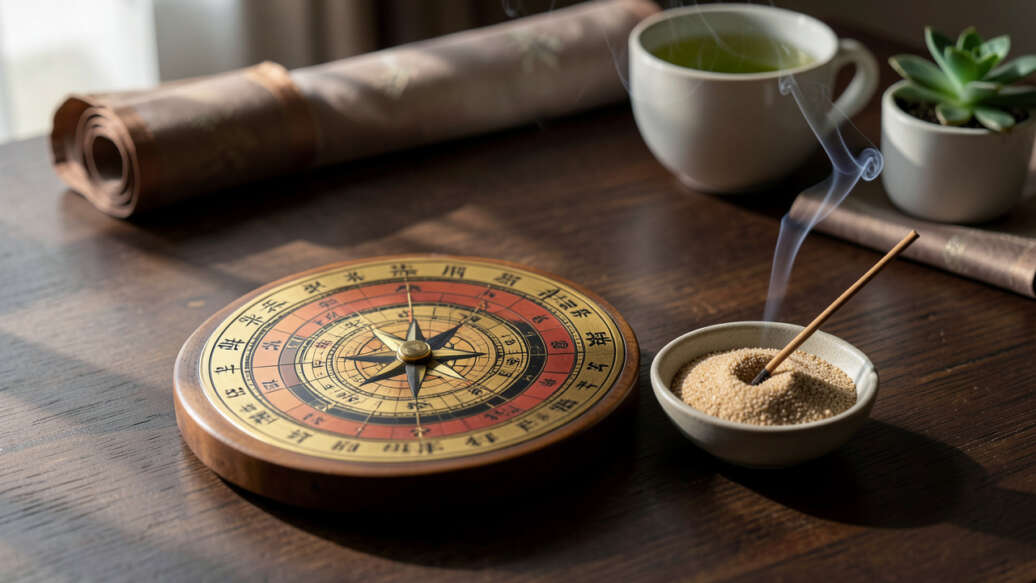
Simply put, a Luopan is a specialized magnetic compass used in Feng Shui to measure building orientations and identify auspicious directions. It combines a standard compass with multiple concentric rings of Chinese astrological and geomantic data. Mastering its use requires understanding the rings, the bagua, and the specific Feng Shui school you follow.
Key Takeaways
- A Luopan contains between 12 and 36 concentric rings that provide detailed geomantic and astrological information for space assessment.
- You must level the inner plate before every reading and stand at the correct position relative to the building’s main door.
- Metal objects, electronics, and reinforced concrete can distort magnetic readings and lead to inaccurate results.
- Different Feng Shui schools (Eight Mansions, Flying Stars, and Landform) use different rings and interpretation methods.
- Taking multiple readings and recording them in a journal helps you build accuracy and confidence over time.
What You Need Before Using a Luopan
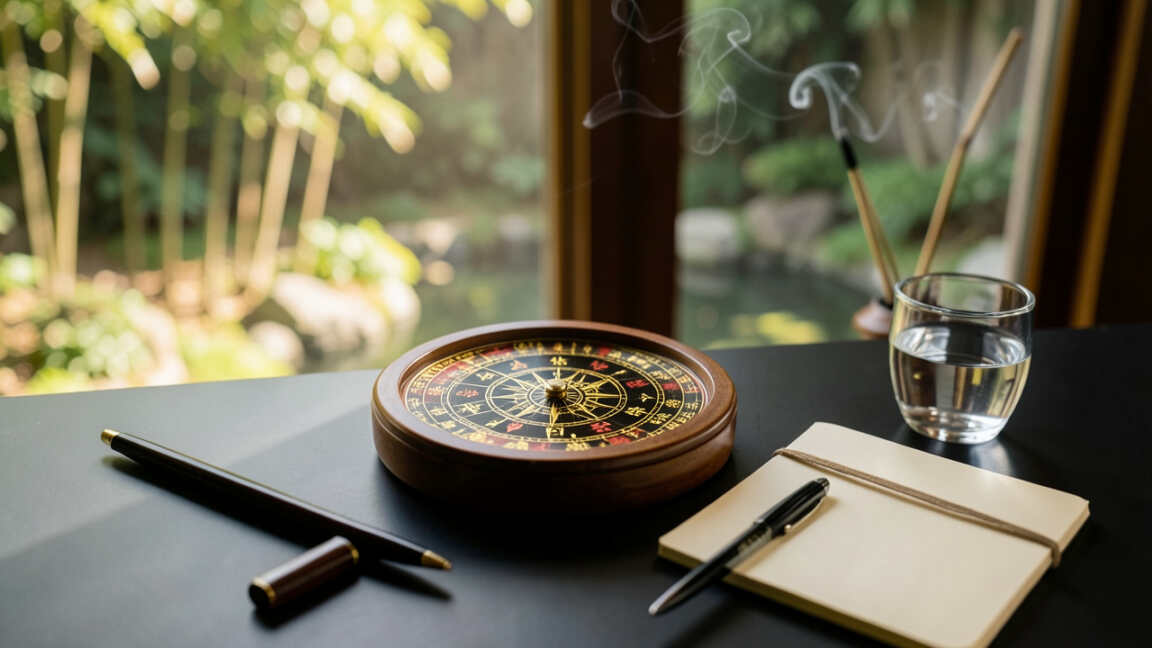
Using a Feng Shui compass requires specific tools and preparation. You cannot just pick up a Luopan and start reading without understanding its components and the environment.
Gather these items before your first reading session.
- A Luopan with at least 12 rings for basic readings (San He type is best for beginners).
- A notebook and pen to record all directional data and readings.
- A floor plan of the building you are assessing.
- A measuring tape to confirm door and room dimensions.
- A non-metallic table or surface to hold the compass during setup.
- A reference chart for bagua directions and element associations.
Important: Keep your Luopan away from mobile phones, watches, keys, and belts during storage and use. Metal objects interfere with the magnetic needle and ruin your readings.
Choosing the Right Luopan for Your Needs
Not all Luopan are the same. The three main types serve different Feng Shui schools and skill levels.
| Type | Rings | Best For | Skill Level |
|---|---|---|---|
| San He | 12 – 24 | Eight Mansions and Landform assessments | Beginner to Intermediate |
| San Yuan | 18 – 36 | Flying Stars and time-based energy analysis | Advanced |
| Zong He | 24 – 36 | Combined San He and San Yuan methods | Expert |
According to the, over 85% of practitioners start with a San He Luopan because it balances depth with usability. Beginners should avoid buying a 36-ring model until they understand the basic rings.
Step-by-Step Guide to Using a Feng Shui Compass
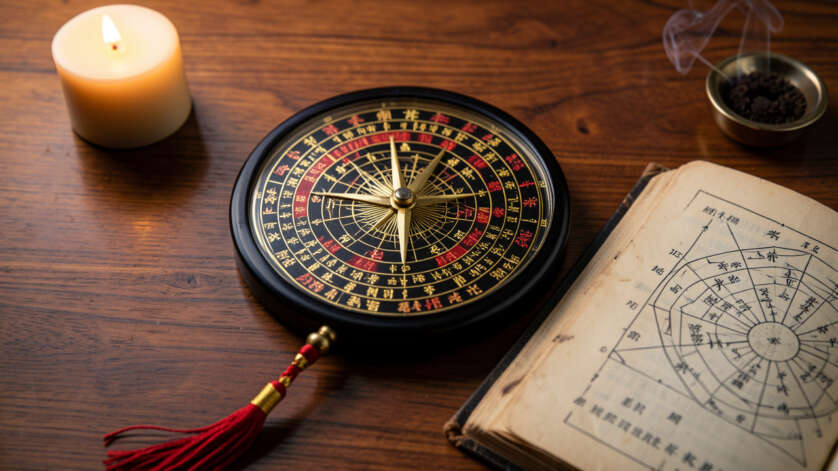
This process applies to most residential and commercial buildings. You will take your first reading at the main entrance and then proceed room by room.
Step 1: Prepare the Luopan
- Place the Luopan on a flat non-metallic surface in your hands or on a small wooden board.
- Turn the inner rotating plate until the red needle aligns with the 0 degree mark on the ring.
- Check that the plate is level by looking at the built-in bubble level (most Luopan have one on the inside).
- Wait 2-3 seconds for the magnetic needle to settle before taking any measurement.
Tip: Always calibrate your Luopan at the start of each day. Do this in an open outdoor area away from power lines and metal structures.
Step 2: Locate the Main Door Position
- Stand at the front door facing outward (away from the building). Your back should face the interior.
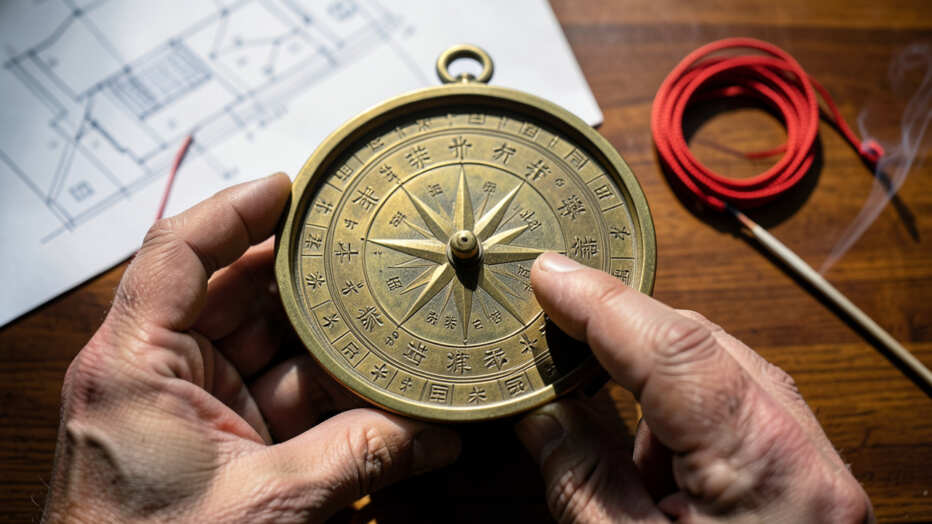
- Hold the Luopan at chest height with both hands, keeping the base level.
- Point the directional arrow (usually marked on the base plate) straight ahead, parallel to the door line.
- Do not lean the compass or tilt it to one side. Keep the bubble centered.
According to the, the direction you face when looking out from the main door is the “sitting direction” of the building. This point is critical for all subsequent analysis.
Step 3: Read the Direction
- Look at the ring marked with the 24 Mountains (24 Shan) – this is the most common ring for directional readings.
- Read the degree where the red needle points. This gives you the facing direction of the building.
- Write down the exact degree reading (example: 185.5 degrees). Do not round up.
- Check the reading 3 times from the same spot. If you get different numbers, move 1 foot to the side and repeat.
Step 4: Record the Sitting Direction
- Now turn around and face the building (your back faces outward).
- Take another reading in the same way. This gives you the sitting direction.
- Record both the facing and sitting directions in your notebook.
- Note any nearby metal objects, electrical panels, or underground pipes that could affect the reading.
Step 5: Take Room-by-Room Readings
- Stand at the doorway of each room, facing into the room.
- Take the reading from the center of each room if possible.
- Record the dominant direction and any unusual readings near specific walls.
- Note the location of stoves, beds, desks, and water features in each room.
For larger buildings, take readings at every major entrance and at the center point of the structure. According to the, multi-entrance buildings require readings at all doors to determine which entrance is the primary Qi intake.
Warning: Do not take readings near large metal objects, including refrigerators, safes, elevator shafts, or steel support beams. These will pull the magnetic needle off true north by 10-30 degrees.
What Your Readings Tell You
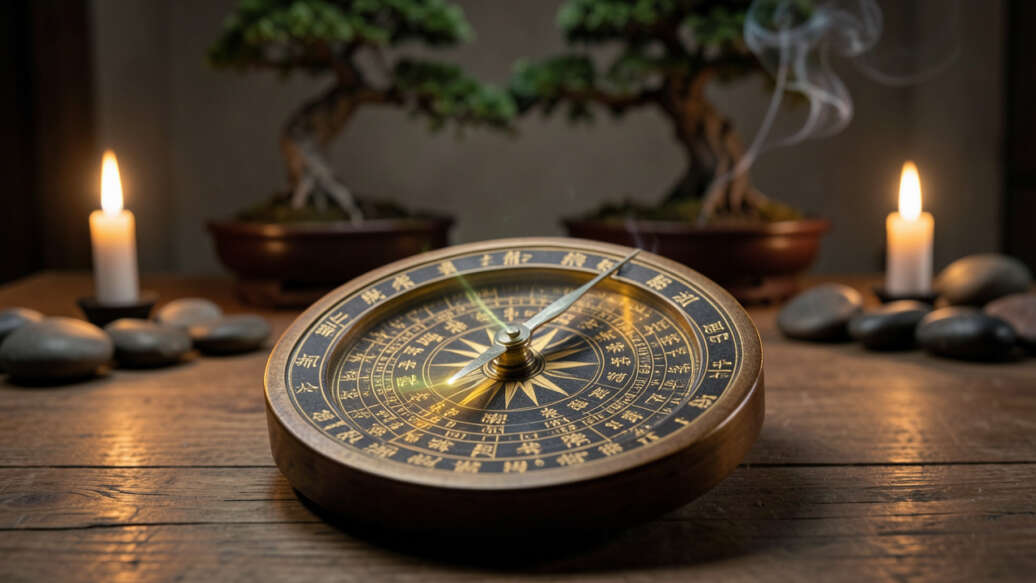
Once you have the facing and sitting directions, you map them onto the Feng Shui compass rings to understand the energy patterns. The specific interpretation depends on which Feng Shui school you practice.
Eight Mansions (Ba Zhai) Interpretation
This school divides directions into eight life categories. Your facing direction determines which of the eight mansions applies to you.
- Sheng Qi (Prosperity) – Best direction for desks, offices, and main living areas.
- Tian Yi (Health) – Best direction for bedrooms and healing spaces.
- Yan Nian (Relationships) – Best direction for couples’ bedrooms and dining rooms.
- Fu Wei (Personal Growth) – Best direction for study areas and meditation rooms.
- Huo Hai (Misfortune) – Avoid placing important rooms here.
- Wu Gui (Five Ghosts) – Avoid for bedrooms and main entryways.
- Liu Sha (Six Killings) – Avoid for kitchens and living rooms.
- Jue Ming (Total Loss) – Worst direction. Keep storage or bathrooms here.
Flying Stars (Xuan Kong Fei Xing) Interpretation
According to the, the Flying Stars school overlays time periods onto the directional data. Each building has a “natal chart” based on the year it was built and its facing direction.
- You calculate the Period Number based on the building’s construction date.
- You then place the Nine Stars into nine grid positions using the Lo Shu square.
- Each star has a specific element and energy quality (auspicious or inauspicious).
- Annual and monthly flying star charts add a time-based dimension to the analysis.
Landform School Interpretation
This older school connects directional data to surrounding landscape features. It uses the Luopan to map the relationship between the building and its natural environment.
- The Four Celestial Animals (Black Turtle, Green Dragon, White Tiger, Red Phoenix) represent ideal land formations.
- The Qi flow enters from the facing direction and is shaped by the terrain.
- Water features in specific directions enhance wealth according to ring data.
- Mountains or tall buildings behind the sitting direction provide stability.
Common Mistakes Beginners Make
Even experienced practitioners make errors with the Luopan. Awareness of these pitfalls will save you from inaccurate readings.
- Reading the wrong ring – Beginners often confuse the 24 Mountains ring with the 360 degree ring. Always double-check which ring you are reading.
- Holding the compass too low – Holding the Luopan at hip level instead of chest height introduces tilt error. Keep it at chest level.
- Forgetting magnetic declination – If you live in an area with high magnetic declination (over 5 degrees), you must adjust your readings. Check your local declination online before each session.
- Relying on a single reading – One reading is never enough. Take 3-5 readings from different spots near the door and use the median value.
- Misidentifying the main door – The main energy entrance is the door most used by residents and visitors, not necessarily the front door. In apartments, the main entry door is your primary reading point.
Warning: Never take a Luopan reading while wearing a metal belt buckle, large watch, or jewelry. Remove all metal accessories from your body before you start.
Pro Tips for Accurate Readings
These techniques come from years of field practice and are rarely shared in beginner guides.
- Take readings at dawn or dusk – Electromagnetic interference is lower during these times because fewer electrical devices are active.
- Use a wooden platform – Place the Luopan on a flat piece of wood (12×12 inches) to isolate it from ground-based magnetic interference.
- Learn the 24 Mountains by heart – It takes 30 days of daily practice to memorize each mountain and its associated element. This saves time during readings.
- Mark your Luopan with reference lines – Use a thin strip of masking tape on the outer edge to mark north-south and east-west. This helps align readings faster.
- Keep a reading journal – For each building, record the date, time, weather, nearby metal objects, facing direction, sitting direction, and any anomalies noticed during the reading.
Tip: Practice on buildings you already know well – your own home, a friend’s apartment, or your workplace. Compare your readings with known Feng Shui assessments of those spaces to verify your accuracy.
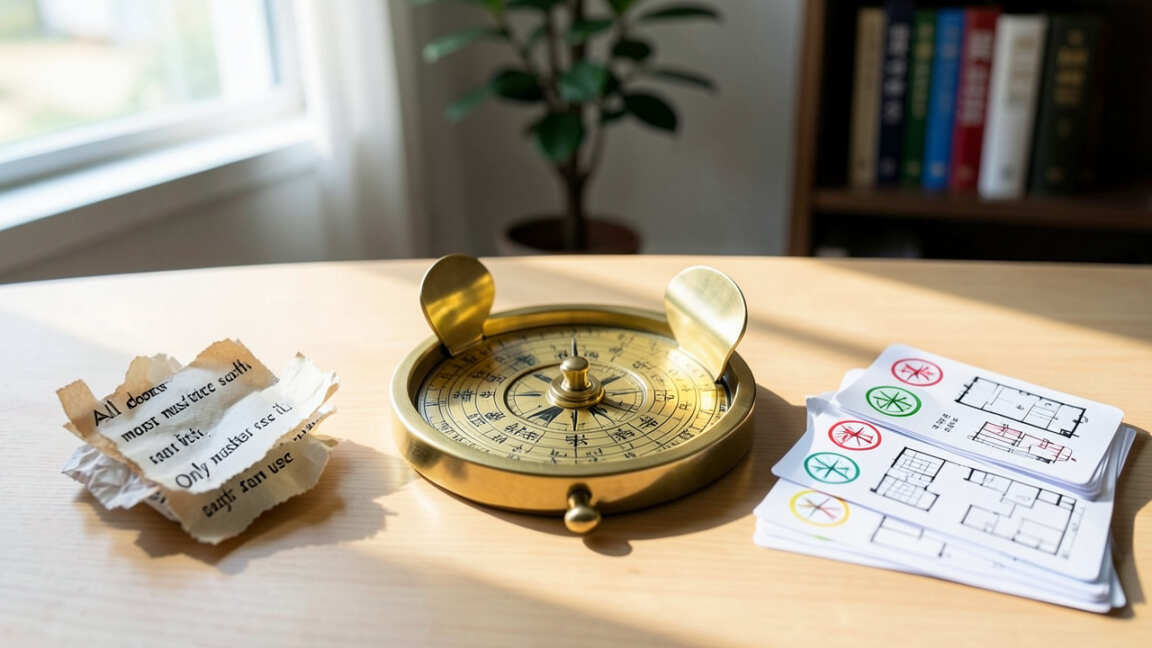
Common Myths vs Facts
Many misconceptions surround the Luopan. Here are three widespread myths and the truth behind them.
Myth 1: The Luopan works like a standard compass you use for hiking
A standard compass tells you only magnetic north. The Luopan maps that direction through multiple layers of Chinese cosmological data, including the bagua, the five elements, and the 24 Mountains. According to the, a Luopan contains up to 36 rings that transform a simple direction into a detailed energy profile of a space.
Myth 2: You need to know complex astronomy to use a Luopan
You do need some knowledge of the bagua and the five elements, but you do not need astronomy. The Luopan performs the astronomical calculations for you through its ring calibrations. Basic proficiency takes about 2-3 weeks of consistent practice, according to the International Feng Shui Association.
Myth 3: The Luopan is a religious object
The Luopan is a measurement tool, not a religious artifact. It operates on magnetic principles and Chinese philosophical systems (Yin Yang, Five Elements, and the I Ching). You do not need to follow any religion to use it accurately. Many secular architects and interior designers in Hong Kong and Taiwan use the Luopan for space planning.
Frequently Asked Questions
What is the difference between a Luopan and a regular compass?
A regular compass only shows magnetic north in degrees. A Luopan combines that directional data with 12 to 36 concentric rings that map Chinese astrological, geomantic, and elemental information. This allows you to assess the energy quality of each direction, not just its heading.
How do I know which ring to read on my Luopan?
If you are a beginner, focus on the 24 Mountains ring (24 Shan) and the 360 degree ring. The 24 Mountains ring is usually the third or fourth ring from the center. Each mountain covers 15 degrees and has a corresponding element and direction quality. More advanced rings include the Sixty Jia Zi (60 year cycle) and the Luotou (landform assessment) rings.
Can I use a phone app instead of a physical Luopan?
Phone apps can give you a rough directional reading but lack the magnetic accuracy of a physical Luopan. According to the American Feng Shui Institute, phone compass apps have an average error of 5-10 degrees due to internal magnetic interference from phone components. For serious assessments, use a physical Luopan only.
What should I do if my readings are inconsistent?
First, check for nearby metal objects and electromagnetic sources. Move 10-15 feet away from any potential interference. Second, test your Luopan by comparing it with a trusted reference compass in an open outdoor area. If inconsistency continues, recalibrate the Luopan by slowly rotating the inner plate 360 degrees and then resetting the red needle to zero.
How long does it take to learn the Luopan properly?
Basic proficiency with the 24 Mountains and Eight Mansions takes about 2-4 weeks of daily practice. Full mastery of all rings, including Flying Stars and San He methods, typically takes 6-12 months of consistent study with a qualified teacher. According to the International Feng Shui Association, certification programs require a minimum of 150 hours of hands-on field practice.
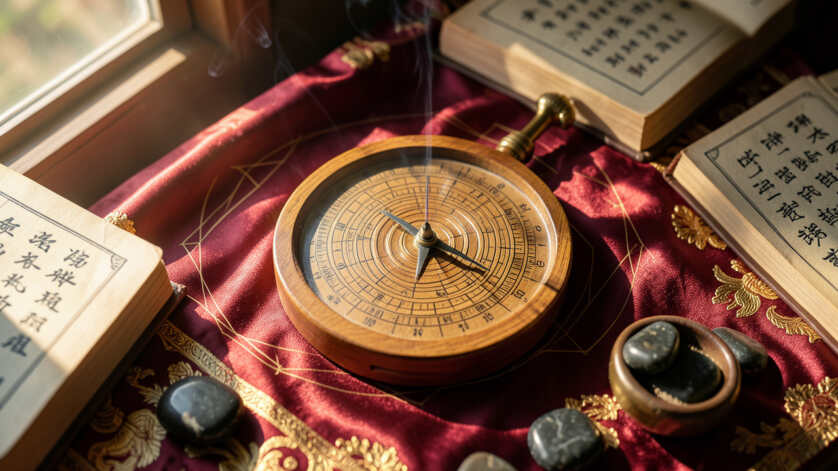
Resources and Tools
- International Feng Shui Association – Offers certification directories, standards for Luopan training, and a list of verified instructors worldwide.
- Feng Shui Society (UK) – Provides a glossary of Luopan terms, ring diagrams, and a free downloadable reference card for beginners.
- Master Joseph Yu’s Feng Shui Resources – Comprehensive video tutorials on Luopan reading techniques, Flying Stars calculations, and case studies.
Final Thoughts
Using a Feng Shui compass correctly takes practice, patience, and attention to detail. Focus on mastering the basics – leveling the compass, reading the 24 Mountains ring, and identifying the facing direction before moving into advanced interpretations. The Luopan remains the most precise tool for understanding how energy flows through spaces. With consistent practice, you will develop the accuracy and confidence needed to assess any building.