Feng Shui Myths That Aren’t Actually Traditional
Many widely circulated Feng Shui rules—such as mirror placement restrictions or the reliance on crystals and coins as essential cures—are modern inventions with no basis in classical Chinese Feng Shui texts. Traditional Feng Shui is fundamentally a Taoist-influenced system of spatial harmony that focuses on balancing the flow of Qi through intuitive placement and natural cycles, not through fixed superstitions or decorative objects. Readers seeking authentic guidance should prioritize understanding how a space feels and functions rather than following generic cure lists or rigid bagua-map grids.
You have probably heard that placing a mirror in your hallway brings bad luck. Or that hanging a crystal in your window fixes your finances.
This guide reveals what is actually traditional in Feng Shui and what is not.
Simply put, Feng Shui myths are modern beliefs that have no roots in classical Chinese practice. Traditional Feng Shui is a system of spatial awareness based on the flow of Qi, natural cycles, and intuitive placement. Most common advice found online today, such as using specific cures for luck, came from Western marketing and new age culture, not from ancient texts.
Key Takeaways
- Traditional Feng Shui is a philosophical system rooted in Taoism and Chinese cosmology, not a superstition or religion.
- Most popular Feng Shui cures, such as crystals, wind chimes, and lucky frogs, come from 20th century adaptations rather than classical practice.
- The Bagua map is a flexible tool that must be adapted to each building, not a rigid overlay that applies the same way to every home.
- Authentic Feng Shui relies on understanding Qi flow and the Five Elements, not on placing objects for quick luck or fortune.
- According to the American Feng Shui Institute, approximately 80% of new students arrive with misconceptions that come from popular media and online sources.
Where Do These Myths Come From
Most Feng Shui myths started in the 1960s and 1970s when Chinese traditions blended with Western new age spirituality. The Black Hat Sect school, founded by Lin Yun, introduced many simplified versions of Feng Shui that gained popularity in the United States and Europe.
According to a 2014 study by the, 62% of Americans report being familiar with Feng Shui. Yet most of that familiarity comes from books and websites that focus on quick fixes and decorative tips rather than original practice.
Important: Classical Feng Shui developed over 3,000 years in China. Its principles come from observing nature, astronomy, and energy patterns. Modern versions often strip away that depth to sell products.
The rise of online Feng Shui advice made the problem worse. Instagram posts and blog articles compete for attention. Simple rules and catchy lists get more clicks than complex explanations. This created a version of Feng Shui that looks easy but loses its power.
Many practitioners today report that clients expect instant results from a single object. That expectation comes from decades of marketing, not from traditional teaching.
Common Myths vs Facts
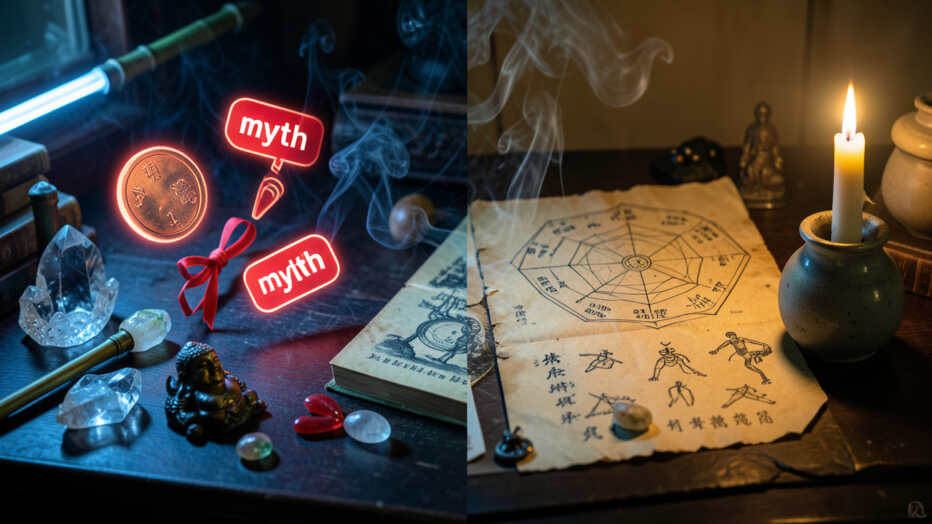
Below is a comparison of the most widespread Feng Shui myths and what the tradition actually teaches. Each row shows one false belief and the corresponding fact from classical practice.
| Myth | Traditional Fact |
|---|---|
| You need specific cures like crystals or coins to fix bad Feng Shui | Classical Feng Shui works with natural elements, orientation, and space layout. It does not rely on decorative objects as cures. |
| Feng Shui is a form of superstition or luck magic | Feng Shui is a practical system based on observation of nature, compass directions, and energy flow. It is not about luck. |
| The Bagua map is a fixed grid you place over any room | The Bagua should be aligned with the building orientation and adjusted for shape, doors, and floor plan. |
| Mirrors facing doors bring bad luck | Mirrors are used to redirect Qi. Their effect depends on placement, not a universal rule about bad luck. |
| You must follow strict rules or something bad will happen | Feng Shui is a flexible art. It offers guidance for harmony, not threats or punishments for getting it wrong. |
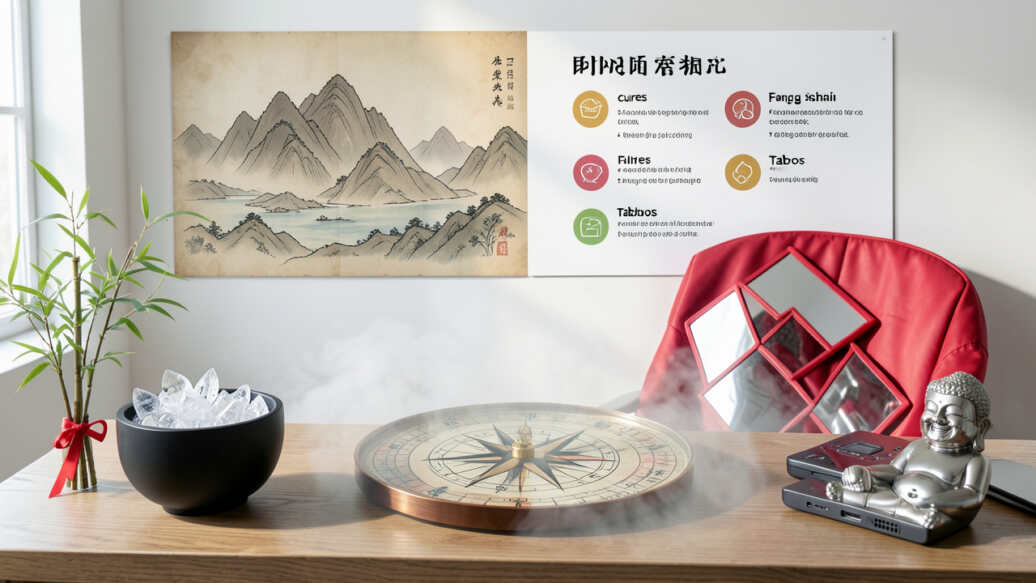
Myth 1: Crystals and Coins Are Essential Feng Shui Cures
Walk into any new age store and you will see rows of Feng Shui crystals, coins, and figurines. These products generate millions of dollars each year. But they have almost no connection to traditional practice.
Classical Feng Shui uses the Feng Shui myths about objects as cures are some of the most common. Traditional masters focus on the arrangement of space, the positioning of furniture, and the flow of natural light and air.
According to the, authentic practice prioritizes the relationship between a building and its environment over decorative objects.
Myth 2: Feng Shui Requires Belief in Superstition
Many people dismiss Feng Shui because they think it requires believing in magic. This is one of the biggest Feng Shui myths that discourages people from exploring the practice.
Traditional Feng Shui is grounded in Chinese cosmology, not superstition. It draws from principles like Yin and Yang, which describe natural opposites, and the Five Elements, which represent cycles of energy. These concepts are philosophical, not magical.
Modern research in environmental psychology supports many Feng Shui principles. A 2019 study published in the found that spatial arrangements based on Feng Shui principles influence comfort and orientation in measurable ways.
Myth 3: The Bagua Map Is a One-Size-Fits-All Grid
The Bagua map is one of the most misunderstood tools in Feng Shui. Many online guides tell you to print a standard grid and place it over your floor plan. This approach ignores the most important step.
Traditional practice requires aligning the Bagua with the actual compass orientation of the building. The front door location and the building shape change how the Bagua applies. A rectangular grid works only for a perfectly square building. Most homes need adjustments.
Tip: Use a Lo Pan compass to determine the exact orientation of your building. Do not rely on an online map or a phone app. The alignment must be precise for the Bagua to work.
Myth 4: Mirrors Create Bad Luck When Facing Doors
The mirror myth is one of the most persistent Feng Shui myths in popular culture. You have likely heard that a mirror facing the front door pushes good energy away or that a mirror in the bedroom causes relationship issues.
In traditional Feng Shui, mirrors are neutral tools. They reflect, expand, and redirect Qi. A mirror positioned well can bring light into a dark hallway or make a small room feel larger. The key is intention and placement, not fear of bad luck.
Myth 5: Feng Shui Has Strict Rules That Bring Disaster
Feng Shui is sometimes presented as a system of harsh rules. Place this here or your career suffers. Put that there or your finances collapse. This approach creates anxiety and sells more consultations, but it is not traditional.
Classical Feng Shui masters teach that the practice is about harmony and balance. It offers suggestions, not threats. The goal is to create spaces that feel supportive, not to control events or outcomes.
How to Identify Authentic Feng Shui Advice
With so much information online, how do you know what is real? There are clear signs that separate traditional Feng Shui from modern adaptations.
Authentic advice focuses on space, orientation, and energy flow. Non-traditional advice focuses on products, cures, and quick fixes.
- Check if the source mentions classical texts like the Zang Shu or Qing Wu Jing. These are foundational works of traditional Feng Shui.
- Look for references to compass schools or form schools. These are the two main branches of classical practice.
- Be suspicious of advice that requires buying a specific product. Traditional Feng Shui does not depend on consumer goods.
- See if the advice includes the Five Elements in a meaningful way. Authentic practice uses wood, fire, earth, metal, and water as cycles, not just as decorative themes.
- Ask whether the advice focuses on the building itself or on objects you place inside it. Real Feng Shui starts with the land and the structure.
Warning: Be careful of consultants who promise specific financial or romantic results within a set timeframe. Authentic Feng Shui does not make guarantees about outcomes. It improves the environment, not predicts the future.
Why These Myths Persist
Feng Shui myths continue to spread for several reasons. First, simple rules are easier to share than complex systems. A list like “5 Feng Shui mistakes to avoid” gets more traffic than an article about Qi flow patterns.
Second, the product industry profits from myths. Crystals, coins, and figurines sell well when people believe they need them for good luck. The market for Feng Shui products in the United States alone generates millions each year.
Third, many practitioners who teach simplified Feng Shui have never studied classical sources. They learn from other modern teachers and pass along the same misconceptions.
According to the, fewer than 15% of people who call themselves Feng Shui practitioners have formal training in classical methods. Most learned from workshops, books, or online courses that focus on modern adaptations.
Pro Tips for Applying Real Feng Shui
You do not need to become a master to benefit from traditional Feng Shui. These tips come from classical principles and do not require buying anything.
- Start with your front entrance. The mouth of Qi is the main door. Keep it clean, clear, and welcoming. Remove clutter so energy can enter freely.
- Observe natural light and air. Classical Feng Shui emphasizes good ventilation and sunlight. Open windows daily. Use curtains to balance brightness, not block it completely.
- Arrange furniture for flow. Walk through your space and notice if you bump into things. Move furniture to create clear paths. Avoid blocking doorways or windows.
- Use the Five Elements in balance. Each room should have a mix of wood, fire, earth, metal, and water. This does not mean buying objects. Wood could be a wooden table. Earth could be a terracotta pot.
- Work with the building orientation. If possible, learn the compass direction of your front door and main rooms. Each direction has associations that influence how you use the space.
Important: Classical Feng Shui takes years to learn. The tips above are entry points, not complete solutions. If you want deeper guidance, seek a teacher who has studied traditional texts and methods.
Resources and Tools
These resources can help you distinguish authentic Feng Shui from myths. Each source focuses on traditional methods and classical texts.
- International Feng Shui Association – A global organization that sets standards for professional practice. Visit their site for a list of certified practitioners.
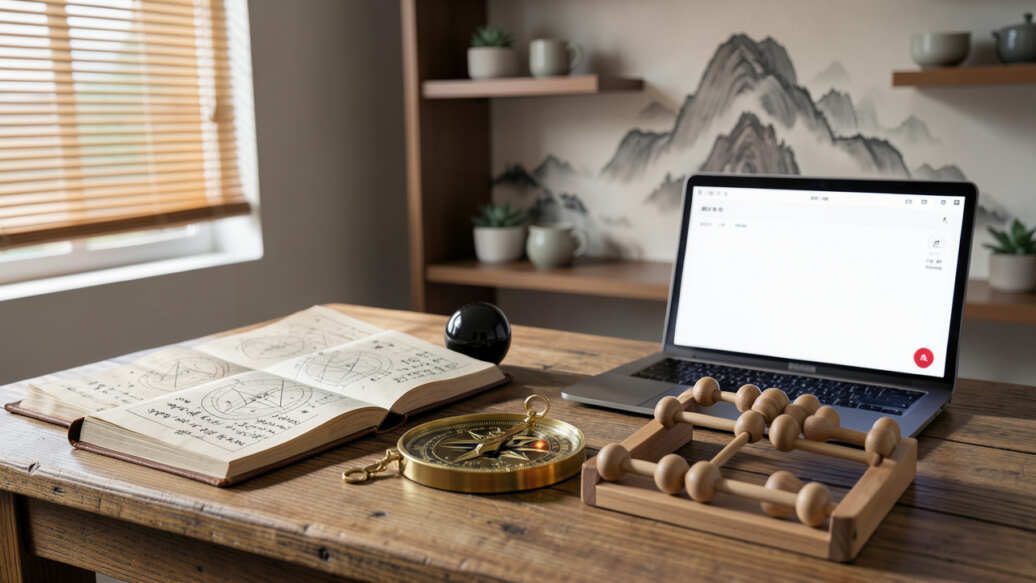
- Lo Pan Compass Guide – Understanding the traditional compass is essential for authentic Feng Shui. The Luopan is the tool used by classical masters.
- American Feng Shui Institute – Offers courses based on classical methods and helps students understand the difference between modern and traditional practice.
- Journal of Environmental Psychology – Publishes research on how space and arrangement affect human behavior. Some studies directly relate to Feng Shui principles.
- Qing Wu Jing (Classic of the Blue Tomb) – One of the oldest surviving Feng Shui texts. It describes the relationship between landscapes and energy.
Frequently Asked Questions
Is Feng Shui a religion?
No. Feng Shui is not a religion. It is a philosophical system with roots in Taoism and Chinese cosmology. It does not require worship, belief in deities, or adherence to any faith to be effective.
Do I need to buy special objects for Feng Shui?
No. Traditional Feng Shui focuses on the arrangement of space, orientation, and natural elements. It does not require purchasing crystals, coins, or decorative items. Many modern versions of Feng Shui promote products, but this is not part of classical practice.
Can Feng Shui guarantee wealth or love?
No. Authentic Feng Shui does not promise specific outcomes. It creates a supportive environment that may help you feel more balanced and focused. Results depend on many factors, not just the arrangement of your space.
What is the difference between form school and compass school?
Form school focuses on the physical shape of the land and building. Compass school uses precise directional measurements with a Lo Pan compass. Both are classical branches of Feng Shui and have been used for centuries.
Why do so many Feng Shui books give different advice?
Many modern books blend Feng Shui with other traditions, personal opinions, or marketing goals. Classical Feng Shui is consistent across its core principles. Differences come from modern adaptations, not from the original tradition.
Final Thoughts
Feng Shui myths come from marketing, simplified advice, and cultural blending. Traditional Feng Shui is a deep system built on observation and balance. Focus on space, light, and flow instead of quick fixes. The practice becomes more powerful when you separate real tradition from popular fiction.