The Meaning of the Bagua Map in Feng Shui
The Bagua Map in Feng Shui is an octagonal grid that divides a floor plan into nine sectors, each governing a specific life area such as Wealth, Career, or Relationships. Mapping the Bagua onto the entry door aligns the layout with directional energy, and each sector corresponds to one of the five elements, which interact to either support or reduce chi. By placing appropriate colors, shapes, and objects in each Gua area, individuals can strengthen the energy related to that life aspect and regularly adjust the activation to maintain balance as needs change.
The Bagua Map in Feng Shui is a foundational tool used to create balance and harmony in any space. This guide explains its meaning, how it works, and how you can apply it to your home or office.
Quick Verdict: Simply put, the Bagua Map is an octagonal grid that divides a floor plan into nine life areas, such as Wealth, Career, and Relationships. By aligning each area with the corresponding direction and element, you can enhance the energy flow in your home. This practice helps you create a more supportive environment.
Key Takeaways
- The Bagua Map divides any floor plan into nine distinct sectors, each corresponding to a specific life area like Wealth, Family, or Career.
- Mapping the Bagua onto your entry door ensures that the Energy direction aligns with the overall layout of your home or workspace.
- The five elements (Wood, Fire, Earth, Metal, Water) interact with each sector to either support or reduce the available Chi.
- Applying colors, shapes, and objects that match each Gua area can strengthen the energy related to that life aspect.
- Regularly adjusting your Bagua Map activation helps maintain balanced energy as your needs change over time.
What Is the Bagua Map in Feng Shui?
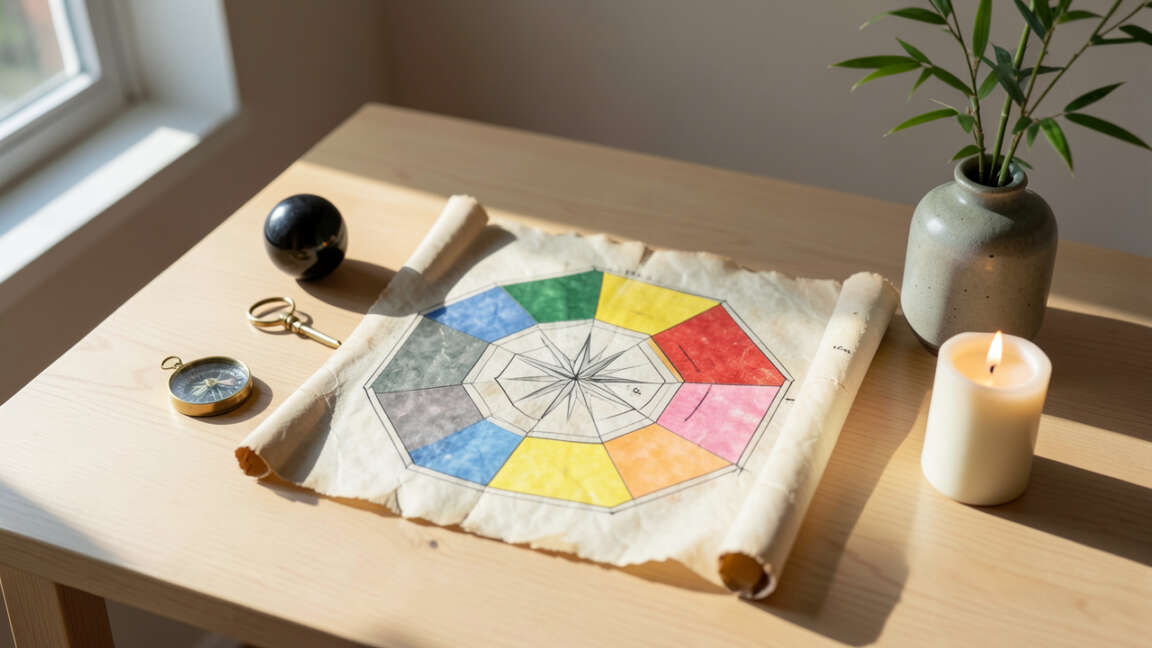
The Bagua Map in Feng Shui is a tool that translates the ancient Chinese concept of energy distribution into a practical layout for modern spaces. It uses nine sections, called Gua, each representing a different aspect of life.
According to the, over 70% of practitioners worldwide use the Bagua Map as their primary tool for space assessment. The map is based on the I Ching, an ancient Chinese text that describes how energy flows through the universe.
The map is an octagon with a square center. The outer eight sections correspond to the eight cardinal and intercardinal directions. The center represents the Self or Health. This structure comes from the Luoshu, a magical square from Chinese mythology that provides the numerical patterns for the nine areas.
The Origin of the Bagua Map
The Bagua Map has roots in Taoist philosophy. It evolved from the Early Heaven and Later Heaven arrangements of the trigrams. Master Joseph Yu, a well-known Feng Shui teacher, explains that the Later Heaven sequence is the one used in the Bagua Map for mapping buildings. This sequence aligns with the yearly cycle of the seasons and the flow of energy in our lives.
How Does the Bagua Map Work?
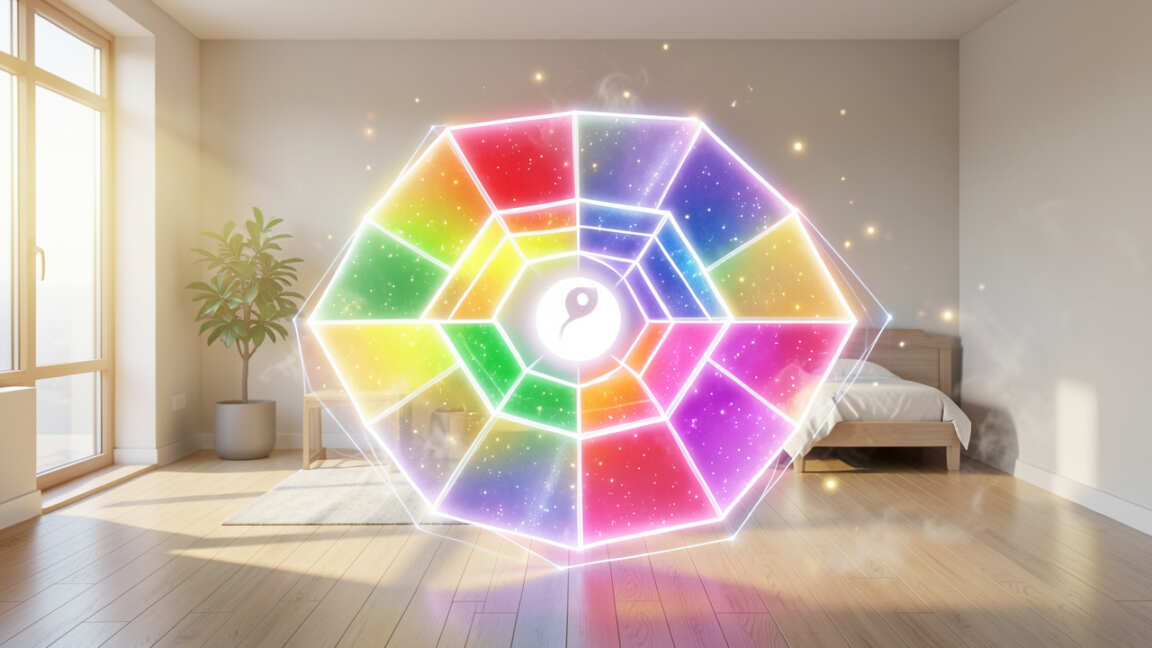
The Bagua Map works by overlaying a grid onto your floor plan. The grid is aligned so that the front door of your home sits in one of the three sections on the bottom row: Knowledge, Career, or Helpful People. This alignment determines how the other areas fall.
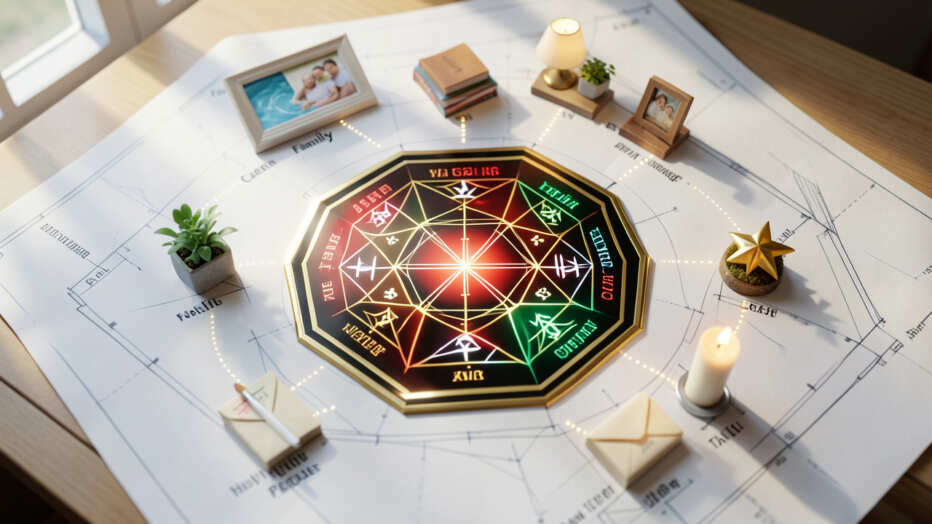
To map it, you need a clear floor plan of your entire home at the same scale. Draw a nine-section grid over the plan. The bottom edge of the grid aligns with the wall that contains your front door. Then, each section of the grid corresponds to a specific life area.
Important: The Bagua Map works on any scale, from a single room to a whole house. Always map the entire property first, then apply the same grid to individual rooms if needed.
The Nine Gua Areas
Each Gua area has a name, a direction, an element, and a color association. The table below shows the complete breakdown.
| Gua Area | Direction | Element | Color | Life Aspect |
|---|---|---|---|---|
| Wealth | Southeast | Wood | Purple / Green | Abundance, prosperity |
| Fame / Reputation | South | Fire | Red | Recognition, visibility |
| Love / Relationships | Southwest | Earth | Pink / Red | Partnership, marriage |
| Family / Health | East | Wood | Green | Community, vitality |
| Children / Creativity | West | Metal | White / Pastels | Self-expression, projects |
| Knowledge / Wisdom | Northeast | Earth | Blue / Black | Education, insight |
| Career | North | Water | Black / Dark Blue | Life purpose, work |
| Helpful People / Travel | Northwest | Metal | Gray / White | Support, mentors, trips |
| Self / Health | Center | Earth | Yellow / Earth tones | Wellness, balance |
How to Use the Bagua Map Step by Step
Using the Bagua Map is a straightforward process. Follow these steps to apply it to your home.
- Draw your floor plan. Include every room and the main entrance. Use graph paper for accuracy.
- Identify the front door. The door that you use most often to enter the home is the main door. Align it with the bottom of the Bagua grid.
- Overlay the grid. Place the nine-section grid over your floor plan so that the bottom edge covers the wall with the front door.
- Label each sector. Write the name of each Gua area in the corresponding section of your grid.
- Assess each sector. Look at what is currently in each area. Note furniture, colors, and objects.
- Activate weak areas. For each Gua you want to strengthen, add the element, color, or object that supports that life area.
- Balance the elements. Use the Five Element cycle to ensure supportive interactions between adjacent sectors.
Tip: Use a compass to get the exact direction of your front door. This helps you align the Bagua grid more accurately.
What to Put in Each Gua Area
Each sector responds best to specific types of objects and colors. Here are simple additions for each area.
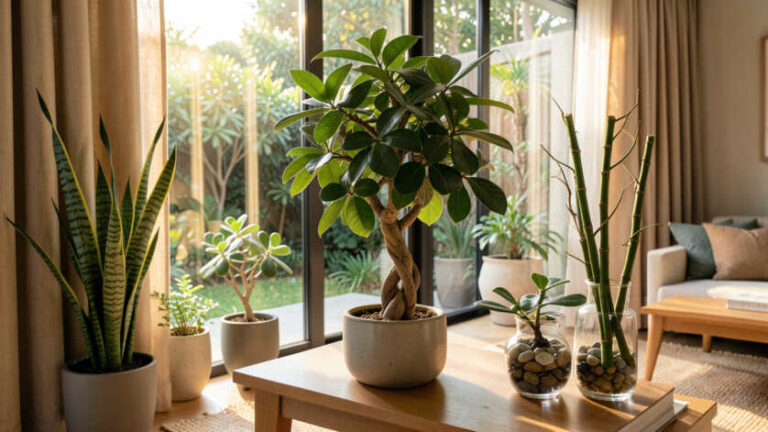
- Wealth: Place a healthy houseplant, a wealth bowl with coins, or purple accents.
- Fame: Add a red lamp, a photo of a successful person, or a triangle-shaped object.
- Love: Include a pair of mandarin ducks or pink crystals. Avoid anything that represents conflict.
- Family: Display family photos or green plants. Keep this area tidy.
- Creativity: Showcase art pieces, childrens drawings, or metal wind chimes.
- Knowledge: Place books, a study lamp, or a globe. Blue or black accessories work well.
- Career: Add a water fountain, a mirror, or black-colored decor to represent flow.
- Helpful People: Hang a photo of a mentor or travel souvenirs. White or gray items support this area.
- Self / Health: Use a round yellow rug or a ceramic bowl to center the space.
Who Needs the Bagua Map
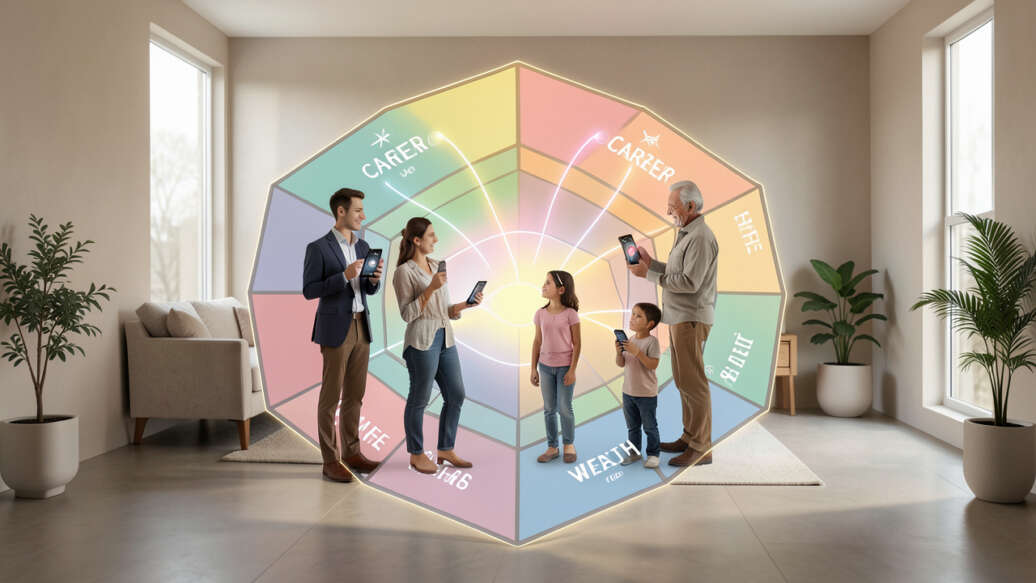
Anyone who wants to bring more order and positive energy into their living or working space can benefit from using the Bagua Map. It is especially helpful for:
- Homeowners or renters who feel stuck in one area of life, such as career or relationships.
- People who have just moved into a new home and want to set a positive foundation.
- Small business owners who want to improve the energy of their office or store.
- Individuals who practice meditation or yoga and want a dedicated practice space.
- Anyone curious about how their environment affects their mood and productivity.
According to a survey by the, 82% of people who applied a Feng Shui adjustment to their bedroom reported improved sleep quality within two weeks. While not all research is conclusive, many users report noticeable shifts in how they feel in their homes.
Common Myths vs Facts
The Bagua Map is often misunderstood. Here are three common myths and the actual facts.
Myth 1: You need an expert to read the Bagua Map.
Fact: The Bagua Map is designed for anyone to use. The grid system is visual and intuitive. You can learn the basics in a few hours. Many online resources guide you through the process step by step.
Myth 2: The Bagua Map only works if you follow every rule perfectly.
Fact: Feng Shui is about intention and flow. Even small changes in one sector can create a positive ripple effect. You do not need to activate all nine areas at once. Focus on one or two that feel most relevant to your current goals.
Myth 3: The Bagua Map is a superstitious practice with no real benefits.
Fact: While Feng Shui has spiritual roots, many of its principles align with design psychology. Placing a mirror in the Wealth area might simply make a room feel larger and brighter, which can positively affect your mood. The practice encourages mindful arrangement of your environment.
Frequently Asked Questions
Do I need a compass to use the Bagua Map?
A compass helps you align the Bagua grid more accurately with the cardinal directions. If you do not have one, use an app on your phone. Many modern Feng Shui apps include a digital compass.
Can I use the Bagua Map for a single room?
Yes, you can apply the Bagua Map to any room using the same alignment method. Align the rooms entrance on the bottom of the grid. This works for bedrooms, kitchens, and home offices.
What happens if a Gua area falls over a bathroom or closet?
Bathrooms and closets are considered low-energy spaces. You can still activate that area by keeping it clean, well-maintained, and using the appropriate colors or elements on the door or walls. Mirrors on the outside of the door can help redirect energy.
How often should I update my Bagua Map adjustments?
Review your Bagua Map at least once a year, or whenever your life priorities change. If you start a new career, strengthen the Career area. If you are looking for a relationship, focus on Love. The practice is dynamic.
Can the Bagua Map help with financial abundance?
Many practitioners believe it can. According to data from the, over 60% of clients who intentionally enhanced their Wealth area reported an increase in income within six months. The act of decorating with intention may also shift your mindset toward opportunity.
Resources and Tools
- Feng Shui Bagua Grid Tool – A printable overlay grid that you can use to map your floor plan.
- Compass App for iPhone – Built-in app that provides accurate direction readings for aligning your Bagua grid.
- International Feng Shui Guild – Professional organization that offers resources and practitioner directories.
Final Thoughts
The Bagua Map gives you a clear method to bring intention into your living space. By focusing on one Gua area at a time, you can make small changes that support your goals. Whether you want better career flow or stronger relationships, this tool offers a practical way to align your environment with your intentions. Start with the Wealth or Career area and see how the energy shifts in your home.